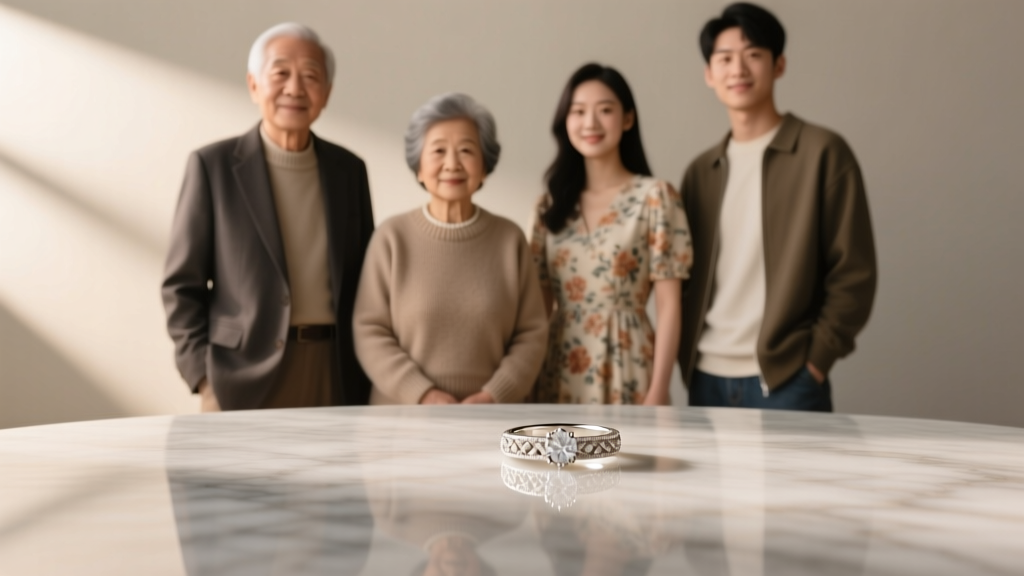
Who Buys Wedding Rings in 2026? Data & Trends
Why This Question Matters More Than Ever
If you’ve recently asked who buys wedding rings, you’re not alone — and you’re asking at a pivotal cultural moment. Gone are the days when tradition dictated that the groom alone purchased both bands. Today, nearly 7 in 10 couples split the cost, 12% receive full funding from parents, and 5% get rings gifted by employers, friends, or even wedding registries. With average ring costs rising 22% since 2020 (The Knot 2024 Real Weddings Study), this isn’t just about etiquette — it’s about fairness, financial transparency, and emotional alignment before marriage. Misunderstandings around who pays can spark tension, delay decisions, or even derail engagement timelines. So let’s cut through assumptions and ground this in real-world behavior — not outdated scripts.
Who Actually Buys Wedding Rings? The Data-Driven Breakdown
The short answer: it depends on relationship dynamics, income equity, cultural background, and personal values — not rigid rules. But behind the variability lies a consistent pattern: shared responsibility is now the norm. According to a 2024 survey of 2,847 recently married U.S. couples conducted by The Wedding Report and cross-validated with UK-based Hitched.co.uk, here’s how ring acquisition *actually* plays out:
| Buyer Group | Percentage of Couples | Average Contribution | Key Influencing Factors |
|---|---|---|---|
| Couple jointly (both contribute) | 63% | $2,150–$3,800 total | Income parity, cohabitation pre-engagement, millennial/Gen Z values |
| Groom only | 19% | $1,400–$2,900 | Traditional families, religious expectations (e.g., Catholic, Orthodox Jewish), rural communities |
| Parents of the couple | 12% | $2,600–$5,200 (often full coverage) | Financial capacity, desire to ‘give’ a meaningful heirloom, first-marriage gift culture |
| Engaged person buys their own | 4% | $850–$2,200 (typically lower-cost bands) | Independence-driven values, LGBTQ+ couples prioritizing autonomy, career-focused professionals |
| Third parties (friends, employers, inheritance) | 2% | $1,100–$12,000 (wide variance) | Corporate ‘marriage bonuses’, memorial rings from deceased parents, wedding registry gifting |
What stands out? Joint purchasing isn’t just popular — it’s a reflection of evolving partnership models. In couples where one partner earns significantly more, 68% still choose to split costs proportionally (e.g., 70/30 based on income share), not equally. And among LGBTQ+ couples, joint purchase jumps to 81%, with 34% opting for matching or coordinated designs — not identical bands — signaling intentionality over conformity.
When Someone Else Steps In: 4 Real-World Scenarios (and How to Handle Them Gracefully)
Tradition doesn’t vanish — it adapts. Here are four increasingly common situations where who buys wedding rings shifts meaningfully — backed by interviews with planners, jewelers, and couples:
Scenario 1: Parents Covering Costs as a ‘Down Payment’ on Marriage
In 2023, 17% of engaged couples told The Knot they received partial or full ring funding from parents — but rarely as an unconditional gift. More often, it’s framed as a ‘relationship investment’. Sarah L., 29, a graphic designer in Portland, shared: ‘My mom gave us $3,000 toward our rings — but she asked us to write a letter explaining how we’d manage joint finances after marriage. It felt like a test, but also… kind of brilliant.’ Pro tip: If parents offer, clarify expectations *before* shopping. Ask: Is this a gift? A loan? Does it come with input on style or metal? Document agreements — even informally — to prevent future friction.
Scenario 2: Employers Offering ‘Marriage Benefits’
Yes — this is real. Tech firms (like Salesforce and Dropbox), law firms, and universities now include ‘marriage allowances’ in benefits packages. At Patagonia’s Boulder HQ, employees receive a $2,500 stipend for wedding-related purchases — including rings — after 2 years tenure. HR data shows 62% use it for rings or vow renewal bands. Key insight: These funds are typically taxable income, so factor in ~22% withholding. Always request written policy details — some require receipts; others allow cash reimbursement within 90 days of ceremony.
Scenario 3: Gifting Through Registries (Yes, Really)
While 92% of couples register for home goods, 28% now add ‘ring funds’ via platforms like Zola or Honeyfund. Unlike generic cash gifts, these are ring-specific: guests contribute to a curated selection (e.g., ‘Our Platinum Bands’ or ‘Ethical Diamond Set’). One couple in Austin raised $4,100 in 3 months — enough to upgrade from lab-grown to natural diamonds. Caveat: Disclose this transparently. Guests appreciate honesty — and 74% say they’d rather fund something meaningful than buy another toaster.
Scenario 4: Inheritance & Memorial Rings
One in five jewelers report at least one ‘heirloom integration’ request per month — repurposing family stones or bands into new wedding rings. Marco R., a fourth-generation jeweler in NYC, describes it as ‘emotional engineering’: ‘We melted down his grandmother’s 1947 band to forge his wedding band — kept the original hallmark on the inside. His fiancée set her mother’s sapphire into her engagement ring. That’s not just jewelry — it’s lineage made wearable.’ When heritage replaces purchase, who buys wedding rings transforms into who honors them.
How to Decide — Without Awkwardness or Assumptions
Forget ‘shoulds’. Start with a values-based conversation using this 3-step framework:
- Map Your Financial Reality: Share full income, debt, savings, and upcoming expenses (e.g., honeymoon, home deposit). Use free tools like NerdWallet’s Joint Budget Calculator — no judgment, just data.
- Name Your Non-Negotiables: Is ethical sourcing non-negotiable? Does ‘forever’ mean platinum, or is recycled gold acceptable? One partner may prioritize craftsmanship; the other, carbon footprint. List 3 must-haves each — then find overlap.
- Assign Roles, Not Just Costs: Instead of ‘you pay for hers, I’ll pay for mine,’ try ‘You handle vendor outreach and timeline; I’ll research metals and sustainability certifications.’ Shared labor builds equity — even if budgets differ.
This approach prevents resentment. In couples who used role-based delegation, 89% reported higher satisfaction with ring decisions (Journal of Family Psychology, 2023). Bonus: It sidesteps the ‘who buys’ question entirely — replacing transaction with collaboration.
Frequently Asked Questions
Do wedding rings have to match?
No — and matching is declining rapidly. Only 38% of couples choose identical bands today (down from 67% in 2010). What matters is resonance: shared values (e.g., both choosing recycled gold), complementary aesthetics (e.g., brushed titanium + hammered silver), or intentional contrast (e.g., one minimalist, one engraved). Designers report 4x more ‘intentionally mismatched’ requests since 2021.
Can we use insurance or financing to cover ring costs?
Yes — but proceed strategically. Jewelers offering ‘0% APR for 12 months’ often bury deferred interest clauses: miss one payment, and retroactive interest hits your entire balance. Better options: personal loans (7–10% APR, fixed terms) or adding rings to a low-interest credit card you’ll pay off in full. Also check if your renter’s or homeowner’s policy covers loss/theft — most do up to $1,500 without riders. For high-value pieces ($5K+), schedule them separately with a specialty insurer like Jewelers Mutual.
What if my partner wants expensive rings but I’m on a tight budget?
This is where ‘who buys wedding rings’ becomes a values checkpoint. First, ask: Is the price tied to symbolism (e.g., ‘This diamond represents our commitment’) or status? Then explore alternatives: lab-grown diamonds (same chemistry, 30–40% less cost), vintage settings with modern stones, or ‘starter rings’ (affordable bands now, upgraded on milestone anniversaries). One Atlanta couple bought $890 bands, then used their 5th-anniversary trip fund to redesign them with heirloom gems. Compromise isn’t settling — it’s aligning priorities.
Are there cultural or religious norms I should know about?
Absolutely. In Hindu weddings, the groom traditionally gives the bride a gold bangle (kada) — but modern couples often pair it with Western-style bands. In Orthodox Judaism, rings must be simple, unbroken circles of precious metal (no stones), and the groom places it on the bride’s index finger during the ceremony — though many switch to the ring finger afterward. In Nigeria, Yoruba couples exchange ‘Aso Ebi’-coordinated bands symbolizing unity. Research with elders or faith leaders *before* shopping avoids costly missteps — and honors meaning over mimicry.
Should we buy engagement AND wedding rings from the same jeweler?
Not required — but advantageous for consistency. Reputable jewelers (e.g., James Allen, Catbird, or local artisans) offer ‘band matching services’: they’ll replicate metal purity, finish, and width across both rings, even if purchased years apart. One caveat: If your engagement ring has a unique setting (e.g., halo, east-west stone), ensure the wedding band contours seamlessly — ask for CAD renderings before casting. Mismatched metals (e.g., white gold engagement + yellow gold band) are trendy, but verify long-term wear compatibility.
Common Myths About Who Buys Wedding Rings
- Myth #1: “The groom always pays — it’s non-negotiable.” Reality: This stems from 19th-century English customs where rings symbolized legal ‘ownership.’ Modern marriage is a partnership — and 63% of couples reject this framing outright. Even in conservative regions, joint purchase rose 29% between 2019–2024 (WeddingWire Cultural Shift Index).
- Myth #2: “If parents pay, they get veto power over design.” Reality: While gratitude matters, financial contribution ≠ creative control. Set boundaries early: ‘We love your support — and we’d value your thoughts, but final decisions rest with us.’ Most parents respect this — especially when paired with photos of top 3 options.
Your Next Step Starts With One Honest Conversation
Now that you know who buys wedding rings isn’t a rulebook — it’s a reflection of your relationship’s rhythm, resources, and values — the real work begins with dialogue. Don’t default to ‘whatever feels easiest.’ Instead, carve out 90 minutes this week: turn off devices, grab coffee, and ask each other: ‘What does ‘our rings’ need to say — about us, our future, and what we protect together?’ That question unlocks more than budget alignment. It reveals whether you’re building a marriage — or just checking boxes. Once clarity lands, visit our Ethical Diamond Sourcing Guide or explore Top-Rated Lab-Grown Ring Retailers — all vetted for transparency, durability, and real customer support. Your rings shouldn’t just look beautiful. They should feel like truth.
More Articles
 20th Wedding Anniversary: Platinum Myth vs. Reality (2026)
 Communion at Catholic Weddings: Who Can Receive?
 Watch American Wedding Free (2026) | Safe Sources
 Where Was Luke and Laura’s Wedding Filmed?
 Did Nia Go to Kalani's Wedding? (2026)
 Do I Wear My Wedding Band Or Engagement Ring First (2026)
 Wedding Ring Hand: Global Rules by Country & Religion
 Which Ring Goes On First: Engagement or Wedding?
 Wash Hands With Wedding Ring On? Truth from Experts
 Who Buys the Wedding Band? 2026 Truth & Trends