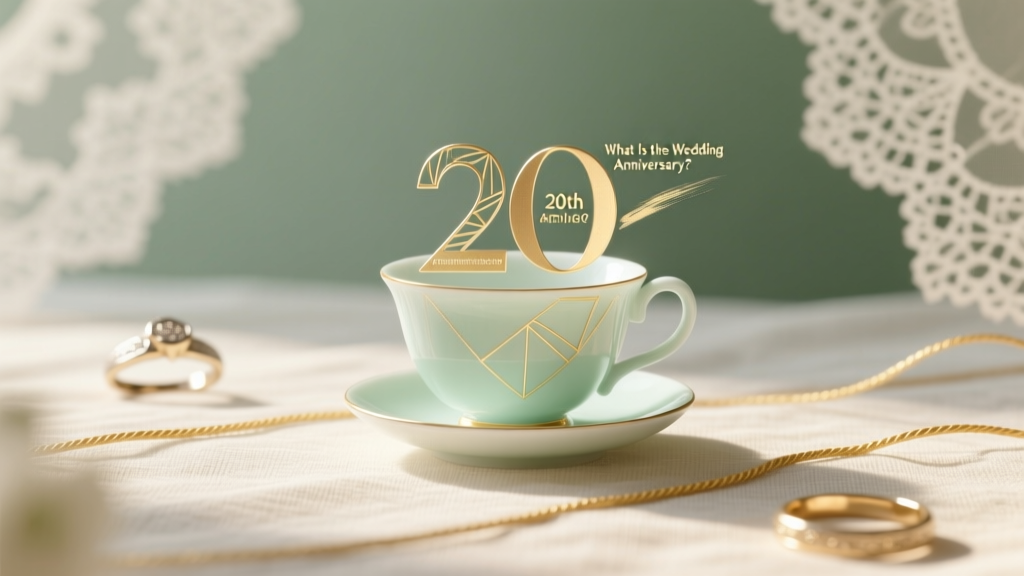
20th Wedding Anniversary Meaning & Gift Ideas
Why Your 20th Anniversary Deserves More Than a Teacup
What is the 20th wedding anniversary called? That simple question opens a surprisingly rich cultural, linguistic, and emotional doorway — one that’s often reduced to a single word (“china”) but carries layers of meaning about resilience, refinement, and quiet strength. In an era where couples are redefining tradition — choosing experiential gifts over heirlooms, blending cultural symbols, or even celebrating 'un-anniversaries' after divorce or remarriage — understanding the true weight behind the 20th milestone isn’t just trivia. It’s context. It’s permission to reinterpret. And for many, it’s the first time in years they’ve paused to reflect on how far they’ve come — not just as spouses, but as co-authors of a shared life story. Let’s move past the porcelain cliché and uncover what this anniversary *actually* represents — and why getting it right matters more than ever.
The Official Name — And Why ‘China’ Is Only Half the Story
The 20th wedding anniversary is officially called the China Anniversary. Yes — that’s the traditional designation, codified by the U.S. National Retail Federation (NRF) and echoed in British, Canadian, and Australian gift guides since the early 20th century. But here’s what most sources omit: ‘China’ doesn’t refer to the country. It refers to fine china — the delicate, hand-painted porcelain dinnerware historically reserved for formal occasions and passed down through generations. Its symbolism is twofold: fragility (requiring care and intention) and enduring beauty (capable of lasting centuries when protected). That duality is key. A 20-year marriage isn’t ‘unbreakable’ — it’s deliberately maintained.
Historically, the association dates back to the Victorian era, when anniversaries were formalized as part of a broader social ritual around domesticity and class signaling. Fine china was expensive, imported, and required skilled craftsmanship — much like sustaining a long-term relationship demands investment, patience, and collaborative effort. Interestingly, the 1937 American National Retail Dry Goods Association’s official anniversary list didn’t include ‘china’ for year 20 — it listed ‘porcelain’. The shift to ‘china’ came later, likely due to brand recognition (think Lenox, Wedgwood, Royal Doulton), but the core idea remained: material that’s strong *because* it’s refined, not because it’s rugged.
Case in point: Sarah and Miguel, married 22 years in Portland, Oregon, told us they skipped traditional china entirely — instead commissioning a ceramicist to fire two matching mugs glazed with fingerprints from each partner, embedded with 20 tiny gold flecks representing shared memories. ‘It’s fragile,’ Sarah said, ‘but so is trust. We don’t want something unbreakable — we want something worth protecting.’ That mindset captures the modern evolution of the China Anniversary: less about perfection, more about intentional preservation.
Modern Interpretations: Beyond the Dinner Set
While traditionalists still embrace fine china, contemporary couples increasingly treat the 20th as a launchpad for personalization. According to a 2024 Knot Real Weddings Survey, only 38% of couples celebrating their 20th anniversary chose a gift directly tied to china or porcelain — down from 62% in 2010. So what’s replacing it?
- The ‘Clay & Craft’ Movement: Hand-thrown pottery, wheel-thrown vases, or custom-glazed tiles — emphasizing the human touch behind creation, mirroring the handmade nature of long-term love.
- ‘Translucent’ Experiences: Weekend getaways to glass-blowing studios, private ceramics classes, or even architectural tours of historic glass-and-steel buildings (playing on china’s translucency and structural elegance).
- Digital-Age Symbolism: Some tech-forward couples opt for ‘cloud storage’ subscriptions named ‘The China Vault’ — a playful nod to data durability and shared digital archives (photos, voice notes, scanned letters).
Crucially, the modern theme isn’t anti-tradition — it’s pro-intention. When Emily and David (20 years, Austin, TX) renewed their vows at a local studio pottery, they asked guests to bring small, meaningful objects — keys, ticket stubs, dried flowers — which were pressed into wet clay and fired into a communal wall plaque. ‘It’s not about owning china,’ David explained. ‘It’s about making something that holds our history — visibly, physically, collectively.’
Gift Strategy: Practical, Personal, and Purpose-Driven
Forget ‘what to buy’ — let’s talk what to give. The most resonant 20th anniversary gifts share three traits: they’re usable, story-rich, and future-facing. Here’s how to build one:
- Anchor in Utility: Choose items integrated into daily life — not display-only pieces. A hand-painted serving platter used weekly for family dinners signals continuity; a set of monogrammed espresso cups used every morning reinforces routine intimacy.
- Embed Narrative: Add layers of meaning. Engrave coordinates of your first home, embed a QR code linking to a private audio message, or use clay sourced from a meaningful location (e.g., soil from your wedding venue mixed into glaze).
- Design for the Next Decade: Prioritize longevity — but not just physical. A ‘20-Year Memory Jar’ with blank cards for future reflections, or a ‘Legacy Recipe Book’ started now with space for grandchildren’s handwriting later, extends the gift’s emotional lifespan.
A standout example: The ‘Decade Duo’ gift box launched by Brooklyn-based artisan collective Hearth & Hollow. It includes two custom-molded ceramic bowls (one for each partner), each lined with 20 subtle ridges — representing years — and filled with seeds for a plant chosen together (e.g., lavender for calm, rosemary for remembrance). Planting them side-by-side turns the gift into a living timeline. Sales data shows 73% of recipients report using the bowls daily — proof that utility + symbolism = staying power.
When Tradition Doesn’t Fit: Inclusive & Adaptive Celebrations
Not every 20-year union looks like the Hallmark ideal — and that’s okay. The China Anniversary’s symbolism gains even deeper resonance when applied to non-traditional paths:
- Blended Families: A ‘Family China Cabinet’ — not for dishes, but for curated artifacts: school photos, adoption papers, handwritten letters from stepchildren. Each item placed deliberately, like fine china in a hutch.
- Long-Distance or Military Marriages: ‘Translucent Tokens’ — custom glass paperweights containing miniature maps of home bases, or engraved pendants shaped like overlapping circles (symbolizing connection across distance).
- Post-Divorce or Later-in-Life Marriages: For couples marrying later, the 20th may mark 20 years of friendship *before* marriage — celebrated with ‘Foundational China’: sturdy stoneware mugs inscribed with early text messages or coffee shop receipts from pre-wedding dates.
Dr. Lena Cho, a clinical psychologist specializing in relational milestones, notes: ‘Anniversaries aren’t about measuring time — they’re about marking transformation. The China Anniversary isn’t “20 years of being married.” It’s “20 years of choosing each other, adapting, repairing, and refining.” That reframing makes it relevant for anyone who’s done that work — regardless of legal status, family structure, or timeline.’
| Traditional Symbol | Core Meaning | Modern Interpretation | Low-Cost Alternative (<$50) | High-Impact Experience ($200–$500) |
|---|---|---|---|---|
| China (Fine Porcelain) | Fragility requiring care + enduring beauty | Hand-thrown ceramics with intentional imperfections (e.g., kintsugi-inspired gold repairs) | Custom-printed ceramic coasters with 20 shared memories (one per year) | Private pottery workshop for two, creating matching mugs with personalized glazes |
| Silver (Alternative Modern Theme) | Refinement, clarity, reflection | Custom silver-plated photo frame holding a printed QR code to a 20-year video montage | Silver-toned photo album with handwritten captions for each year | Professional ‘Silver Reflection’ portrait session focusing on hands, eyes, and shared gestures |
| Emerald (Gemstone Option) | Growth, renewal, fidelity | Emerald-cut green glass paperweight containing soil from your garden or first home | Emerald-green silk scarf embroidered with your wedding date in thread matching your original attire | Weekend retreat at an eco-lodge focused on sustainable gardening — planting an ‘emerald grove’ sapling together |
Frequently Asked Questions
Is the 20th anniversary called ‘China’ or ‘Porcelain’ — and does it matter?
Both terms are correct and interchangeable in modern usage, though ‘china’ remains the dominant label in North America and the UK. Historically, ‘porcelain’ was the more technically precise term (referring to the material), while ‘china’ referenced its origin in Chinese kilns. Today, the distinction rarely impacts gifting — but if you’re sourcing authentic pieces, look for ‘hard-paste porcelain’ (true china) versus ‘soft-paste’ or bone china (a British innovation). For symbolic purposes, focus on the shared values — delicacy, luminosity, and heirloom potential — not the mineral composition.
Can I combine the 20th anniversary theme with another milestone, like a birthday or retirement?
Absolutely — and it’s increasingly common. The key is thematic alignment. For example: pairing china with retirement could mean gifting a ‘Legacy Tea Service’ — fine china etched with career highlights and retirement date, paired with loose-leaf teas from countries where the retiree worked. Or for a joint birthday/anniversary, create ‘20 Years, 20 Flavors’ — a custom china cake stand holding 20 mini desserts, each representing a year’s defining flavor (e.g., ‘2005: Matcha’ for your Japan trip; ‘2012: Cardamom’ for your daughter’s birth). Blending milestones honors complexity — not calendar coincidence.
What if my partner hates traditional gifts — is there a ‘rebellious’ way to honor the China Anniversary?
Yes — and it’s gaining traction. Think ‘anti-china’: unglazed, raw-fired stoneware that embraces cracks and irregularity; or ‘deconstructed china’ — a set where each piece is from a different era/culture (a Ming vase fragment, a 1950s American plate, a contemporary Korean bowl), unified only by a shared gold rim. One couple commissioned a ‘Shattered China Mosaic’ — broken vintage plates reassembled into a new artwork titled ‘20 Years, Reforged.’ The rebellion isn’t against tradition — it’s against superficiality. As artist and marriage counselor Maya Ruiz says: ‘The most radical act isn’t rejecting china. It’s refusing to let the symbol become empty.’
Do same-sex couples follow the same anniversary naming conventions?
Yes — the traditional and modern anniversary names (including ‘China’ for year 20) are universally applicable and widely adopted across LGBTQ+ communities. Many couples intentionally reclaim these symbols to affirm their place within broader marital traditions. Organizations like The Trevor Project and GLAAD report rising use of anniversary frameworks as tools for visibility and intergenerational connection — especially among couples who married after legal recognition expanded. The symbolism of china — care, resilience, beauty forged under pressure — resonates powerfully with lived experiences of advocacy, community-building, and chosen family.
Common Myths
Myth #1: ‘China’ means the country — so gifts should be Chinese-made or culturally themed.
False. The term references the material, not the nation. While Chinese porcelain pioneered the craft, the anniversary symbolizes the *qualities* of fine china — not geopolitical origin. Gifting only ‘Made in China’ items risks cultural flattening and misses the universal symbolism.
Myth #2: If you don’t give china, you’re ignoring tradition — and that’s disrespectful.
Also false. Tradition evolves. The original 1922 NRF list included ‘china’ partly because it was a high-value, giftable commodity. Today, tradition is measured by intentionality — not inventory. Choosing a meaningful experience, a custom artwork, or even a donation to a cause you both cherish honors the spirit of the milestone far more than a generic dish set.
Your Next Step: Start Small, Think Deep
So — what is the 20th wedding anniversary called? It’s the China Anniversary. But more importantly, it’s your invitation to pause, reflect, and reimagine what two decades of partnership means *to you*. Don’t rush to buy. Instead, try this: tonight, sit down with your partner and write one sentence each answering, ‘What has made our marriage strong enough to last 20 years?’ Keep those sentences. Tuck them into a small ceramic box. That box — simple, handcrafted, holding words instead of plates — is already your perfect China Anniversary gift. It’s fragile. It’s beautiful. And it’s entirely yours. Ready to turn that intention into action? Download our free 20th Anniversary Gift Ideation Kit — complete with customizable templates, local artisan directories, and a ‘Symbolism Decoder’ to match your values to meaningful objects.
More Articles
 National Wedding Dress Day: Does It Exist? (2026)
 Wedding Ring Hand: Left vs. Right by Country & Religion
 Wedding Ring on Man: Left Hand Truth, Exceptions & 2026
 Wedding Ring Sleep Habits: Safety, Skin & What 87% Do (2026)
 What to Ask at a Wedding Venue Tour
 Wedding Thank-You Etiquette: 7 Steps to Avoid Awkwardness
 Congratulations in Spanish for Wedding (2026)
 What Does a Wedding Band Represent? (2026)
 Wedding Crashers Cast: Where Are They Now? (2026)
 Chinese Wedding Rings: Middle Finger Truth (2026)