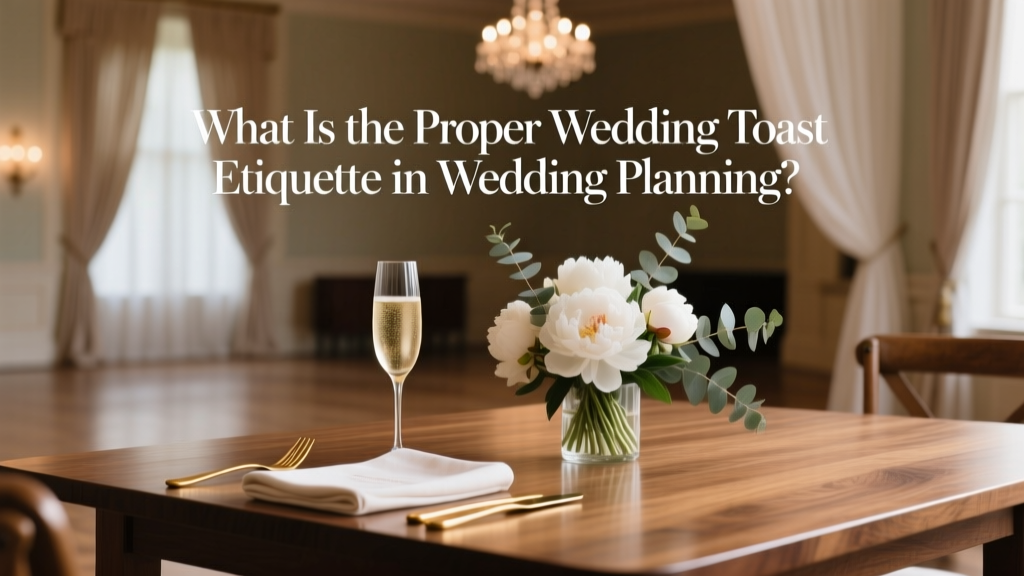
What Is the Proper Wedding Toast Etiquette
What Is the Proper Wedding Toast Etiquette?
Wedding toasts can be one of the most memorable parts of a reception—for the right reasons. A great toast makes guests feel included, celebrates the couple, and adds warmth to the room. A messy toast (too long, too personal, or too tipsy) can derail the vibe fast.
If you’re planning a wedding and wondering what “proper” wedding toast etiquette really means, you’re not alone. Couples often ask because they want to honor tradition, avoid awkward moments, and keep the reception flowing smoothly.
The quick answer: What’s “proper” wedding toast etiquette?
Proper wedding toast etiquette is simple: keep toasts short (2–4 minutes), positive, and couple-centered; schedule them at a time that doesn’t interrupt the meal or dance floor; limit the number of speakers; and make sure each speaker is prepared and sober enough to deliver with confidence. The goal is to celebrate—not to roast, vent, or “tell the real story.”
Who typically gives wedding toasts (and in what order)?
Traditional wedding toast order varies by region and family custom, but a common structure looks like this:
- Welcome toast: Often by the couple, the couple’s parents, or the host (whoever is paying/hosting). This can be brief and warm—more “thank you for coming” than a speech.
- Best man / best person: A classic reception toast spot.
- Maid of honor / honor attendant: Another standard toast.
- Couple’s toast: Some couples do a short toast together (especially in modern weddings) to thank guests and acknowledge parents.
Modern weddings often expand this list: siblings, a close friend, or a parent may speak. The etiquette piece is less about the “right” people and more about keeping it organized and respectful of everyone’s time.
“If you’re having more than three toasts, I recommend treating them like a curated set—like a short playlist, not an open mic,” says Marisol Bennett, wedding planner at Coast & Vine Events. “Pick speakers who will be thoughtful, keep them brief, and give them a clear time limit.”
When should toasts happen during the reception?
The most common (and guest-friendly) timing is after guests have been served dinner but before dessert, or between courses so people aren’t chewing through the heartfelt parts.
Here are three popular options couples use today:
- After dinner is served (most popular): Guests are settled, glasses are filled, and attention is easier to hold.
- Before dinner (less common): Works if you want a quick welcome toast, then you move straight into the meal.
- During rehearsal dinner instead: A growing trend—especially for couples who want a shorter reception timeline or a more relaxed toast environment.
Real couple experience: Jordan & Priya (married in 2025) chose rehearsal dinner toasts and only one short toast at the wedding. “We wanted the reception to feel like a party, not a program,” Priya says. “At the rehearsal dinner, everyone was more comfortable and we didn’t worry about speeches cutting into dancing.”
How long should a wedding toast be?
Ideal toast length: 2–4 minutes. Five minutes can work for a truly great speaker. Anything beyond that often feels long in a room full of hungry guests and a tight reception timeline.
A practical guideline: 300–500 words is usually plenty.
“Short toasts land best in a busy reception environment,” says Dante Ruiz, wedding DJ and emcee. “You’re competing with dinner service, the bar, and excitement. Two minutes can be more powerful than ten.”
What should a proper wedding toast include?
A reliable toast structure (that works for best man speeches, maid of honor speeches, parent toasts, and friend speeches):
- Introduce yourself and your relationship to the couple.
- Share one meaningful story (sweet, funny, or heartfelt—nothing humiliating).
- Say something genuine about the couple together (why they’re great, what you admire).
- Offer a warm wish for their marriage.
- Raise a glass and invite guests to toast: “To [Name] and [Name]!”
This is also where modern etiquette has shifted: many couples prefer less “ball-and-chain” humor and more sincere celebration. If you’re aiming for current wedding trends, heartfelt and inclusive usually wins.
What should a wedding toast NOT include?
If you want to avoid awkward wedding speech moments, steer clear of these common pitfalls:
- Exes, hookups, or dating history (even “everyone knows” stories).
- Inside jokes that leave the room confused.
- Embarrassing stories that feel like a roast, not a toast.
- Negative comments about marriage, spouses, or commitment.
- Overly personal details (yes, that includes anything sexual or bathroom-related).
- Going off-script while intoxicated—the quickest way to regret.
One of the kindest etiquette choices a couple can make is setting expectations. A simple “keep it to 3 minutes and keep it PG” goes a long way.
Traditional vs. modern toast etiquette: what’s “right” now?
Traditional approach: a small set of formal speeches (best man, maid of honor, parents) delivered seated at the head table, often with champagne poured and a clear “program” moment.
Modern approach: fewer formalities, more personalization. Couples might skip bridal party speeches entirely, do only one or two toasts, or have the couple speak together. Another current trend is the thank-you toast from the couple early in the reception to set a welcoming tone.
Either is proper etiquette if it fits your crowd and is communicated clearly. The most “correct” etiquette is what keeps guests comfortable and makes the couple feel celebrated.
Actionable tips for couples: how to manage wedding toasts smoothly
- Choose 2–4 speakers max for the reception. If more people want to speak, consider rehearsal dinner toasts or written notes.
- Put toast timing on the timeline and share it with your planner/coordinator, DJ, photographer, and caterer.
- Ask speakers to run their toast by you (or a trusted friend) if you’re worried. This is more common than people realize.
- Set a clear time limit: “Please keep it under 3 minutes.” Your DJ can enforce it gently.
- Encourage practice. Even a quick read-through reduces nerves and rambling.
- Plan the mic situation: handheld mic, stand mic, or lapel mic. A bad audio setup makes even a great toast feel chaotic.
- Offer water and food before speeches, especially for the wedding party.
If you’re building a reception that feels calm and well-paced, toasts should feel like a highlight—not a hurdle.
Related questions couples ask (and how etiquette applies)
Do guests have to stand during a wedding toast?
No. Typically, the person giving the toast stands, and guests remain seated while they listen. Guests usually raise their glass at the end. Standing the whole room can feel like a lot, especially during dinner.
Do you have to clink glasses to make the couple kiss?
This tradition is fading fast. Many couples find it disruptive or uncomfortable. If you like the idea, consider an alternative (a quick “kiss” sign once or twice, or your DJ inviting one moment). If you don’t want it, tell your DJ and venue—proper etiquette is honoring the couple’s preferences.
What if someone you don’t want to speak asks for a toast?
You can decline kindly and still be gracious. Try: “We’re keeping reception toasts very short with just a couple speakers so we can enjoy the party. We’d love for you to share your message in a card—or join us at the rehearsal dinner if you’re attending.”
Should you provide champagne for toasts?
Not required. Many couples now toast with whatever guests are already drinking (wine, cocktail, sparkling water). It’s simpler, more inclusive, and fits modern wedding trends around personalization and budget-conscious planning.
What if a speaker is nervous or tends to ramble?
Give them a structure and a word count goal. Also consider having your DJ cue them with a gentle “two-minute warning” (some couples plan a subtle signal). A written toast is almost always better than “winging it.”
Conclusion: Proper wedding toast etiquette is about warmth, brevity, and respect
The best wedding toast etiquette isn’t about perfect wording or strict rules—it’s about creating a moment that feels supportive, joyful, and comfortable for the couple and the guests. Keep toasts short, plan them well, choose speakers thoughtfully, and set clear expectations. When you do, your reception stays fun, your timeline stays on track, and the words people remember are the ones that truly celebrate your marriage.
More Articles
 20th Wedding Anniversary Meaning & Modern Ideas
 Wedding Planner Career: Income, Burnout & Quit Rates (2026)
 Mario RPG Wedding Hall: Exact Sequence (2026)
 Edmure Tully at Red Wedding: Why He Survived
 Why Do Couples Have a Wedding Website and What to Include
 Wedding Band Under Engagement Ring? The Truth (2026)
 Is Wedding Pie Indica or Sativa? (2026)
 Where to Watch Madea’s Destination Wedding (2026)
 Invite Boss to Wedding? HR Managers’ 2026 Advice
 Why Wedding Dresses Are White: The Truth (2026)