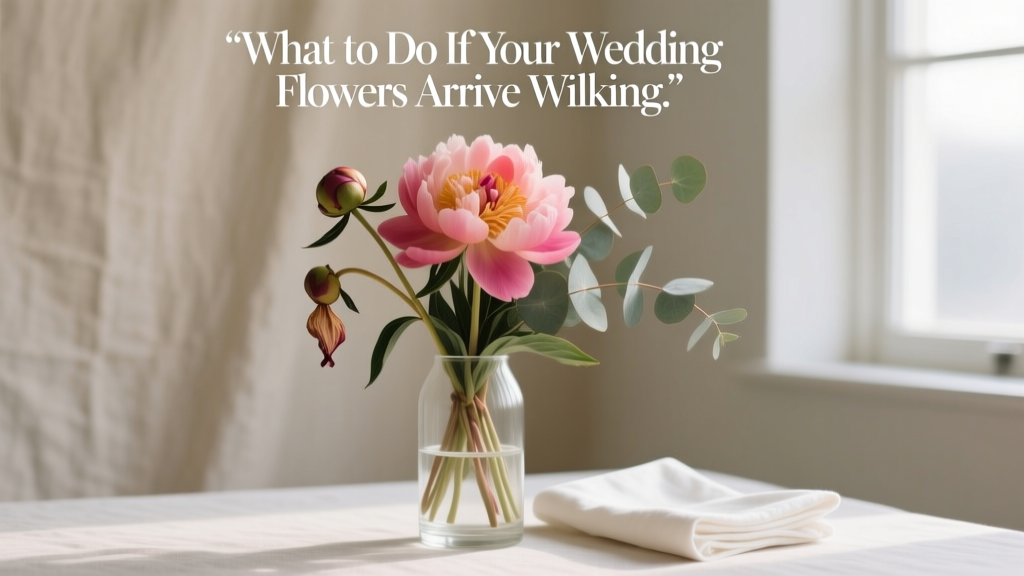
What to Do If Your Wedding Flowers Arrive Wilting
What to Do If Your Wedding Flowers Arrive Wilting
Few wedding details are as emotional (and as photographed) as your flowers. They’re in your hands, on your aisle, on your reception tables, and often in your keepsake photos for years. So when your wedding flowers arrive looking wilted, bruised, or “tired,” it can feel like the whole day is slipping off track.
The good news: wilting is often fixable, and even when it’s not, you still have options. Most florists expect a certain amount of shipping stress—especially with modern wedding trends like destination weddings, flower delivery services, and DIY blooms ordered online.
The direct answer: What should you do immediately?
Act fast and triage the situation: move flowers to a cool space, give them water (or re-cut stems if appropriate), document the condition with photos, and contact your florist or delivery company right away for a solution. If the wedding is within hours, focus on saving the most visible pieces first (your bouquet and boutonnieres), then arrange a backup plan for anything beyond saving.
Q: Why do wedding flowers arrive wilting in the first place?
A: Usually it’s timing, temperature, or hydration—not necessarily a “bad florist.” Flowers can wilt due to:
- Heat exposure (delivery van, porch, sunny lobby, warm hotel room, outdoor ceremony setup)
- Time out of water during transport or staging
- Cold shock (some blooms hate refrigeration, or the flowers were stored too cold then moved into warm air)
- Delicate varieties (garden roses, sweet peas, tulips, hydrangea, ranunculus can be drama-prone)
- Long-distance shipping for online wedding flowers or destination events
As floral designer “Marina Ellis” (fictional), owner of an event studio in Austin, explains: Fresh flowers are living things. A bouquet can look slightly soft right out of the box and bounce back beautifully after a drink, a trim, and a cool room. The key is knowing what’s normal softness versus true damage.
Q: What should I do the moment I notice wilting?
A: Use this quick, calm checklist. It’s designed for real wedding mornings when you have 20 minutes and a curling iron in your hand.
-
Get them out of heat and sun.
Move everything to the coolest indoor space available (hotel bathroom, shaded suite, air-conditioned room). Avoid putting them directly under an AC vent, which can dehydrate petals quickly.
-
Check what’s actually wilting.
Separate pieces: bouquet, boutonnières, centerpieces, ceremony arrangements. Often only a few stems are struggling, not the entire order.
-
Add water immediately (if they’re in vases) or rehydrate safely (if they’re hand-tied).
If arrangements arrived in water, top them off. If bouquets/boutonnières arrived in hydration packs, make sure the packs are intact and damp.
-
Re-cut stems when appropriate.
If you have loose stems or a vase arrangement, trim 1/2–1 inch off the bottom at an angle and place into clean, cool water. Use sharp scissors or floral snips if available.
-
Take clear photos and a short video.
Capture wide shots (showing the full arrangement) and close-ups (showing browning edges, broken heads, mushy petals). Include the delivery box and any temperature indicators if provided.
-
Contact the florist/delivery company right away.
Text is fine for speed, but follow with a call if you’re within 24 hours of the ceremony. Ask what they recommend and what they can do fast: replacement stems, partial refund, courier redelivery, or a “rescue plan.”
Q: Can wilted wedding flowers actually recover?
A: Often, yes—especially if the issue is dehydration, not rot or crushing.
Flowers that frequently “perk back up”: roses, lisianthus, carnations, chrysanthemums, eucalyptus, many greenery varieties.
Flowers that can be trickier: hydrangea (can revive, but needs special care), tulips (they move and droop naturally), delicate garden blooms (bruise easily), and anything with mushy stems (usually too far gone).
“Daniel Cho,” a wedding florist in Seattle (fictional), puts it simply: If the petals look a little soft but still fresh-looking, that’s usually thirst. If the petals are browning, translucent, or the stems are slimy, that’s damage. Different fix.
Q: What’s the best way to save the most important wedding flowers first?
A: Prioritize by visibility and proximity to your face in photos.
- Bridal bouquet: Keep it cool and hydrated. If any outer blooms are bruised, you (or a florist) can remove a few “guard petals” from roses or swap in spare stems if you have them.
- Boutonnières and corsages: These wilt fast because they’re small and often worn close to body heat. Store in a cool place and keep them in their boxes until just before pinning on.
- Ceremony arrangements: If something must be sacrificed, guests forgive ceremony flowers more easily than a sad bridal bouquet.
- Reception centerpieces: Dim lighting covers a lot. If replacements are limited, focus on head table or sweetheart table florals first.
Real-couple style example (fictional): Our florist’s van got stuck in traffic on a 90-degree day. The boutonnieres arrived floppy. We stuck them in the mini fridge in our suite for 20 minutes and they bounced back. You’d never know from photos.
— “Tara & Luis,” married in Phoenix
Traditional vs. modern approaches: How should you handle it politely?
Traditional etiquette: The couple (or a designated family member) contacts the florist privately and calmly, gives them a chance to make it right, and avoids blasting complaints on social media on the wedding day.
Modern reality: Many couples use a mix of vendors—local florist for personal flowers, online flower delivery for bulk stems, a coordinator who sets up, and a venue that receives shipments. When multiple hands are involved, you’ll want to focus on solutions first, then untangle responsibility after the wedding.
If you have a planner or day-of coordinator, hand this off. A simple script works: Hi! The flowers arrived with visible wilting and browning. We’re on a tight timeline. Can you advise immediate steps and confirm whether you can send replacements or issue a partial refund?
Q: What if my flowers were delivered to the venue/hotel early and sat out?
A: This is a common edge case with wedding flower delivery. Call the receiving location first (venue manager, hotel front desk) and ask:
- Where were they stored (AC, refrigerator, loading dock)?
- When exactly were they delivered?
- Who signed for them?
Then loop in the florist with those facts. If your contract specifies delivery time windows and storage requirements, you’ll have clearer leverage for a remedy.
Q: What if I ordered DIY flowers online and they arrived wilted?
A: With online wedding flowers, slight wilting after shipping is normal, but severe damage should be reported immediately. Most companies have a tight claims window (sometimes just 24 hours) and require photos of the box, packing materials, and blooms.
Action plan:
- Unbox right away, even if it’s earlier than you wanted.
- Process the stems (trim, clean water, flower food if included).
- Contact customer support the same day with documentation.
- If your wedding is within 48 hours, ask for a refund and buy replacement blooms locally (grocery store florals can be a lifesaver).
Q: What if only some flowers are wilted—do I still complain?
A: You can, and you should if it affects the overall look or you paid for premium blooms. A reasonable approach is to be specific: “5 out of 10 centerpieces have browning hydrangea” or “The bridal bouquet arrived with three broken rose heads.” Most florists would rather fix a partial issue quickly than have you silently stressed.
Practical rescue tips (that actually work on wedding day)
- Cool air, not freezing: If you use a fridge, avoid placing flowers near the back where they can freeze. Never store flowers with uncovered food (ethylene gas from produce can shorten life).
- Remove bruised petals strategically: Roses often have outer “guard petals” that can be removed to reveal fresh layers.
- Hydrangea emergency: Submerge the bloom head in cool water for 10–15 minutes, then recut the stem and place in water. (Do this only if you have time and a sink.)
- Hide imperfections: Rotate the “bad side” of a centerpiece toward the wall. Use greenery to cover gaps. Place the best arrangements in the most photographed spots.
- Use what’s on hand: Ask a bridesmaid to grab extra eucalyptus or filler greenery from a local market. Even simple additions can make arrangements look intentional.
Q: How do refunds or replacements usually work?
A: It depends on timing and what’s available locally, but common solutions include:
- Replacement stems delivered ASAP (most likely if you’re working with a local wedding florist)
- Partial refund for the portion that was unusable
- Credit toward future services (less helpful for most couples, but sometimes offered)
- Full refund is rare unless the order was largely unusable or the florist clearly breached the contract
Wedding trend note: With more couples choosing “statement installations” and large-scale ceremony pieces, florists often build in contingency stems. If you’ve invested in a big floral moment, it’s worth asking your florist ahead of time what their backup plan is for heat, shipping delays, or fragile blooms.
Related questions couples ask
- Should I keep my bouquet in water? If it’s in a vase-friendly style, yes. If it’s a hand-tied bouquet, follow your florist’s instructions—many arrive with a water source already attached.
- Can I use hairspray or mist petals? Skip hairspray. A light mist can help some blooms, but too much water can spot petals. Cooling and hydration are more reliable.
- What if the flowers look smaller or different than expected? That’s a separate issue from wilting. Photograph and discuss after the wedding if you’re on a tight timeline.
- How can I prevent this next time (or for events like a rehearsal dinner)? Confirm delivery time, storage plan, and who is responsible for receiving. Avoid leaving flowers in cars. Choose heat-tolerant blooms if your wedding is outdoors.
Takeaway
If your wedding flowers arrive wilting, you’re not powerless—and you’re not alone. Cool them down, hydrate what you can, document the condition, and loop in your florist quickly. Most issues can be rescued or at least minimized, and guests will remember the feeling of your day far more than a slightly imperfect centerpiece. Your job is to protect your peace and your photos, one stem at a time.
More Articles
 Did MTV Pay for Deena’s Wedding? (2026)
 Wedding Guest No-Shows: Why They Skip & How to Prevent
 Will There Be a Wedding Crashers 2? (2026)
 When Will Taylor Swift Have Her Wedding? (2026)
 USAID & Chelsea Clinton Wedding: Truth Revealed (2026)
 How to Set Up Place Cards for a Wedding Without the Stress
 How Did the Wedding Go? What No One Tells You Afterward
 Did Tuohys Attend Michael’s Wedding? (2026)
 Adam Peaty’s Mum Banned From Wedding? Debunked (2026)
 What to Do If Your Wedding Dress Arrives Damaged