When Should You Send Wedding Day Vendor Meals
When Should You Send Wedding Day Vendor Meals?
Vendor meals are one of those wedding planning details that feels small—until it suddenly affects your timeline, your photos, your band’s energy, and even how smoothly dinner service runs. If you’ve ever wondered, “When do we feed the photographer?” or “Do vendors eat at the same time as guests?” you’re not alone. Engaged couples ask this constantly because the right answer depends on your schedule, your vendor team, and the kind of reception you’re hosting.
Good vendor meal timing is part etiquette, part logistics. Do it well, and your vendors stay energized and present for the moments you hired them to capture or coordinate. Do it poorly, and you risk missed events, delays, or a cranky vendor team (even the nicest professionals get human when they’re hungry).
The direct answer
Send wedding day vendor meals during your guests’ dinner—ideally as soon as dinner service begins, and no later than when the couple is served—so your vendors can eat quickly and be ready before the next key moment (toasts, first dance, sunset photos, cake cutting).
In practical terms: vendors usually eat right after you’re announced into the reception and guests are seated, while dinner is being plated or the buffet opens. Most pros prefer a hot meal served promptly, with enough time to eat before your formalities resume.
Why this timing matters (and what “vendor meal” really means)
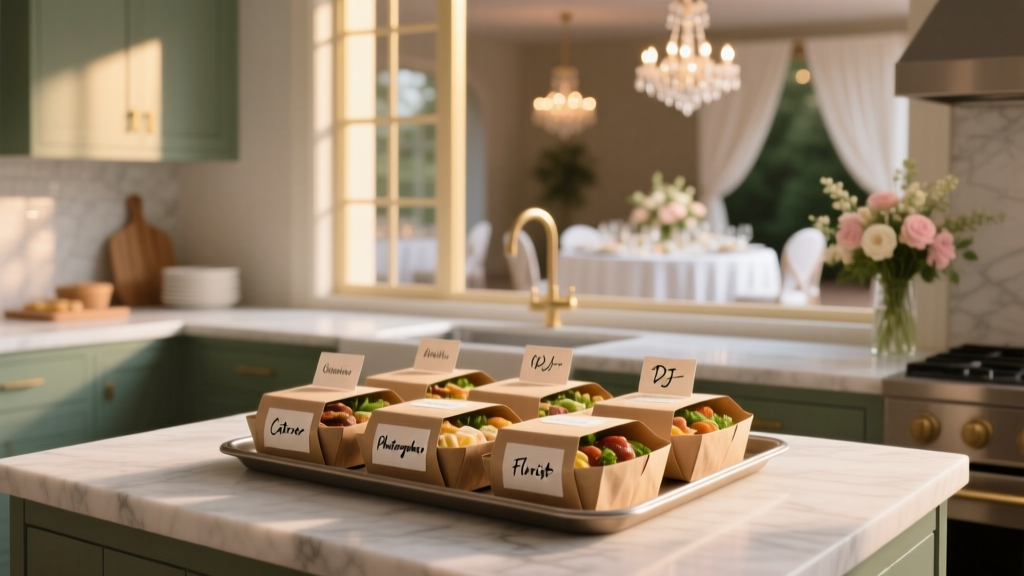
“Vendor meal” typically refers to a full hot entrée (not a snack) provided to vendors who are working through dinner and can’t reasonably leave to find food. This often includes your photographer and second shooter, videographer team, planner/coordinator, DJ/band, and sometimes photobooth attendant or content creator—depending on hours and responsibilities.
Feeding them during guest dinner does three helpful things:
- Protects your timeline: Vendors are off-camera and not needed for staged moments while guests eat.
- Keeps your pros available: They’re done eating before toasts or dances start.
- Coordinates with catering: Catering can plate meals in a predictable flow instead of trying to squeeze vendor food in later.
As wedding planner “Alyssa M.,” of Coastline Events (fictional), puts it: “If you feed vendors after the guests, they’re often eating during speeches or your first dance—exactly when you want them working. Dinner is the natural window.”
Modern etiquette and real-world logistics
Traditional etiquette focused mostly on guests, but modern wedding planning recognizes that your vendor team is part of what makes the celebration run smoothly. With today’s trend toward full-day photo/video coverage, multi-location events, and longer receptions, vendors are onsite for 8–12 hours (sometimes more). A proper meal isn’t a luxury—it’s a practical expectation.
Many catering contracts even have a section for “vendor meals” or “crew meals,” and some venues have policies about where vendors can eat. These policies aren’t meant to be unfriendly; they’re designed to keep service smooth and to ensure vendors can take a quick break without disrupting the guest experience.
A real-world example: “Jordan and Priya” (fictional couple) planned sunset portraits at 7:15 p.m. right after dinner. They asked catering to serve vendor meals immediately when the buffet opened, and their photographer ate quickly. Priya shared: “Our photographer was ready to grab us right on time for golden hour. If she’d been waiting on food, we would’ve missed that light.”
Timing scenarios: what works best for different styles of receptions
1) Plated dinner receptions
Best practice: Ask catering to serve vendor meals right after the head table is served (or at the same time), not after every guest is served.
Plated dinners can take time, especially with multiple courses. If vendors wait until the end, they may miss the start of toasts or the couple’s table visits. Photographers and videographers also need time to capture décor, candids, and sometimes sneak out to photograph the reception space untouched—so they benefit from an efficient meal window.
“Marco L.,” a wedding photographer (fictional), says: “If I’m served after all guests, it can be 45 minutes in. That’s usually when the speeches start. I’d rather eat earlier and be fully present for the moments that matter.”
2) Buffet or family-style dinner
Best practice: Feed vendors when the buffet opens—either first or in the first round—depending on your venue’s approach.
Some couples worry it looks rude if vendors go early. In reality, it’s often the most considerate option. Vendors who eat early can return to work faster, and it avoids the buffet getting picked over by the time the vendor team gets a chance.
If you prefer a more traditional flow, you can have vendors go after immediate family or the wedding party. The key is making sure they’re not waiting until the buffet line is long and slow.
3) Cocktail-style receptions (passed hors d’oeuvres, stations, no formal dinner)
Best practice: Provide a dedicated vendor meal or vendor station at a set time.
With cocktail-style weddings—a current trend, especially for smaller or city weddings—it’s easy to assume vendors can “grab apps.” In practice, they may not have a free hand (literally) or a consistent break. Passed bites also don’t equal a meal.
Work with your caterer to schedule a 15–20 minute vendor break with a boxed meal or plated staff meal. Build it into the timeline so your photographer isn’t eating during your private vows or your DJ isn’t stepping away during the peak dance set.
4) Cultural weddings and multi-event days
If you’re hosting a ceremony plus luncheon, then a separate reception later, vendor meal timing may differ. For example, a team covering a South Asian wedding might need meals across multiple events and long coverage windows. The most successful approach is to align meals with natural transitions—like right after the ceremony, during guest dining, or between outfits/locations.
Actionable tips to get vendor meals right
- Confirm who needs a meal: Ask each vendor what their team size will be on wedding day (second shooters, assistants, etc.). Update catering with a final count.
- Put meal timing in your timeline: Your planner (or you) should note “Vendor meals served” at the start of guest dinner.
- Request hot meals, served promptly: If your contract includes “vendor meals,” specify that they’re served at the same time as guests or immediately after the couple.
- Ask about “vendor table” placement: Many venues seat vendors in a back corner or separate room. That’s fine—just ensure it’s close enough that they can return quickly if something happens.
- Plan coverage around the meal break: For photo/video, confirm whether they’ll keep one person “on duty” during dinner (common for larger teams) or if they’ll all eat at once.
- Don’t forget water and soft drinks: Hydration is huge, especially for outdoor summer weddings. Ask catering to provide water at the vendor table.
Common concerns (and reassuring answers)
“Is it rude if vendors eat before guests?”
Usually, no—especially for buffet meals. In many venues it’s standard for vendors to eat early so they’re ready for the next event. If it feels uncomfortable, choose a compromise: vendors eat right after the wedding party or immediate family is served.
“Do we have to provide vendor meals?”
If a vendor is working through dinner (especially 6+ hours of coverage), providing a meal is widely considered standard modern wedding etiquette. Many contracts require it. If you truly can’t provide meals, talk with vendors ahead of time—some may build in an offsite break, but that can reduce coverage during the reception.
“Can we give vendors the same meal as guests?”
Yes, and most vendors appreciate it. Some caterers offer a “vendor meal” that’s a simpler version of the guest entrée at a lower cost. Either option is fine as long as it’s a real meal and served on time.
“What about vendors who arrive after dinner?”
If your band starts at 8 p.m. and arrives at 6 p.m. to set up, they may still need dinner. Ask their manager what they expect. If a vendor arrives after dinner service is over, a meal may not be necessary—but offering something easy (boxed meal, sandwiches, or vendor-to-go plate) is a thoughtful touch.
“Do we need to feed hair and makeup artists?”
Not always. If hair and makeup finishes before lunch and they leave, a meal isn’t expected. If they stay for touch-ups through photos or into the ceremony, offering lunch or a snack is considerate. The rule of thumb: if someone is working during a normal meal time and can’t reasonably leave, plan to feed them.
“We’re doing speeches during dinner—when do vendors eat?”
If toasts happen during dinner, vendors should still be fed early. Your photographer and videographer may choose to eat quickly between speeches or have one team member eat while the other films. Communicate your plan so no key speech gets missed.
Conclusion: the simple takeaway
Send (serve) wedding day vendor meals during guest dinner—right when service begins or immediately after you’re served—so your vendor team can refuel and be fully present for the next big moments. A clear plan, shared with your caterer and planner, keeps the reception running smoothly and helps the professionals you hired do their best work. When vendors are taken care of, you feel it in the entire day.
More Articles
 Black Wedding Ring Meaning: Truth vs. Myth
 How to Do Your Own Music at Your Wedding and Save Thousands
 What to Write in Wedding Vows That Make Everyone Cry
 Wedding Ring Hand Rules by Country & Religion
 Did Scott Disick Attend Kourtney’s Wedding? (2026)
 Delete Wedding Website on The Knot: Step-by-Step (2026)
 Shotgun Wedding Meaning in 2026: Truth & Modern Take
 A Wedding Story Season 4: Real or Not? (2026)
 Naked Wedding Trend: Minimalist Nature Celebrations
 How to Handle Ex-Partners at Your Wedding