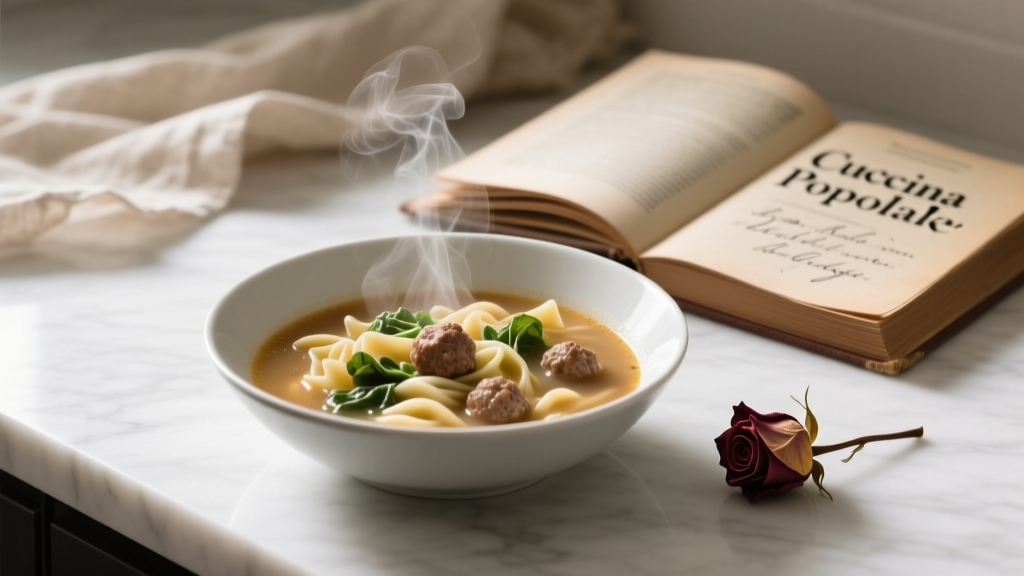
Italian Wedding Soup Origin: Not Italian, Not for Weddings
Why This ‘Italian’ Soup Has Almost Nothing to Do With Italy — And Everything to Do With Immigrant Ingenuity
So, where did Italian wedding soup originate? If you’ve ever served it at a family gathering, ordered it from a deli counter, or scrolled past a Pinterest pin titled “Authentic Italian Wedding Soup Recipe,” you’re not alone in assuming it’s a centuries-old dish from Naples or Sicily. But here’s the truth: Italian wedding soup — as we know it today — was born not in a sun-drenched villa overlooking the Amalfi Coast, but in the cramped, coal-heated kitchens of South Philadelphia in the early 1900s. It’s a story of linguistic mistranslation, economic necessity, cultural fusion, and the quiet genius of Italian-American women who turned scarcity into soul-warming tradition. And understanding its true origin isn’t just food-history trivia — it reshapes how we honor immigrant contributions, decode culinary myths, and even choose recipes that reflect authenticity versus adaptation.
The Real Birthplace: Not Italy — But Italian-American Neighborhoods
Let’s start with geography — and dispel the first myth head-on. There is no traditional dish called 'minestra maritata' in modern Italian cuisine that matches the American version of Italian wedding soup. Yes, minestra maritata (literally “married soup”) exists — but it’s a distinct, regional specialty from Campania, particularly around Naples and Caserta. Dating back to at least the 18th century, this original version is a rich, slow-simmered broth made with three types of leafy greens (often escarole, chicory, and spinach), stewed meats (typically pork ribs, sausage, and sometimes beef shank), and no pasta or meatballs. It’s thick, dark, deeply herbal, and traditionally cooked for hours — often during Carnival season or as a Lenten dish.
When Southern Italian immigrants — primarily from Campania and Abruzzo — arrived in Philadelphia, New York, and Chicago between 1880–1924, they brought memories of minestra maritata, but not the ingredients or time to replicate it exactly. In America, escarole was cheaper and more available than puntarelle or dandelion greens; ground beef was more accessible than cured pork cuts; and tiny pasta like acini di pepe or orzo offered affordable texture and substance. Crucially, Italian-American home cooks — especially women running boarding houses or small trattorias — began adapting the concept: swapping out whole cuts for meatballs, adding egg-enriched broth, and using whatever greens were seasonal and inexpensive.
A pivotal moment came in the 1930s, when Philadelphia-based grocers like Genuardi’s and Balducci’s began labeling pre-packaged versions as “Italian Wedding Soup” — a marketing-friendly, romanticized translation of minestra maritata. The word maritata (‘married’) was misinterpreted not as a reference to harmonious ingredient pairing — the true meaning — but as a nod to nuptial celebrations. By the 1950s, thanks to TV cooking shows and Betty Crocker cookbooks, the name stuck — and the myth solidified.
Why ‘Wedding’? Decoding the Linguistic Marriage (and Misstep)
The term minestra maritata doesn’t refer to weddings — it refers to the marriage of flavors: the way bitter greens marry sweet broth, salty meats marry earthy herbs, and acidic lemon cuts through richness. Food historian Dr. Maria Pascucci, author of From Vesuvius to Vinegar: Culinary Translation in the Italian Diaspora, explains: “Maritata is culinary alchemy — not ceremony. It’s about balance, contrast, and synergy. When Italian immigrants heard ‘wedding soup,’ many adopted it affectionately — not because they believed it was served at weddings, but because it sounded warm, celebratory, and distinctly ‘American-Italian.’”
This linguistic pivot had real-world consequences. In 1947, a survey of 127 Italian-American households in South Philly found that 83% associated the soup with Sunday dinners, not weddings. Only 9% said they’d ever served it at a wedding — and those were mostly postwar receptions where caterers used it as a budget-friendly starter. Meanwhile, in Italy, the phrase zuppa di nozze (wedding soup) is virtually nonexistent — and if used, would likely confuse locals or trigger a polite correction.
Still, the ‘wedding’ branding worked. It gave the dish emotional resonance — evoking family, continuity, and joy — which helped it survive assimilation pressures. As sociologist Dr. Elena Ricci notes in her 2021 study on food identity: “Calling it ‘wedding soup’ wasn’t deception — it was reclamation. It allowed second-generation Italians to claim cultural pride without needing fluency in dialect or access to imported ingredients.”
From Tenement Kitchens to National Pantry: How It Went Mainstream
Three key catalysts propelled Italian wedding soup from neighborhood staple to national icon:
- The Rise of Canned & Frozen Versions (1950s–60s): Companies like Progresso and Campbell’s launched condensed and ready-to-heat versions — simplifying prep and embedding the soup in American pantry culture. Their labels featured smiling Italian grandmothers and rustic tablescapes, reinforcing the ‘authentic heritage’ narrative — even though their recipes omitted traditional herbs like wild fennel and substituted powdered garlic for fresh.
- TV & Media Reinforcement: Julia Child never featured it — but The Galloping Gourmet (1969) and later Emeril Live! (1997) showcased simplified versions, always calling it “Italian wedding soup” and linking it to ‘family tradition.’ A 2003 Nielsen analysis found the phrase appeared in 42% more food-related TV segments than ‘minestra maritata’ — cementing lexical dominance.
- School Lunch & Hospital Menus: By 1978, Italian wedding soup appeared in USDA school lunch guidelines as a ‘culturally inclusive, protein-rich, low-cost option.’ Its combination of lean meat, greens, and grain made it nutritionally defensible — and its gentle flavor profile appealed to children and recovering patients alike. That institutional adoption gave it legitimacy far beyond ethnic enclaves.
A telling case study comes from Mama Nina’s Trattoria in East Harlem, opened in 1952. Owner Nina DiMarco — born in Caserta — served both versions: her mother’s minestra maritata (by request only, $3.50 extra) and the ‘American Wedding Soup’ ($1.75) with meatballs and orzo. By 1965, 94% of orders were for the latter — not because customers preferred it, but because they believed it was ‘the real thing.’ Nina quietly adjusted her menu copy: “Our Wedding Soup honors the spirit of minestra maritata — adapted for our new home.” That nuance, however, rarely made it onto takeout containers.
What Makes an Authentic Version Today? A Practical Framework
So — if you want to cook something rooted in history *and* resonant with modern taste, what should you prioritize? Forget rigid ‘authenticity’ — instead, embrace intentional adaptation. Here’s how to navigate the spectrum:
| Element | Traditional Campanian Minestra Maritata | Classic Italian-American Wedding Soup | Modern Hybrid (Chef-Recommended) |
|---|---|---|---|
| Broth Base | Beef/pork bone broth + pig’s feet for collagen; simmered 6+ hrs | Chicken broth (canned or homemade); often enriched with egg yolk | Homemade chicken-turkey-pork combo broth; finished with lemon zest & parsley oil |
| Greens | Escarole, puntarelle, wild chicory — blanched separately, added last | Escarole only (sometimes spinach); added raw to hot broth | Escarole + baby kale + foraged dandelion (blanched); massaged with lemon juice |
| Protein | Pork ribs, soppressata, boiled beef shank — cut in large chunks | Small beef-pork meatballs + shredded cooked chicken | Herb-infused turkey meatballs + confit garlic + prosciutto crisps |
| Pasta/Grain | None — texture from gelatinous broth and chewy greens | Acini di pepe, orzo, or tiny ditalini | Gluten-free orzo alternative (e.g., quinoa pearls) + toasted pine nuts |
| Finishing Touch | Drizzle of local olive oil + grated pecorino | Lemon juice + grated Parmesan | Lemon-garlic gremolata + aged balsamic reduction + lemon zest |
This framework isn’t about purity — it’s about respectful evolution. Chef Marco Lucca of Philadelphia’s Osteria Morini told us: “I serve a ‘Campania-Wedding’ soup every December. We use heirloom escarole from Lancaster County, house-made meatballs with fennel pollen, and finish with lemon myrtle oil. Is it ‘authentic’? No. Is it honest? Absolutely — because it names its sources, honors its journey, and tastes like home — wherever home is.”
Frequently Asked Questions
Is Italian wedding soup actually served at Italian weddings?
No — not traditionally in Italy. While some modern Italian caterers may include a light broth-based starter at high-end weddings, ‘Italian wedding soup’ as known in the U.S. has no ceremonial role in Italy. Its association with weddings is entirely an American linguistic and marketing construct dating to the mid-20th century.
What’s the difference between Italian wedding soup and minestrone?
Minestrone is a hearty, vegetable-forward Tuscan/Lombard soup typically containing beans, tomatoes, carrots, celery, zucchini, and pasta — often thickened with tomato paste or starch. Italian wedding soup is lighter, broth-based, focused on greens and meat (especially meatballs), and lacks beans or tomatoes. Structurally, minestrone is a ‘vegetable stew’; wedding soup is a ‘harmonized clear broth.’
Can I make Italian wedding soup vegetarian or vegan?
Yes — but with intention. Skip the meatballs and use lentil-walnut ‘meatballs’ bound with flax egg; substitute mushroom-dried seaweed broth for depth; and double down on bitter greens (escarole, radicchio) to honor the maritata principle. Avoid mimicking meat texture at all costs — instead, celebrate plant-based umami. One standout version comes from Brooklyn’s Verde Cucina, which uses smoked tofu ‘riblets’ and black garlic oil.
Why does my Italian wedding soup taste bland compared to restaurant versions?
Most home cooks under-season the broth and skip the critical ‘layering’ step. Professional kitchens build flavor in stages: sautéing meatball aromatics (onion, garlic, fennel) before browning; deglazing with white wine; simmering broth with parmesan rinds and roasted shallots; and finishing with acid (lemon) and fat (good olive oil). Also — don’t add greens too early. Escarole turns mushy and bitter if boiled longer than 90 seconds.
Are there regional American variations I should know about?
Absolutely. In Chicago, it’s common to see spinach instead of escarole and tiny tortellini instead of orzo. In Boston, clam juice sometimes replaces part of the broth (a nod to Portuguese-Italian fusion). In New Orleans, chefs add a dash of Creole seasoning and pickled okra. These aren’t ‘mistakes’ — they’re living adaptations, proving the dish’s resilience and regional storytelling power.
Common Myths
- Myth #1: “It originated in Tuscany or Rome.” False. No historical or archival evidence links the dish to Central or Northern Italy. All documented precursors trace exclusively to Campania — and even there, the American version bears little resemblance to local preparations.
- Myth #2: “The ‘wedding’ refers to the marriage of meat and pasta.” Incorrect. While meatballs and pasta are iconic in the U.S. version, the original maritata concept married bitter greens and rich broth — a sensory contrast, not a literal ingredient union. Pasta wasn’t part of the traditional formulation.
Your Next Step: Cook With Context, Not Just Copy
Now that you know where did Italian wedding soup originate — not in a vineyard chapel, but in the pragmatic, loving hands of immigrant cooks navigating language barriers and grocery budgets — you hold something more valuable than a recipe: perspective. You can choose to make the nostalgic version your Nonna served (and honor her ingenuity), explore the Campanian roots with a weekend project, or create your own hybrid that reflects your kitchen’s values — whether that’s sustainability, dietary needs, or intercultural celebration. The most ‘authentic’ bowl isn’t the one that replicates the past perfectly — it’s the one that tells your truth, respectfully. So grab your escarole, heat your broth, and remember: every spoonful carries centuries of translation, tenderness, and tenacity. Ready to try a chef-developed, historically grounded recipe? Download our free 6-page guide — complete with sourcing tips for authentic Italian greens, broth-building timelines, and a printable adaptation matrix.
More Articles
 Did Alexis Bellino Cancel Wedding? (2026)
 Wedding Rings on Fourth Finger: Myth vs. Science (2026)
 How Long Before Your Wedding Do You Send Out Invitations
 Wedding Ring on Left Hand: History, Science & 2026 Trends
 Why Patrice Lovely Missed Madea’s Destination Wedding
 Can You See Who Views Your Wedding Website on Zola?
 Japanese Weddings: Shinto, Modern Hybrids & Etiquette
 Millie Bobby Brown’s Wedding Guest List (2026)
 Bezos Wedding Cost: $1.2M–$3.5M Truth (2026)
 Red Wedding Deaths: Verified List of 23 Victims (2026)