
Who Pays for the Man's Wedding Ring? (2026)
Why This Question Is More Important Than You Think
‘Who pays for the man's wedding ring’ isn’t just a logistical footnote—it’s a quiet litmus test for values, communication, and equity in your relationship. In an era where 73% of couples co-fund major wedding expenses (The Knot 2023 Real Weddings Study), and nearly 60% of grooms now wear rings (up from 42% in 2010), the assumption that ‘he buys his own’ or ‘she gifts it’ no longer holds universal weight. Yet confusion persists—leading to last-minute budget scrambles, unspoken expectations, and even pre-wedding tension. This isn’t about tradition for tradition’s sake; it’s about aligning financial decisions with your shared vision before the invitations go out.
The Historical Context: Why This Question Even Exists
The modern wedding ring tradition for men is relatively new—less than a century old. During World War II, U.S. soldiers began wearing bands as symbols of fidelity while deployed, sparking civilian adoption by the late 1940s. Before that, only brides wore rings in most Western cultures. Because the groom’s ring emerged as a commercial product *after* bridal jewelry had long been institutionalized, its funding lacked codified norms. Bridal rings were often framed as ‘gifts’ (sometimes from the groom or his family), while men’s rings quietly slipped into the ‘personal purchase’ category—despite being equally symbolic. That historical gap created today’s ambiguity: no authoritative source ever decreed who *should* pay. Instead, customs evolved regionally, generationally, and relationally.
Consider this real-world example: Sarah and Mateo, engaged in Portland, assumed ‘he’d buy his own ring’—until Mateo revealed he’d maxed out his credit card on engagement ring insurance and a custom band for Sarah. They paused, recalculated their $28,500 wedding budget, and jointly allocated $1,200 toward matching platinum bands. Their solution wasn’t traditional—but it prevented resentment and honored mutual investment.
Modern Realities: 4 Clear Payment Scenarios (and When Each Makes Sense)
Forget rigid rules. Today’s couples choose based on income equity, cultural background, personal symbolism, and practical constraints. Here’s how real couples navigate it—with data-backed rationale:
- Scenario 1: The Groom Purchases His Own Ring — Still the most common (48% of couples, per 2024 WeddingWire survey). Works best when incomes are similar, the groom has strong aesthetic preferences (e.g., titanium vs. tungsten), or he wants full ownership of the purchase process. Pro tip: If choosing this path, set a soft budget cap *together*—so ‘his ring’ doesn’t cost more than hers due to unspoken pressure.
- Scenario 2: The Bride Gifts the Ring — Chosen by 29% of couples, especially when the bride earns significantly more, or when the couple wants to mirror the ‘groom gives bride a ring’ gesture. Note: 71% of brides who gift the ring also cover at least partial engraving or resizing costs—making this more than symbolic.
- Scenario 3: Shared Purchase (Jointly Funded) — Fastest-growing option (up 34% since 2020). Ideal for dual-income households, LGBTQ+ weddings (where gendered assumptions dissolve), or couples prioritizing financial transparency. Couples using this model report 22% higher pre-marital financial alignment scores (TIAA Institute, 2023).
- Scenario 4: Family Contribution — Less common but meaningful: 12% of grooms receive their ring from his parents (often as a ‘passing down’ heirloom or first major adult gift), while 8% get it from her parents—usually tied to cultural traditions (e.g., Japanese ‘yūkō’ gifting or Nigerian ‘Igba Nkwu’ ceremonies).
Crucially, payment method ≠ emotional meaning. A groom who buys his own ring can still feel deeply cherished—if the conversation around it affirms partnership. Likewise, a bride-gifted ring lands powerfully when presented with intention—not obligation.
Negotiation Tactics That Prevent Awkwardness (Backed by Relationship Research)
How you ask matters more than what you ask. According to Dr. Terri Orbuch’s 30-year longitudinal study on marital longevity, couples who frame financial discussions as ‘problem-solving partnerships’ (vs. ‘negotiations’) report 40% less post-wedding money conflict. Try these evidence-based approaches:
- Anchor to values, not budgets: Ask, “What does this ring symbolize to us? Unity? Commitment? Equality?” Then ask, “What payment approach best reflects that?” This shifts focus from ‘who pays’ to ‘what we stand for.’
- Use ‘we’ language + concrete options: Instead of “Should I buy my ring?” try “Shall we split the cost, or would you like to gift it? We’ve got $1,400 reserved for both bands—how do you feel about allocating it?”
- Time-box the conversation: Set a 20-minute ‘ring talk’ during a low-stress moment (not after wine tasting or venue tours). End with a decision—or a clear ‘let’s revisit in 48 hours with ring samples.’
- Pre-empt guilt: Normalize that financial discomfort is common. Say: “It’s okay if this feels weird—we’re redefining norms together.”
One couple in Austin used a ‘values auction’: they listed 10 wedding priorities (e.g., photography, food, rings, honeymoon) and each allocated 100 ‘value points’ across them. Rings scored 15 points for her, 25 for him—revealing his deeper emotional connection to the symbol. That insight led them to allocate 70% of the ring budget to his band, 30% to hers. No debate. Just clarity.
Cost Breakdown & Smart Savings Strategies
Let’s demystify pricing. Men’s wedding bands range wildly—not just by metal, but by fit, finish, and ethical sourcing. Below is a realistic 2024 cost comparison for popular options (based on national averages from Jewelers of America and independent retailer data):
| Metal Type | Avg. Price Range (Men’s Band) | Key Considerations | Smart Savings Tip |
|---|---|---|---|
| Platinum (6mm comfort-fit) | $1,200–$2,800 | Hypoallergenic, dense, retains polish; 60% heavier than gold | Opt for 950 purity (vs. 999) — same look, 18% lower cost |
| 14K White Gold | $650–$1,400 | Rhodium-plated; requires re-plating every 12–24 months ($75–$120) | Ask for rhodium service included in purchase or negotiate a 2-year package |
| Titanium | $320–$790 | Lightweight, corrosion-resistant, non-magnetic; cannot be resized | Buy online from certified vendors (e.g., Titanium-Guide.com) — 30% cheaper than brick-and-mortar |
| Recycled Gold (Ethical) | $890–$1,950 | Same quality as mined gold; certified chain-of-custody adds ~$120 premium | Look for ‘Fairmined’ certification — ensures artisanal miner premiums are paid |
| Wood-Inlay (Stainless Steel Base) | $420–$980 | Unique texture; wood expands/contracts with humidity — avoid if living in high-humidity zones | Order from makers offering free humidity-adjustment service (e.g., WoodRingCo) |
Beyond material, hidden costs add up: engraving ($45–$120), sizing adjustments ($25–$65), insurance appraisal ($75–$150), and shipping/insurance for online orders ($15–$40). Build a 12% buffer into your ring budget. And remember: 68% of couples who bought rings separately overspent by an average of $310 due to duplicated research time and impulse upgrades—versus 22% for jointly researched purchases (Jewelers Board 2024).
Frequently Asked Questions
Does the groom’s ring have to match the bride’s?
No—and increasingly, it doesn’t. Only 39% of couples choose identical metals and widths (WeddingWire 2024). Mismatched bands signal individuality within unity: think brushed titanium for him, hammered rose gold for her. Designers like Catbird and Vrai now market ‘complementary duos’—not ‘matching sets’—emphasizing harmony over uniformity. Just ensure both bands sit comfortably side-by-side (avoid extreme width gaps >2mm).
Can we use family heirlooms instead of buying new rings?
Absolutely—and it’s growing fast. 27% of grooms now wear repurposed or redesigned heirlooms (up from 11% in 2018). Key considerations: Have the piece professionally assessed for structural integrity (especially if over 50 years old), discuss sentimental boundaries (“Is this meant to be worn daily or displayed?”), and consider subtle modernization—like adding a micro-engraved date inside the band. Bonus: Heirloom reuse cuts costs by 60–90% and reduces environmental impact by ~85% vs. newly mined metals (Responsible Jewellery Council).
What if we’re on a tight budget? Are there truly affordable options?
Yes—without compromising meaning. Consider: 1) Lab-grown diamond accents (<$200 vs. $1,200+ for natural), 2) Stackable minimalist bands ($195–$395 at brands like Mejuri or Article), 3) Engraving meaningful coordinates or fingerprints instead of stones, or 4) Delaying the ‘forever ring’ and starting with a simple, durable band ($120–$280), upgrading later. One Brooklyn couple spent $220 total on stainless steel bands engraved with their GPS wedding location—then gifted each other platinum upgrades on their 5th anniversary.
Do cultural or religious traditions dictate who pays?
Yes—significantly. In Orthodox Jewish weddings, the groom’s ring must be owned outright by him before the ceremony (so he typically purchases it), and it must be a plain, unbroken band of precious metal. In Hindu ceremonies, the groom often receives a gold ‘mangalsutra-inspired’ ring from his mother—a ritual gift, not a purchase. In many West African traditions, rings are part of broader gift exchanges between families, making ‘who pays’ a collective decision. Research your specific heritage—or consult a cultural advisor—to honor roots without defaulting to assumptions.
Common Myths
Myth 1: “The groom always pays for his own ring—it’s basic responsibility.”
Reality: This ‘rule’ emerged from mid-20th-century marketing, not tradition. Jewelry ads in the 1950s targeted men with slogans like “A man buys his own symbol”—a deliberate shift to expand the market. Historically, rings were communal gifts. Today, 52% of grooms say they’d prefer their partner contribute if finances allow (The Knot survey).
Myth 2: “If she gifts his ring, it undermines his agency or masculinity.”
Reality: This conflates financial action with identity. In fact, couples where partners exchange thoughtful, intentional gifts (regardless of who pays) report stronger emotional reciprocity. A groom receiving a ring hand-selected by his partner—especially one reflecting his values (e.g., recycled metal, ethical sourcing)—often experiences deeper connection than a solo purchase.
Your Next Step: Clarity, Not Convention
‘Who pays for the man's wedding ring’ isn’t a puzzle to solve—it’s an invitation to define your marriage’s financial language early. There’s no universal right answer, but there *is* a right answer for you: one rooted in honesty, respect, and shared intention. Start small: this week, sit down with your partner and ask just one question—“What feeling do you want this ring to carry for you?” Listen without solving. That conversation is worth more than any metal. Then, if you’re ready to explore options, download our free ‘Ring Decision Toolkit’—including a customizable budget calculator, ethical vendor checklist, and script templates for tough money talks. Because the most valuable ring isn’t measured in carats or karats—it’s the one you build together, intentionally.
More Articles
 Red at Indian Wedding: Yes—But Avoid These 5 Mistakes
 Why Couples Are Opting for Smaller Wedding Parties
 Wedding Rings: Left vs. Right Hand & Stacking Rules (2026)
 Wedding Theme Essentials for 2026
 Men's Wedding Ring Hand: Left vs Right (2026)
 Muslims at Christian Weddings: Boundaries & Respect
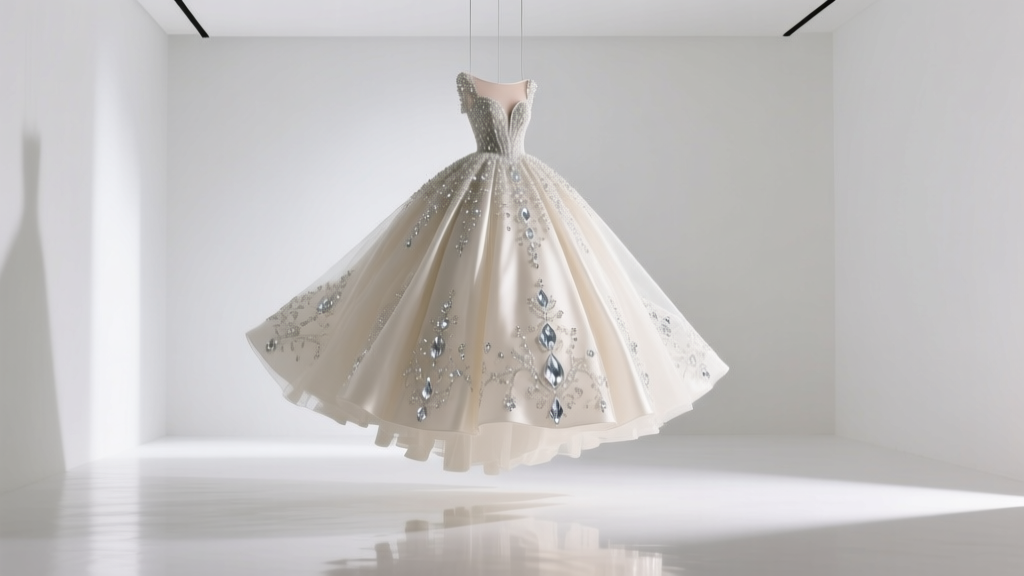 Most Expensive Wedding Dress: $12.5M Gown (2026)
 Beyond Essentials: 7 Practical, Science-Backed Alternatives to Common Household Essentials
 Why Can’t the Groom See the Bride Before the Wedding?
 DIY Wedding Arbor Under $150 (2026)