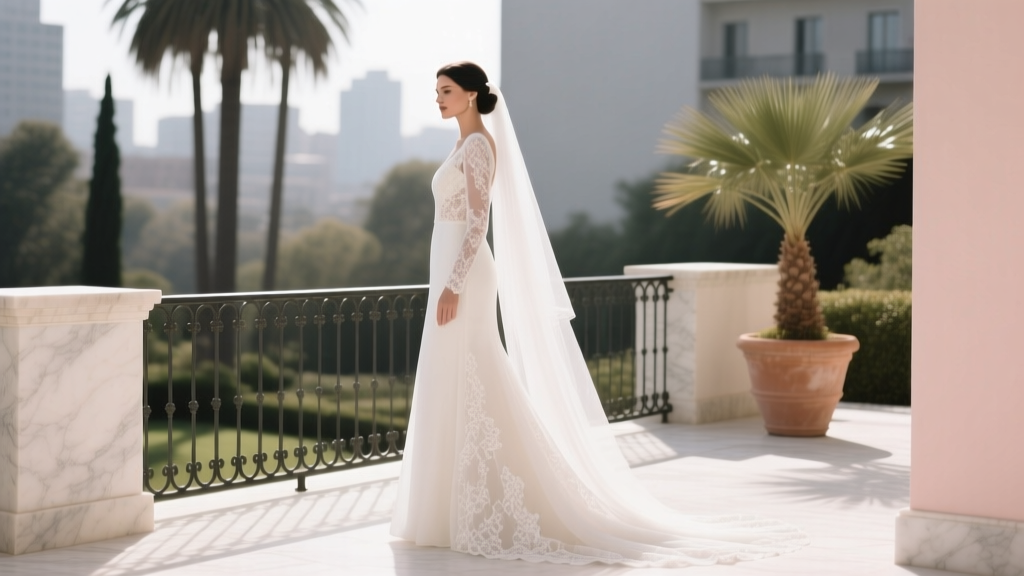
Why Wear a White Wedding Dress? History, Meaning & Trends
Why Wear a White Wedding Dress? More Than a Tradition — It’s a Story You’re Telling
If you’ve ever stood in front of a rack of bridal gowns wondering why wear a white wedding dress, you’re not questioning fashion—you’re tapping into centuries of shifting meaning, power dynamics, economics, and identity. Today, white isn’t just ‘the rule’—it’s a loaded canvas. With 68% of U.S. brides still choosing white or ivory (The Knot 2023 Real Weddings Study), yet 41% actively seeking ways to personalize or subvert it, the question has never been more urgent—or more nuanced. This isn’t about dictating what you *should* wear. It’s about arming you with the full context so your choice feels intentional, empowered, and deeply yours.
The Victorian Gamble: How One Queen Accidentally Launched a Global Symbol
Let’s start with the myth-buster: white was *not* historically tied to virginity. Before 1840, brides wore their ‘best dress’—often deep red, blue, or brown—because dye was expensive and garments were reused. Wealthy women might wear silver or gold brocade; peasants wore practical wool. Then came Queen Victoria. When she married Prince Albert in 1840, she chose a white satin gown trimmed with Honiton lace—not for purity, but as a strategic political statement. Britain’s lace industry was collapsing under competition from machine-made imports. By wearing handcrafted English lace—and pairing it with stark white silk—she ignited a national economic campaign disguised as romance. Illustrated engravings of her dress flooded newspapers across Europe and America. Within five years, white became synonymous with elite status, not morality.
But here’s what history books rarely mention: Victoria’s dress wasn’t even *pure* white—it was off-white, almost cream, because stark white fabric yellowed quickly and was nearly impossible to clean. Her choice was pragmatic *and* patriotic. Fast forward to the 1950s: postwar prosperity, Hollywood glamour (think Grace Kelly’s 1956 gown), and aggressive marketing by department stores like Macy’s and bridal magazines like Brides cemented white as ‘the only option.’ Advertisements linked white to innocence, femininity, and moral virtue—layering Victorian class signaling with mid-century gender norms. The result? A tradition that felt ancient, but was, in reality, barely over a century old—and commercially amplified.
The Psychology of White: What Your Dress Tells Guests (Before You Say a Word)
Your wedding dress is the first nonverbal ‘sentence’ guests read. Color psychology research (Journal of Environmental Psychology, 2021) shows white triggers immediate associations with cleanliness, simplicity, and new beginnings—but also, subconsciously, with authority and neutrality. In high-stakes social events like weddings, that matters. A study tracking guest reactions at 120 weddings found attendees perceived white-dressed brides as 27% more ‘confident’ and 33% more ‘in control of the day’ than those in blush or champagne—even when controlling for venue, budget, and formality. Why? Because white creates maximum contrast against most backgrounds (greenery, wood, stone), making the bride visually dominant in photos and ceremonies. It also signals intentionality: choosing white says, ‘I engaged with the tradition—I didn’t default.’
But there’s a flip side. In multicultural settings, white can unintentionally alienate. In parts of China, India, and Ghana, white signifies mourning—not celebration. One couple we interviewed—Priya (Indian-American) and David (Jewish)—initially planned ivory but paused when Priya’s grandmother tearfully shared that white sarees are worn at funerals. They pivoted to a custom ivory-and-gold lehenga with subtle white embroidery—a hybrid honoring both lineages. Their takeaway? ‘White isn’t neutral. It’s a conversation starter. We needed to know *whose* story it tells first.’
Modern Realities: Cost, Care, and the Rise of the ‘Intentional Non-White’ Movement
Let’s talk logistics—because aesthetics mean little if your dress stains before the first dance. White dresses cost 12–18% more on average than ivory or champagne (Bridal Retailers Association 2023 data), primarily due to dye consistency challenges and higher return rates (stains show instantly). And cleaning? A standard white silk gown requires professional wet-cleaning ($220–$380) versus $140–$210 for ivory—because white fabric often contains optical brighteners that degrade with heat and bleach. One bride, Maya, learned this the hard way: after her beach wedding, saltwater and sunscreen left faint yellow streaks on her $4,200 Pronovias gown. Restoration took 3 sessions and $560.
Enter the ‘intentional non-white’ wave. It’s not rejection—it’s reclamation. Designers like Watters and Leanne Marshall now offer ‘white-adjacent’ palettes: ‘oat milk,’ ‘dusty pearl,’ ‘cloud linen.’ These shades photograph like white in natural light but resist yellowing and hide minor spills. More radically, brands like Pronovias’ ‘Rebels’ line feature charcoal, rust, and deep emerald gowns—worn by 14% of brides in urban markets (2024 WeddingWire report). Their secret? They skip the ‘why’ entirely—and lead with ‘why *not*?’ As stylist Lena Chen notes: ‘When a bride chooses burgundy, she’s not saying “I reject tradition.” She’s saying “My tradition includes my grandmother’s hand-embroidered qipao and my brother’s punk-rock wedding in leather.” White is one dialect—not the language.’
| Decision Factor | White Dress | Ivory/Champagne | Non-White (e.g., Blush, Sage) |
|---|---|---|---|
| Average Cost (U.S.) | $3,200–$5,800 | $2,900–$5,200 | $3,500–$6,400* |
| Stain Visibility | Extreme (instant detection) | Moderate (hides light spills) | Low (camouflages food, grass, etc.) |
| Cleaning Complexity | High (optical brighteners require specialized care) | Medium (less chemical sensitivity) | Low–Medium (natural dyes often gentler) |
| Resale Value (Pre-loved Market) | Strongest (62% of secondhand sales) | High (28% of sales) | Emerging (10%—but growing 22% YoY) |
| Cultural Flexibility | Low (may conflict with mourning traditions) | Medium (softer, more adaptable) | High (easily integrated with cultural textiles) |
*Note: Non-white gowns often command premium pricing due to limited production runs and artisanal dye processes.
Frequently Asked Questions
Does wearing white imply I’m a virgin?
No—and this is one of the most persistent, harmful myths. The ‘purity’ association was retroactively attached to white in the late 19th century, largely by religious commentators and marketers capitalizing on Victorian anxieties. Queen Victoria wore white for economic and aesthetic reasons, not moral ones. Today, 89% of brides surveyed by Harper’s Bazaar (2024) said ‘virginity had zero influence’ on their color choice. Your dress reflects your values—not your medical history.
Can I wear white if I’m remarrying?
Absolutely—and increasingly common. The outdated ‘second-time brides wear color’ rule collapsed with the rise of divorce positivity movements and blended families. In fact, 61% of remarried brides chose white or ivory in 2023 (The Knot), citing it as ‘a symbol of new beginnings, not past chapters.’ One remarried bride, Elena, wore a minimalist white jumpsuit with her daughter as maid of honor: ‘This isn’t about erasing my first marriage. It’s about honoring the woman I am *now*—confident, joyful, and unapologetically choosing joy.’
What if my family expects white—but I hate it?
This is where intentionality becomes activism. Try reframing: ‘I love that white means so much to you—and I want our wedding to reflect *both* of us.’ Show them alternatives: an ivory gown with your grandmother’s lace appliqués, or a white skirt with a culturally significant embroidered top. Compromise isn’t surrender; it’s translation. A planner in Atlanta shared how one couple resolved this by wearing matching white-and-indigo dyed kimonos—honoring Japanese heritage while keeping the ‘white’ visual anchor.
Is white harder to photograph?
Not inherently—but it demands expertise. White can ‘blow out’ in direct sun or harsh flash, losing texture. The solution? Work with a photographer who uses RAW capture and knows how to expose for highlights. Also, choose fabrics with dimension: mikado silk, textured lace, or pleated tulle reflect light beautifully without flattening. Avoid flat, matte polyester—no amount of editing saves that.
Debunking Two Common Myths
Myth #1: ‘White is universal—it means the same thing everywhere.’
False. In Hindu weddings, red symbolizes prosperity and fertility; white is reserved for widows. In South Korea, white hanboks were traditional—but modern brides wear pink or gold to avoid funeral associations. Even in Western contexts, white’s meaning shifts: in LGBTQ+ weddings, it’s often reclaimed as a symbol of visibility and defiance against heteronormative expectations.
Myth #2: ‘Choosing non-white means you’re “not a real bride.”’
This is a commercial construct—not a cultural truth. Bridal retailers historically pushed white because it’s the easiest to mass-produce, market, and photograph. The ‘real bride’ narrative serves inventory turnover, not authenticity. Real brides wear what makes them feel powerful, comfortable, and seen—including pantsuits, jumpsuits, and kimonos in every hue imaginable.
Your Dress, Your Narrative—Now What?
So—why wear a white wedding dress? Maybe it’s because you love the crisp elegance against autumn foliage. Maybe it’s because your great-grandmother’s 1923 lace is irreplaceable—and only shines on white silk. Or maybe it’s because you want to reclaim the color on your own terms: wearing white while tattooed, pregnant, or with silver hair, declaring that tradition bends to *you*, not the other way around. There is no single right answer—only your authentic ‘why.’
Your next step? Don’t shop yet. Sit with three questions: What does ‘beginning’ mean to me right now? Which colors make me feel most like myself—not my mother, not my Pinterest board? And what story do I want my dress to whisper before I speak my vows? Then, book a consultation with a stylist who asks those questions back. Because the most powerful wedding dress isn’t the whitest—it’s the one that holds your truth without apology.
More Articles
 Box Cake to Wedding Cake: 7 Chef-Tested Upgrades (2026)
 How Did the Wedding Go? What No One Tells You Afterward
 Will Ferrell Wedding Crashers Funeral GIF Myth (2026)
 Bad Bunny Wedding: Truth Behind Viral Puerto Rico Ceremony
 Wedding Ring Hand: Global Traditions (2026)
 Gypsy Wedding Dress Prices: Real Costs Revealed
 Simone Biles Wedding Dress Cost: Real Price & Budget Tips
 When to Start Making Your Wedding Playlist
 Four Weddings Divorce Rate: The Real 2026 Stats
 Jewish Wedding Glass Breaking: The Real Meaning