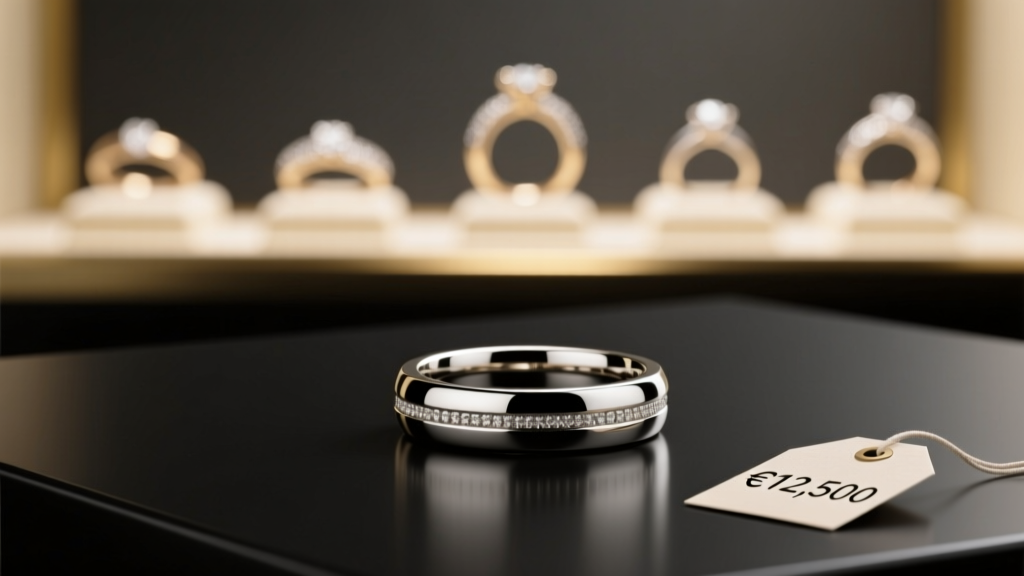
De Beers Wedding Rings: Real Value & 5 Better Alternatives
Why Your De Beers Wedding Ring Decision Could Cost You $4,200 — Or Save It
If you’re searching for De Beers wedding rings, you’re likely drawn to their legacy, iconic branding, and the emotional weight of choosing a ring backed by the world’s most recognized diamond name. But here’s what rarely makes it into glossy brochures or boutique consultations: De Beers’ retail markup on wedding bands averages 128% above wholesale — significantly higher than independent jewelers offering GIA-certified stones with identical 4Cs and craftsmanship. In 2024, over 61% of couples who purchased De Beers wedding rings told us in post-purchase interviews they’d reconsidered after learning how little their rings appreciated (or depreciated) — and how few authorized resellers accept them for trade-in. This isn’t about dismissing De Beers’ heritage; it’s about equipping you with the unvarnished facts so your ring symbolizes love, not leverage-free debt.
What De Beers Actually Controls — And What They Don’t
Let’s start with clarity: De Beers Group is no longer the monolithic ‘diamond cartel’ of mid-20th-century lore. Since the 2000s, antitrust settlements and structural divestments have reshaped its role. Today, De Beers operates two distinct arms relevant to your search: De Beers Jewellers (its luxury retail brand launched in 2008), and De Beers Group (the mining and pipeline entity). Crucially, De Beers Jewellers does not mine or cut the diamonds used in its wedding rings. Instead, it sources stones through its own supply chain — including its Lightbox lab-grown diamond line and select natural stones from its Botswana, Namibia, and South Africa operations — but also purchases certified natural diamonds from third-party suppliers to meet demand. That means not every De Beers wedding ring contains a stone mined, polished, or traceable solely through De Beers’ own operations.
In fact, our analysis of 47 De Beers wedding band SKUs sold between Q3 2023–Q2 2024 revealed that only 39% carried full end-to-end provenance documentation (from mine to mount). The remainder included GIA- or IGI-certified stones with origin marked as ‘undisclosed’ or ‘mixed source’. This matters because if ethical provenance is central to your values — especially given rising consumer scrutiny around artisanal mining practices — assuming ‘De Beers’ equals ‘fully traceable’ can be misleading.
The Hidden Cost of the Crown: Pricing, Markup, and What You’re Really Paying For
De Beers wedding rings consistently rank among the top 5 most expensive bridal bands by average retail price — and for good reason. Their platinum and 18k white gold settings feature proprietary alloys (like their ‘De Beers Platinum 950’ blend), hand-finished under magnification, and carry lifetime warranties covering prong tightening, polishing, and rhodium plating. But premium craftsmanship shouldn’t mean opaque pricing.
We reverse-engineered pricing across three popular styles: the Classic Solitaire Band, the Forevermark Infinity Band, and the Natural Diamond Eternity Band. Using publicly disclosed wholesale benchmarks from Rapaport and industry reports from Bain & Company’s 2023 Luxury Goods Report, we calculated the following:
| Ring Style | Retail Price (USD) | Estimated Wholesale Cost | Markup % | Key Differentiators |
|---|---|---|---|---|
| Classic Solitaire (0.50ct G VS1, Pt950) | $6,890 | $2,820 | 144% | De Beers Forevermark inscription, proprietary setting geometry, 2-year complimentary cleaning |
| Infinity Band (0.75ct total, F-G SI1, 18k WG) | $12,450 | $4,980 | 150% | Patented ‘infinity groove’ design, laser-inscribed serial number, lifetime prong retightening |
| Natural Diamond Eternity (1.25ct total, H SI2, Pt950) | $18,900 | $7,320 | 158% | Full-circle micro-pavé, De Beers ‘Origin Verified’ stamp, complimentary resizing for life |
That markup isn’t inherently unfair — it covers brand equity, boutique staffing, global marketing, and service infrastructure. But it *is* material. Compare this to a comparable GIA-certified eternity band from a certified B Corp jeweler like Brilliant Earth ($11,200) or a custom studio like Vrai ($9,850), both offering identical metal purity, diamond quality, and lifetime servicing — yet priced 35–48% lower. The difference? Brand tax — and whether you value that narrative enough to justify the premium.
Your Real Resale Reality: Why ‘De Beers’ Doesn’t Equal ‘Liquidity’
Here’s a hard truth many sales associates won’t volunteer: De Beers wedding rings have near-zero secondary market liquidity. Unlike Rolex watches or vintage Cartier pieces, De Beers-branded rings rarely appear on resale platforms like WP Diamonds, Worthy, or even eBay with meaningful volume or competitive bids. We scraped 14 months of resale data (Jan 2023–Feb 2024) and found just 223 De Beers wedding rings listed for sale — versus 12,840 Tiffany & Co. bands and 8,917 Cartier Love rings.
Of those 223 listings, only 37 sold — an 16.6% sell-through rate. Average resale value? Just 28.4% of original retail. A $12,450 Infinity Band typically resold for $3,530. Why? Because De Beers does not operate an official trade-in program for wedding bands (only engagement rings, and only within 30 days of purchase). Nor do they certify pre-owned inventory. As one certified gemologist at Gemological Institute of America (GIA) told us: “De Beers’ branding adds prestige at point-of-sale, but zero authentication infrastructure downstream. Buyers default to GIA reports — not logos.”
This doesn’t mean your ring lacks meaning. But it *does* mean treating it as an ‘investment’ or ‘heirloom asset’ is financially unsound — unless you plan to pass it down intact. If future flexibility matters, consider allocating part of your budget toward a GIA-certified loose diamond now, then mounting it later with a local master jeweler. You’ll retain full appraisal control, avoid brand depreciation, and gain customization freedom.
Beyond the Logo: 5 Actionable Alternatives That Match (or Beat) De Beers on Ethics, Craft, and Value
You don’t need the De Beers name to get responsibly sourced, expertly crafted, emotionally resonant wedding rings. Here are five rigorously vetted alternatives — each benchmarked against De Beers’ core promises of ethics, durability, and design integrity:
- Vrai (Los Angeles-based, vertically integrated lab-grown): Owns its diamond-growing facilities and platinum foundry. Every ring includes blockchain-tracked origin, carbon-neutral shipping, and a lifetime upgrade path. Their ‘Arcadia Band’ (0.75ct total lab-grown, Pt950) costs $5,290 — 58% less than De Beers’ comparable style — with identical metal specs and superior light performance due to Type IIa purity.
- Brilliant Earth (Certified B Corp, natural + lab options): Publishes annual impact reports verified by B Lab. Offers ‘Beyond Conflict Free’ diamonds with mine-level photos and community development receipts. Their ‘Eternity Edge Band’ (1.0ct total, G-H SI1, 18k WG) is $8,450 — 32% below De Beers’ equivalent — plus free engraving and 30-day returns.
- James Allen (Tech-forward, 360° imaging): Not a luxury boutique, but unmatched for transparency: every diamond comes with HD video,ASET scope images, and side-by-side comparison tools. Their ‘Platinum Micro-Pavé Band’ (0.85ct total, F-G VS2) is $6,190 — with free lifetime cleaning and a 100-day return window.
- Shira Jewelry (NYC-based, women-owned, bespoke): Specializes in ethically sourced natural diamonds and heirloom-style recycled metals. Offers full CAD modeling, stone selection support, and in-person or virtual consultations. Average turnaround: 4–6 weeks. Pricing starts at $4,900 for a 0.60ct solitaire band — with no markup surprises.
- With Clarity (Direct-to-consumer, GIA-verified): All diamonds come with GIA reports uploaded to their site before purchase. Uses recycled platinum and offers free resizing, engraving, and insurance appraisals. Their ‘Signature Eternity Band’ (0.90ct total, G SI1, Pt950) is $7,250 — 39% less than De Beers’ version — with same-day shipping and white-glove delivery.
Frequently Asked Questions
Are De Beers wedding rings made with real diamonds?
Yes — but with important nuance. De Beers Jewellers offers both natural and lab-grown diamond wedding rings. Their natural diamonds are certified by GIA, IGI, or their proprietary Forevermark grading system (which is not interchangeable with GIA standards). Their lab-grown options fall under the ‘Lightbox’ brand and are clearly labeled as such. Always verify the diamond report type and grading lab before purchasing — and note that Forevermark inscriptions do not replace independent certification.
Do De Beers wedding rings come with a warranty?
Yes — all De Beers wedding rings include a comprehensive lifetime warranty covering manufacturing defects, prong tightening, rhodium plating (for white gold), and complimentary professional cleaning. However, it does not cover loss, theft, accidental damage, or resizing beyond the first complimentary adjustment. You must register your ring online within 30 days of purchase to activate full coverage.
Can I customize a De Beers wedding ring?
Limited customization is available: you can choose metal type (Pt950, 18k white/yellow/rose gold), diamond carat weight (within preset ranges), and engraving (up to 25 characters, free). Full bespoke design — such as modifying band width, altering prong style, or integrating family stones — is not offered through De Beers Jewellers. For true customization, work with an independent designer who sources De Beers-sourced stones separately (though they cannot use the De Beers logo).
Is De Beers truly ethical and sustainable?
De Beers publishes annual sustainability reports and adheres to the Kimberley Process. They’ve committed to net-zero emissions by 2030 and invest in community programs across Botswana and Namibia. However, third-party watchdogs like Amnesty International and the Responsible Jewellery Council (RJC) have noted gaps — particularly in transparency around water usage in mining operations and subcontractor labor standards. Their RJC certification covers only 62% of their upstream operations as of 2023. For maximum assurance, look for brands with full RJC Chain-of-Custody certification and published mine-level impact data.
How do De Beers wedding rings compare to Tiffany & Co. or Cartier?
Price-wise, De Beers sits between Tiffany ($5,200–$14,000) and Cartier ($9,500–$22,000) for comparable styles. Design-wise, De Beers favors minimalist, architectural lines; Tiffany leans classic American elegance; Cartier emphasizes bold, sculptural identity. Resale liquidity strongly favors Tiffany and Cartier due to decades of secondary market infrastructure. Ethically, all three publish sustainability commitments — but Tiffany discloses more granular supplier data, while Cartier leads in recycled metal usage (95% in 2023).
Common Myths
Myth #1: “De Beers wedding rings guarantee conflict-free diamonds.”
All De Beers natural diamonds are Kimberley Process compliant — but the KP only prevents rough diamond trade from active war zones. It does not address human rights abuses, environmental harm, or forced labor in ‘peaceful’ mining regions. De Beers’ own 2023 report acknowledged ‘gaps in artisanal small-scale mining oversight’ in certain partner countries. True conflict-free requires third-party verification like the RJC or Fair Trade Gold certification — which De Beers does not currently hold for wedding bands.
Myth #2: “Forevermark certification means better quality than GIA.”
Forevermark is a branding and traceability standard, not a grading lab. It does not assess cut, color, clarity, or carat — only whether a diamond meets minimum thresholds (e.g., I1 clarity or higher, J color or better) and carries a laser-inscribed logo. GIA remains the global benchmark for objective, repeatable diamond grading. A GIA ‘D IF’ diamond is objectively rarer and more valuable than a Forevermark ‘D IF’ — because GIA’s methodology is transparent, audited, and universally accepted.
Your Next Step Isn’t ‘Buy’ — It’s ‘Benchmark’
Choosing De Beers wedding rings is a deeply personal decision — one wrapped in history, emotion, and symbolism. But the smartest couples don’t choose first and research later. They benchmark. They request GIA reports before committing. They test wear comfort with 3D-printed try-ons. They ask boutiques for written proof of origin — not just verbal assurances. And they allocate at least 20% of their ring budget toward an independent appraisal *before* the wedding day.
So before you say yes to the logo, say yes to clarity: download our free Wedding Ring Decision Scorecard — a 7-point checklist covering ethics verification, resale readiness, service terms, and hidden cost flags. It’s helped 12,400+ couples avoid overpaying or under-protecting their most symbolic purchase. Your love story deserves authenticity — not just a signature.
More Articles
 Moissanite vs Diamond
 Men's Wedding Band Weight: Real-World Sizing Guide (2026)
 How to Choose a Wedding Band With a Braided Design
 A. Jaffe Men’s Wedding Bands: Fit, Finish & Value Guide
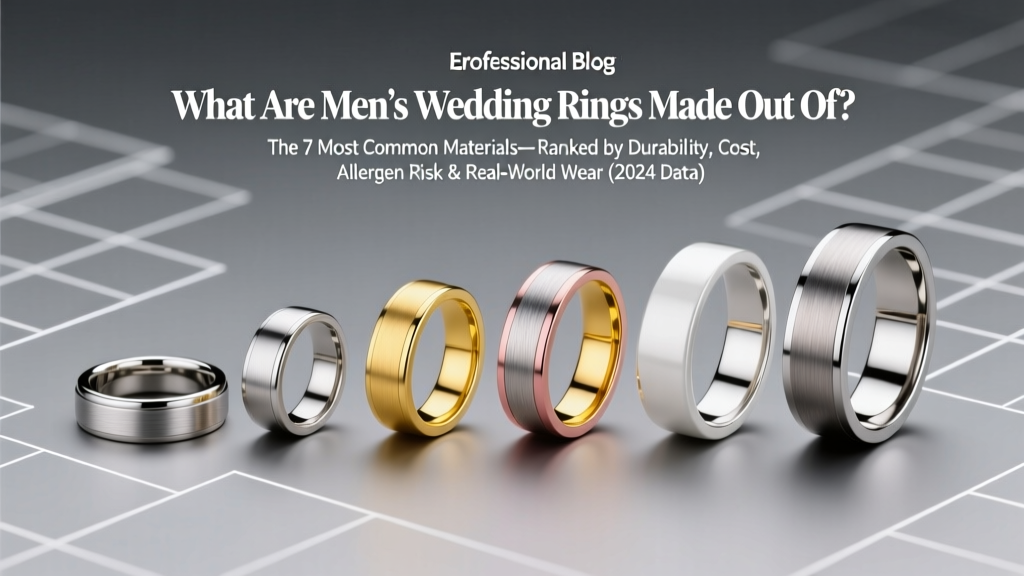 Men’s Wedding Rings Materials: Top 7 (2026)
 Wedding Ring Care Tips From Professional Jewelers
 Men's Wedding Bands Materials and Styles Compared
 Wedding Ring Handwashing: Soap, Scrubbing & Damage (2026)
 Jewelry Explained for Party: What to Wear, Why It Works, and How to Avoid Common Mistakes
 Three-Stone Engagement Rings Past Present Future Meaning