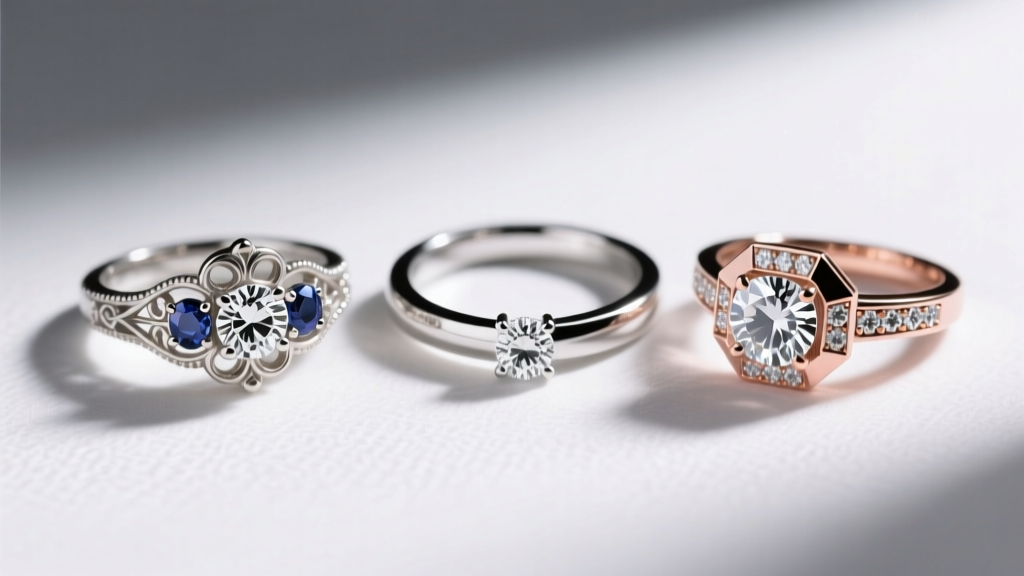
Three-Stone Engagement Rings Past Present Future Meaning
A three-stone engagement ring is one of the few styles that’s both instantly recognizable and deeply personal. Beyond its balanced, elegant look, it carries a message many couples love: the past, present, and future of your relationship set side by side—distinct, meaningful, and designed to last.
This “past present future” meaning is part of why three-stone engagement rings have stayed popular across decades, from vintage heirloom designs to today’s sleek, low-profile settings. It’s also a practical choice for many shoppers: three-stone rings can offer more sparkle, customization, and finger coverage than a solitaire while still feeling timeless.
If you’re choosing an engagement ring and thinking ahead to wedding bands, daily wear, and long-term value, a three-stone ring rewards a little extra knowledge. Here’s how the symbolism works, how to choose stones and metals, what to watch for in craftsmanship, and how to buy wisely.
What “Past, Present, Future” Means in a Three-Stone Ring
The classic interpretation is straightforward:
- Past: the memories and experiences that brought you together
- Present: your commitment today—your engagement and shared life right now
- Future: what you’re building together over time
Traditionally, the center stone represents the present, while the side stones symbolize the past and future. Many couples personalize this further: one side stone might represent a shared milestone (like meeting or a move), or even loved ones, family heritage, or a promise for the future.
Because the meaning is built into the structure, three-stone rings feel intentional. It’s a design where symbolism and style align—one reason it’s a common upgrade choice for anniversaries as well.
Three-Stone Engagement Ring Styles: Classic to Current Trends
Classic Balanced Three-Stone
The most traditional look features a center diamond with two slightly smaller diamonds of the same shape and color family. Popular choices include round brilliant or cushion-cut diamonds, set in prongs with a simple band. It’s timeless, easy to pair with wedding bands, and works with most personal styles.
Modern Minimal Three-Stone
Today’s trend leans toward clean lines and low profiles: slimmer bands, subtle claw prongs, and gallery details that keep the silhouette refined. Minimal three-stone rings often feature a larger center stone with tapered side stones for a sleek, elongated look.
Vintage-Inspired (Milgrain, Filigree, and Hand-Engraving)
If you love heirloom character, look for milgrain edges, scrollwork, and engraved shanks. These rings can feel romantic and old-world, especially in yellow gold or rose gold. They do require more attention to craftsmanship and upkeep because fine details can wear over time.
Color and Mixed-Gemstone Three-Stone Rings
One of the strongest current jewelry trends is adding color. Many couples choose a center diamond with sapphire side stones, or reverse it with a sapphire center and diamond sides. Emerald and ruby accents can also look striking, but they require careful durability considerations for everyday wear.
Choosing the Gemstones: Diamonds, Sapphires, and Smart Pairings
Diamond Center Stone with Diamond Sides
This is the most classic three-stone engagement ring setup and usually the easiest to match for brightness and sparkle. For cohesive brilliance, aim for side stones that are close in:
- Color: within 1–2 grades of the center (for example, center G with sides F–H)
- Clarity: similar “eye-clean” appearance (often VS2–SI1 works beautifully)
- Cut quality: prioritize cut—especially for rounds and ovals—since it drives sparkle
Sapphire as a Meaningful Alternative
Sapphire is a favorite for engagement rings because it’s durable (Mohs 9) and available in many colors: royal blue, teal, pink, yellow, and even white. A sapphire center with diamond side stones gives strong contrast and a regal look, while sapphire side stones can add a subtle personal touch without changing the overall “diamond ring” feel.
Emerald and Ruby Accents
Emerald (Mohs ~7.5–8) is softer than sapphire and can be prone to chipping, especially at corners. Ruby (also corundum like sapphire) is durable (Mohs 9). If choosing emerald side stones, consider protective settings (like bezels or V-prongs) and a ring design that sits lower on the finger to reduce knocks.
Lab-Grown vs Natural Stones
Lab-grown diamonds are chemically and optically the same as natural diamonds and can offer a larger look for the budget—useful when you’re buying three stones instead of one. Natural diamonds often retain stronger traditional resale perception, while lab-grown typically provides better size-per-dollar value. For colored gemstones, ask whether they are natural, lab-created, or treated; heat treatment in sapphire is common and generally accepted, but it should always be disclosed.
Best Stone Shapes and Cuts for Three-Stone Rings
The shape you choose affects not just the style but also how comfortably the stones sit together.
- Round brilliant: maximum sparkle, easiest matching; great with tapered baguette or trillion sides
- Oval: flattering elongation; popular trend; pairs well with pear or half-moon side stones
- Cushion: soft vintage feel; works with trapezoids or smaller cushions
- Princess: crisp modern look; corners need protection (V-prongs help)
- Emerald cut: sleek “hall of mirrors”; clarity matters more; often paired with baguettes
- Pear or marquise: dramatic and elegant; needs careful symmetry and secure prongs
For step-cut centers (emerald, Asscher), don’t compromise on clarity and symmetry—these cuts highlight inclusions more than brilliant cuts. For brilliant cuts (round, oval, cushion), cut quality and proportions are the sparkle drivers.
Settings and Craftsmanship: What Makes a Three-Stone Ring Wear Well
Prong Settings (Classic and Versatile)
Prongs show off more of each stone and maximize light. For active lifestyles, consider heavier prongs or claw prongs with good coverage. Check that the side stones are not set too high, which can snag on clothing.
Bezel and Half-Bezel Settings (Secure and Modern)
Bezels surround the stone with metal, offering strong protection—especially good for emerald cuts, pears, and princess cuts. The trade-off is a slightly more metal-forward look and potentially a touch less light entry, though well-made bezels still sparkle beautifully.
Basket and Gallery Details
A well-built basket supports all three stones evenly and keeps them aligned. Look for clean finishing under the stones (smooth edges, no sharp seams). The best craftsmanship feels comfortable from every angle and keeps the stones secure without bulky metal.
Ring Height and Wedding Band Fit
Three-stone rings can sit higher because there are three heads to accommodate. If you want a wedding band to sit flush, ask about:
- a low-profile three-stone design
- a contoured wedding band made to fit the ring
- slight cathedral shoulders that lift and protect the center stone while maintaining balance
Metal Choices: Platinum vs Gold for Three-Stone Engagement Rings
- Platinum: naturally white, dense, and durable; great for securing multiple stones; develops a soft patina over time
- 14K white gold: strong and budget-friendly; typically rhodium-plated for a bright white finish
- 18K yellow gold: richer color, slightly softer; classic with vintage styles and warmer diamonds
- Rose gold: romantic and trending; flattering tone; can make near-colorless diamonds look warmer
If you choose white gold, plan for occasional rhodium replating (often every 12–24 months depending on wear). For sensitive skin, platinum is often the easiest choice.
Quality Factors That Matter Most (Especially with Three Stones)
Cut Quality and Matching
With three stones, mismatched sparkle is easier to spot. Prioritize excellent/ideal cut proportions where available, and ensure side stones match the center in brightness.
Proportion and Finger Coverage
Side stones should support the center, not compete with it. Many shoppers like side stones around 20–35% of the center stone’s size, though the “right” ratio depends on shape. Tapered baguettes and half-moons can create a longer, more elegant line without overwhelming the center.
Secure Stone Setting
Because there are more stones, there are more prongs and more opportunities for wear. Ask whether the ring is cast or hand-finished, and inspect prongs: they should be even, smooth, and firmly seated over the stone’s edges.
Practical Buying Tips for Three-Stone Engagement Rings
- Decide on your symbolism: all diamonds for a classic message, or add a colored gemstone for personalization
- Think ahead to the wedding band: ask to try bands with the engagement ring or request a matched set
- Choose durable shapes if you’re hard on jewelry: rounds and ovals tend to be forgiving; protect corners with V-prongs
- Ask for certification: for diamonds, look for GIA or IGI reports (common for lab-grown and natural)
- Consider lab-grown for value: it can make the three-stone look far more attainable at larger total carat weights
- Confirm return/resize policies: resizing three-stone rings can be more complex depending on design
Care and Maintenance: Keeping Three-Stone Rings Brilliant
Three-stone rings collect lotion, soap, and everyday residue around multiple settings, so routine care matters.
- At-home cleaning: warm water, mild dish soap, and a soft toothbrush; rinse well and pat dry with a lint-free cloth
- Avoid harsh chemicals: bleach, chlorine, and abrasive cleaners can damage metals and some gemstones
- Professional checkups: have prongs inspected every 6–12 months, especially if you wear your ring daily
- Safe storage: store separately in a fabric-lined box to prevent scratching (especially important for gold)
Price Range and Value Tips
Three-stone engagement ring pricing varies widely based on center stone size, whether stones are natural or lab-grown, metal type, and design complexity.
- Budget-friendly: lab-grown diamond center with lab-grown side stones in 14K gold often provides the best visual impact per dollar
- Mid-range: natural diamond center with smaller natural side stones, or a sapphire center with diamond sides in 14K/18K gold
- Higher-end: larger natural diamonds, premium color/clarity, platinum settings, hand engraving, custom design, or matched fancy shapes (half-moons, trapezoids)
Value tips that consistently pay off:
- Prioritize cut: a slightly smaller well-cut diamond can outshine a larger duller one
- Go eye-clean on clarity: you can often save by choosing VS2–SI1 (or SI2 if truly eye-clean)
- Use side stones strategically: tapered baguettes can look luxe and elongated without requiring large carat weight
- Consider total carat weight (TCW): compare rings by TCW, but judge beauty by proportions and sparkle
Common Mistakes to Avoid
- Ignoring side stone quality: poorly matched side stones can make the whole ring look “off,” even with a beautiful center
- Choosing fragile shapes without protective prongs: princess, pear, and marquise need secure corner coverage
- Buying too-high settings for your lifestyle: tall profiles snag and can loosen over time
- Forgetting wedding band spacing: a three-stone head can prevent a straight band from sitting flush
- Overcomplicating the design: too many details can distract from the three-stone story; balance matters
FAQ: Three-Stone Engagement Rings
Are three-stone engagement rings more expensive than solitaires?
Often, yes, because you’re purchasing additional gemstones and a more complex setting. That said, you can control cost by choosing smaller side stones, selecting lab-grown diamonds, or using baguettes/accents that create presence without a high total carat weight.
Do three-stone rings look bigger on the finger?
They usually do. The extra stones add finger coverage and sparkle across the top of the ring. Shapes like oval centers with tapered side stones or half-moons can make the ring look especially substantial and elegant.
What are the best side stones for an oval or emerald-cut center?
For an oval center, pears and half-moons are popular and modern; they follow the curve and add softness. For an emerald-cut center, tapered baguettes or trapezoids are classic and complement the clean, step-cut lines.
Can I use my birthstone as one of the side stones?
Yes, and it’s a meaningful way to personalize the past-present-future concept. Just confirm durability: sapphire and ruby are excellent for daily wear, while softer stones may require protective settings or occasional wear.
Is platinum better than white gold for a three-stone setting?
Platinum is a top choice for security and longevity, especially with multiple stones, because it’s dense and holds prongs well. White gold is also durable and often more budget-friendly, but it may need rhodium replating to maintain its bright white finish.
What wedding band works best with a three-stone engagement ring?
Many couples choose a simple pavé or plain band, but fit is key. If the center setting prevents a straight band from sitting flush, a contoured band or a custom-fitted wedding band creates a cleaner, more comfortable pairing.
Next Steps: Choosing a Three-Stone Ring That Feels Like Yours
If you want an engagement ring that combines timeless style with a built-in story, the three-stone “past, present, future” ring is hard to beat. Start by deciding whether your vision is classic all-diamond brilliance, a sapphire-accented modern look, or a vintage-inspired heirloom style—then focus on cut quality, secure settings, and a metal that suits your lifestyle.
When you’re ready, explore more engagement ring and wedding band guides on weddingsift.com to compare cuts, metals, settings, and pairing ideas with confidence.
More Articles
 How to Choose a Wedding Band With a Celtic Knot Design
 Are Wedding Bands Solid Gold? Truth & Buying Tips
 Where to Sell My Wedding Ring Near Me (2026)
 How to Choose a Wedding Band With a Milgrain Edge
 Diamond Tension Settings Modern and Minimalist Style
 Platinum Wedding Ring Value: Real 2026 Worth
 How to Choose a Wedding Band With a Geometric Pattern
 Wedding Band Trends That Are Dominating in 2026
 Radiant Cut Diamonds Maximum Fire and Brilliance
 What Is a 10K Gold Wedding Band Worth? (2026)