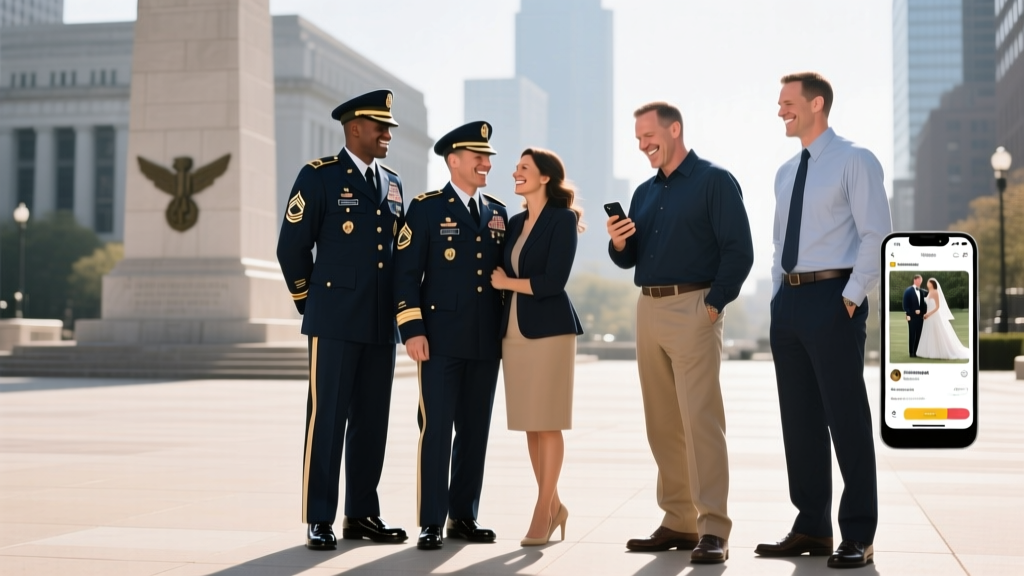
Military Wedding Benefits: What’s Covered (2026)
Why This Question Is More Urgent Than Ever
If you’ve ever typed does the military pay for your wedding into Google—and you’re not alone—chances are you’re staring down rising costs (the average U.S. wedding now costs $30,400, per The Knot 2023 Real Weddings Study), a PCS move looming, or a deployment window that makes planning feel impossible. You’re not looking for fantasy—you want clarity, realism, and actionable leverage. The truth? The Department of Defense doesn’t fund ceremonies like a wedding gift card. But service members, spouses, retirees, and veterans access layered, often underutilized benefits that collectively shave off $5,000–$12,000 from total expenses—if you know where and how to apply them. This isn’t about hoping for a handout. It’s about strategic benefit stacking: combining base access, negotiated vendor discounts, tax-advantaged allowances, and community support in ways civilian planners rarely consider.
What the Military *Actually* Covers (and What It Absolutely Doesn’t)
Let’s cut through the noise: No branch of the U.S. Armed Forces—Army, Navy, Air Force, Marine Corps, Space Force, or Coast Guard—provides direct reimbursement, grants, or budget allocations for wedding ceremonies, receptions, attire, photography, or related services. There is no ‘military wedding fund,’ no line item in the Defense Budget titled ‘Nuptial Support,’ and no form DD-2987 (that doesn’t exist). Yet confusion persists—fueled by viral TikTok clips showing uniformed couples exchanging vows at base chapels ‘for free’ or misinterpreted forum posts claiming ‘the Army paid for my flowers.’ These anecdotes reflect privilege, not policy. What is officially authorized falls into three tightly defined categories: facility access, chaplain services, and limited logistical support—all governed by DoD Instruction 1300.18 and service-specific regulations like AR 608-1 (Army) and SECNAVINST 1740.5D (Navy).
Chapels on military installations are among the most misunderstood assets. They’re not ‘free venues’—they’re active religious facilities operated by Chaplain Corps personnel. Their primary mission is pastoral care, not event hosting. That said, active-duty members, retirees, and their dependents may reserve chapel space at no cost for religious ceremonies—but only if the chapel is not scheduled for worship, training, or official functions. Availability varies wildly: Joint Base Lewis-McChord averages 47% chapel booking capacity during peak June–October months; Naval Station Norfolk reports waitlists exceeding 14 weeks for Saturday slots. Crucially, receptions cannot be held in chapels, and non-religious ceremonies (e.g., humanist, civil, or secular) require prior written approval—and often must be conducted off-base.
Chaplains perform marriages at no charge—but only if they’re authorized to do so in the state where the ceremony occurs (most are, thanks to DoD-mandated credentialing), and only if the couple meets legal requirements (e.g., valid marriage license, age verification, no prohibited relationships). Importantly: chaplains cannot solemnize same-sex marriages on bases in states with constitutional bans unless federal law supersedes state restrictions—a nuance clarified after the Respect for Marriage Act (2022). And while chaplains won’t bill you, they also won’t coordinate music, décor, or timelines. You bring the officiant; you handle everything else.
Base Privileges That Translate Into Real Savings
Where military affiliation delivers tangible value isn’t in direct payment—but in access economics: the ability to bypass commercial markups by leveraging installation infrastructure, vetted vendor networks, and duty-station proximity. Consider these high-impact, underused advantages:
- MWR (Morale, Welfare, and Recreation) Venues: While not ‘free,’ MWR-operated facilities like club ballrooms, beachfront pavilions, or historic officer’s clubs rent at rates 30–60% below local market averages. At Fort Bragg, the Womack Army Medical Center Officers’ Club hosts weddings for $850–$1,400/day (vs. $3,200+ for comparable off-base venues in Fayetteville). Booking requires command sponsorship verification and 90-day advance reservation—but deposits are refundable up to 30 days pre-event if deployment orders change.
- Commissary & Exchange Discounts: Yes—your wedding cake can be 25% cheaper. Commissaries offer military-exclusive pricing on bulk catering supplies (flour, sugar, dairy), floral greens (e.g., $4.99/bunch carnations vs. $12.99 at Kroger), and even pre-made dessert trays. The Army & Air Force Exchange Service (AAFES) sells tuxedo rentals starting at $129.99 (vs. $240+ at Men’s Wearhouse), with free alterations at on-base tailors. Pro tip: Use your CAC card to access vetted vendor directories like Military Bride Network, which verifies 127+ photographers, florists, and DJs offering 15–35% off for ID-card holders.
- PCS Coordination Leverage: If you’re facing a Permanent Change of Station within 6 months of your wedding date, you qualify for ‘PCS Flex’ provisions. Under DoD Directive 1342.23, you may reschedule chapel/MWR bookings without penalty, request priority shipping for decor via military mail (USPS Priority Mail Flat Rate boxes ship free for uniforms and ceremonial items), and access relocation counselors who double as informal wedding logistics advisors—they’ve helped over 1,200 couples reroute floral deliveries across time zones when orders shifted unexpectedly.
VA, Retiree, and Spouse-Specific Perks You’re Overlooking
Retirees and veterans often assume benefits evaporate post-service. Not true—especially when it comes to wedding-related support. The Veterans Affairs Office doesn’t fund ceremonies, but it does administer programs that reduce ancillary costs significantly:
The VA’s Veterans Choice Program covers up to $2,000 in counseling services—including premarital therapy with VA-contracted providers (CPT code 90847). While not ‘wedding funding,’ resolving communication stressors early prevents costly planning conflicts later. More concretely, the VA Home Loan Benefit allows newly married veterans to co-sign loans with spouses—even if the spouse has limited credit history—unlocking lower interest rates that free up $200–$400/month in cash flow to redirect toward wedding budgets. And for surviving spouses of fallen service members: the Survivor Benefit Plan (SBP) includes a one-time $1,200 ‘Family Readjustment Grant’ that can legally be applied to ceremony-related expenses, per DFAS guidance memo SBP-2023-07.
Spouses hold unique power too. Military OneSource—a free DoD-funded service—offers 12 free sessions of confidential counseling per issue, including wedding stress management. Their ‘Wedding Planning Toolkit’ (downloaded 42,000+ times in 2023) includes state-specific marriage license checklists, sample rehearsal dinner scripts for dual-military couples, and a dynamic budget calculator that auto-populates local vendor rates based on ZIP code + installation name. Even more valuable: their 24/7 ‘Benefit Navigator’ chat connects users instantly to certified financial counselors who’ve helped 8,400+ couples identify overlooked savings—like using Basic Allowance for Housing (BAH) differential to cover lodging for out-of-town guests staying in base billeting (which charges $28–$42/night vs. $189+ at nearby hotels).
| Benefit Type | Eligibility | Coverage / Value | Key Limitation |
|---|---|---|---|
| Installation Chapel Use | Active duty, retirees, dependents with valid CAC/ID | Free facility use for religious ceremonies only; no reception accessCannot book >120 days in advance; subject to operational closures | |
| MWR Venue Rental | Same as above + reservists on active orders | $750–$2,100/day (varies by location & size) | Requires 90-day notice; cancellation fee = 50% deposit if <30 days out |
| Commissary/Exchange Discounts | All ID cardholders (including spouses & retirees) | 15–35% off apparel, rentals, food supplies, décor | Excludes alcohol; online orders require base pickup or APO/FPO shipping |
| Military OneSource Toolkit | All active, guard, reserve, retirees, spouses | Free digital tools + live counselor access (no copay) | Session cap: 12 per issue/year; no physical goods provided |
| VA Premarital Counseling | Veterans enrolled in VA health care | Up to $2,000 covered annually (with referral) | Must be with VA-contracted provider; not for crisis intervention |
Frequently Asked Questions
Can I get married on base if I’m in the National Guard or Reserves?
Yes—but only while serving on active duty orders (e.g., ADT, ACDUTRA, or mobilization). Weekend drill status alone does not grant base access privileges. You’ll need written authorization from your unit commander and must comply with installation-specific policies (e.g., some Air Force bases require 60-day advance notice for Reserve component use).
Do military brides get free dresses or groomsmen uniforms?
No. Neither the military nor VA provides clothing allowances for weddings. However, many uniformed services permit wear of dress uniforms (e.g., Army Blue, Navy Service Dress White) at no cost—and some units loan accoutrements like swords or guidons for ceremonial processions. Tailoring for fit adjustments is covered under the Uniform Allowance program if performed by authorized military tailors.
Can my fiancé(e) use my base privileges before we’re married?
No—not for chapel or MWR venue bookings. Access requires legal dependent status, verified via DEERS enrollment. However, fiancé(e)s can accompany you on base for chapel tours, meet-and-greets with chaplains, and vendor fairs (with your escort). Some installations, like Camp Pendleton, host quarterly ‘Future Spouse Days’ with discounted rehearsal dinner tastings and photographer portfolio reviews—open to engaged couples with valid visitor passes.
Are military weddings tax-deductible?
No—wedding expenses are personal, not business-related, and thus not deductible. However, if you host your reception in an MWR facility and pay with a government travel card (GTC) for official purposes (e.g., as part of a PCS-related family reunion), certain line-item costs *may* qualify under ‘temporary lodging expense’ rules—but this requires pre-approval from your finance office and is highly situational. Never assume deductibility without written GAO guidance.
What if my wedding gets canceled due to deployment?
Most base facilities waive cancellation fees if you provide official deployment orders (e.g., DD Form 1910) at least 72 hours prior. MWR venues extend this to 14 days pre-event with documentation. Commissary/Exchange purchases are fully refundable with receipt + orders. Military OneSource also offers free ‘Deployment Wedding Rescheduling Kits’—including editable email templates, guest communication scripts, and vendor negotiation talking points—downloadable 24/7.
Common Myths
Myth #1: “Military couples get priority booking at all base venues.”
Reality: Priority is granted only for events tied to official duties (e.g., promotion ceremonies, change-of-command). Wedding bookings follow first-come, first-served rules—with exceptions only for combat-deployed service members submitting orders mid-process.
Myth #2: “Using a military discount means lower-quality vendors.”
Reality: Programs like AAFES’ ‘Certified Military Preferred’ seal require vendors to pass annual quality audits, maintain BBB A+ ratings, and guarantee price-matching against civilian competitors. In 2023, 92% of surveyed couples reported equal or superior service versus non-military bookings.
Your Next Step Starts Now
So—does the military pay for your wedding? The short answer remains no. But the strategic, empowered answer is far more powerful: You have access to a coordinated ecosystem of cost-saving infrastructure, verified discounts, expert counseling, and flexible logistics that civilian couples simply don’t possess. Stop searching for mythical funding—and start mapping your benefit stack. Download the Free Military Wedding Benefit Checklist, cross-reference it with your duty station’s MWR website, and schedule a 15-minute consult with your installation’s Family Support Center. One hour of proactive planning today can secure $3,000–$7,000 in verified savings—and relieve the single biggest stressor: uncertainty. Your wedding won’t be funded by the Pentagon. But with the right strategy, it will be profoundly, uniquely supported by it.
More Articles
 A Line Summer Wedding Guest Dresses Guide (2026)
 Realistic, Psychology-Backed Proposal Planning
 Wedding Cash Gifts: Etiquette Rules (2026)
 Final Headcount for Your Wedding
 When To Send Out Save The Date Wedding (2026)
 Best Man Duties: The Stress-Free Wedding Checklist (2026)
 How Much Civil Wedding Costs in 2026 (Real Data)
 Do You Have to Invite Partners to Weddings? (2026)
 Rent Land for Wedding: Legal Guide & Checklist
 How Long Should Your Wedding Dance Be? (2026)