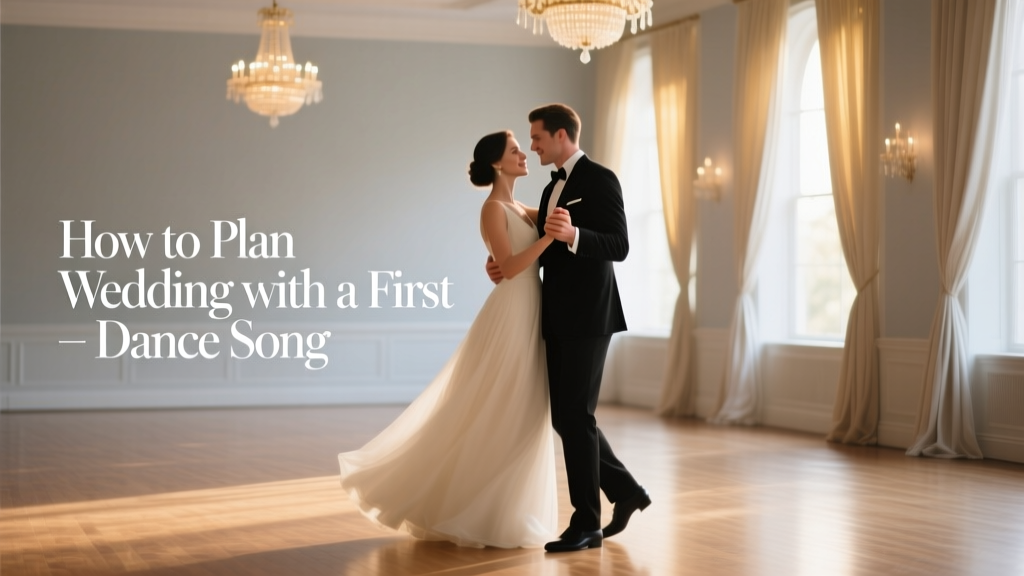
How to Plan a Wedding With a First Dance Song
You know that moment: the lights soften, your guests quiet down, and it’s just the two of you moving together for the first time as newlyweds. For some couples, the first dance is a quick, sweet sway. For others, it’s the centerpiece of the reception. Either way, the song you choose has a funny way of shaping the whole feeling of the night.
If you’re feeling stuck—because you have different music tastes, because you don’t love being watched, or because you want it to feel meaningful without being cheesy—you’re not alone. Picking a first dance song can feel surprisingly high-pressure, especially when you’re juggling a dozen other wedding planning decisions.
The good news: you can absolutely plan your wedding around your first dance song (or at least use it as a guiding thread). When you do, your music, timeline, lighting, and even your décor can feel more cohesive—and your first dance becomes less of a “performance” and more of a moment that fits you.
Why Start Wedding Planning With the First Dance Song?
Your first dance song isn’t just a soundtrack—it’s a tone-setter. Couples who choose their first dance song early often find other choices get easier because they have a “north star” for the vibe.
- It sets your reception mood: Romantic and slow? Upbeat and playful? Classic and elegant?
- It influences your timeline: A 2:30 song works differently than a 5-minute ballad or a choreographed medley.
- It helps align vendors: DJ/band, lighting, photographer, and videographer can plan key cues.
- It can inspire your theme: Not a literal theme, but the feeling—modern, vintage, cozy, glamorous, etc.
Real-world scenario: If you choose a soft acoustic song, you might plan candlelight, warm uplighting, and a more intimate dance floor moment right after dinner. If you choose an upbeat Motown hit, you might open the dance floor immediately with your wedding party joining in.
Step 1: Choose a First Dance Song That Fits You
Use this quick decision checklist
- Does it feel like your relationship? Think road trips, kitchen dancing, or a concert you loved.
- Can you picture dancing to it in front of people? If the idea makes you cringe, choose something simpler.
- Does it match your comfort level? Swaying is enough. You don’t owe anyone a routine.
- Is it danceable? Many songs are meaningful but tricky to move to—test it in your living room.
- Is the content appropriate for your crowd? If you have kids or conservative relatives attending, check the lyrics.
If you have different music tastes
This is extremely common. Try one of these solutions:
- Pick a cover version (acoustic, piano, instrumental) of a song one of you loves.
- Find a “bridge” artist you both like (for example: a classic love song performed by a modern singer).
- Use a shortened edit that highlights the part you both connect to.
- Create a two-song mini-medley (romantic intro + fun switch-up) if it fits your personalities.
Budget note: edits and mixes
Many DJs will trim a song or create a clean fade for free or a small fee. If you need a custom mashup, expect an added cost depending on the DJ, or hire a music editor. Ask early so you’re not doing this the week of the wedding.
Step 2: Decide What Kind of First Dance You Want
Before you plan anything else, decide what the “moment” looks like. There’s no single right approach.
Common first dance formats (and who they’re best for)
- Classic slow dance (2–3 minutes): Great for couples who want something timeless and low-stress.
- Short and sweet (60–90 seconds): Perfect if you’re shy, anxious about being watched, or want to keep the reception moving.
- Choreographed routine: Fun if you love performing or want a memorable highlight—plan lessons and practice time.
- Private last dance: If the idea of a public first dance isn’t your thing, consider a private dance after guests exit.
- Group “invite others in” dance: Start with just the two of you, then invite parents/wedding party/guests halfway through.
Real-world scenario: One couple loved their song but didn’t want all eyes on them. Their DJ announced, “Join the couple on the dance floor!” after 45 seconds. It still felt special, but it took the pressure off immediately.
Step 3: Build the Reception Timeline Around Your Song
Where you place the first dance affects energy, photos, and guest experience. Work backward from your song choice and the vibe you want.
Best timing options
- Right after grand entrance: Keeps attention focused; great if you want the first dance photographed before people start eating.
- After dinner/toasts: Creates a natural “transition” into open dancing.
- After cake cutting: Works well if you want a sequence of “spotlight moments” together.
- Later in the night: Not typical, but it can feel intimate once the dance floor is already warm.
Simple timeline templates
Option A: High-energy start
- Grand entrance
- First dance
- Parent dances
- Welcome toast
- Dinner service
- Toasts
- Open dancing
Option B: Romantic transition into dancing
- Grand entrance
- Welcome + dinner
- Toasts
- First dance
- Parent dances (optional)
- Open dancing
Pro tip: plan for the “walk-on”
Decide how you’ll get to the dance floor. Will the DJ invite you? Will you be seated at a sweetheart table and walk together? A clean transition makes the moment feel effortless—and avoids awkward shuffling while your song starts.
Step 4: Match Your Lighting, Space, and Décor to the Song’s Mood
You don’t need a themed wedding based on lyrics. You just want the environment to match the feeling of your first dance.
Quick mood-to-design guide
- Soft, romantic ballad: warm uplighting, candles (real or LED), spotlight on the couple, gentle haze (venue permitting), florals with movement (garden roses, greenery)
- Modern pop love song: cleaner lighting, crisp white spotlight, sleek monogram projection, minimal but intentional décor
- Vintage/classic (Sinatra, Etta James, etc.): amber tones, classic lounge feel, black-and-white dance floor, art deco touches
- Upbeat/fun track: colorful dance lights, confetti moment (venue-approved), faster transition into party music
Budget-friendly upgrades that make a big impact
- Spotlight: Ask your DJ or venue about pin-spotting the dance floor.
- Uplighting package: Even a basic uplighting setup changes the entire room.
- Dance floor placement: Center it where guests can gather naturally (and where photos look full and lively).
- Fog/haze effects: Only if allowed; confirm ventilation, alarms, and cleanup fees.
Step 5: Coordinate With Your DJ/Band, Photographer, and Videographer
This is where the first dance goes from “nice” to truly smooth and cinematic. Your vendors can’t read your mind—so give them clear cues.
What to tell your DJ or band
- Exact song choice and version (send a link and a downloaded backup file)
- Preferred start point (some intros are long—choose where you want to begin)
- Desired length (full song vs. a 90-second edit)
- Any special moments (dip at 1:10, spin at the chorus, invite guests halfway)
- Announcement wording (simple and comfortable, or more formal)
What to tell your photographer/videographer
- When the first dance happens in the timeline
- Any planned moves so they can anticipate angles
- Lighting plan (spotlight, uplighting colors, any special effects)
- If you want guest reactions captured (parents tearing up, friends cheering)
Real-world scenario: A couple planned a quick spin at the chorus. They told their photographer, who positioned for a wide shot with guests in the background. That single image ended up being their favorite print.
Step 6: Practice Without Turning It Into a Second Job
You don’t need to rehearse for hours to look great. The goal is to feel comfortable and connected.
Low-stress practice plan (15–20 minutes, 3–5 times)
- Practice holding hands and finding a natural sway
- Work on one simple turn or spin (optional)
- Decide on an ending pose (forehead touch, hug, or kiss)
- Practice entering the dance floor together
- Try it once in shoes similar to your wedding shoes
When dance lessons make sense
- You want a choreographed routine
- One or both of you feel very nervous
- Your song has an unusual rhythm
- You want help with posture, pacing, and confidence
Budget range: Dance lessons vary widely by location. Group classes cost less; private lessons cost more but move faster. If budget is tight, one private lesson can still give you a game plan.
Common First Dance Mistakes (and How to Avoid Them)
- Choosing a song that’s too long. Solution: ask your DJ to trim to 90–120 seconds.
- Waiting until the last month to decide. Solution: pick your song 4–6 months out, especially if you want lessons or a custom edit.
- Forgetting the “start and stop” details. Solution: decide your starting position, who cues the music, and how you’ll end.
- Overcomplicating choreography. Solution: keep it to one or two simple moves and focus on connection.
- Not considering your dress or suit. Solution: practice in similar footwear; bustle your dress before the dance if needed; make sure your suit allows easy movement.
- Harsh lighting that kills the mood. Solution: ask for warm lighting and a spotlight rather than bright overhead fluorescents.
Wedding Planner Pro Tips for a First Dance That Feels Natural
- Shorten the song without guilt. Guests remember the emotion, not the full runtime.
- Build in a “reset breath.” Before you walk to the floor, pause for two seconds, squeeze hands, and smile at each other.
- Talk to each other while you dance. A quiet “We did it” or “You look amazing” makes it real—and looks beautiful on video.
- Plan your dance floor crowd shape. Ask your coordinator or DJ to invite guests to gather closer. It feels intimate and photographs better.
- Have a backup plan. Keep an offline copy of your song on a phone or USB, especially if you’re using a streaming playlist elsewhere.
Timeline Advice: When to Decide What
- 6–9 months before: Choose your song (or shortlist 3), decide on public vs. private first dance, book dance lessons if needed
- 3–5 months before: Confirm DJ/band details, request edits/mashups, decide where the first dance fits in the reception timeline
- 6–8 weeks before: Do a few practice runs, confirm lighting and dance floor setup with venue/DJ
- 2–3 weeks before: Share final song file and cues with DJ, photographer, videographer, and coordinator
- Wedding week: One relaxed practice, confirm bustles/shoes, and let the rest be what it is
FAQ: Planning Your Wedding Around a First Dance Song
How long should a first dance be?
Most couples feel best with 60–120 seconds. It’s long enough to feel meaningful and short enough to keep everyone engaged. If your song is longer, ask your DJ to create a clean edit.
What if we don’t want to do a first dance at all?
You’re allowed to skip it. Alternatives include a private last dance, a “first dance” with everyone invited from the start, or replacing it with another moment (a toast, a special song played during dessert, or a couple’s entrance straight into open dancing).
Can we use a song that isn’t a traditional love song?
Yes—if it feels like you. Just double-check lyrics for themes you don’t want highlighted (breakups, jealousy, or anything that might feel awkward once you really listen). A meaningful non-traditional choice often feels more personal than the obvious picks.
Should we choose a live band or a DJ for the first dance?
Either works. A DJ offers the exact recorded version you love. A live band adds energy and a one-of-a-kind feel. If you choose a band, ask whether they can perform that specific song (and how close it will be to the original).
How do we handle stage fright during the first dance?
Keep it short, choose a comfortable tempo, and invite guests onto the dance floor partway through. Practicing your entrance and first 20 seconds helps more than perfect choreography.
What if our venue has limited space for dancing?
You can still have a beautiful first dance. Consider a short dance, a smaller “moment” near your sweetheart table, or a cleared area that’s staged just for the song. Your photographer can frame it tightly for a romantic feel.
Your Next Steps
If you want your wedding to feel cohesive and personal, start with these three actions this week:
- Pick a shortlist of 3 songs and test-dance to each one at home.
- Choose your first dance style (short and sweet, classic slow dance, choreographed, or a halfway “invite everyone in”).
- Tell your DJ/band your plan early so edits, cues, and lighting can be mapped into your reception timeline.
Your first dance doesn’t need to be flawless to be unforgettable. If it feels like you—comfortable, joyful, and real—your guests will feel it too.
For more supportive, practical wedding planning advice, explore the planning guides on weddingsift.com.
More Articles
 Charity Wedding Gifts: 7 Respectful Steps (2026)
 Wedding Suit Colors: Venue, Season & Time Rules (2026)
 Wedding Invitation Addressing: 7-Step Checklist (2026)
 How Much Cash to Give as a Wedding Gift UK (2026 Guide)
 Wedding Photos for Family: 7 Displayed Gift Ideas (2026)
 Wedding Dress Shipping Checklist (2026)
 Men’s Wedding Attire: Suits vs. Tuxedos (2026)
 Wedding Speech for Best Friend: 90-Minute Toast Guide (2026)
 Elie Saab Wedding Dress Cost (2026) | Real Prices & Tips
 Wedding Flower Seasonality Chart: Save 40% In Season