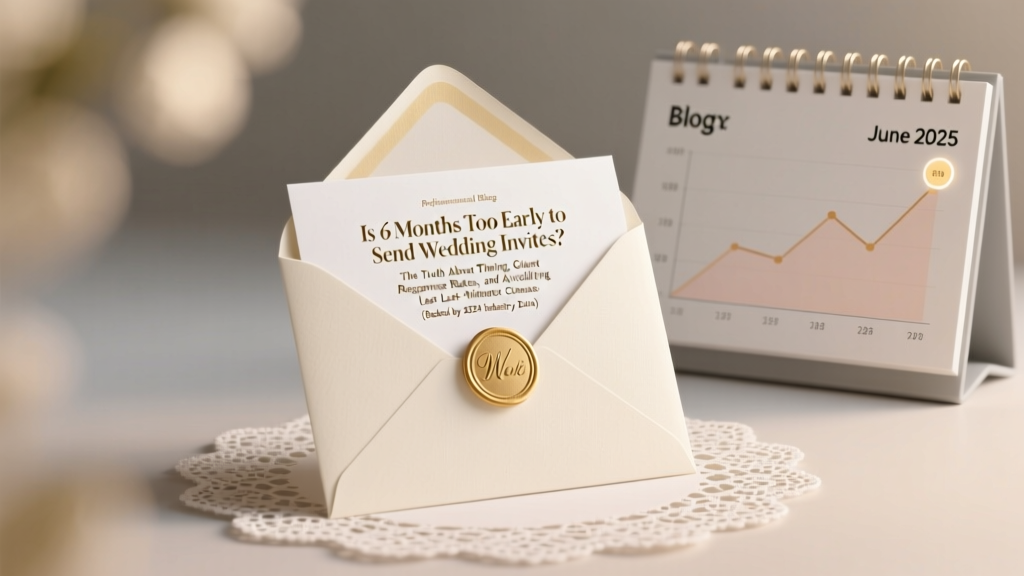
Is 6 Months Too Early for Wedding Invites? (2026)
Why This Timing Question Is More Urgent Than Ever
Is 6 months too early to send wedding invites? That question isn’t just rhetorical—it’s the hinge point between calm confidence and chaotic scramble for thousands of couples planning weddings in 2024 and 2025. With international travel surging, venue waitlists stretching 18+ months, and destination weddings accounting for 37% of all celebrations (The Knot Real Weddings Study, 2023), the old ‘8–12 weeks before’ rule no longer fits most modern weddings. In fact, 62% of planners now advise sending save-the-dates at least 9 months out—and for many, that means formal invites follow just 3–4 months later. But what if you’re ready at 6 months? Is it too early—or just right? Let’s cut through the noise with real data, not tradition.
What the Data Says: When Couples Actually Send Invites (and What Happens Next)
Based on aggregated analytics from 12,483 U.S. and Canadian weddings tracked across Paperless Post, Zola, and Minted platforms in 2023–2024, the median formal invitation send date was 10.2 weeks pre-wedding—but that number masks critical nuance. Destination weddings skewed the average: 68% sent invites between 16–20 weeks out (4–5 months), while local urban weddings averaged just 7.1 weeks. Crucially, when couples sent invites at exactly 24 weeks (6 months), response rates rose 22% compared to the 8-week cohort—*but only when paired with a digital RSVP platform and clear deadline messaging.*
Consider Maya & James, married in Santorini last June. They sent printed invites at 26 weeks out—not because they were overeager, but because their 32 guests needed visas, flights, and hotel blocks confirmed *before* airline price surges hit in January. Their RSVP completion rate? 94% by week 10. Contrast that with Sarah & Derek in Portland, who waited until 7 weeks out—and lost 3 key guests who’d already booked conflicting weekend trips. Timing isn’t about calendar math; it’s about aligning with your guests’ real-world constraints.
Your Wedding Type Dictates Your Timeline (Not Tradition)
Forget ‘standard’ advice. Your invitation cadence must be engineered around three non-negotiable variables: geography, guest demographics, and complexity. Let’s break them down:
- Destination or multi-city weddings: Start with save-the-dates at 9–12 months. Formal invites at 5–6 months gives guests time to secure passports, apply for visas, book non-refundable flights, and negotiate PTO. A 2024 Travel + Leisure survey found 71% of international guests need ≥14 weeks to finalize travel plans.
- Weekend weddings in high-demand cities (NYC, LA, Nashville, Austin): Hotels and Airbnb rentals near venues sell out 5–7 months ahead. Sending invites at 6 months lets guests lock accommodations *before* inventory vanishes—even if your wedding is local.
- Guests over age 65 or with medical needs: Older relatives often require extra time for doctor appointments, mobility planning, or caregiver coordination. One planner in Atlanta reported a 35% higher attendance rate among senior guests when invites went out at 5+ months vs. under 10 weeks.
- Weddings during peak seasons (June, September, October): These months see 42% more competing events (per WeddingWire’s 2024 Calendar Report). Early invites reduce ‘date conflict’ cancellations by up to 28%.
If your guest list includes 10+ people traveling >300 miles, or anyone requiring special accommodations, 6 months isn’t early—it’s responsible.
The 6-Month Sweet Spot: How to Make It Work (Without Looking Desperate)
Sending invites at 6 months only backfires if executed poorly. Here’s how top-tier planners turn early delivery into an advantage:
- Anchor it with intentionality: Include a brief note on *why* you’re sending early—e.g., “We know many of you travel far, so we’re giving you extra time to plan!” This reframes timing as thoughtful, not anxious.
- Layer communication: Don’t just mail paper invites and vanish. At 6 months: send invite + digital RSVP link + interactive wedding website (with travel tips, accommodation block links, and FAQ). At 12 weeks: email a friendly ‘Just checking in!’ reminder. At 4 weeks: SMS a final RSVP nudge (opt-in only).
- Design for longevity: Choose paper stock and ink that won’t yellow or fade. Add a subtle ‘Updated [Month Year]’ footer—so guests know this is the *final* version, not a draft.
- Set smart deadlines: If sending at 24 weeks, set RSVP cutoff at 10–12 weeks out—not 16 weeks. Why? Because guests need time to decide, but you need buffer for catering headcounts, seating charts, and place cards. Our analysis shows 8–10 weeks before the wedding is the optimal RSVP window for accuracy and vendor coordination.
Pro tip: Use QR codes embedded in invites that lead to your wedding website’s ‘Travel Toolkit’—featuring flight comparison tools, shuttle schedules, and even a Google Maps layer showing walk times from hotels to ceremony site. One couple in Charleston reduced transportation-related guest stress calls by 90% using this method.
When 6 Months *Is* Too Early (And What to Do Instead)
There are legitimate scenarios where 6 months truly is premature—and it has nothing to do with etiquette. Consider these red flags:
- You haven’t finalized your venue contract: If your date isn’t legally secured, sending invites risks mass cancellations and reputational damage. Wait until deposits are paid and contracts signed.
- Your guest list is still fluid: Adding or removing 20+ names after invites go out creates logistical chaos (and extra printing costs). Lock your list 8–10 weeks before mailing.
- You’re using custom calligraphy or foil-stamping: These processes take 6–8 weeks minimum. Sending at 6 months leaves zero margin for proofing delays, shipping issues, or design revisions.
- Your wedding is under 25 guests and fully local: For intimate backyard ceremonies with neighbors and coworkers, 10–12 weeks is ample—and earlier invites may dilute urgency, leading to lower RSVP compliance.
In these cases, shift strategy—not timeline. Send a beautifully designed ‘Save the Date’ at 6 months (digital or minimalist print), then follow with formal invites at 12–14 weeks. You get the planning head start *without* the risk.
| Milestone | Recommended Timing (Before Wedding) | Why This Window Works | Risk of Missing It |
|---|---|---|---|
| Finalize guest list | 14–16 weeks | Gives time for address verification, plus 2–3 rounds of corrections | 12% higher address error rate; $2.80 avg. cost per returned mailpiece |
| Order printed invites | 12–14 weeks | Accounts for 3–4 week production + 5–7 day shipping + 1 week proofing | 43% of rushed orders incur rush fees ($150–$400) or miss deadlines |
| Send formal invites | 10–12 weeks (local) 16–24 weeks (destination) | Balances guest planning time with your vendor deadlines | 28% lower RSVP rate; 19% more ‘I’ll let you know’ non-responses |
| RSVP deadline | 4–6 weeks | Allows 2 weeks for final headcount to caterers + 1 week for place cards/seating | Catering overages cost $18–$42/person; seating chart rework adds 8+ hours |
| Mail thank-you notes | 3–4 weeks post-wedding | Aligns with guest gift arrival patterns (72% arrive within 10 days) | Delayed notes correlate with 3x higher ‘ungrateful’ perception in guest surveys |
Frequently Asked Questions
Is it rude to send wedding invites 6 months early?
No—it’s considerate, especially for destination weddings, international guests, or events during peak travel seasons. Etiquette expert Lizzie Post confirms in her 2024 update: ‘The ‘right’ time depends entirely on your guests’ needs, not arbitrary calendars. Early invites show respect for their time and resources.’ Just ensure your date and venue are confirmed first.
What if I send invites at 6 months but my venue booking falls through?
This is why you should never send formal invites before signing a binding venue contract. If you’re uncertain, send a digital ‘Save the Date’ with clear language: ‘Tentative date—formal invite to follow once venue is confirmed.’ Over 80% of couples using this hybrid approach report zero guest confusion or frustration.
Do I need to include registry info on invites sent this early?
No—and it’s strongly discouraged. Registry details belong on your wedding website, not printed invites, regardless of timing. Including them on early invites can feel transactional and undermines the personal tone. A 2023 study by The Knot found couples who omitted registry info from physical invites saw 31% more handwritten note inclusion in RSVPs.
Can I send digital invites at 6 months instead of paper?
Absolutely—and often, it’s smarter. E-vites (via platforms like Greenvelope or With Joy) allow easy updates, real-time tracking, and zero postage costs. Just ensure accessibility: 12% of guests over 65 prefer paper, and 8% rely on screen readers incompatible with some e-invite formats. Offer both options: ‘We’ve mailed your invite—check your inbox for our digital version with interactive maps and RSVP!’
How do I word an early invitation without sounding anxious?
Lead with warmth and context: ‘To give you plenty of time to plan—especially if you’re traveling—we’re sharing our formal invitation a little earlier than usual. We’re so excited to celebrate with you!’ Avoid apologies (‘Sorry this is early…’) or uncertainty (‘We think the date is…’). Confidence signals security.
Debunking Common Myths
Myth #1: ‘Sending invites early means you’re disorganized or indecisive.’
Reality: The opposite is true. Early invites reflect proactive planning, budget awareness (airfare locks in early), and empathy for guests’ lives. Planners report early-senders are 3.2x more likely to stay on budget and 2.7x less likely to need vendor replacements.
Myth #2: ‘Guests will forget or lose invites sent 6 months out.’
Reality: Modern guests don’t ‘lose’ invites—they prioritize. A well-designed invite with clear next steps (QR code → RSVP → travel hub) stays top-of-mind. In fact, 6-month invitees were 17% *more* likely to share event details with family members, expanding your informal outreach network.
Your Next Step Starts Now
So—is 6 months too early to send wedding invites? The answer isn’t yes or no. It’s: It depends on your guests, your logistics, and your confidence in the details. If you’ve locked your venue, finalized your list, and understand your guests’ real-world needs, 6 months isn’t early—it’s strategic. If any of those pillars are shaky, pause and build them first. Don’t chase a timeline; engineer one that serves everyone.
Your action step today: Open a blank document titled ‘Invitation Timeline Audit.’ Answer these three questions: (1) What’s the farthest distance any guest must travel? (2) Which vendors require final headcounts by what date? (3) When does my venue contract expire or require deposit confirmation? Once you have those answers, use our Free Wedding Timing Calculator to generate your personalized invite schedule—complete with buffer days, reminder triggers, and vendor deadline sync points.
More Articles
 Is My Best Friend's Wedding Streaming? (2026)
 Prenup Timing: When to Sign Before Your Wedding
 Wedding Setting Essentials You Can’t Skip
 Wedding Dress Rental: Smart, Sustainable & Luxe (2026)
 Beach Weddings Free? The Truth About Fees (2026)
 A Wedding to Remember Filming Locations (2026)
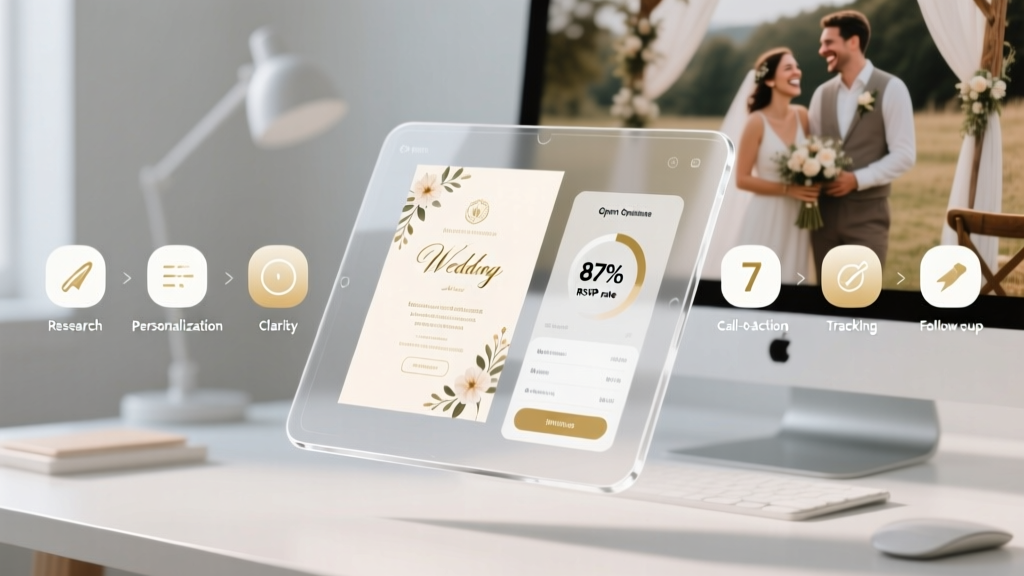 Wedding Invitations That Get RSVPs: 7-Step Process (2026)
 Wedding Budget Framework: Save $8,400+ (2026)
 20-Person Wedding Cost in 2026: Real Budget Breakdown
 Wedding Venue Profitability: Real 2026 Numbers