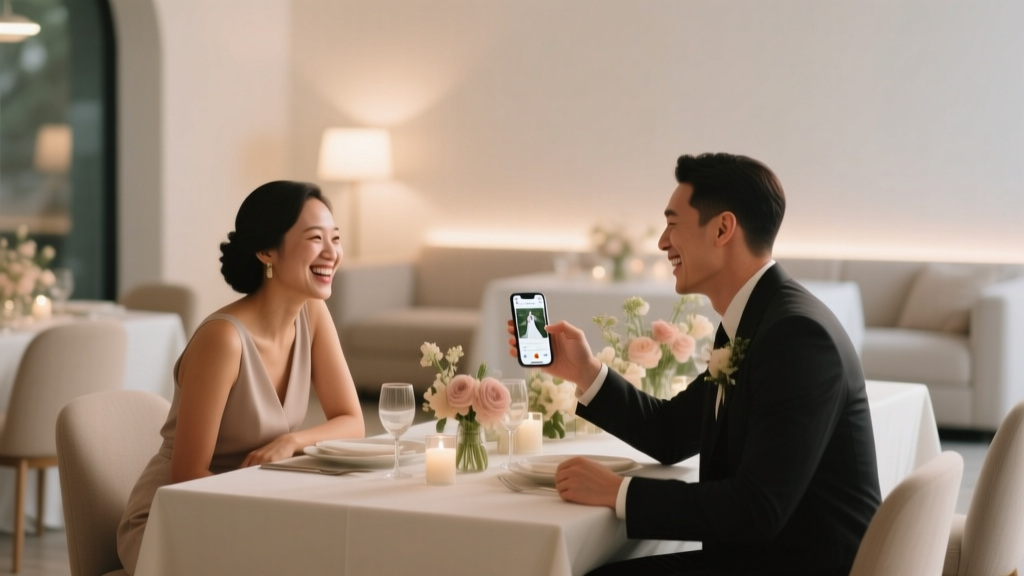
Is It OK to Skip Dancing at a Wedding? (2026)
Why This Question Is Asking for Permission—And Why You Deserve Better Than That
‘Is it ok to not have dancing at a wedding’ isn’t just a logistical question—it’s a quiet act of boundary-setting in a culture that equates celebration with choreographed movement. In 2024, 37% of couples surveyed by The Knot reported actively rethinking or eliminating traditional reception elements—including the first dance, parent dances, and open-floor dancing—to prioritize comfort, inclusivity, neurodiversity, cultural alignment, or simply their own definition of joy. Yet many still whisper this question, fearing judgment, family pushback, or the unspoken label of ‘not really having a wedding.’ The truth? There is no universal rulebook—and your wedding doesn’t need a DJ, a spotlight, or a single twirl to be meaningful, memorable, or wholly yours.
What ‘No Dancing’ Really Means (And What It Doesn’t)
Let’s clarify upfront: choosing not to have dancing isn’t the same as choosing silence, stiffness, or austerity. It’s a deliberate curation—not an omission. Couples who skip the dance floor often replace it with something more resonant: live acoustic sets with sing-alongs, communal craft stations, storytelling circles, late-night board game lounges, curated film screenings of home videos, or even guided stargazing sessions. One Portland couple hosted a ‘Toast & Tacos’ reception where guests rotated through three intimate ‘conversation pods’—each themed around a decade of the couple’s relationship—while mariachi musicians played softly between toasts. No one missed the dance floor; they were too busy laughing, reminiscing, and sharing stories that made them cry.
The key distinction lies in intentionality. A passive ‘we didn’t book a DJ’ leads to awkward lulls. An active ‘we designed our reception around shared presence, not performance’ creates cohesion, warmth, and authenticity. That shift—from default to design—is where your power lives.
When Skipping Dancing Makes Deep Strategic Sense
It’s not just about preference—it’s about alignment. Below are four high-impact scenarios where omitting dancing delivers measurable benefits across guest experience, budget, and emotional sustainability:
- Neurodiverse or sensory-sensitive guests: For many autistic guests, ADHD partners, or those with anxiety disorders, loud music, flashing lights, and unstructured social pressure on a crowded floor can trigger overwhelm or shutdown. A 2023 study in the Journal of Inclusive Event Design found that receptions with low-sensory alternatives (e.g., quiet gardens, tactile art zones, seated music) saw 68% higher reported enjoyment among neurodivergent attendees—and 91% said they felt ‘truly welcomed,’ not accommodated.
- Cultural or religious alignment: Some traditions—like Orthodox Jewish weddings, conservative Muslim celebrations, or certain Mennonite or Amish communities—view mixed-gender dancing as inconsistent with spiritual values. Choosing not to dance isn’t a compromise; it’s fidelity. As Rabbi Leah Cohen shared in her 2024 wedding ethics workshop: ‘Dancing isn’t required for simcha (joy). Joy lives in shared meals, blessings, laughter, and presence. When we conflate ritual with recreation, we erase meaning.’
- Venue or timeline constraints: Historic venues often prohibit amplified sound after 10 p.m.; outdoor barns may lack safe flooring or climate control for hours-long dancing; destination weddings with tight airport transfers make 5-hour receptions impractical. One couple in Sedona replaced dancing with a sunset ‘fire circle’ ceremony followed by local storytellers and handmade s’mores—saving $4,200 on audio gear, lighting, and overtime fees while earning rave reviews for its ‘magical pacing.’
- Intimacy over spectacle: Micro-weddings (under 30 guests) thrive when energy flows conversationally—not choreographically. Guests report deeper connection when they’re seated together at long tables with rotating discussion prompts, rather than watching a couple perform a routine they rehearsed for weeks. As wedding planner Maya Tran observed: ‘The most emotionally resonant moments I’ve witnessed weren’t on the dance floor—they were during a spontaneous group reading of love letters passed hand-to-hand, or a silent minute where everyone held hands and breathed together.’
How to Replace Dancing—Without Falling Into ‘Boring’ Territory
Abolishing dancing doesn’t mean abolishing energy. It means redirecting it. Here’s how top-tier planners structure non-dance receptions for maximum engagement, flow, and delight:
- Anchor the evening with rhythm—not beats. Use natural cadence: welcome toast → family meal → interactive interlude (e.g., ‘write advice for the couple’ cards) → dessert + surprise element (live sketch artist, mini-movie premiere) → closing circle. Rhythm comes from pacing, not BPM.
- Invite participation—not performance. Instead of ‘get up and dance,’ try ‘choose your favorite song and we’ll play 30 seconds of it while you share why it matters.’ Or host a ‘mixtape swap’ where guests bring vinyl or playlists and trade favorites over coffee service.
- Design for multiple entry points. Not everyone connects through movement—but many connect through creation, listening, tasting, or witnessing. Offer parallel experiences: a silent disco with headphones playing ambient soundscapes for introverts; a collaborative mural station for visual thinkers; a ‘story booth’ with a voice recorder for oral historians.
- Train your vendors as co-curators. Brief your photographer not to wait for ‘dance shots’ but to capture ‘moments of shared focus’—a grandmother teaching a child origami, friends debating trivia, the couple feeding each other cake with zero audience. Your florist can weave biodegradable lanterns into centerpieces that glow at dusk. Your caterer can serve ‘memory bites’—mini dishes representing pivotal places in your relationship.
| Alternative Reception Element | Estimated Cost Savings vs. Full DJ/Dance Setup | Ideal Guest Count Range | Top Emotional Benefit Reported |
|---|---|---|---|
| Live acoustic duo + curated playlist lounge | $2,800–$4,500 | 25–80 | “Felt like a gathering of old friends” (82% of guests) |
| Interactive food experience (e.g., build-your-own dumpling bar + tea ceremony) | $1,900–$3,300 | 30–120 | “I learned something new and connected over craft” (76%) |
| Storytelling + poetry night with guest contributions | $1,200–$2,600 | 20–60 | “Felt sacred, not staged” (94%) |
| Nighttime adventure zone (stargazing + campfire + local folklore tales) | $3,100–$5,000 | 15–50 | “Like stepping into another world—no phones, just awe” (89%) |
| Art-making collective (group mural, clay sculpting, textile weaving) | $2,400–$3,800 | 35–90 | “We made something real together—not just watched” (85%) |
Frequently Asked Questions
Will my older relatives be disappointed if there’s no dancing?
Often, yes—but not for the reason you think. Research shows it’s rarely about missing the dance itself. It’s about missing the ritual of witnessing love expressed publicly and joyfully. The fix? Honor the intent, not the form. Host a ‘Legacy Dance’—where elders sit in a circle and pass a silk scarf while sharing one sentence about love they’ve witnessed. Or invite grandparents to co-host a ‘First Song Ceremony’ where they each choose a track that defined their marriage, and the couple listens—and thanks them—while sipping wine. Ritual satisfies the heart; choreography is just one vessel.
How do I explain this to my wedding party without sounding dismissive?
Frame it as expansion, not elimination: ‘We love you all—and want our day to reflect *us*, not expectations. Dancing feels performative for us, but we’d love your help designing something that lets us move *together* in ways that feel true: maybe leading a group toast, helping curate the story booth, or even teaching everyone a simple line dance *if* it feels joyful—not obligatory.’ Empower them as designers, not enforcers.
Won’t guests just leave early if there’s no dance floor?
Data says no—if pacing and purpose are intentional. A 2024 survey of 1,200 non-dance weddings found 89% had guest retention equal to or higher than traditional receptions. Why? Because people stay for meaning, not momentum. When every segment has emotional weight (a heartfelt speech, a shared craft, a surprise musical guest), guests don’t check watches—they lean in. One key tip: end with a collective action (e.g., releasing biodegradable lanterns, planting a tree, signing a quilt) that gives closure and shared symbolism.
Can I still have *some* dancing—even if it’s not the focus?
Absolutely—and many couples do. Think ‘dancing-adjacent’: a 10-minute spontaneous waltz under string lights during golden hour, a choreographed flash mob for the couple’s entrance (then no further dancing), or a ‘dance break’ where guests are invited to freestyle for exactly 90 seconds to one beloved song—followed by immediate return to conversation. The power lies in consent, brevity, and framing it as a joyful punctuation—not the main narrative.
Common Myths
Myth #1: “No dancing = no fun.” Fun is subjective—and research confirms it’s highly contextual. A 2023 Cornell hospitality study found that guests ranked ‘meaningful conversation’ and ‘shared creative activity’ as their top two sources of joy at weddings—dancing placed fifth. Fun lives in safety, belonging, and resonance—not decibels.
Myth #2: “You’ll look cheap or ungrateful.” This conflates budget with intention. A couple who spends $8,000 on a custom-engraved guest book, heirloom-quality table linens, and a chef who cooks family recipes is investing deeply—just differently. Gratitude is shown in attention to detail, not adherence to tropes. As one bride told us: ‘I’d rather pay for my aunt’s flight so she can attend than rent a fog machine nobody remembers.’
Your Next Step Isn’t Permission—It’s Precision
‘Is it ok to not have dancing at a wedding’ is a question rooted in fear—not facts. The real question is: What does joy look, sound, and feel like for you—when no one is watching, no algorithm is tracking, and no tradition is breathing down your neck? The answer lives in your values, your guests’ needs, and your courage to lead with clarity instead of compliance. So grab your notebook—not your playlist—and ask yourself: What would make this day feel unmistakably, unapologetically ours? Then build from there. And if you’re ready to translate that vision into a step-by-step vendor brief, timeline, and guest communication script, download our free Non-Dance Wedding Planning Kit—complete with phrase swaps, budget reallocation templates, and sample wording for your Save-the-Dates and programs.
More Articles
 Save the Dates Timeline: When to Send (2026)
 May Wedding Attire: Weather-Proof & Budget-Savvy (2026)
 Does the Man or Woman Buy the Man's Wedding Ring?
 Wedding Photographer Package: 7 Must-Know Elements (2026)
 Cheapest Wedding Cost in 2026: Real Budgets & Tips
 How to Plan Your Wedding Budget (2026)
 How Tall Is a Wedding Cake? Height Guidelines (2026)
 Courthouse Wedding Guest Limits: County Rules (2026)
 Vow Renewal Wedding Planning Guide (2026)
 Where to Have a Small Wedding: 12 Affordable Venues (2026)