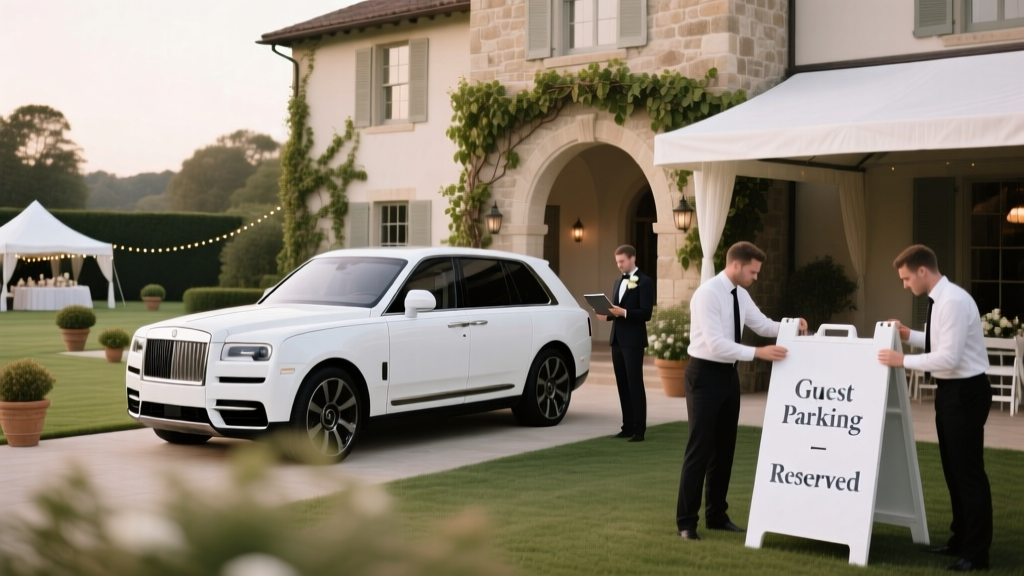
Wedding Parking and Logistics Planning Guide
Parking and logistics rarely make the Pinterest board, but they can make or break how your wedding day feels—for you and for everyone you love. When guests arrive calm, on time, and welcomed (instead of circling for a spot or hiking in heels), the whole day starts on a better note. And when you’re not fielding last-minute “Where do I go?” texts, you get to stay present for the moments you’ve been planning for months.
If you’re juggling a venue tour, vendor emails, and a guest list that somehow grew overnight, you’re not alone. Parking and transportation can feel like a puzzle with too many moving pieces—especially for weddings at private estates, city venues, vineyards, beaches, or anywhere with limited lots. The good news: a few smart decisions, made early, can prevent most day-of headaches.
This guide walks you through wedding parking and logistics planning like a trusted wedding planner friend would: what to decide, when to decide it, and how to communicate it so guests feel cared for from the moment they arrive.
What “Wedding Logistics” Really Includes
When couples hear “logistics,” they often think “parking,” but it’s bigger than that. Your plan should cover the full flow of arrivals, movement, and departures:
- Guest parking (capacity, overflow, accessibility)
- Transportation (shuttles, rideshare, valet, carpooling)
- Signage and wayfinding (where to park, where to enter, where to check in)
- Timing and traffic (arrival windows, rush hour, road closures)
- Vendor access (load-in routes, parking, power access)
- Weather contingencies (mud, snow, extreme heat, storms)
- Safety (lighting, security, intoxicated driving prevention)
Start With the Venue: Parking Reality Check
Before you book a shuttle or create signage, get the facts. Ask your venue for specifics in writing—then confirm again a month out.
Questions to Ask Your Venue
- How many parking spots are available on-site?
- Is parking included in the venue fee?
- Is the lot paved, gravel, grass, or street parking?
- Are there restrictions on shuttles, buses, or valet companies?
- What time can guests arrive and when must cars be off-site?
- Are there accessible parking spots near the entrance?
- Is lighting available for evening departures?
- Is there a separate entrance for vendors and deliveries?
- What happens if the lot fills up—where is overflow parking?
- Are there local noise/traffic ordinances that affect arrivals or departures?
Real-World Scenario: The “Charming Barn” With 30 Spots
A 120-guest wedding at a barn venue sounds perfect until you realize the property only has 30 parking spaces—especially if guests arrive in couples and families driving separately. In this case, your best solution might be:
- Reserve an overflow lot at a nearby church or school.
- Run a continuous shuttle loop 45 minutes before ceremony through 30 minutes after.
- Add clear signage at both locations and a greeter at the overflow lot.
Estimate Parking Needs (Without Guessing)
Here’s a simple way to estimate how many spots you’ll need. It’s not perfect, but it’s reliable enough to plan with.
Quick Parking Calculator
- Local guests: assume 2–2.5 guests per car
- Out-of-town guests staying at hotels: assume 2–3 guests per car (often more carpooling)
- Family-heavy guest lists: assume closer to 2 guests per car
- Friends-heavy guest lists: assume closer to 2.5–3 guests per car
Example: 140 guests / 2.3 guests per car ≈ 61 cars (plus vendors). If your venue has 50 spaces, you’ll need overflow parking or transportation for at least 10–15 cars.
Don’t Forget Vendor Parking
Vendors often need space close to load-in. Plan for:
- Planner/coordinator
- Photography and video (often 2 vehicles)
- Catering team (sometimes multiple vans)
- Band/DJ
- Florist delivery
- Rentals company trucks
Choose the Right Transportation Plan
Your transportation plan depends on venue location, parking capacity, guest comfort, and budget. These are the most common options for wedding transportation logistics.
Option 1: On-Site Self-Parking
Best for venues with plenty of spots and easy access.
- Pros: simplest, usually least expensive
- Cons: traffic at arrival, guests may park far away, accessibility can be tricky
Option 2: Shuttle From Hotel(s)
Ideal for weddings with out-of-town guests or limited venue parking.
- Pros: reduces parking needs, supports safety, keeps guests together and on time
- Cons: requires tight scheduling, adds cost, needs clear communication
Option 3: Off-Site Parking + Shuttle Loop
Great for private estates, vineyards, beach weddings, and mountain venues.
- Pros: solves capacity issues, keeps venue roads clear
- Cons: requires staffing and signage at the off-site lot
Option 4: Valet Parking
Perfect for city venues with limited street parking or upscale locations where guest experience is a priority.
- Pros: polished, reduces congestion, helpful for older guests
- Cons: can be pricey, needs a safe staging area and insurance
Option 5: Rideshare-Friendly Plan
Works best for downtown weddings and venues with a clear pickup/drop-off point.
- Pros: flexible, often cheaper than shuttles for smaller weddings
- Cons: unreliable in rural areas, surge pricing, poor cell service can cause delays
Step-by-Step Wedding Parking & Logistics Checklist
Use this as your planning roadmap—especially if you’re building your wedding day timeline now.
3–6 Months Before
- Confirm parking capacity with the venue and ask about overflow options.
- Map guest travel patterns: Are most people local? At one hotel? Spread across town?
- Decide on transportation: self-park, shuttle, valet, rideshare plan, or a mix.
- Get quotes from shuttle/coach companies and valet services.
- Identify accessibility needs (guests with mobility aids, elderly relatives, parents with strollers).
2–3 Months Before
- Reserve any overflow lots (church, school, nearby business). Ask about permissions and hours.
- Finalize your transportation schedule: first pickup, last pickup, and loop frequency.
- Design your parking plan (where guests park vs. where vendors park).
- Create a communication plan for invitations, wedding website, and day-of signage.
4–6 Weeks Before
- Walk the property at the same time of day as your wedding (lighting and traffic feel different).
- Confirm staffing: attendants, greeters, or a security person if needed.
- Order signage (directional signs, “Parking,” “Shuttle Pickup,” “Drop-Off”).
- Send final logistics to vendors including load-in route and parking instructions.
Wedding Week + Day-Of
- Print a one-page logistics sheet for your coordinator and key family members.
- Set up cones, flags, or rope lines to guide cars before guests arrive.
- Place signage starting from the nearest major turn, not just at the venue entrance.
- Assign a point person for transportation issues (not you).
- Do a final test: confirm shuttle driver has the correct address and contact number.
Timeline Advice: When Should Guests Arrive?
Late arrivals often come down to unclear arrival windows. Build a realistic buffer based on your venue type.
Recommended Arrival Windows
- City venues: ask guests to arrive 30–45 minutes early (parking garages, elevators, traffic lights)
- Rural venues/private estates: 45–60 minutes early (two-lane roads, longer walks, shuttle loops)
- Beach/mountain locations: 60 minutes early (limited access roads, weather, uneven terrain)
Pro tip: If you’re running a shuttle, set your first shuttle arrival at the venue at least 45 minutes before the ceremony, with continuous loops until 15 minutes before start time.
Budget Considerations (What Parking & Transportation Actually Costs)
Every region is different, but these ranges can help you plan your wedding budget realistically.
- Shuttle/coach buses: often priced by hourly minimums (commonly 4–6 hours) plus mileage
- School buses: sometimes more affordable for short distances (ask about comfort and policies)
- Valet: typically priced per attendant per hour, sometimes with a management fee
- Parking attendants: a cost-effective alternative to valet (they direct parking but don’t park cars)
- Signage and lighting: small line items that make a big difference at night
- Permits/insurance: may be required for street parking control, shuttles, or off-site lots
Smart savings idea: If most guests are staying at one hotel, run a shuttle only from that hub rather than multiple pickup points. Another option is a ceremony-to-reception shuttle only if you’re hosting at two locations.
Communication: How to Tell Guests Exactly What to Do
Even the best plan falls apart if guests don’t understand it. Share parking instructions in three places: your wedding website, your invitation suite (or details card), and day-of signage.
Wedding Website Wording Example
Parking: On-site parking is limited. Please park at Riverside Church (123 Oak St.) and take the complimentary shuttle to the venue. Shuttles run continuously from 3:30–4:45 PM. The last shuttle to the ceremony departs at 4:45 PM. Rideshare drop-off is available at the venue entrance.
Day-Of Signage Must-Haves
- Directional signs from the main road (start earlier than you think)
- “Guest Parking” vs. “Vendor Parking”
- “Shuttle Drop-Off” and “Shuttle Pick-Up” (with arrows)
- Lighting or reflective signs for nighttime exits
Common Mistakes to Avoid (and How to Fix Them)
- Mistake: Assuming guests will carpool.
Fix: Plan for more cars than you hope for, especially with families and older guests. - Mistake: Scheduling one shuttle trip instead of a loop.
Fix: Continuous loops reduce stress and prevent “missed the bus” panic. - Mistake: No plan for poor cell service.
Fix: Provide printed directions on your website and add signage at key turns. - Mistake: Forgetting about weather and ground conditions.
Fix: Avoid grass parking if rain is possible, or rent trackway/mats and have a tow contingency. - Mistake: No accessible route from parking to ceremony.
Fix: Reserve close spots and consider a golf cart or designated drop-off for mobility needs. - Mistake: Letting vendors compete for guest parking.
Fix: Assign vendor parking and load-in areas clearly on a shared diagram.
Wedding Planner Pro Tips for a Smooth Arrival and Exit
- Assign a transportation captain: a coordinator, trusted friend, or hired attendant who can make real-time calls.
- Build a “late arrival plan”: a side entrance or usher who can quietly seat guests without disrupting vows.
- Plan the exit like you plan the entrance: guests leaving at once can bottleneck small roads. Stagger shuttle departures for 30–60 minutes.
- Use cones and simple fencing: it’s inexpensive and dramatically improves traffic flow in fields and driveways.
- Create a one-page logistics map: include addresses, routes, and contact numbers for shuttle/valet plus your coordinator.
- Protect the couple’s arrival: if you’re doing a private first look or want a calm pre-ceremony moment, keep your arrival route separate from guest traffic.
Special Scenarios Couples Often Face
Scenario: City Wedding With No Lot
If your venue is downtown with street parking and garages nearby, guests need clarity and backup options.
- List 2–3 nearby garages on your wedding website with addresses and rates.
- Consider valet if your budget allows and the venue can support it.
- Add a clear rideshare drop-off point to avoid traffic jams at the entrance.
Scenario: Two Locations (Ceremony + Reception)
Split-location weddings can be lovely—and logistically tricky.
- If parking differs between locations, state it plainly (“Park at the church lot; reception has valet”).
- Consider a shuttle for guests who may not want to drive after cocktails.
- Pad the timeline: travel time + 10–15 minutes for actual loading/unloading.
Scenario: Backyard Wedding on a Narrow Street
Neighborhood weddings need extra care so you’re not disrupting neighbors or blocking emergency access.
- Encourage rideshare or carpooling.
- Rent an off-site lot and shuttle if street parking is limited.
- Check local rules about street parking, signage, and noise.
FAQ: Wedding Parking and Logistics
Do we really need a shuttle for our wedding?
Not always. A shuttle is most helpful when on-site parking is limited, guests are staying at a hotel block, the venue is remote, or you want to reduce drinking-and-driving risk. If most guests are local and the venue has ample parking, clear signage and an arrival buffer may be enough.
How many parking spots should we plan for?
A practical estimate is one car per 2–2.5 guests, plus vendor vehicles. If your guest list includes many families driving separately, plan closer to one car per 2 guests.
What’s the best way to handle rideshare drop-offs?
Create a dedicated drop-off/pick-up point that won’t block traffic—ideally with a sign and lighting. Share the exact address and any gate codes on your wedding website so drivers don’t get lost.
When should we share parking instructions with guests?
Start early and repeat often: add basics to your wedding website as soon as you know them, include key details on your invitation details card (or digital invite), and send a reminder 1–2 weeks before the wedding.
Do we need parking attendants?
If parking is anything other than a simple paved lot, attendants are worth considering. They help maximize space, keep lanes open, and prevent guests from parking in areas that create safety issues or block vendor access.
What’s the biggest logistics detail couples forget?
Lighting. Guests leaving at night need a well-lit path from the venue to parking or shuttles, plus visible signs for the exit. A few portable lights can prevent falls, frustration, and delays.
Your Next Steps (A Simple Plan You Can Tackle This Week)
- Ask your venue for a written parking count, a site map, and overflow options.
- Estimate your car count using your guest list and decide if you need a shuttle, valet, or attendants.
- Draft parking instructions for your wedding website and save them in one place.
- Build a realistic arrival window into your wedding day timeline (and add buffer time).
- Assign a day-of transportation point person so you’re not managing traffic in wedding attire.
You’re allowed to want a wedding day that feels easy—for you and for your guests. A solid parking and logistics plan is one of the kindest things you can do behind the scenes, and it pays off in a calmer, happier celebration.
Want more planning support? Browse more practical wedding planning guides on weddingsift.com—we’ll help you think through the details so you can focus on the joy.
More Articles
 Wedding Cancellation Checklist: Compassionate & Legal (2026)
 How to Plan a Wedding That Celebrates Your Journey Together
 Georges Hobeika Wedding Dress Prices (2026)
 How Long Is Wedding Ceremony? Data-Backed Timing Guide
 Wedding Processional Order: Expert Guide (2026)
 Wedding Dress Styles: Find Your Perfect Silhouette
 How to Print Wedding Table Numbers (2026)
 May Formal Wedding Guest Dress Rules (2026)
 Wedding Photography Leads: 7 Low-Cost Tactics (2026)
 Pyramid Wedding Cost: Real 2026 Budgets (From $8.5K–$65K)