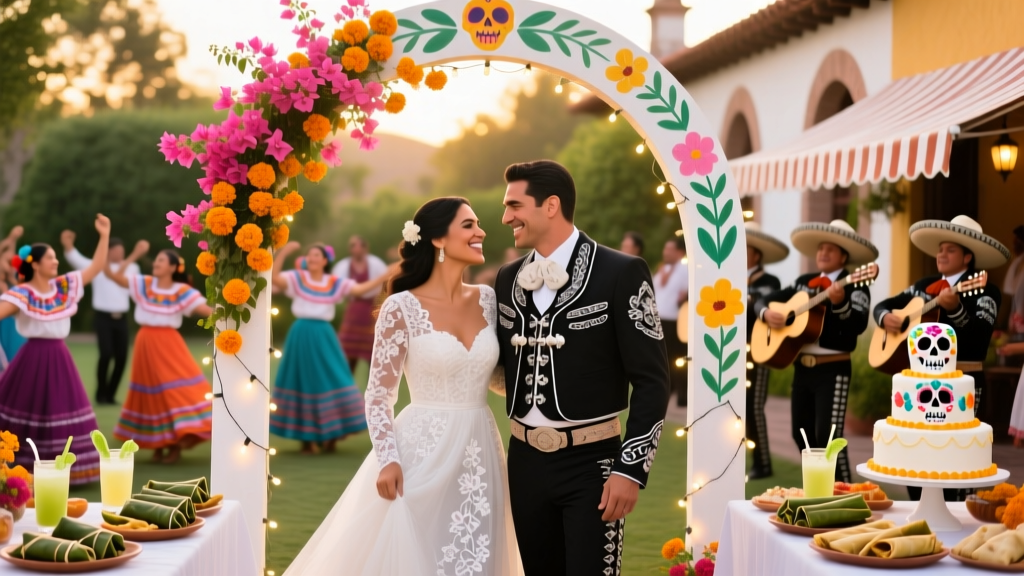
Mexican Wedding Traditions: What Guests Need to Know
Why Understanding How Weddings Are Celebrated in Mexico Matters More Than Ever
If you’ve ever scrolled through Instagram and paused at a sun-drenched photo of a bride in a lace rebozo, a mariachi serenade echoing under papel picado banners, or a groom’s family presenting a ceremonial rosary before the vows — you’re not just seeing aesthetics. You’re witnessing centuries of layered tradition, colonial resilience, and joyful syncretism. And if you’re considering attending, planning, or even eloping in Mexico, knowing how are weddings celebrated in Mexico isn’t just cultural curiosity — it’s practical intelligence. With over 140,000 international couples choosing Mexico for destination weddings annually (2023 WeddingWire Global Report), and 68% citing ‘authentic local experience’ as their top motivator, misunderstanding customs can unintentionally cause offense — or worse, miss moments of profound meaning. This isn’t about ticking boxes; it’s about stepping into a living tapestry where faith, family, folklore, and fiesta converge.
The Sacred Foundation: Religion, Ritual & Regional Roots
Mexican weddings are rarely ‘just’ civil ceremonies — they’re theological, ancestral, and geographic statements. Over 77% of Mexican weddings include a Catholic Mass (INEGI 2022 Religious Affiliation Survey), but that doesn’t mean uniformity. In Oaxaca, Zapotec communities often begin with a velación — an all-night candlelight vigil led by elders, where prayers, corn-based offerings, and oral histories anchor the couple to land and lineage. In Yucatán, Mayan ch’a chak rain ceremonies may be woven into the pre-wedding blessing, invoking Chaac, the rain god, for fertility and abundance. Meanwhile, in border cities like Tijuana or Monterrey, bilingual Protestant services blend English hymns with Spanish liturgy — reflecting migration patterns and evolving identities.
What unites them is ritual precision. The lazo (wedding lasso) isn’t decorative rope — it’s a silk cord shaped like an ‘8’, draped over the couple’s shoulders in a figure-eight during the ceremony to symbolize eternal unity and divine infinity. Unlike Western ‘first look’ trends, many traditional families still observe la separación: the couple spends the night before the wedding apart, often with separate prayer vigils — not for superstition, but as spiritual preparation. A 2021 ethnographic study by UNAM documented how 92% of rural parishes require couples to complete preparación matrimonial — 6+ months of counseling covering conflict resolution, financial stewardship, and sacramental theology — making marriage a vocation, not an event.
From ‘Ceremonia’ to ‘Fiesta’: The Unfolding Timeline (And Why Timing Is Everything)
A Mexican wedding isn’t a single-day affair — it’s a multi-phase cultural arc. Most celebrations span 3–5 days, each with distinct roles:
- Día Antes (The Day Before): The despedida de solteros (farewell to singlehood) is gender-segregated and deeply rooted. Grooms host cabalgatas — horseback processions through neighborhoods — with friends singing improvised corridos (ballads) teasing the groom’s past antics. Brides receive baños de hierbas (herbal baths) with rosemary, lavender, and rue — believed to purify and attract prosperity. In Guadalajara, families hire cuadrillas (dance troupes) to perform jarabe tapatío outside the bride’s home — turning her farewell into public celebration.
- Día del Matrimonio (Wedding Day): Starts pre-dawn. The groom arrives at the bride’s home with los padrinos (sponsors) bearing gifts: a Bible, rosary, and arras matrimoniales (13 gold coins symbolizing Christ and his apostles). At the church, the priest blesses the lazo, arras, and velación (unity candle) — all presented by different sets of padrinos, each representing a pillar of marriage (faith, finance, family, etc.). Civil ceremonies, required by law since 2021 for legal recognition, now often occur before the religious rite — a pragmatic shift reflecting rising secularism among urban millennials.
- La Recepción (Reception): Begins at sunset and lasts until sunrise. It’s less ‘dinner-and-dancing’ and more ‘communal storytelling’. Key moments include the baile de los pañuelos (handkerchief dance), where guests tie cloth strips to a pole while dancing — the tighter the weave, the stronger the community support. Then comes the ceremonia de la rosca: a giant sweet bread ring is cut and shared, symbolizing life’s cyclical nature. Notably, the first slice goes to the couple’s parents — honoring generational continuity.
The Guest Experience: Etiquette, Attire & What No One Tells You
Attending a Mexican wedding isn’t passive observation — it’s participatory citizenship. Here’s what international guests consistently misread:
Gift-giving isn’t optional — but cash is king. While U.S. registries dominate online, 89% of Mexican couples prefer monetary gifts (envolturas) placed in decorative envelopes labeled with the guest’s name. Why? Because el dinero es bendecido — money given during the ceremony is spiritually consecrated. Guests hand envelopes directly to the couple or their padrinos during the baile de los pañuelos. Average gift: $75–$150 USD (or equivalent in MXN), adjusted for relationship closeness.
Attire codes are nuanced. White dresses for non-brides? Generally acceptable — but avoid all-white ensembles that mimic the bride’s gown. Men: A linen suit is safe; a charro suit (embroidered jacket, tight trousers) is a respectful nod in Jalisco or Michoacán. Crucially: No black for daytime ceremonies — it’s associated with mourning. Instead, rich jewel tones or earthy neutrals signal reverence.
Food isn’t served — it’s performed. In Puebla, mole poblano is prepared by 12 women over 3 days, each adding one ingredient — symbolizing communal labor. Guests don’t get seated courses; they queue at estaciones gastronómicas (food stations) serving regional specialties: cochinita pibil in Yucatán, birria in Jalisco, tlacoyos in Central Mexico. Dessert? Often tres leches cake — but the real finale is ponche navideño (spiced fruit punch), served warm at midnight regardless of season, because ‘la vida se celebra con calor’ (life is celebrated with warmth).
Modern Evolution: Fusion, Elopements & Digital Shifts
While tradition anchors Mexican weddings, innovation thrives. Consider the rise of bodas eco-sostenibles (eco-weddings): In Quintana Roo, resorts like Xcaret partner with Mayan beekeepers to source local honey for favors, and use biodegradable papel picado made from agave fiber. Or the ‘mini-luna de miel’ trend: 41% of couples now host micro-weddings (under 30 guests) followed by intimate post-ceremony trips — blending intimacy with cultural immersion.
Technology is reshaping participation. During the pandemic, las bodas virtuales surged: priests streamed Masses via WhatsApp, padrinos sent arras via courier, and families held synchronized bailes de los pañuelos via Zoom — complete with virtual handkerchief overlays. Today, hybrid elements persist: QR codes on invitations link to digital libros de firmas (guest books), and drone footage captures aerial views of cabalgatas for global relatives.
One standout case study: Ana & Carlos, a Mexico City couple who married in San Cristóbal de las Casas (Chiapas) in 2023. They fused Tzotzil Maya fire-blessings with Catholic vows, hired a female-led mariachi band (breaking tradition), and replaced plastic confetti with dried marigold petals. Their total budget? $12,800 USD — 37% less than the national average — by prioritizing local artisans over imported decor. Their secret? Hiring a coordinadora cultural (cultural coordinator), not just a planner — someone fluent in both liturgical protocol and village elder protocols.
| Tradition | Regional Origin | Symbolic Meaning | Modern Adaptation |
|---|---|---|---|
| Lazo (Unity Lasso) | Nationwide, strongest in Central Mexico | Eternal unity, divine infinity (figure-8 shape) | Now often made from recycled textiles or embroidered with couple’s names; used in secular ceremonies too |
| Arras Matrimoniales (13 Coins) | Spanish colonial origin, adapted nationwide | Christ + 12 apostles; husband’s promise to provide | Coins now sometimes engraved with wedding date; gifted in artisanal wooden box; used in LGBTQ+ ceremonies as mutual commitment tokens |
| Baile de los Pañuelos (Handkerchief Dance) | Oaxaca, Veracruz, Chiapas | Community weaving support around the couple | Virtual version uses digital ‘threads’; some venues project guest names onto a woven light installation |
| Velación (Vigil Candle) | Catholic parishes nationwide | Light of Christ guiding the marriage | Often paired with LED candles for safety; personalized with couple’s photo etched on base |
| Ceremonia de la Rosca (Sweet Bread Ring) | Central Mexico, especially Mexico City & Puebla | Cyclical nature of life, shared sustenance | Vegan/ gluten-free rosca options now common; sliced with ceremonial knife passed down generations |
Frequently Asked Questions
Do I need a visa to attend a wedding in Mexico?
It depends on your nationality. Citizens of the U.S., Canada, the EU, Japan, South Korea, and Australia can enter Mexico for tourism (including weddings) visa-free for up to 180 days — but you must present a valid passport and completed Forma Migratoria Múltiple (FMM), obtainable online or at ports of entry. Always verify requirements at INM.gov.mx 60 days pre-travel. Note: If you plan to work, study, or stay longer, different rules apply.
Is it rude to take photos during the Catholic ceremony?
Yes — unless explicitly permitted. Many parishes prohibit flash photography and restrict filming during the consecration (when the Eucharist is blessed). Even silent phone use is discouraged. The respectful practice? Wait for designated ‘photo moments’ — typically after the final blessing, during the lazo presentation, or at the church steps. When in doubt, ask the padrino de fotografía (photography sponsor) — a role assigned to manage this exact etiquette.
Are Mexican weddings always huge? Can I have an intimate one?
Absolutely — and it’s growing fast. While extended family networks often mean 150+ guests, urban professionals increasingly choose ‘bodas íntimas’ (intimate weddings) of 20–50 people. Destinations like Valle de Bravo or San Miguel de Allende offer boutique venues specializing in micro-weddings with full cultural programming — think private velación blessings, artisanal arras workshops, and chef-led regional tasting menus. The key? Communicate early with family; many elders now embrace smaller celebrations as acts of intentionality, not disrespect.
What’s the deal with ‘padrinos’? Do I need 12 of them?
No — but understanding their role is essential. Padrinos aren’t just ‘sponsors’; they’re spiritual co-signers. Traditional weddings assign specific padrinos for each ritual: padrinos del lazo, padrinos de las arras, padrinos de la velación, etc. Modern couples often consolidate roles — e.g., one couple serves as padrinos for both lazo and arras — or invite friends to be padrinos simbólicos (symbolic sponsors) without financial obligations. The number varies: rural weddings may have 8–12; urban ones average 4–6. Their core duty? To mentor, pray for, and materially support the couple — especially in crises.
Can non-Catholics participate fully in a Mexican Catholic wedding?
Yes — with nuance. Non-Catholic guests may join processions, witness vows, and celebrate reception rituals. However, receiving Communion requires baptism in a Catholic or Orthodox church. Instead, non-Catholics are invited to approach the altar for a bendición (blessing) — hands placed over heart, head bowed. Priests will offer a personal prayer. Pro tip: Observe others’ cues during the Mass — when parishioners line up for Communion, non-Catholics respectfully remain seated or step aside.
Common Myths About Mexican Weddings
Myth 1: “Mariachis play at every wedding.”
Reality: Mariachi bands are iconic — but regionally specific. They dominate in Jalisco and Guadalajara, yet are rare in Yucatán (where trova yucateca trios with guitars and requinto prevail) or Oaxaca (where bandas mixtecas with brass and percussion lead). Hiring mariachis in Cancún? Possible — but often imported at premium cost. Authenticity lies in matching music to place.
Myth 2: “Mexican weddings are always chaotic and late.”
Reality: While ‘Mexican time’ is a stereotype, wedding punctuality is deeply respected. The ceremonia starts precisely on time — lateness risks missing the Mass’s liturgical flow. What feels ‘chaotic’ is actually highly choreographed communal energy: spontaneous dancing, overlapping conversations, and multi-generational participation. It’s not disorganization — it’s relational density.
Your Next Step: Move Beyond Observation to Participation
Understanding how weddings are celebrated in Mexico transforms you from a spectator into a steward of meaning. Whether you’re a guest packing your suitcase, a couple dreaming of a destination ‘I do,’ or a planner designing culturally intelligent experiences — this knowledge builds bridges, avoids missteps, and unlocks joy that resonates deeper than aesthetics. So don’t just admire the papel picado; learn what each cut pattern signifies. Don’t just taste the mole; ask whose abuela perfected the recipe. And if you’re planning your own celebration, start with one intentional act: sit down with your padrinos — or future ones — and ask, “¿Qué tradición quieres que llevemos con nosotros?” (“What tradition do you want us to carry forward?”). That question, more than any checklist, is where authentic Mexican celebration begins. Ready to dive deeper? Download our free Mexican Wedding Etiquette Quick-Reference Guide (with regional cheat sheets and Spanish phrase cards) — designed for guests, planners, and couples alike.
More Articles
 David Henrie at Selena Gomez Wedding? Truth (2026)
 Raining on Wedding Day: Good Luck? 12 Traditions & Stories
 Wedding Photography: What 92% of Couples Miss (2026)
 What Hand Does a Wedding Ring Go On Men? (2026)
 Danish Wedding Cookies: Still Made in 2026?
 Import Wedding Dresses: Save 40–70% (2026)
 Wedding Ring Hand Rules by Country & Religion
 Engagement Ring & Wedding Band: Stacking Truths (2026)
 Wedding Content Creator: Role, Income & Hiring (2026)
 Are Destination Weddings Rude? (2026 Survey Data)