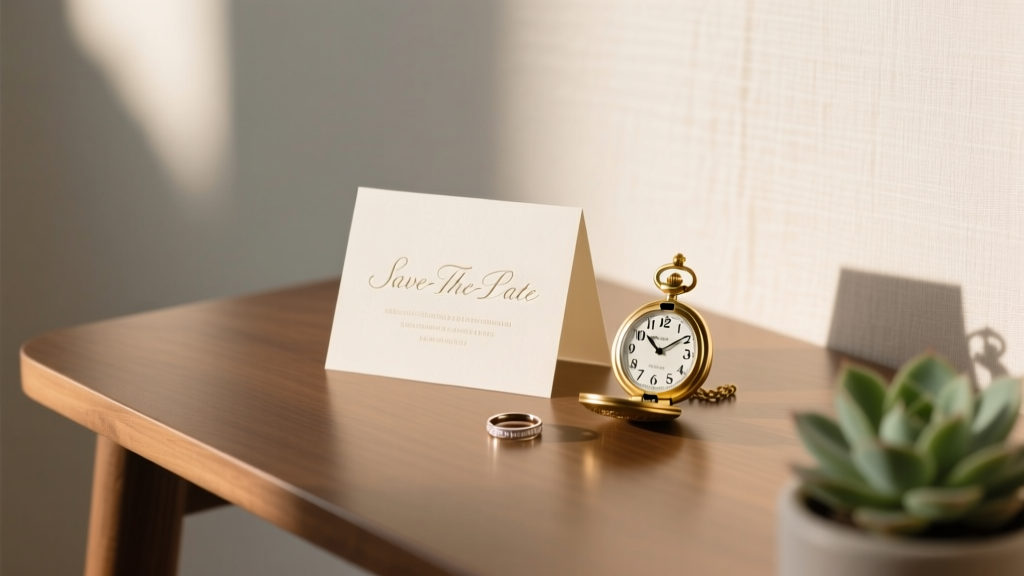
When to Send Save the Date Cards Timing Guide
When to Send Save the Date Cards: A Timing Guide You Can Actually Use
If you’ve booked a date and venue, you’ve probably heard the chorus: “Don’t forget the save the dates!” Then comes the real question—when are you supposed to send them? Too early feels presumptuous. Too late feels… pointless. And if you’re planning a destination wedding, a holiday weekend, or you have out-of-town guests, the pressure can feel even higher.
Save the date timing matters because it sets expectations, helps your VIPs plan travel and time off, and quietly signals how formal (or flexible) your celebration will be. The good news: there’s a clear window that works for most couples, plus simple rules for special situations.
Q: When should we send save the date cards?
A: Most couples should send save the date cards 6–8 months before the wedding. If you’re planning a destination wedding or a date that’s tough to travel for (holiday weekend, peak season, remote location), send them 9–12 months ahead. If your wedding is smaller or mostly local, 4–6 months can still work.
Think of save the dates as your “heads-up,” not your full invitation. You’re giving guests enough notice to protect the date before calendars fill up.
Q: Why is 6–8 months the sweet spot?
Six to eight months gives guests time to:
- Request time off work (especially for weekday weddings or travel-heavy weekends)
- Book flights and hotels before prices spike
- Arrange childcare or pet care
- Coordinate travel with other friends and family attending
It also protects you. Many couples adjust details after booking the venue—start time, hotel block, rehearsal dinner plans—so sending save the dates too far in advance can create confusion if you’re still finalizing the basics.
Real-world perspective: “Six to eight months is my go-to recommendation because it’s the best balance of helpful and accurate,” says Marissa Cole, a fictional but realistic wedding planner in Chicago. “Your guests can plan, but you’re not locked into decisions you haven’t made yet.”
Q: What counts as “early” or “late” for save the dates?
Early: 12–14+ months out. This can be totally appropriate for destination weddings, major holidays, or very large guest lists where travel is common. It’s less ideal if you’re still debating the venue or date flexibility.
Late: Inside 4 months. At that point, many guests have already committed to other plans, and you’re close to when wedding invitations typically go out (usually 6–8 weeks before the wedding). Save the dates sent too late can feel redundant.
If you’re already inside the window: You can skip save the dates and send invitations a little earlier (around 10–12 weeks out), especially for a wedding with lots of travelers.
Q: What timing should we use for different wedding scenarios?
Traditional, mostly local wedding
Send save the dates: 6 months before (up to 8 if you want extra cushion).
Example: Saturday wedding in your hometown, most guests live within driving distance.
Modern approach: digital save the dates
Send: 6–8 months before, just like paper. Digital doesn’t mean “later”—it just means faster delivery and easier updates.
Trend note: Many couples are choosing digital save the date options (email, text, or online platforms) to save on printing and postage and to link directly to a wedding website. If you go digital, include one clear call-to-action: “Save the date—formal invitation to follow” and a link to your site if it’s ready.
Destination wedding
Send save the dates: 9–12 months before.
Why: Guests need time to budget and plan travel documents, and they’ll appreciate early notice for flight deals.
Couple experience: “We sent ours at 11 months for our Mexico wedding,” says Janelle & Priya (fictional). “It gave everyone time to coordinate PTO and book rooms in the same resort block. We still had a few declines, but no one said it was too early.”
Holiday weekend or peak travel season
Send: 9–12 months before.
Dates that fill up fast: Memorial Day weekend, Labor Day weekend, Thanksgiving-adjacent dates, New Year’s Eve, and summer Saturdays in popular vacation areas.
Very large guest list (150+), lots of out-of-town guests
Send: 8–10 months before.
Why: More travel coordination, more “checking with other relatives,” and more calendar conflicts.
Small wedding or micro wedding
Send: 4–6 months before can be fine, especially if guests are local and flexible.
Tip: If you’re keeping it intimate, save the dates can double as a warm announcement—just don’t include RSVP requests yet.
Q: Do we send save the dates to everyone?
A: Only send save the dates to guests you are truly inviting. A save the date is essentially a promise. It’s awkward to send one and later realize you can’t include them.
If you’re still finalizing your guest list, wait. Or send save the dates only to your “definitely yes” circle (immediate family, wedding party, closest friends) until you’re confident about the full count.
Q: What should a save the date include (so timing doesn’t backfire)?
Keep it simple and clear:
- Your names
- Wedding date
- City and state (or country) of the wedding
- “Invitation to follow” (or similar wording)
- Your wedding website (optional, but helpful if it has travel basics)
Modern etiquette tip: If you don’t have your venue nailed down, list the city/region only. Don’t guess. Guests will plan around what you tell them.
Q: When should invitations go out after save the dates?
Most invitations go out 6–8 weeks before the wedding. For destination weddings, many couples send invitations 10–12 weeks before, especially if guests need to finalize travel.
A helpful planning rhythm:
- Save the dates: 6–8 months out (9–12 for destination/holiday)
- Invitations: 6–8 weeks out (10–12 for destination)
- RSVP deadline: about 3–4 weeks before, depending on your caterer
Q: What if we’re behind—can we send save the dates late?
Yes, and you’re not alone. Short engagements are common, and plenty of couples plan in 3–6 months.
If you’re within 4 months of the wedding, consider these options:
- Skip save the dates and send invitations earlier (10–12 weeks out)
- Send digital save the dates today to get the information out quickly, then follow with invitations on a normal timeline
- Call/text your VIPs (immediate family, wedding party, key travelers) the moment your date is set
“When couples are late to the save-the-date game, I tell them to prioritize clarity,” says Derek Lin, a fictional stationery designer. “A simple digital notice plus a solid wedding website can prevent a lot of confusion.”
Q: What are common edge cases couples worry about?
“What if our venue contract isn’t finalized yet?”
Wait until the date and location are truly secure. If you’re worried about guests booking travel, tell your closest circle informally until you can send something official.
“What if we might change the date?”
Don’t send save the dates until the date is locked. If you absolutely must change it after sending, send an updated notice immediately (digital works well here) and personally reach out to anyone traveling.
“Do we send save the dates to coworkers?”
Only if you’re sure they’re invited. If you’re uncertain, hold off and share the date casually in conversation without making it feel like an official invite.
“Can we do a save the date email and paper invitations?”
Yes—this is increasingly common. Guests appreciate the early heads-up, and you can still keep the formal feel with a printed invitation suite later.
Actionable tips to make save the date timing easier
- Pick your send date now: Put a calendar reminder for when you’ll mail or schedule your save the dates.
- Order extras: Mistakes happen, and you may add guests later.
- Collect addresses early: Use a simple online form or text request to avoid last-minute scrambling.
- Include travel cues: If it’s a destination wedding or holiday weekend, a gentle note like “Travel weekend—book early” is appreciated.
- Start a wedding website: Even a basic page with the city, hotel area, and general schedule reduces guest questions.
Conclusion: The right timing is the one that helps your guests
If you’re aiming for the “standard” answer, send your save the date cards 6–8 months before the wedding. Go earlier—9–12 months—for destination weddings, holiday weekends, and travel-heavy guest lists. And if you’re late, you’re not doomed: a clear digital save the date or an earlier invitation can keep everyone on track.
Your guests want to celebrate you. Giving them a thoughtful heads-up is one of the kindest, simplest ways to start the wedding experience on the right foot.
More Articles
 Best Wedding Movie of 2026: Realistic Budget Scenes
 What Is Traditional Wedding? Culture, Faith & 2026
 Good Luck for Weddings? Cultural Taboo & Better Alternatives
 Donate Wedding Gowns: 7 Trusted Organizations (2026)
 American Wedding Filming Location: Michigan Venue (2026)
 Edit Wedding Dress in Sims 4: Safe 2026 Guide
 Maroon 5 Wedding Crash: Truth Behind Viral Videos (2026)
 Can a Bishop Officiate a Wedding? (2026)
 Did Any Suits Actors Attend the Royal Wedding?
 Can Mayors Perform Weddings? State Law & Steps (2026)