Wedding Ring Insurance: What Homeowners Policies Miss (2026)
Why This Question Can’t Wait Until After You Lose It
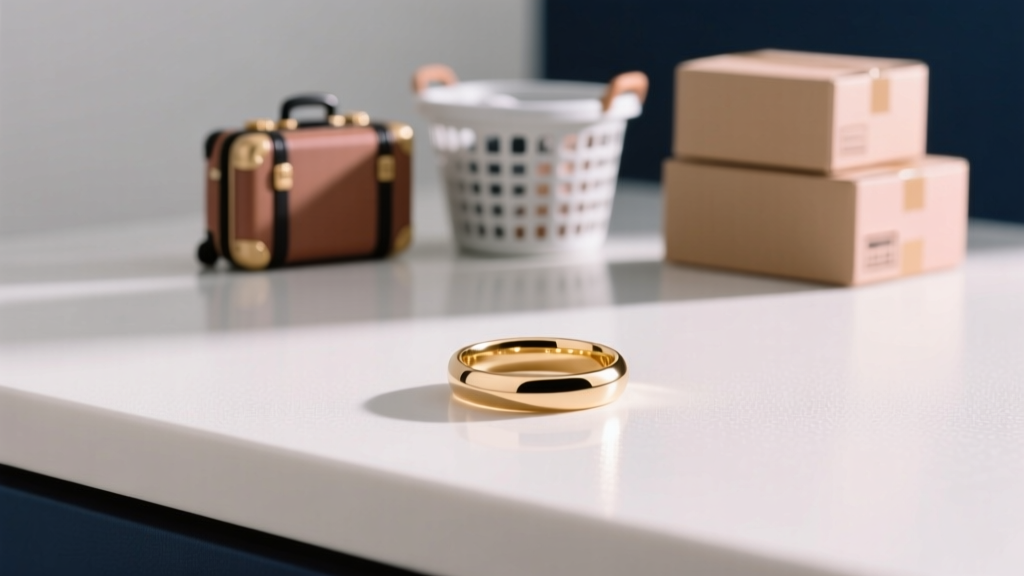
If you’re asking should you insure wedding ring, you’re likely already holding something irreplaceable—not just in monetary terms, but emotionally. Consider this: the average U.S. wedding ring costs $6,400 (The Knot 2023 Real Weddings Study), yet nearly 7 in 10 couples assume their standard homeowners or renters policy automatically covers full replacement. That assumption has cost thousands of people tens of thousands of dollars—often in the most vulnerable moments: after a beach trip, during home renovation, or even while washing dishes. Unlike a laptop or couch, your wedding ring carries layered value—sentimental, symbolic, and increasingly financial—and standard policies treat it like generic personal property. In this guide, we cut through the fine print, expose where insurers quietly underinsure you, and give you a step-by-step action plan—not tomorrow, not after the honeymoon—but before your next routine activity that puts your ring at risk.
What Standard Homeowners Insurance *Really* Covers (and Where It Fails)
Most homeowners and renters policies include a ‘personal property’ section with a sublimit for jewelry—typically $1,000 to $2,500 per item, and often with a $5,000 aggregate cap across all valuables. But here’s the critical nuance: that coverage is almost always for *actual cash value* (ACV), not replacement cost. ACV deducts depreciation—even for brand-new rings. A $6,500 platinum band with a 1.2-carat lab-grown diamond might be valued at just $3,800 on your policy after 18 months because of ‘wear and tear’—a clause that makes zero sense for a piece worn daily but rarely deteriorates physically.
Worse, many policies exclude ‘mysterious disappearance’—the #1 cause of ring loss (Jewelers Mutual 2022 claims data shows 41% of losses fall into this category). Did it slip off while gardening? Vanish from your nightstand? Fall down a drain during handwashing? Insurers classify those as ‘unexplained,’ and unless you have scheduled coverage, they’re denied outright. And don’t assume filing a police report helps: only 12% of reported jewelry thefts result in recovery (FBI UCR 2023), making replacement—not recovery—the realistic goal.
Real-world example: Sarah M., a teacher in Portland, lost her 10-year-old heirloom ring while volunteering at a school carnival. Her $1,500 jewelry sublimit applied—but her insurer offered $920 (ACV) for a ring appraised at $4,200 in 2022. She’d never updated her appraisal, and her policy excluded loss due to ‘inadvertent removal.’ She paid $180 out-of-pocket for a new appraisal, waited 11 weeks for approval, and ultimately settled for a lesser-quality replica. Her story isn’t rare—it’s the default outcome without proactive coverage.
Your 4-Step Coverage Audit (Do This in Under 12 Minutes)
Before you call an agent or click ‘get quote,’ run this actionable audit. It reveals gaps faster than any sales call—and highlights whether you need insurance *at all*.
- Locate your current policy’s ‘Scheduled Personal Property’ or ‘Rider’ section. If you can’t find it—or if the word ‘schedule’ doesn’t appear near jewelry—you’re operating on blanket coverage (i.e., sublimits apply).
- Find your ring’s most recent professional appraisal. Not a receipt. Not an online estimate. A USPAP-compliant document dated within the last 12–18 months, signed by a GIA-certified appraiser. If it’s older, outdated, or missing, your coverage is already invalid—insurers require current valuations.
- Calculate your ring’s true replacement cost today. Use three sources: (a) Your appraiser’s ‘replacement value’ line item, (b) a live quote from a reputable jeweler for identical specs (metal, carat weight, cut, clarity), and (c) a third-party valuation tool like Worthy or Gemological Institute of America’s price guide. Average them. If that number exceeds your policy’s sublimit by >20%, you’re underinsured.
- Check exclusions for ‘loss’ vs. ‘theft.’ Does your policy cover loss? Or only theft *with police report*? Does it list ‘accidental damage’ or ‘breakage’? If ‘mysterious disappearance’ isn’t explicitly covered, you’re exposed.
Pro tip: Take a photo of your ring next to a ruler and a dated newspaper—store it in cloud storage *separate* from your phone. 83% of successful claims include verifiable visual proof of ownership and condition (Insurance Information Institute, 2023).
Cost vs. Peace: Is Ring Insurance Actually Worth It?
Let’s talk numbers—because ‘worth it’ means different things to different budgets. A standalone jewelry policy (like those from Jewelers Mutual, Chubb, or Lavalier) typically costs 1–2% of the item’s insured value per year. For a $7,200 ring? That’s $72–$144 annually—or $6–$12/month. Compare that to the median cost of replacing a lost ring: $5,800 (Jewelers Board of Trade, 2023). Even if you *never* file a claim, the math shifts when you factor in intangible ROI: zero-deductible repairs, global coverage (yes—even if you lose it hiking in Bali), and concierge claim handling (most top providers assign a dedicated agent who coordinates with jewelers, handles shipping, and expedites replacements in 10–14 days).
But cost isn’t just about premiums—it’s about opportunity cost. Consider these scenarios:
- The ‘I’ll just save up’ approach: To self-insure a $6,500 ring, you’d need to set aside $542/month for 12 months. Miss two payments? You’re back at square one—if loss happens in month 11, you’ve got $5,380 saved… and a $1,120 shortfall.
- The ‘renters insurance upgrade’ trap: Adding a $5,000 jewelry rider to your existing policy may cost $45/year—but it still caps at $5,000, excludes mysterious disappearance, and forces you to file under your main policy (raising your overall premium long-term).
- The ‘engagement ring only’ myth: 68% of claims involve wedding bands—not engagement rings (Jewelers Mutual Claims Report). Yet most people only insure the flashier piece. Your platinum band with micro-pavé diamonds? Often more expensive to replace than the solitaire.
Bottom line: For most couples, ring insurance pays for itself after one claim—and delivers outsized value in speed, simplicity, and emotional relief. As financial planner Lena Torres notes: ‘It’s not about expecting loss. It’s about refusing to let a $200 annual decision derail a $6,000+ emotional investment.’
How to Choose & Activate Coverage (Without Getting Trapped)
Not all jewelry insurance is equal—and some policies bury dealbreakers in Section 7, Subparagraph D. Here’s how to spot the right fit:
- Look for ‘Agreed Value’ coverage. This locks in your ring’s worth upfront (no ACV deductions). Every top-tier provider offers it—but confirm it’s written into your declaration page.
- Verify worldwide coverage. Does it cover loss while traveling? During air travel? At a friend’s house? Policies like Chubb’s ‘Personal Articles Policy’ cover globally; others limit to ‘within the continental U.S.’
- Check repair clauses. Can you choose your own jeweler? Or are you forced into a network? Top providers let you pick—some even reimburse up to $250 for labor on prong tightening or sizing.
- Avoid ‘replacement only’ traps. Some policies say ‘we’ll replace your ring’ but define ‘replace’ as ‘a ring of similar kind and quality’—leaving room for subjective interpretation. Insist on language like ‘identical specifications’ or ‘GIA-certified equivalent.’
Once you’ve selected a provider, activation takes under 20 minutes: submit your appraisal, photos, and payment. Most issue instant digital ID cards. And crucially—update your policy every 18–24 months. Diamond prices fluctuate up to 12% annually (Rapaport Price List Q2 2024); platinum is up 22% since 2022. Letting your coverage stagnate is like driving with expired auto insurance.
| Coverage Feature | Standard Homeowners Policy | Standalone Jewelry Policy (e.g., Jewelers Mutual) | High-End Personal Articles Policy (e.g., Chubb) |
|---|---|---|---|
| Valuation Method | Actual Cash Value (depreciated) | Agreed Value (fixed, no depreciation) | Agreed Value + annual inflation adjustment |
| Mysterious Disappearance | Excluded | Covered | Covered |
| Deductible | $500–$1,000 | $0 (optional $100) | $0 |
| Global Coverage | No (U.S.-only) | Yes (including checked luggage) | Yes (includes war zones & cruise ships) |
| Repair Coverage | No | Yes (up to $250/year) | Yes (unlimited, pre-approved jewelers) |
| Claim Turnaround | 45–90 days | 10–14 business days | 7–10 business days |
Frequently Asked Questions
Is my wedding ring covered under my fiancé’s parents’ homeowners policy?
No—homeowners policies only cover residents of the named dwelling. Even if you live with them temporarily, you’re not a named insured unless added explicitly. Worse, their sublimit applies to *all* household jewelry collectively, not per person. If their policy has a $3,000 jewelry sublimit and they have $2,200 in watches and heirlooms, only $800 remains for your ring. Always verify coverage in writing—not verbally.
Can I insure a vintage or heirloom ring with no receipt?
Yes—but you’ll need a formal appraisal from a certified antiques or estate jeweler (not just a GIA gemologist). Vintage pieces require provenance documentation: old photos, family letters mentioning the piece, or auction records. Providers like Lavalier specialize in heirlooms and accept ‘comparable market analysis’ reports for pre-1950 items. Expect 2–3 weeks for appraisal turnaround.
Does insurance cover damage from everyday wear—like a bent shank or loose prongs?
Most standalone policies cover accidental damage—including bent bands and prong failure—if it results from a discrete event (e.g., hitting a doorframe, dropping it on tile). Routine maintenance (e.g., prong re-tipping due to gradual wear) is excluded. However, top-tier plans like Chubb’s include complimentary annual inspections and cover repair labor if damage is verified as sudden and accidental.
What if my ring is stolen during a home break-in—won’t my homeowners policy cover it?
It *might*—but only if you meet strict conditions: police report filed within 24 hours, deductible paid, and your total jewelry loss falls below the sublimit. If your ring is $5,200 and your sublimit is $3,000, you absorb the $2,200 difference. Also, insurers often require proof of forced entry—so if a thief walked in through an unlocked door, coverage may be denied. Scheduled coverage eliminates all these variables.
Do I need separate insurance for my engagement ring *and* wedding band?
Technically, no—you can schedule both on one policy. But best practice is to insure them separately, with individual appraisals. Why? Engagement rings often appreciate (especially vintage or branded pieces), while bands may depreciate. Tracking them individually lets you adjust coverage independently—and simplifies claims if only one is lost.
Debunking 2 Common Myths
Myth #1: “My ring is covered because it’s listed on my inventory sheet.”
Listing an item on a home inventory does not constitute coverage. It’s merely documentation for claims—it doesn’t trigger automatic protection or override sublimits. Without a scheduled endorsement or standalone policy, your inventory sheet is just evidence, not insurance.
Myth #2: “Insurance companies will replace my ring with something ‘just like it’—so why worry?”
‘Just like it’ is dangerously vague. One insurer replaced a 2018 Tiffany Setting with a 2024 model featuring thinner prongs and lower-clarity side stones—technically ‘similar,’ but visibly inferior. Agreed Value policies prevent this by requiring exact specification matching. Always demand written confirmation of replacement standards before signing.
Take Action Today—Your Ring Deserves Certainty, Not Hope
So—should you insure wedding ring? The data is unambiguous: yes, if its replacement value exceeds your policy’s jewelry sublimit (and for 89% of couples, it does). But ‘yes’ isn’t enough. What matters is *how* you insure it—ensuring agreed value, global protection, zero deductible, and claim support that treats your ring as more than inventory. Don’t wait for a ‘what if’ moment. Pull out your policy tonight. Open your photo library and verify you have dated, high-res images. Call your appraiser and ask, ‘Is my valuation current?’ Then, get three no-obligation quotes—compare not just price, but the fine print on disappearance, repair, and replacement guarantees. Your ring symbolizes permanence. Your coverage should, too. Start now—and sleep easier knowing that love, unlike metal, shouldn’t be left to chance.
More Articles
 Short Wedding Dresses for 2026: 12 Chic Styles
 Plato’s Closet Wedding Dresses: What They Accept (2026)
 Can I Wear White To A Wedding As A Guest (2026)
 Wedding Dress in Spanish: Exact Terms by Style & Region
 Wedding Photography: What 92% of Couples Miss (2026)
 Wedding Ring: The 5-Second Rule to Avoid Confusion (2026)
 What Hand To Wear Wedding Ring On
 How to Say Wedding in Italian (2026)
 Super Bowl Wedding Real? Viral Halftime Truth (2026)
 Bridesmaid Wedding Gift: Meaning, Timing & Budget (2026)