# Engagement Ring or Wedding Ring First: The Order You Need to Know
You've said yes, the wedding is planned, and now you're staring at two beautiful rings wondering: which one goes on first? It's a surprisingly common question that trips up even the most organized brides. The answer involves tradition, practicality, and a little personal preference — and getting it right makes a real difference on your wedding day.
## The Traditional Rule: Wedding Ring Closest to Your Heart
The long-standing tradition, rooted in ancient Roman and Victorian customs, is that the **wedding ring goes on first** — meaning it sits closest to your hand, nearest to your heart. The engagement ring then stacks on top.
The reasoning is symbolic: the wedding ring represents the formal marriage vow and should maintain the most intimate contact with your finger. Many cultures across Europe and North America have followed this convention for centuries.
In practical terms, this means:
- On your wedding day, move your engagement ring to your **right hand** before the ceremony
- Your partner slides the wedding band onto your bare left ring finger
- After the ceremony, move your engagement ring back on top of the wedding band
This simple swap ensures the correct stacking order without any awkward fumbling at the altar.
## How to Stack Both Rings Comfortably
Fit matters more than most people anticipate. Two rings on one finger can feel tight, especially in warm weather when fingers swell slightly. Here's how to manage it:
**Get both rings sized together.** When you go for ring sizing, bring both rings. Jewelers can size the wedding band slightly larger (by a quarter size) so the engagement ring slides over it smoothly.
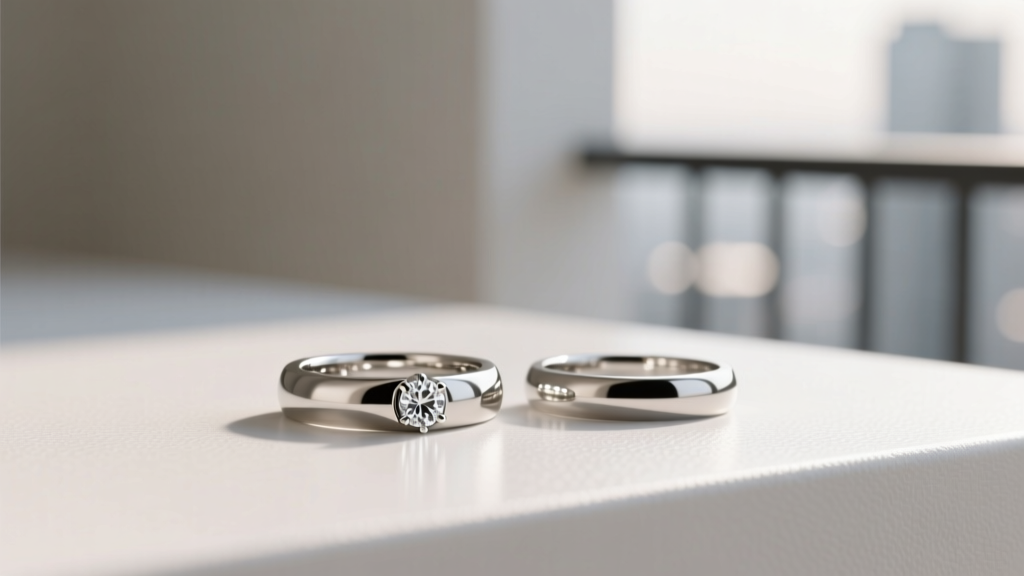
**Consider a contoured or curved wedding band.** These are designed specifically to nestle against the profile of a solitaire or halo engagement ring, eliminating gaps and reducing bulk.
**Use a ring guard or solder them together.** If you find yourself constantly adjusting both rings, a jeweler can solder them into a single unit. This is a permanent solution, so think it through — but many women find it eliminates daily frustration entirely.
**Try a spacer ring.** A thin metal spacer between the two rings can prevent the engagement ring's prongs from scratching the wedding band's surface over time.
## Modern Alternatives: Breaking the Traditional Order
Not everyone follows the traditional stacking rule, and that's completely valid. Several modern approaches have become widely accepted:
**Wearing the engagement ring alone.** Some women choose to wear only the wedding band daily and reserve the engagement ring for special occasions. This is especially practical for people who work with their hands.
**Stacking engagement ring first.** Some couples simply prefer the look of the engagement ring sitting lower on the finger. If the aesthetic works for you and your partner, there's no rule police.
**Wearing rings on separate hands.** In many European countries — Germany, Russia, Norway, Spain — the wedding ring is traditionally worn on the **right hand**. If you have heritage ties to these traditions, wearing one ring per hand is entirely appropriate.
**Skipping the engagement ring at the ceremony.** Some brides choose not to wear their engagement ring at all during the wedding, keeping the ceremony focused solely on the wedding band exchange.
## Common Misconceptions About Ring Order
**Misconception 1: "You must wear both rings at all times."**
This is simply not true. Many married women wear only their wedding band daily and bring out the engagement ring for evenings or events. Rings are jewelry — wear them in whatever combination suits your lifestyle. Forcing yourself to wear both rings when it's uncomfortable or impractical serves no one.
**Misconception 2: "The order doesn't matter as long as they're both on."**
While personal preference is valid, the order does have practical consequences. If your wedding band sits on top, it takes the brunt of daily wear and contact — which matters if it's a more delicate or ornate design. The engagement ring on top also means its prongs are more exposed to snagging. Understanding the traditional order helps you make an informed choice, not just a default one.
## The Bottom Line
The traditional answer is clear: **wedding ring first, closest to your heart, with the engagement ring stacked on top**. On your wedding day, move your engagement ring to your right hand before the ceremony, then return it to its place above the wedding band afterward.
But tradition is a starting point, not a mandate. What matters most is that your rings fit well, feel comfortable, and reflect what the commitment means to you.
Ready to finalize your ring stack? Visit a local jeweler before your wedding day to try on both rings together — sizing, comfort, and style all deserve a proper fitting, not a last-minute guess.
 Jewelry Sustainability Evolution: Real Change Tracked
 Wedding Ring Payout: 7 Real Factors (2026)
 Gold Wedding Ring Buying Guide: Real-World Durability (2026)
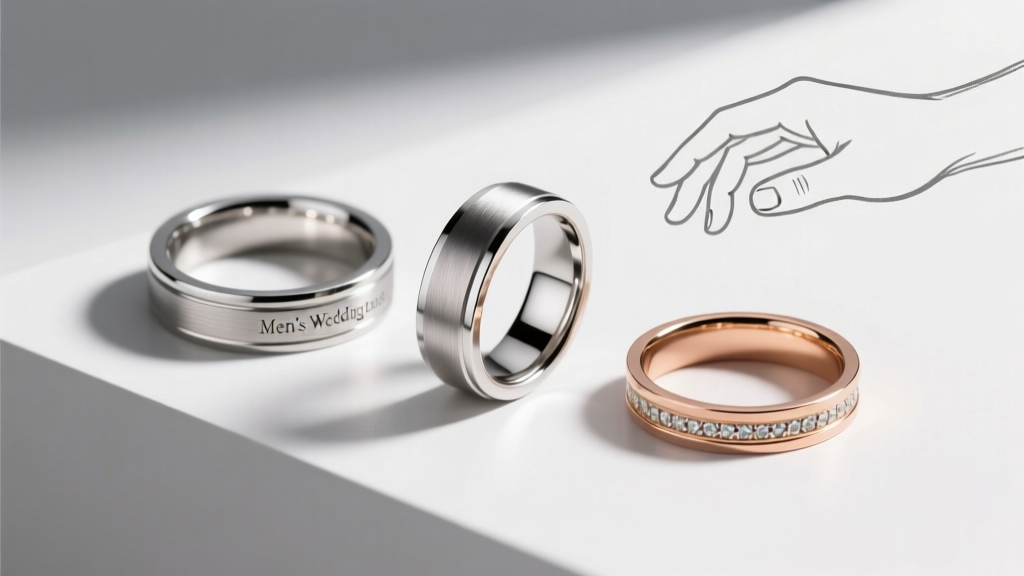 Men's Wedding Bands Materials and Styles Compared
 Pink Diamond Rarity and Romance
 Can You Resize a Wedding Ring Bigger? (2026)
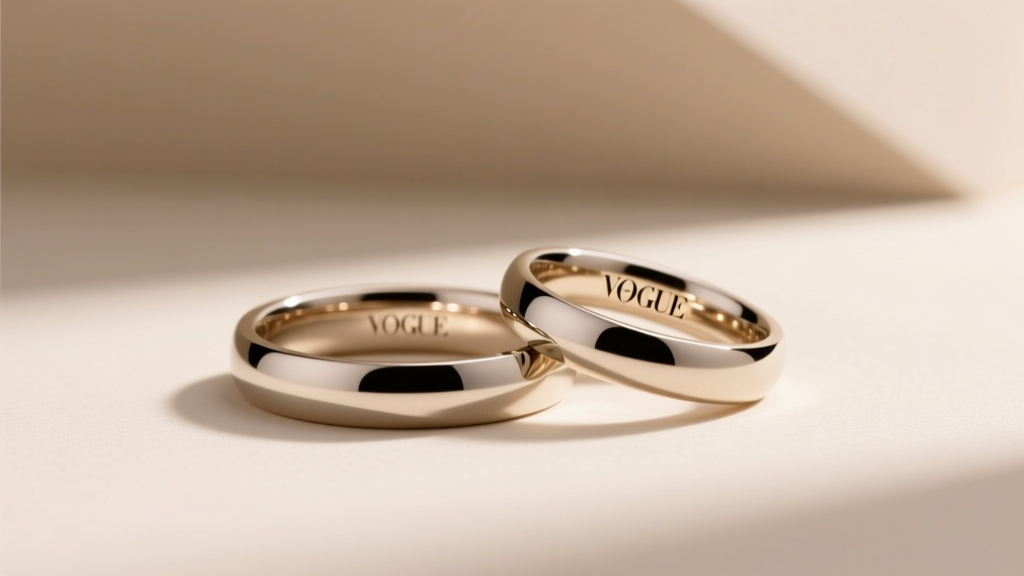 Do You Wear Wedding Band On Top Or Bottom (2026)
 Wedding Ring Care: 7 Non-Negotiable Habits (2026)
 How to Choose an Engagement Ring for Active Lifestyles
 Men's Black Wedding Bands: Materials Explained