# Wedding Ring and Band: The Exact Order, Finger, and Stacking Rules Every Bride Should Know
You've said yes, picked the perfect rings — and now you're staring at two bands wondering which goes on first. You're not alone. The "right" way to wear a wedding ring and band trips up nearly every new bride. The good news: there are clear traditions, practical reasons behind them, and plenty of room to make the look your own.
---
## Which Finger and Why
In most Western countries, both the engagement ring and wedding band are worn on the **fourth finger of the left hand** — the "ring finger." The tradition traces back to the Roman concept of the *vena amoris* (vein of love) believed to run directly from that finger to the heart. While anatomy has since debunked the vein myth, the tradition stuck.
In several European countries (Germany, Norway, Russia, India), wedding rings are worn on the **right hand** instead. If your family follows this custom, wear both rings on the right ring finger using the same stacking logic below.
---
## The Correct Order: Band First, Engagement Ring Second
The most widely followed rule is:
1. **Wedding band on the bottom** (closest to your heart, nearest the palm)
2. **Engagement ring on top**
**Why?** The wedding band is placed first during the ceremony to symbolize it being "closest to the heart." Practically, it also keeps the engagement ring — usually the showier of the two — visible and on top.
### How to Achieve This on Your Wedding Day
Most brides move their engagement ring to their **right hand** before the ceremony. After the "I do's" and the band is placed on the left hand, they slide the engagement ring back on top. Some jewelers also solder the two rings together after the wedding for a seamless, permanent stack.
---
## Stacking and Fit: Making Two Rings Work Together
Not all ring pairings sit flush. Here's how to get a clean stack:
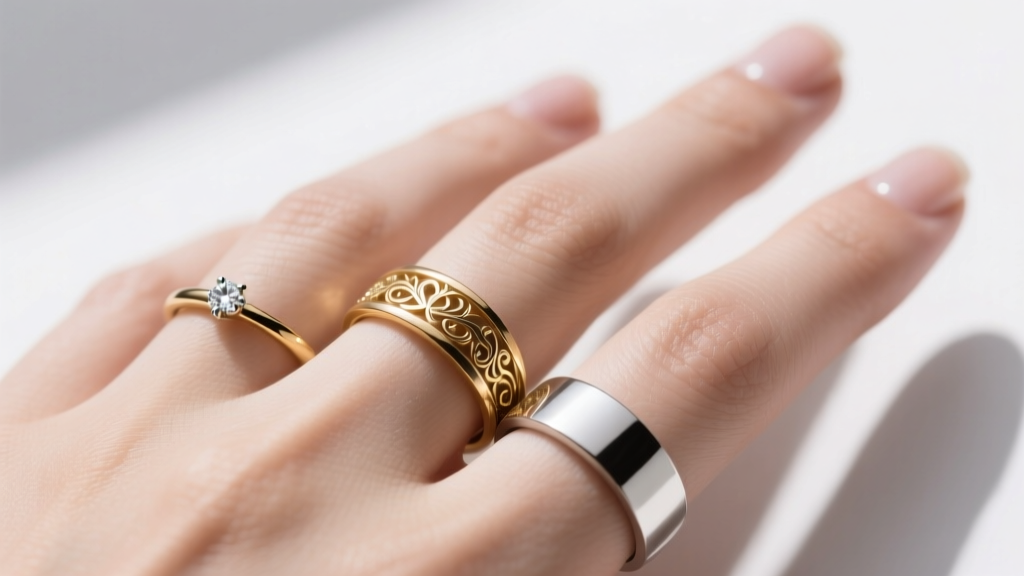
- **Contoured or curved bands** are designed to hug the shape of a solitaire engagement ring — ideal if your stone sits high.
- **Straight bands** work best with low-profile or bezel-set engagement rings.
- **Sizing matters**: two rings on one finger can feel tight, especially in heat or after a long day. Have both rings sized together at the jeweler so the fit accounts for the stack.
- **Metal matching**: mixing metals (yellow gold band, white gold engagement ring) is increasingly popular and intentional — but confirm both metals are durable enough to avoid scratching each other.
According to a 2024 survey by The Knot, **67% of brides** wear their engagement ring and wedding band on the same finger, while 18% solder them together within the first year.
---
## Everyday Wear: Practical Tips
- **Remove rings before** heavy lifting, gardening, cleaning with harsh chemicals, or swimming in chlorinated pools — all can damage settings and metals.
- **Store them together** in a ring dish or soft pouch to avoid scratching.
- If your rings spin or slide, a **ring adjuster insert** (a small silicone band) can improve fit without resizing.
- Get your stack **professionally cleaned** every 6–12 months to keep stones secure and metals bright.
---
## Common Mistakes (And the Myths Behind Them)
**Myth 1: "The engagement ring always goes on top, no exceptions."**
Some brides prefer the wedding band on top for aesthetic reasons or because their band is more ornate. There is no rule that mandates one order — tradition is a guide, not a law. Wear what feels right and looks best to you.
**Myth 2: "You must solder your rings together."**
Soldering is permanent and makes future resizing harder (and more expensive). It's a great option if your rings twist or separate constantly, but it's entirely optional. Many couples wear separate rings their entire marriage without issue.
---
## Conclusion
The "correct" way to wear your wedding ring and band is the way that feels meaningful and comfortable to you — but starting with the band closest to your palm and the engagement ring on top is the time-tested tradition for good reason. Focus on fit, metal compatibility, and daily care, and your rings will look beautiful for decades.
**Ready to find the perfect band to complement your engagement ring?** Browse our curated guides on contoured wedding bands, mixed-metal stacking, and budget-friendly ring sets to build your ideal bridal stack.
 Complete Budget Essentials: A Practical Metalsmith’s Guide to Starting Jewelry Making Under $500
 Wedding Band Stacking Trends for 2026
 The 4Cs of Diamonds: Simple Buying Guide
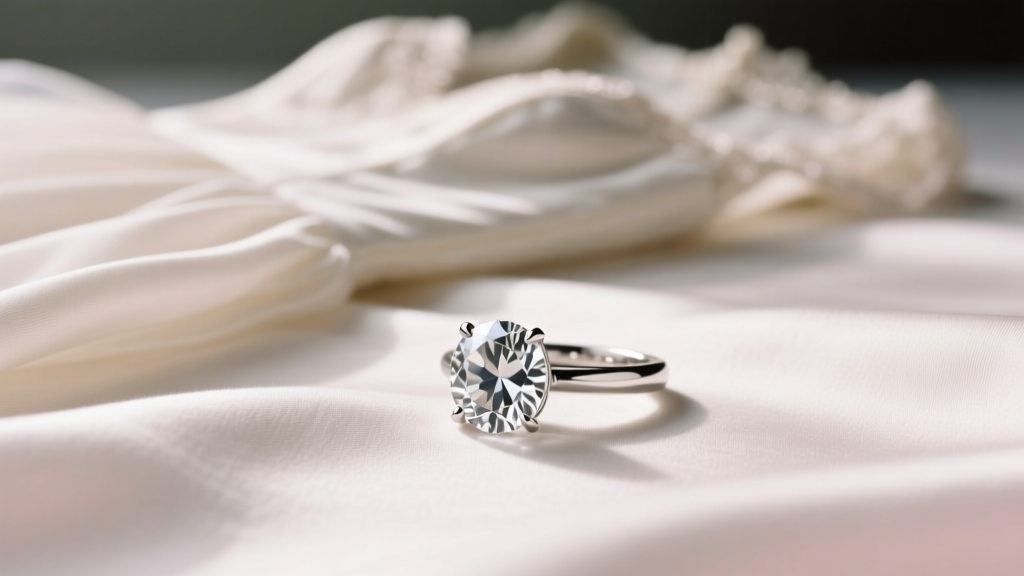 Old Mine Cut Diamonds Antique Charm
 Cobalt Wedding Bands: Truth, Safety & Sizing (2026)
 Clean Your Engagement Ring at Home Safely
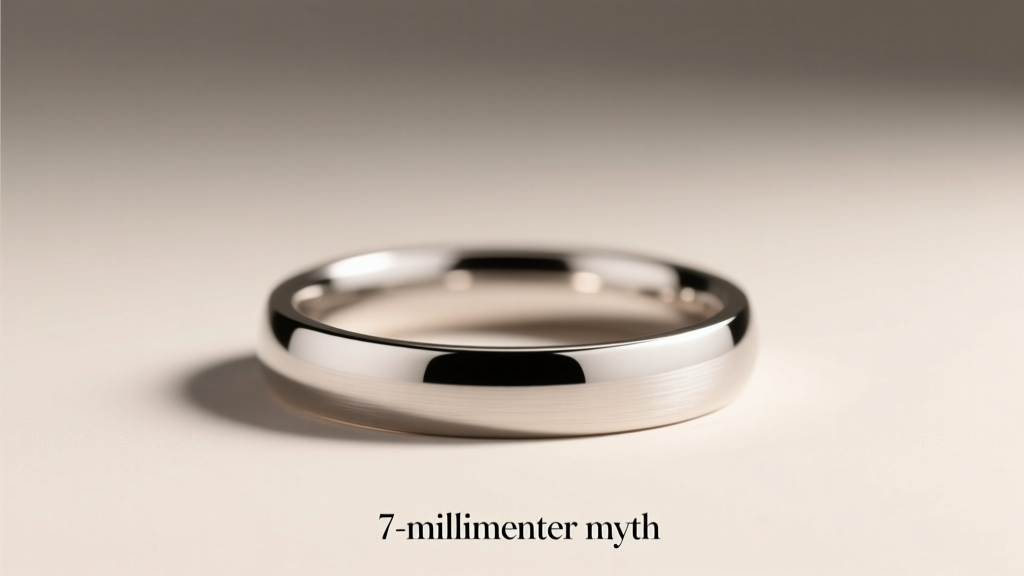 Wedding Band Width: 7mm Myth vs. Comfort Fit (2026)
 Men's Wedding Band Fit: 5-Second Test & Red Flags (2026)
 Claddagh Ring Pronunciation Guide (2026)
 Wedding Ring Etiquette for Second Marriages