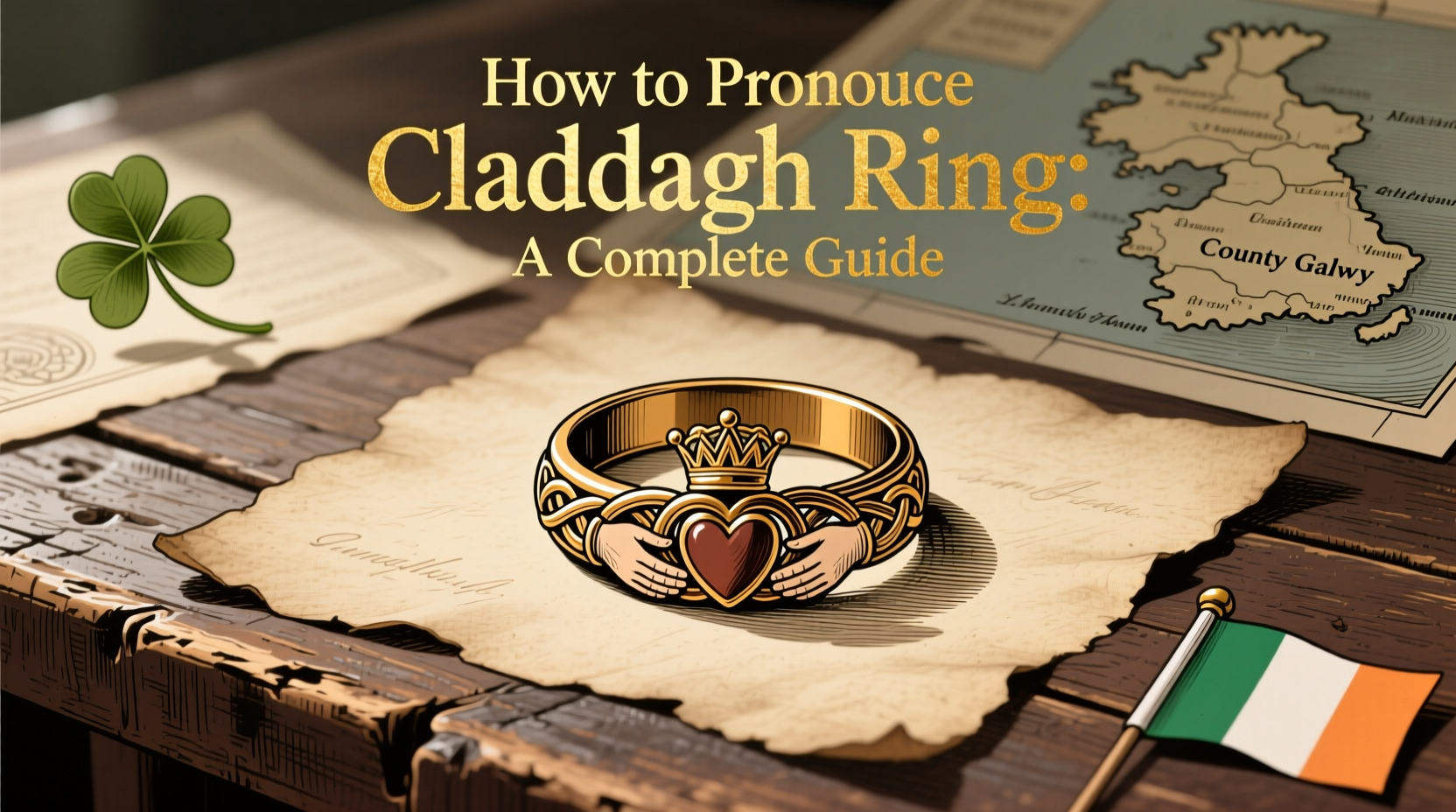
Claddagh Ring Pronunciation Guide (2026)
If you've ever wondered how do you pronounce claddagh ring, the correct pronunciation is "KLAD-uh" (rhymes with "bad") followed by "ring." This beloved piece of Irish heritage jewelry carries deep symbolism and a rich history that goes far beyond its name. Understanding both the proper pronunciation and the cultural background enhances your appreciation of this timeless design. Whether you're considering purchasing a Claddagh ring or simply want to speak knowledgeably about it, knowing how to say it right—and why it matters—is essential for anyone interested in meaningful, tradition-rich accessories.
What Is a Claddagh Ring?
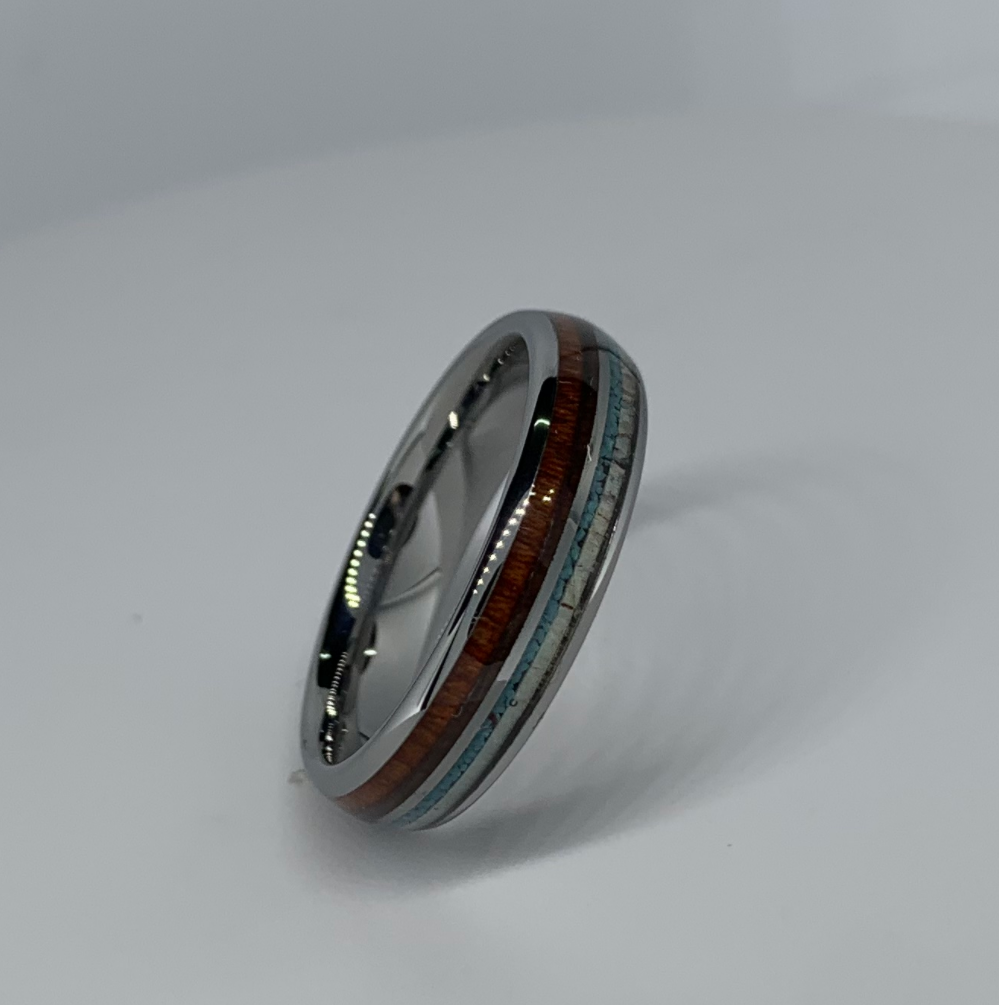
A Claddagh ring is a traditional Irish symbol representing love, loyalty, and friendship. It features three distinct elements: two hands clasping a heart, which is topped with a crown. Each part has symbolic meaning:
- The hands represent friendship.
- The heart stands for love.
- The crown symbolizes loyalty.
Originating from the fishing village of Claddagh in Galway, Ireland, these rings have been worn for centuries as tokens of affection, commitment, and Irish identity. Today, they are popular worldwide—not only among people of Irish descent but also among those who value their emotional resonance and elegant craftsmanship.
Breaking Down the Pronunciation: 'Claddagh'
The word “Claddagh” comes from the Irish Gaelic an Cladach, meaning “the shore” or “stone beach.” Despite its spelling, it is not pronounced as it appears to English speakers. Many mistakenly say “CLAD-dah” with emphasis on the first syllable and a hard second syllable, but the accurate way is “KLAD-uh”.
To break it down phonetically:
- Klad – rhymes with “bad,” “mad,” or “glad.”
- Dah – a soft, unstressed schwa sound (like “a” in “sofa”).
So when combined: Klad-uh ring. Think of it like saying “glad” + “uh” quickly.
This common mispronunciation stems from assumptions based on English spelling rules, which don’t apply to many Irish words. For example, similar Gaelic-derived names like Lough (pronounced “lock”) or Cnoc (pronounced “crock”) follow irregular patterns unfamiliar to non-Gaelic speakers.
Why Pronunciation Matters in Cultural Context
Pronouncing “Claddagh” correctly shows respect for its Irish roots. Language preservation is vital in maintaining cultural identity, especially for symbols tied closely to national heritage. Mispronouncing such terms can unintentionally diminish their significance or suggest ignorance of their origin.
For instance, wearing a Claddagh ring while incorrectly calling it “CLAD-age” or “CLAD-doff” may lead native Irish speakers or culturally aware individuals to question your understanding of what the ring truly represents. Correct pronunciation reinforces authenticity and demonstrates genuine appreciation.
Common Mispronunciations and Why They Happen
Here are some of the most frequent incorrect ways people pronounce “Claddagh,” along with explanations of why these errors occur:
| Mispronunciation | Reason for Error | Correct Alternative |
|---|---|---|
| CLAD-dage | Assuming “gh” sounds like “g” or “j” | Klad-uh |
| CLAD-off | Mimicking Scottish “loch” ending | Klad-uh |
| KLAD-dah (with equal stress) | Overemphasizing second syllable | Klad-uh (second syllable soft) |
| CLAD-uhg | Adding unnecessary guttural sound | Klad-uh |
These mistakes often arise because English speakers rely on familiar phonetic patterns. However, Irish Gaelic pronunciation follows different conventions—silent letters, silent endings, and unexpected vowel sounds are common. The best way to avoid errors is to listen to native speakers or trusted audio sources.
How to Wear a Claddagh Ring: Symbolism Based on Orientation
Beyond pronunciation, another frequently asked question is: how should I wear my Claddagh ring? The position and orientation convey specific meanings related to relationship status:
- Worn on the right hand with the heart facing outward: You are single and open to love.
- Worn on the right hand with the heart facing inward: Your heart is taken; you’re in a relationship.
- Worn on the left hand with the heart facing inward: You are engaged or married.
This custom dates back generations and remains widely observed today, particularly in Ireland and among Irish communities abroad. While modern wearers may choose styles based purely on aesthetics, understanding the tradition adds depth to personal use.
History and Origins of the Claddagh Ring
The Claddagh ring traces its origins to the late 17th century in the Claddagh district of Galway City. One popular legend attributes its creation to Richard Joyce, a local fisherman who was captured by pirates and sold into slavery. During his captivity, he learned goldsmithing and crafted the first Claddagh ring as a symbol of enduring love for his sweetheart back home.
Upon his eventual return, he presented the ring to her and later became a goldsmith in Galway. His initials were found on early versions of the ring, lending credibility to the tale. Whether entirely factual or partially mythological, the story captures the essence of the ring’s meaning: unwavering love, loyalty through hardship, and friendship forged over time.
Originally passed down within families or given as engagement rings, Claddagh rings gained broader popularity during the Irish diaspora, especially in the United States, Canada, and Australia.
Variations in Design and Materials
While the classic Claddagh design remains consistent, variations exist across materials, metals, and artistic interpretations:
- Metals: Traditionally made in silver, but now available in gold (yellow, white, rose), platinum, and palladium.
- Stone accents: Some designs include gemstones—diamonds, emeralds, or birthstones—set in the crown or around the heart.
- Engravings: Personal messages, names, or Gaelic phrases like “Grá, Dilseacht, Cairdeas” (Love, Loyalty, Friendship) are often engraved inside the band.
- Gender-specific styles: Men’s versions tend to be wider and more understated; women’s versions often feature delicate detailing.
When choosing a Claddagh ring, consider durability, skin sensitivity, budget, and whether you want a vintage-style piece or a contemporary interpretation.
Where to Buy Authentic Claddagh Rings
Due to growing demand, many mass-produced versions of Claddagh rings are available online. However, authentic pieces are typically handmade in Ireland, often stamped with official hallmarks indicating metal purity and country of origin.
To ensure authenticity:
- Purchase from reputable jewelers in Ireland or certified Irish-owned businesses abroad.
- Look for the Hallmark stamp from the Assay Office in Dublin Castle.
- Avoid overly cheap options on global marketplaces—these may use low-quality alloys or inaccurate designs.
- Check customer reviews and return policies before buying online.
Popular Irish brands include Thomas Dillon’s Claddagh Gold, Claddagh Jewellers, and Solvar Ltd.—all known for high-quality, ethically sourced products.
Cultural Significance Beyond Romance
Though commonly associated with romantic relationships, Claddagh rings also serve other meaningful purposes:
- Friendship gifts: Given to close friends as a token of lasting bond.
- Family heirlooms: Passed from mother to daughter or grandmother to granddaughter.
- Baptism or confirmation gifts: Presented to children as symbols of protection and belonging.
- Irish pride: Worn by those celebrating their heritage, especially during St. Patrick’s Day or cultural festivals.
In this broader context, the Claddagh transcends romance and becomes a universal emblem of connection and continuity.
Tips for Learning How to Pronounce Claddagh Ring Correctly
If you're still unsure how to say “Claddagh ring” confidently, here are practical tips:
- Listen to native speakers: Search YouTube or language-learning sites for clips of Irish locals saying “Claddagh.”
- Break it into syllables: Practice saying “Klad” then add “uh” softly—don’t emphasize the second syllable.
- Use mnemonic devices: Remember: “It’s like saying ‘glad’ + ‘uh.’”
- Record yourself: Compare your pronunciation with audio samples to refine accuracy.
- Ask an expert: Visit an Irish cultural center or talk to someone from Galway for feedback.
With practice, saying “Klad-uh ring” will feel natural and confident.
Frequently Asked Questions (FAQs)
How do you pronounce Claddagh ring in Irish?
In Irish Gaelic, “Claddagh” comes from an Cladach, pronounced “on KLAD-akh,” where the final “ch” is a soft guttural sound similar to the German “Bach.” However, in everyday English usage, “KLAD-uh” is standard and widely accepted.
Is it disrespectful to wear a Claddagh ring if I’m not Irish?
No, it is not disrespectful. People worldwide wear Claddagh rings to honor love, loyalty, and friendship. As long as you understand and respect its meaning, wearing one is seen as a tribute rather than appropriation.
Can men wear Claddagh rings?
Absolutely. Men have worn Claddagh rings for centuries, especially in Ireland. Designs vary to suit masculine preferences, including thicker bands and simpler finishes.
Does the way I wear the Claddagh ring matter?
It depends on your intention. If you follow tradition, orientation reflects your relationship status. But many wear it purely for style or heritage, without adhering strictly to customs.
Are all Claddagh rings made in Ireland?
Not all. While authentic ones are crafted in Ireland and hallmarked accordingly, many replicas are manufactured elsewhere. Always verify the source and look for certification if authenticity is important to you.
More Articles
 Why Polish People Wear Wedding Rings on the Right Hand
 How to Choose a Ring With the Right Diamond Clarity
 Jewelry Buyer Guide: What to Know First
 Can You Resize a Wedding Ring Bigger? (2026)
 Cobalt Wedding Bands: Truth, Safety & Sizing (2026)
 Wood Inlay Wedding Bands Natural and Organic
 Does The Wedding Band Go Inside Or Outside (2026)
 Birthstone Wedding Rings A Unique Alternative
 Men's Wedding Band Fit: The 5-Second Finger Test (2026)
 Engagement and Wedding Ring Order: The Right Way