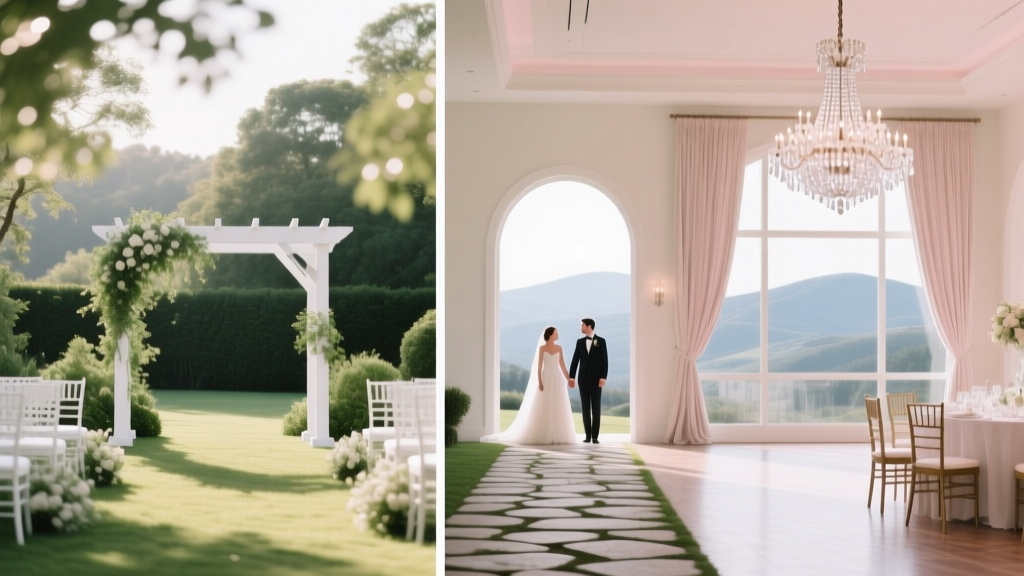
How to Choose Between Indoor and Outdoor Wedding Venues
You’ve started picturing it already: the moment you walk down the aisle, the way the light hits your dress, the laughter during cocktail hour, the first dance. Then reality shows up with a very real question: Should we choose an indoor or outdoor wedding venue?
If you feel torn, you’re not alone. Many couples love the romance of an outdoor ceremony but worry about weather, comfort, and logistics. Others feel drawn to the ease and polish of an indoor venue but don’t want their day to feel “boxed in” or less personal. The good news is there isn’t one correct choice—there’s the choice that best supports your priorities, your guest list, your budget, and your stress level.
This guide will help you compare indoor vs. outdoor wedding venues like a pro, ask the right questions on venue tours, and make a confident decision—without getting lost in Pinterest perfection.
Start With Your Wedding Vision (and Your Non-Negotiables)
Before you tour venues, get aligned as a couple. The indoor/outdoor decision becomes much clearer when you know what matters most.
A quick “venue values” exercise (10 minutes)
- Each of you writes down your top 5 venue priorities.
- Compare lists and circle shared items.
- Rank your shared priorities from 1–5.
Common priorities couples list:
- Weather-proof peace of mind
- Scenery and photos (mountains, gardens, waterfront)
- Guest comfort (temperature, accessibility, restrooms)
- Budget predictability
- One-location convenience (ceremony + reception)
- Late-night party vibe (sound, lighting, dancing)
Planner tip: If “stress level” would be #1 if you were honest, give it real weight. A venue that reduces decisions is often worth more than a venue that looks perfect online.
Indoor Wedding Venues: The Pros, Cons, and Who They’re Best For
Why couples love indoor venues
- Weather protection: Rain, wind, heat, and cold are far less disruptive.
- Built-in infrastructure: Restrooms, power, kitchens, lighting, and HVAC are typically ready to go.
- More predictable costs: Fewer surprise rentals like tents, generators, or extra heaters.
- Better sound control: Music, speeches, and dancing are easier with contained acoustics.
- Longer event windows: Some indoor venues have later end times or fewer noise restrictions.
Potential drawbacks to plan around
- Less natural light: Some ballrooms or event spaces can feel dim (ask about uplighting and window access).
- Style limitations: You may need more décor to transform the space into your vibe.
- Space constraints: Indoor rooms have hard capacity limits; tight dance floors happen.
- Vendor restrictions: Some hotels and banquet halls require in-house catering or preferred vendors.
Real-world scenario
If your guest list includes elderly relatives, young kids, or lots of out-of-town guests, an indoor venue can be a gift. Think: easy parking, climate control, nearby hotels, and bathrooms that don’t involve a long walk in heels.
Outdoor Wedding Venues: The Pros, Cons, and Who They’re Best For
Why couples love outdoor venues
- Natural beauty: Gardens, vineyards, beaches, forests, and mountain views create instant atmosphere.
- Dreamy photos: Golden hour portraits and open-sky ceremony shots are hard to beat.
- Flexible layouts: You can design ceremony and reception areas with more creativity.
- Fresh-air energy: Outdoor celebrations often feel relaxed, spacious, and joyful.
Potential drawbacks to plan for
- Weather risk: Heat, humidity, rain, wind, and cold can affect comfort and timelines.
- Extra rentals: Tents, flooring, lighting, restrooms, generators, heaters/fans, and lounge furniture can add up fast.
- Sound restrictions: Noise ordinances may mean lower volume or earlier end times.
- Guest accessibility: Grass, gravel, slopes, and long walks can be tough for some guests.
- Nature surprises: Bugs, muddy ground, pollen, and uneven terrain are real.
Real-world scenario
If you’re envisioning a sunset ceremony and a laid-back cocktail hour, an outdoor wedding venue might be perfect—especially if the venue offers a solid rain plan and close-by indoor backup space.
The Biggest Decision Factor: Weather (and Your Backup Plan)
Most couples think they’re deciding between “pretty outdoors” and “safe indoors.” What you’re really deciding is how much weather uncertainty you’re willing to manage.
Ask these questions on every venue tour
- What is the rain plan, and where exactly would the ceremony move?
- Is the backup space equally beautiful and large enough for guest count?
- When is the latest time we can decide to move indoors?
- Who makes the call—venue manager, planner, or couple?
- Are there additional costs for the backup plan (staffing, room flip, tent sidewalls)?
- What happens with wind (especially for arches, candles, signage)?
Planner pro tip: If the “backup plan” is a cramped hallway, a dark basement room, or “we’ll squeeze everyone under the tent,” treat that as no backup plan.
Budget Considerations: What Couples Often Forget
When comparing indoor and outdoor wedding venues, look beyond the rental fee. Outdoor weddings can be breathtaking—and sometimes deceptively expensive if the venue is essentially “a beautiful empty space.”
Common indoor venue costs (often included)
- Tables and chairs
- Climate control
- Restrooms
- Built-in lighting
- Kitchen/catering prep area
- Staffing packages (depending on venue type)
Common outdoor venue costs (often added)
- Tent (plus sidewalls, stakes/weights)
- Flooring (for dance floor and sometimes under the tent)
- Generators and power distribution
- Heaters, fans, or portable AC
- String lights and pathway lighting
- Restroom trailers (especially for private estates or parks)
- Sound system upgrades (wind and open space can swallow audio)
- Weather insurance (optional, but worth considering)
A realistic budget snapshot
Imagine you book a scenic outdoor property for $6,000. By the time you add a tent, lighting, restrooms, and power, you could easily add several thousand more. Meanwhile, an indoor venue at $9,000 might include tables, chairs, staffing, and an indoor ceremony option—making it surprisingly comparable.
Budget tip: Ask every venue for a list of what’s included and what’s not. Then request a “typical total spend” estimate based on weddings similar to yours (guest count, season, day of week).
Guest Comfort: The Detail Your Guests Will Remember
Your guests may not remember your exact centerpiece, but they will remember if they were sweating through cocktail hour or shivering during speeches. Comfort is a love language.
Use this comfort checklist
- Temperature: What’s the average high/low for your date and location?
- Shade: If outdoors, where will guests sit during the ceremony? Any direct sun?
- Hydration: Will you offer water stations pre-ceremony?
- Footing: Grass, sand, cobblestones, stairs—how walkable is it?
- Restrooms: How far are they from ceremony and reception spaces?
- Accessibility: Parking distance, ramps, golf carts, ADA compliance.
- Noise: Nearby roads, trains, airplanes, or public spaces.
Specific scenario couples relate to
If you’re considering an outdoor ceremony in mid-summer, picture this: 4:00 p.m., full sun, guests fanning themselves, makeup melting, groomsmen squinting in photos. A simple shift to later ceremony time or choosing a venue with shaded ceremony options can change everything.
Photos, Lighting, and Atmosphere: What You’re Really Paying For
Both indoor and outdoor venues can photograph beautifully—just differently.
Outdoor photo strengths
- Natural light and scenery create effortless backdrops
- Golden hour portraits without leaving the venue
- Wide-open space for large group shots
Indoor photo strengths
- Consistent lighting (especially if the venue has big windows)
- Stylish architecture: grand staircases, chandeliers, historic details
- Less wind and fewer hair-and-dress disruptions
Pro tip: Ask venues for full wedding galleries (not just highlight photos). Look for ceremony shots, reception lighting, and what the space looks like when it’s crowded—because that’s how it will feel on your day.
Timeline Planning: How Indoor vs. Outdoor Changes Your Day
Your venue choice impacts your wedding day timeline more than most couples expect.
Indoor timeline advantages
- Fewer delays from weather
- More reliable hair/makeup timing (less humidity and wind)
- Easier room flips and transitions
Outdoor timeline considerations
- Build in buffer time for weather shifts and moving guests
- Plan lighting as the sun sets (especially for dinner and dancing)
- Coordinate vendor load-in across longer distances (fields, lawns, separate buildings)
A practical planning guideline
- 6–9 months before: If outdoors, confirm rain plan and tent rules before you sign.
- 3–4 months before: Book rental items (tents and restroom trailers can book early).
- 4–6 weeks before: Finalize timeline with sunset time and lighting needs.
- 1 week before: Watch the forecast and confirm decision deadlines for backup plans.
Step-by-Step: How to Decide (A Simple Venue Decision Method)
- List your top 3 priorities (budget, guest comfort, scenery, party vibe, etc.).
- Choose your “risk tolerance” for weather: low, medium, or high.
- Compare true total costs (venue fee + required rentals + staffing + transportation).
- Evaluate guest experience (restrooms, accessibility, temperature, walking distance).
- Confirm the backup plan in writing (space, timing, cost, and who decides).
- Picture your day in motion: arrivals, ceremony, cocktail hour, sunset, dancing, exits.
- Make the decision and stop second-guessing: commit, then design within that choice.
Common Mistakes Couples Make (and How to Avoid Them)
- Mistake: Falling in love with a view and ignoring the logistics.
Fix: Ask: “Where do guests park, walk, and use restrooms?” before you sign. - Mistake: Assuming a tent solves everything.
Fix: Tents need sides, flooring, climate control, lighting, and a plan for wind and mud. - Mistake: Not checking sound rules.
Fix: Confirm decibel limits, end time, and whether the DJ/band can set up outdoors. - Mistake: Underestimating heat or cold.
Fix: Plan seasonal comfort: shade, fans, heaters, blankets, hot drinks, or an indoor option. - Mistake: Waiting too long to book key rentals for outdoor weddings.
Fix: Secure tent and major rentals shortly after booking your venue, especially for peak season.
Wedding Planner Pro Tips for Getting the Best of Both Worlds
- Look for “indoor-outdoor” venues: Places with an indoor reception space and an outdoor ceremony garden reduce stress while keeping the scenery.
- Choose a covered outdoor option: A pavilion, veranda, or permanent pergola can offer the outdoor feel with added protection.
- Do an outdoor ceremony + indoor reception: This is one of the most guest-friendly combinations.
- Use strategic timing: Hot climate? Consider a later ceremony. Cooler climate? Schedule earlier and move inside as temperature drops.
- Communicate dress guidance: A line on your wedding website like “The ceremony is on grass—block heels recommended” helps guests plan.
FAQ: Indoor vs. Outdoor Wedding Venues
What if I love an outdoor wedding but I’m terrified of rain?
Choose an outdoor venue only if the rain plan feels like a venue you’d be happy to use even on a sunny day. Ideally, the backup is a true indoor space (not a cramped room or a last-minute tent). Ask for photos of weddings that used the rain plan.
Are outdoor weddings always more expensive?
Not always, but they can be. Outdoor venues often require more rentals and infrastructure. Compare the true total: venue fee + rentals + staffing + power + restrooms + lighting. An “all-inclusive” indoor venue can sometimes be more budget-friendly overall.
How do I keep guests comfortable at an outdoor ceremony?
Prioritize shade (or timing), provide water before the ceremony, and consider comfort rentals like fans or heaters. Keep the ceremony tight and well-paced, and make sure restrooms are easy to access.
What’s the best season for an outdoor wedding?
It depends on your region. In many areas, late spring and early fall offer the best balance of comfortable temperatures and lower weather extremes. Look up historical averages for your date and location, then plan a backup option anyway.
Can I have both an indoor and outdoor wedding at the same venue?
Yes—many couples choose an outdoor ceremony space with an indoor reception room, or vice versa. When touring, ask how transitions work, whether the venue flips spaces, and how far guests need to walk.
How far in advance should we book our venue?
For popular dates, 9–18 months is common (sometimes longer in major cities or peak seasons). If you’re planning outdoors and need tents or specialty rentals, booking earlier helps you lock in vendors before availability tightens.
Your Next Steps (Simple and Actionable)
- Write down your top 3 venue priorities as a couple.
- Decide your weather-risk tolerance (low/medium/high).
- Create a shortlist of 5–8 venues that fit your guest count and style.
- Tour with a question list—especially about backup plans, rentals, and restrictions.
- Compare venues using true total cost, not just the rental fee.
- Once you choose, commit—and let everything else (timeline, rentals, décor) flow from that decision.
If you’re feeling stuck between indoor and outdoor, remember: the “right” venue is the one that supports your guests, your budget, and your peace of mind—while still feeling like you. You can create a beautiful, personal wedding in either setting with smart planning and a solid plan B.
Want more planning support? Explore more venue tips, budgeting tools, and wedding planning guides on weddingsift.com.
More Articles
 Jaipur Wedding Cost 2026: Real Budgets ₹3L–₹50L+
 Acrylic Wedding Welcome Sign: 7 Steps + $120 Savings (2026)
 Wedding Ceremony Time: What Guests Really Need to Know
 Where Is Sword at Wedding KCD2? Official Placement Guide
 Wedding Peak Season: Save $8,200+ Booking Off-Peak (2026)
 What Do Ladies Wear to Black Tie Wedding? (2026)
 Wedding Makeup Prep: 4-Week Skincare Timeline (2026)
 Commitment Ceremonies Without Marriage (2026)
 Black and White Dress for Wedding: Etiquette & Styling
 DIY Wedding Cake Stand Ideas (2026)