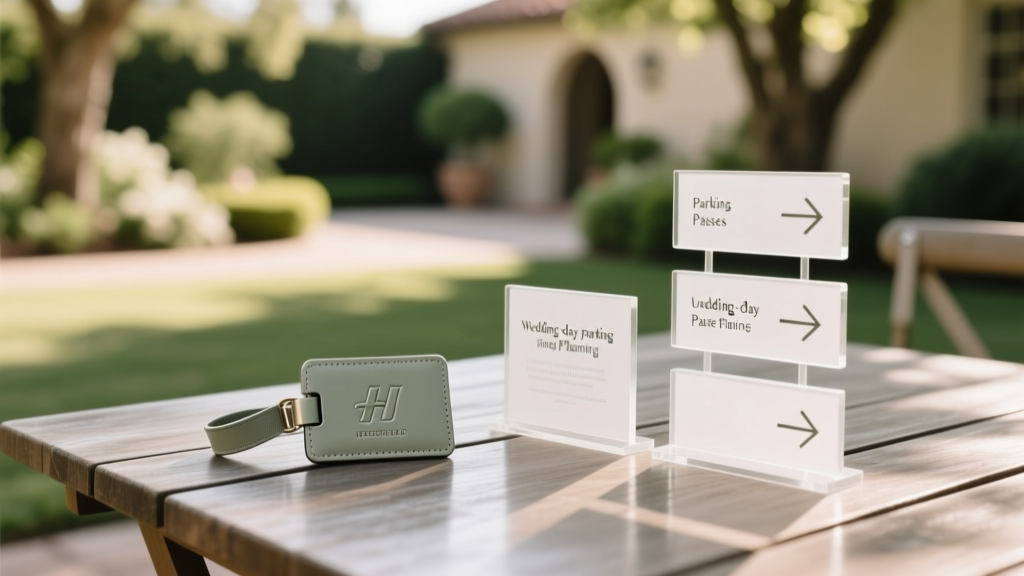
Wedding Day Parking Passes and Signage Planning
You can spend months perfecting your ceremony timeline, selecting the right songs, and choosing a menu your guests will rave about—then watch the whole day start with a stress spike because no one knows where to park. It’s not glamorous, but parking passes and signage are one of those behind-the-scenes details that quietly shape how your wedding feels from the first minute.
If you’ve ever arrived at an event and circled the block, wondered if you’re allowed to park there, or trekked half a mile in heels because the lot was full, you already know why this matters. The goal isn’t just “having parking.” It’s creating an arrival experience that feels organized, welcoming, and easy for everyone—especially your VIPs, older relatives, and wedding party.
This guide walks you through how to plan wedding day parking passes and signage like a pro: what to ask your venue, how many passes you really need, what your signs should say, and how to avoid common parking mishaps. You’ll end with a clear plan (and a checklist) you can hand off to your planner, coordinator, or a trusted friend.
Start with the Big Picture: What Kind of Parking Situation Do You Have?
Before you design a single sign, get clear on the type of parking you’re working with. Most weddings fall into one of these scenarios:
- Venue lot parking: One on-site lot, sometimes shared with the public or other events.
- Street parking: Common for city venues, restaurants, and historic churches.
- Remote/off-site lot: Guests park elsewhere and shuttle in.
- Mixed approach: On-site for VIPs + overflow lot for guests.
- Valet: Great for tight spaces, upscale venues, or cities with limited parking.
Questions to Ask Your Venue (or Ceremony Site) Right Away
Parking details can change what you rent, what you print, and even what time guests need to arrive. Ask these as early as possible:
- How many parking spaces are available on-site?
- Are spaces reserved exclusively for our wedding, or shared?
- Are there towing rules or enforcement we need to communicate?
- Is there a separate vendor parking area?
- Where should rideshares (Uber/Lyft) drop off and pick up?
- Are there accessible/ADA spaces and a step-free route to the ceremony?
- Is lighting adequate for nighttime departures?
- Are there sound restrictions (e.g., no honking for exit “send-offs”)?
- Can we place signs (stakes, stands, tape on walls), and what’s allowed?
Pro tip: If your venue hosts multiple weddings per weekend, confirm whether your event overlaps another. Two weddings + one lot is where parking passes and clear signage become non-negotiable.
Who Needs a Parking Pass? Build a Simple Parking “Guest List”
Not every wedding needs parking passes. They’re most helpful when parking is limited, shared, gated, or managed by attendants. Start by mapping out who should have priority parking and who can be directed to general parking or an overflow lot.
Typical Parking Pass Categories
- Couple: Your car (or your end-of-night getaway car) should have a guaranteed spot.
- Wedding party: Especially helpful if you want them parked close for photos and prep.
- Immediate family: Parents, grandparents, siblings—reduce walking and stress.
- VIPs: Officiant, readers, special guests, anyone with mobility needs.
- Vendors: Some venues require vendor passes; sometimes vendors need separate parking.
- Shuttle/transport vehicles: Space for buses, sprinters, or trolleys to turn around and wait.
How Many Passes Should You Print?
Use this quick method:
- Estimate how many cars you expect: Take your guest count and divide by 2 (then adjust for your crowd—city weddings may have more rideshares, suburban weddings more cars).
- Subtract what you can control: If you’re providing a shuttle, the number of guest cars may drop.
- Assign priority passes first: Family + wedding party + accessibility needs.
- Add a buffer: Print 10–15% extra passes for last-minute needs.
Real-world example: You’re inviting 120 guests at a winery with 60 total spots. You expect about 50 cars (many couples). You decide to run a shuttle from a nearby school lot. You print 20 reserved passes (family, wedding party, VIPs), and everyone else is directed to the shuttle lot. Result: the winery lot stays calm, photos start on time, and guests aren’t stressed at arrival.
Parking Signage: What You Actually Need (and What You Can Skip)
Great wedding signage is clear, not cute. You can still make it match your wedding aesthetic—just don’t sacrifice readability.
Essential Wedding Parking Signs
- “Wedding Parking” directional signs: At each turn from the main road to the venue.
- “Reserved Parking” signs: For family/VIP rows or specific spots.
- “Overflow Parking” signs: Clear arrows to the backup lot.
- “Shuttle Pick-Up/Drop-Off” signs: At both the remote lot and the venue entrance.
- “Rideshare Drop-Off” signs: Prevents Ubers from clogging the main drive.
- Accessible parking signage: If not already marked by the venue.
Nice-to-Have Signs (Depending on Your Setup)
- “Do Not Park Here” reminders: Helpful if there are tempting off-limit areas (fire lanes, neighbors’ driveways, loading zones).
- “Check-in this way” sign: Keeps arrival flow moving if guests can enter from multiple directions.
- “Last shuttle at…” sign: Great for remote lots and hotels.
Make Signs Easy to Read From a Car
- Use high contrast (dark text on light background or vice versa).
- Choose large fonts; avoid thin scripts for directional signs.
- Keep wording short: “PARKING →” beats a full sentence.
- Use arrows consistently (same style/size).
- Consider weather: foam board or corrugated plastic holds up better than paper.
Budget note: A small set of professionally printed parking signs might cost $50–$200 depending on size and materials. If you’re DIY-ing, budget for stakes/stands, zip ties, waterproofing, and backups.
Step-by-Step: Create Your Wedding Parking Plan (Checklist)
Use this as your planning checklist and handoff document.
1) Map the Arrival Flow
- Identify the most common route guests will take (from the main road/highway).
- Mark every decision point: turns, forks, gates, and lot entrances.
- Choose a single primary entrance if possible (fewer chances for confusion).
2) Decide How You’ll Handle Limited Parking
- Reserved + general: Reserve on-site for VIPs, direct others to general.
- Overflow lot: Secure a nearby lot (church, school, office complex) with written permission.
- Shuttle plan: Confirm pickup intervals and the final shuttle time.
- Valet: Confirm staging space, keys process, tips/gratuity expectations, and liability.
3) Assign Parking Passes and Track Distribution
- Create a simple list: name + category (family/VIP/wedding party/vendor) + pass number.
- Decide distribution method:
- Mail with invitations (best for formal or gated venues).
- Include in welcome bags at the hotel (great for destination weddings).
- Hand out at rehearsal dinner (ideal for family and wedding party).
- Include a quick instruction on the pass: “Display on dashboard” or “Hang on mirror.”
4) Write Your Signage Copy
- Directional: “WEDDING PARKING →”
- Reserved: “RESERVED – [Last Name] FAMILY” or “RESERVED – VIP”
- Overflow: “OVERFLOW PARKING →”
- Shuttle: “SHUTTLE PICK-UP” / “SHUTTLE DROP-OFF”
- Rideshare: “RIDESHARE DROP-OFF →”
Pro tip: If your venue has multiple events, add your names: “SMITH/JONES WEDDING PARKING →” so guests don’t accidentally follow another group.
5) Confirm Placement and Setup Logistics
- Choose who will place signs (coordinator, venue staff, a designated helper).
- Confirm setup time (often 2–4 hours before guest arrival for ceremony sites).
- Bring supplies: extra zip ties, tape approved by venue, stakes, a hammer/mallet, and a backup sign.
- Plan for removal at the end of the night (assign someone).
6) Communicate Parking Details to Guests
- Add a “Parking” section on your wedding website with:
- Address and a map pin
- Where to park
- Shuttle times (if applicable)
- Rideshare instructions
- A note about footwear if parking is on grass/gravel
- Add a short reminder to the invitation details card if parking is tricky.
- Text wedding party/family the plan 48 hours before the wedding (include a screenshot map).
Real-World Scenarios (and How to Handle Them Smoothly)
Scenario 1: Downtown Venue with No Lot
Your guests will arrive with different comfort levels around city parking. Make it simple:
- Partner with a nearby garage for a discounted rate or validated parking.
- Include a garage address and “best entrance” note on your website.
- Use a small curbside “Rideshare Drop-Off” sign to avoid traffic backups.
- Consider a few reserved street spots (if your city allows temporary permits).
Scenario 2: Barn or Estate Wedding with One Gravel Driveway
One lane in and out can cause arrival gridlock if everyone shows up at once.
- Set guest arrival time 30 minutes earlier than you “need” them there.
- Use directional signs at each turn plus a greeter/parking attendant at the driveway entrance.
- Create a separate route/area for vendors so catering trucks aren’t blocking guests.
- Plan lighting for the exit: string lights, solar path lights, or venue-provided lighting.
Scenario 3: Ceremony at a Church, Reception at a Different Venue
Two locations doubles the chances of confusion.
- Provide parking instructions for both sites on your wedding website.
- Ask the church about reserved spaces for family and the wedding party.
- Use a small “Wedding Parking” sign at the church lot entrance if it’s shared.
- If travel time is tight, consider a shuttle between locations for wedding party and family.
Common Mistakes to Avoid (and Planner-Approved Fixes)
- Mistake: Only one sign at the venue entrance.
Fix: Add signs at every decision point (each turn/fork), starting from the main road. - Mistake: Cute script fonts that drivers can’t read.
Fix: Use bold, high-contrast fonts for parking signage; save calligraphy for welcome signs. - Mistake: No plan for rideshare pickup at the end of the night.
Fix: Designate a pickup spot and share it with guests—especially if there’s poor cell service. - Mistake: Forgetting vendor parking and load-in routes.
Fix: Include vendor parking in your plan and share it with your vendor team 1–2 weeks ahead. - Mistake: Underestimating how many cars will come.
Fix: When in doubt, plan for more cars—especially if many guests are local or families with teens driving separately. - Mistake: Not planning for rain/mud.
Fix: Ask about rain parking options, bring straw/mats if allowed, and avoid directing guests to low grassy areas.
Pro Tips from Wedding Planners: Make Parking Feel Effortless
- Use attendants for high-stress lots: Even one or two people guiding cars improves flow dramatically.
- Stagger arrivals with gentle wording: On your website: “Parking opens at 3:30 PM; please arrive by 4:15 PM.”
- Think about guest comfort: If parking is far, provide a shuttle or golf cart for elderly guests.
- Create a “VIP parking row” close to the entrance: Parents, grandparents, anyone with mobility concerns.
- Have a late-night plan: Make sure the lot is lit and signage is still visible for departures.
- Pack a parking kit: Zip ties, stakes, a Sharpie, painter’s tape (if allowed), a flashlight, and an extra printed arrow sign.
Budget and Timeline: When to Handle What
Typical Budget Ranges
- DIY printed signs + stakes: $20–$80
- Professionally printed parking signs: $50–$200
- Parking attendants (1–2 staff for a few hours): $100–$400+
- Valet service: $500–$1,500+ (varies widely by city and guest count)
- Shuttles: $600–$2,500+ depending on distance, hours, and number of buses
Planning Timeline (Simple and Realistic)
- 3–6 months out: Confirm parking capacity, shuttle/valet needs, and any venue restrictions.
- 6–10 weeks out: Finalize your signage list and order prints.
- 4–6 weeks out: Build your pass distribution plan; update your wedding website parking details.
- 2 weeks out: Confirm attendants, shuttle schedule, and sign placement responsibilities.
- 48 hours out: Text VIPs and wedding party the parking plan; pack your parking kit.
- Wedding day: Place signs early, do a quick drive-by test from the main road, and keep a few spare passes at check-in.
FAQ: Wedding Day Parking Passes and Signage
Do we need parking passes if our venue has a large lot?
Maybe not. Passes are most useful when spaces are limited, shared with the public, gated, or reserved for VIPs. If your venue lot is ample and clearly marked, simple directional signage may be enough.
What should a wedding parking pass include?
Keep it simple: your names (or initials), wedding date, “Reserved/VIP” if applicable, and how to display it (“Place on dashboard” or “Hang on mirror”). Numbering passes helps if you’re managing a tight count.
How do we prevent guests from parking in the wrong area?
Use multiple signs at decision points, not just at the lot. If there are off-limit zones, add a clear “No Wedding Parking” or “Staff/Vendor Only” sign. A parking attendant at peak arrival time is the fastest fix for confusion.
Is valet worth it for a wedding?
Valet can be a great investment if parking is limited, the venue is in a busy area, or you want a more elevated guest experience. It also helps older guests and keeps traffic from backing up. Get quotes early and confirm whether tips are included.
How do we handle rideshare pickups at the end of the night?
Designate a safe, well-lit pickup point and share it on your wedding website and with your DJ/coordinator. If cell service is spotty, consider having a helper near the pickup area to coordinate cars and guests.
What’s the best way to communicate parking details without overwhelming guests?
Put the full details on your wedding website, then include a short line on your details card like: “Parking & shuttle info: [your URL].” For VIPs and wedding party, send a direct text with a map screenshot a day or two before.
Your Next Steps: A Calm, Clear Arrival Plan
If you do just three things this week, make them these:
- Confirm the parking count and rules with your venue (and ceremony site, if different).
- Choose your parking setup (on-site only, reserved + overflow, shuttle, valet).
- Draft your signage list and placement plan so someone else can execute it without guessing.
When parking is handled well, guests arrive relaxed, your timeline stays intact, and you get to focus on the part you actually care about—getting married. You’ve got this.
For more practical, real-life planning help, explore the rest of our wedding planning guides on weddingsift.com.
More Articles
 Wedding Photography Advertising: 7 Low-Budget Tactics (2026)
 Corset for Wedding Dress: 7-Step DIY (No Sewing Machine)
 Micro Wedding Guest Count: What’s Really Standard?
 Wedding Day Emergency Kit: Full Checklist
 Bachelorette Party Timing: The Stress-Free 2026 Timeline
 Can You Wear Black Dress To A Wedding
 Wedding Toast Speech: 5-Step Framework (2026)
 How to Print Your Own Wedding Programs (2026)
 Taco Bell Wedding Catering: Truth, Fees & Hacks (2026)
 Wedding Day Sweat Solutions: 7 Proven Strategies (2026)