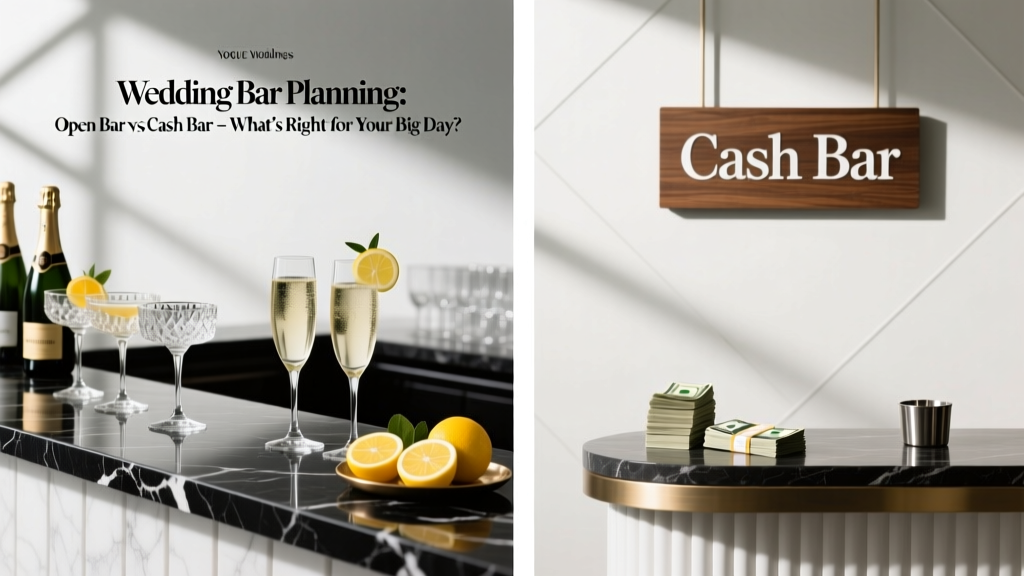
Wedding Bar Planning Open Bar vs Cash Bar
You can pick the perfect venue, find a photographer you adore, and curate a playlist that feels like “you”… and still end up stressing over one surprisingly emotional question: what kind of wedding bar should we have?
If you’re torn between an open bar and a cash bar, you’re not alone. Couples usually come to this decision with a mix of excitement, budget reality, family expectations, and a genuine desire to make guests feel welcomed. And because weddings bring together different generations and social circles, the “right” answer can feel confusing.
Here’s the good news: you don’t have to choose between being generous and being financially responsible. With a little planning and a few smart guardrails, you can design a wedding bar setup that fits your budget, matches your vibe, and keeps the celebration running smoothly.
Open Bar vs Cash Bar: What Each Option Really Means
What is an open bar?
An open bar means guests don’t pay per drink during the reception. The couple (or host) covers the bar costs, typically through:
- Per-person packages (often called “hosted bar”): a fixed price per guest for a set number of hours
- Consumption bar: you pay for what’s actually poured
- Limited open bar: beer/wine only, or select liquors, or open bar for a specific time window
What is a cash bar?
A cash bar means guests pay for their own drinks (cash or card) during the reception. Variations include:
- Full cash bar: all drinks are guest-paid
- Partial hosted bar: you cover some items (like wine at dinner), guests pay for the rest
- Drink tickets: each guest gets 1–2 tickets, then pays after that
The “middle ground” options most couples end up choosing
If “open bar vs cash bar” feels too black-and-white, you’ll love these crowd-pleasing hybrids:
- Beer + wine open bar (guests can still purchase cocktails)
- Open bar during cocktail hour, then beer/wine only after
- Open bar until a set time (for example, until 9:30 PM), then cash bar
- Signature cocktails + beer/wine (skip a full liquor lineup)
How to Decide: The Factors That Actually Matter
1) Your budget (and how predictable you need costs to be)
Bar costs can swing more than couples expect, especially with consumption-based pricing. Start by deciding which matters more:
- Cost certainty: choose a per-person package or a limited bar
- Possibly lower cost (but variable): choose consumption-based or a hybrid model
Real-world scenario: You have 140 guests, but you know 30 are under 21 and another 20 don’t drink. A per-person premium open bar might charge you for all 140 adults anyway, while consumption could be more efficient—if your venue’s pricing is fair.
2) Guest expectations (culture, region, and formality)
In some regions and circles, an open bar is standard. In others, a cash bar is normal and not seen as rude. Consider:
- Are many guests traveling? (Travel costs can heighten expectations of hospitality.)
- Is the event black-tie or more casual?
- Do your families have strong opinions or traditions?
Planner perspective: Guests rarely remember the exact brand of vodka. They do remember long lines, confusion at the bar, and awkward payment moments. Whatever you choose, prioritize clarity and flow.
3) Your venue and catering rules
Your venue may dictate what’s possible. Ask early:
- Do you have to use in-house bartenders?
- Are there minimum spends for the bar?
- Can you supply your own alcohol (BYO), and if so, are there corkage/service fees?
- Is a special event liquor license required?
- Do they allow shots or doubles?
4) Your guest list: drinkers, nondrinkers, and everyone in between
Think about the makeup of your crowd:
- Lots of heavy social drinkers (college friends, big party crowd)? Plan more structure.
- Many nondrinkers, pregnant guests, or sober guests? Put extra love into the non-alcoholic options.
- A mixed-age guest list? Consider beer/wine plus one or two signature cocktails.
Cost Breakdown: What Couples Typically Pay For
Every venue is different, but bar pricing usually includes some combination of:
- Alcohol (beer, wine, liquor)
- Mixers and garnishes (soda, tonic, juices, limes, etc.)
- Bartenders (hourly or packaged)
- Glassware (sometimes included, sometimes rented)
- Service charges and gratuity
- Insurance/permits (especially for BYO or backyard weddings)
Budget-friendly bar choices that still feel generous
- Beer and wine open bar instead of full liquor
- Two signature cocktails (his/hers, or “yours/ours”) instead of full open spirits
- House liquor package (often plenty for most guests)
- Skip champagne for everyone and do a sparkling toast pour only
- Shorter hosted bar time (host cocktail hour + dinner, then switch)
Step-by-Step Wedding Bar Planning Checklist
Step 1: Choose your bar style (and write it down)
Pick one clear plan, not a vague idea. Examples:
- “Hosted beer/wine + 2 signature cocktails for 5 hours.”
- “Full open bar during cocktail hour; beer/wine only afterward.”
- “Drink tickets (2 per guest), then cash bar.”
Step 2: Confirm bar logistics with your venue or caterer
- Number of bars needed (one bar per ~75–100 guests is a good starting point)
- Hours of service (and last call timing)
- What’s included in packages (brands, mixers, garnishes)
- Rules about shots, doubles, and neat pours
- Card payments available for cash bar?
Step 3: Build a smart, guest-friendly drink menu
A streamlined menu speeds service and helps your budget. A balanced approach:
- 2 beers (one light, one IPA/amber)
- 2 wines (one red, one white; add rosé if it fits your crowd)
- 2 signature cocktails (one spirit-forward, one lighter/refreshing)
- Non-alcoholic “signature” option (sparkling lemonade, mojito mocktail, etc.)
Specific scenario: Summer outdoor wedding? Offer a crisp white wine, a lager, and a citrus-forward signature cocktail. Winter ballroom wedding? Add a red wine with body and a bourbon-based signature drink.
Step 4: Don’t forget the non-alcoholic bar plan
A thoughtful wedding bar includes everyone. Consider offering:
- Sparkling water and still water (ideally at multiple stations)
- NA beer or NA sparkling wine
- Mocktail option on the menu (not just soda)
- Coffee/tea service later in the night
Step 5: Plan consumption and safety
Your bartenders should be empowered to serve responsibly. Helpful policies:
- No shots (or limit to one “specialty shot” only)
- No doubles
- Cutoff for hard liquor after a certain time
- Plenty of water and late-night food
Step 6: Communicate clearly to guests
If you’re doing a cash bar or hybrid, clarity prevents awkwardness:
- Add a simple note to your wedding website FAQ: “Beer and wine will be hosted; cocktails available for purchase.”
- Use tasteful signage at the bar (small framed sign works great).
- If it’s cash-only, say so—guests don’t carry cash like they used to.
Open Bar Pros & Cons (What Couples Wish They Knew)
Pros of an open bar
- Feels generous and hospitable, especially for a formal reception
- Smoother guest experience (no wallets, no payment delays)
- Often keeps the party energy high
Cons of an open bar
- Can be expensive—especially premium liquor packages
- May lead to overconsumption if not structured well
- Some packages include brands you don’t care about (and you still pay)
Cash Bar Pros & Cons (and How to Do It Tactfully)
Pros of a cash bar
- Lower direct cost to the couple
- Can reduce heavy drinking
- Works well for very casual weddings or certain family/community norms
Cons of a cash bar
- Can surprise guests if not communicated
- Creates lines and slows service (payment time adds up)
- May feel mismatched at a formal wedding
How to make a cash bar feel considerate
- Host something: even if it’s just wine at dinner or a signature cocktail
- Offer drink tickets: guests feel “treated,” and you control spending
- Make sure cards are accepted: or provide an ATM option nearby
- Upgrade the NA options: great mocktails reduce frustration for everyone
Timeline Advice: When to Decide and What to Confirm
- 9–12 months out: Ask venues about bar rules, minimum spends, BYO options, and package pricing.
- 6–8 months out: Choose your bar style (open vs cash vs hybrid). If you’re hiring a separate bar service, book them.
- 3–4 months out: Finalize drink menu (beer/wine selections, signature cocktails, NA beverages).
- 4–6 weeks out: Confirm bartender count, bar setup locations, signage, and last call timing.
- 1–2 weeks out: Provide final headcount, review invoice, and confirm who is handling gratuity.
Common Mistakes to Avoid (and Pro Tips You’ll Be Glad You Used)
Mistake: Choosing a bar package before you know your guest list
Pro tip: Even a rough headcount + guest “type” helps you avoid paying for a premium full open bar when your crowd would be thrilled with beer/wine and one signature cocktail.
Mistake: Forgetting water and NA drinks until the last minute
Pro tip: Add water stations in addition to the bar. It reduces lines and keeps guests feeling good.
Mistake: Underestimating how much time a cash bar adds
Pro tip: If you’re set on cash bar, consider a second bar setup or a simplified menu to keep the line moving.
Mistake: No plan for last call
Pro tip: A gentle last call 20–30 minutes before the end helps guests wrap up, find rides, and keeps cleanup smooth.
Mistake: Allowing unlimited shots at a wedding with mixed-age guests
Pro tip: Most planners recommend “no shots” as a default. You can still have a fun cocktail menu without turning the night into damage control.
Real-World Bar Setups That Work (Copy These)
Scenario 1: You want an open bar feel on a mid-range budget
- Hosted beer and wine for 5 hours
- Two signature cocktails
- No full liquor list
- Champagne pour for toasts only
Scenario 2: Big guest list, budget pressure, still want guests cared for
- Hosted welcome drink at cocktail hour
- Hosted wine service during dinner
- Cash bar after dinner (card accepted)
- Upgraded mocktail option all night
Scenario 3: Backyard wedding with BYO alcohol
- Hire insured bartenders (even with BYO)
- Stock beer, wine, and two batched cocktails
- Provide plenty of ice, cups/glassware, and water stations
- Arrange rideshares/taxis and have a plan for overnight parking
FAQ: Wedding Bar Planning
Is a cash bar considered rude at a wedding?
Not always—it depends on your region, culture, and how you communicate it. If your wedding is formal or many guests are traveling, a fully hosted option (even if limited) often feels more in line with expectations. A hybrid approach is a common compromise.
What’s the most budget-friendly bar option that still feels generous?
Hosted beer and wine with one or two signature cocktails is usually the best value. Guests feel taken care of, service stays fast, and you avoid the high cost of a full premium liquor lineup.
How many bartenders do I need for my wedding?
A common guideline is 1 bartender per 50–75 guests for a simple bar, and 1 per 40–50 guests for full cocktails. If you’re offering complicated mixed drinks or expecting heavy volume during cocktail hour, add staff.
Should we do an open bar all night or only for part of the reception?
If budget is tight, hosting cocktail hour and dinner can deliver the “hosted” feeling when it matters most, then switching to beer/wine only (or a cash bar) later. Just be clear with signage and on your wedding website.
How do we handle guests who don’t drink?
Plan for them as intentionally as you plan for cocktails: add a mocktail, NA beer, sparkling water, and attractive presentation. Many guests will choose NA options at least part of the night.
How can we prevent people from drinking too much at an open bar?
Use structure: limit shots and doubles, offer food throughout the night, add water stations, and consider switching to beer/wine only later. Professional bartenders will also manage responsible service.
Your Next Steps: Make a Plan You Feel Good About
If you’re still deciding between an open bar and a cash bar, start with these three actions this week:
- Ask your venue/caterer for bar pricing details (package vs consumption, minimums, service fees).
- List your top priorities (cost certainty, guest experience, party vibe, cultural expectations).
- Pick a “default” plan and one backup plan (for example: beer/wine + signature cocktails as Plan A; drink tickets + cash bar as Plan B).
You’re not just choosing drinks—you’re designing how your guests will feel in the celebration. With a clear plan, good communication, and a menu that fits your crowd, your wedding bar can be one of the easiest parts of the night to enjoy.
Want more practical planning support? Explore more wedding planning guides on weddingsift.com to keep your budget, timeline, and guest experience feeling beautifully under control.
More Articles
 Do Men And Women S Wedding Rings Have To Match (2026)
 Do Guys Wear Suits to Weddings? (2026)
 Demetrios Wedding Gowns Cost in 2026
 Wedding Coordinator Tip: How Much to Give (2026)
 Updo for Wedding: 7 Foolproof Steps (2026)
 Calm Wedding Nerves: 7 Science-Backed Techniques (2026)
 Disneyland Wedding Costs: Hidden Fees & 2026 Savings
 QR Code for Wedding Photos: 5 Steps (2026)
 Indian Wedding Gift Amounts: 2026 Regional Guide
 How Much Does It Cost For Destination Wedding (2026)