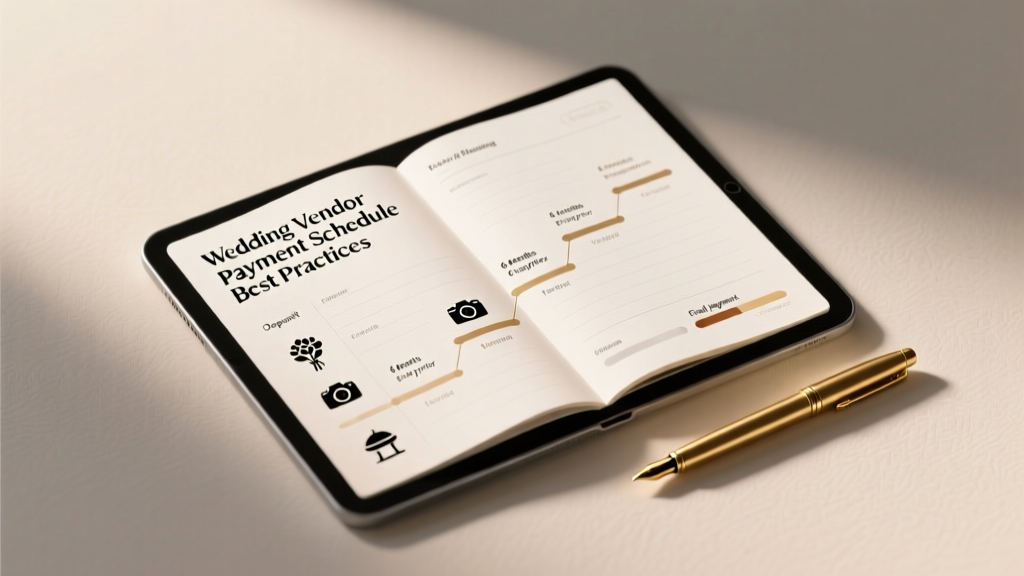
Wedding Vendor Payment Schedule Best Practices
You’ve found your dream venue, you’re saving inspo photos like it’s your second job, and you’re starting to feel that exciting “this is really happening” momentum. Then reality taps you on the shoulder: deposits, due dates, contracts, and the big question—when do we actually pay everyone?
If you’re feeling a little nervous about vendor payments, you’re not alone. Even the most organized couples can get overwhelmed when multiple vendors each have different terms. The good news: a clear, realistic wedding vendor payment schedule will protect your budget, reduce stress, and keep your planning on track.
Below is a warm, practical guide (the kind your planner-friend would text you) to help you map out your wedding payment timeline, avoid common mistakes, and feel confident from first deposit to final gratuities.
Why Your Wedding Vendor Payment Schedule Matters
Most wedding vendors work with tight calendars and limited availability. A payment schedule isn’t just about money—it’s part of how vendors reserve your date, plan staffing, order materials, and deliver on your vision. Having a plan also helps you avoid late fees, awkward conversations, and last-minute budget surprises.
What a good payment plan does for you
- Prevents cash-flow crunches by spreading payments over the engagement.
- Keeps you contract-compliant (so you don’t risk losing a date or a deposit).
- Creates peace of mind because you know what’s due and when.
- Makes it easier to compare quotes (two vendors with the same total can have very different due dates).
Typical Wedding Vendor Payment Structures (What You’ll See Most Often)
Every vendor has their own policies, but most payment schedules fall into a few common patterns. Knowing these ahead of time will help you negotiate and plan.
1) Retainer/Deposit + Final Payment
This is the most common setup. You pay a non-refundable retainer to reserve the date, then the balance closer to the wedding.
- Common for: photographers, DJs/bands, planners, officiants, hair & makeup
- Typical range: 20–50% retainer; balance due 2–8 weeks before
2) Installment Plans (Milestone Payments)
Payments are split into 2–4 chunks tied to planning milestones.
- Common for: venues with catering, planners, florists (larger orders), rentals
- Typical setup: retainer at booking, second payment at 90–180 days out, final payment 14–30 days out
3) Pay-on-Delivery or Day-Of Balance
Some vendors allow (or request) final payment on the wedding day.
- Common for: small rentals, some beauty teams, some musicians
- Best practice: avoid needing to do financial tasks on the wedding day if possible (more on that below)
4) Minimums, Service Charges, and Gratuities
Venues and caterers often include service charges, gratuities, staffing fees, and tax. These can change your “real total” significantly.
- Ask: Is gratuity included? Is the service charge a gratuity or an admin fee? Are taxes applied to service charges?
A Smart Wedding Payment Timeline (Month-by-Month Guide)
This is a general wedding planning timeline for vendor payments. Your exact schedule depends on your wedding date, season, and local market, but this framework works for most couples.
12–18+ Months Out: The “Reserve the Date” Phase
This is when you typically pay the biggest retainers because you’re booking in-demand vendors.
- Venue (often 25–50% to hold the date)
- Planner (retainer or first installment)
- Photographer/Videographer (retainer)
- Band/DJ (retainer)
Real-world scenario: You’re planning a Saturday wedding in peak season. Your venue requires 40% down, your photographer requires 30%, and your planner needs a 25% retainer. That’s three big payments in the same month—so your “booking season” cash needs to be ready before you start touring and interviewing.
9–12 Months Out: The “Build the Team” Phase
- Catering (if separate from venue: retainer or first installment)
- Florist (retainer; sometimes a second payment later)
- Rentals (retainer for specialty items)
- Hair & Makeup (retainer)
- Officiant (retainer or full payment)
6–9 Months Out: The “Design and Details” Phase
- Second installments for venue/catering/planner (common milestone)
- Stationery deposits for custom invitation suites
- Transportation retainer (especially for shuttles)
3–6 Months Out: The “Final Counts Are Coming” Phase
- Alterations payments begin (often split into fittings)
- Rentals finalizing quantities may trigger additional payment
- Florals proposal updates may increase totals—plan a cushion
1–2 Months Out: The “Final Payments” Phase
This is the most expensive stretch for cash flow. Many vendors require final payment before the wedding week.
- Venue/Catering final balance (often due 14–30 days out)
- Photographer/Videographer final balance
- Entertainment final balance
- Planner final balance
- Hair & Makeup balance (sometimes due before, sometimes day-of)
Wedding Week + Wedding Day: The “No Surprises” Phase
If anything must be paid on the wedding day, prep it in advance so you’re not dealing with it in formalwear.
- Gratuities (cash tips in labeled envelopes)
- Any remaining balances (rare, but some vendors do this)
- Overage payments (extra hours, last-minute add-ons—ask how they’re handled)
Step-by-Step: How to Create Your Vendor Payment Schedule
Here’s a simple system that keeps everything organized, even if spreadsheets aren’t your love language.
Step 1: List every vendor and their contract terms
- Vendor name and service
- Total cost
- Retainer amount + due date
- Installments + due dates
- Final payment due date
- Accepted payment methods (check, ACH, credit card, cash)
- Card processing fees (often 2–4%)
- Cancellation/reschedule policy
Step 2: Put due dates on a master timeline
Use a calendar you actually check (Google Calendar, Apple Calendar, or a shared planning app). Add reminders:
- 30 days before each payment
- 7 days before each payment
- 48 hours before (especially for checks/ACH)
Step 3: Align payments with your paychecks
Instead of thinking “due on June 1,” think “comes out of the May 15 paycheck.” This makes the schedule feel doable.
Step 4: Build a buffer line in your budget
Aim for 5–10% of your total wedding budget as a “vendor flex” buffer for:
- Guest count changes
- Additional rentals
- Delivery/setup fees
- Extra photo/video coverage time
- Weather backup plans (tents, heaters, umbrellas)
Step 5: Decide who is responsible for payments
If family members are contributing, clarify early:
- Who pays which vendor?
- Who signs the contract?
- Who receives invoices and reminders?
Pro tip: If someone else pays, you still need visibility. Ask vendors to send invoices to both you and the payer so nothing gets missed.
Budget Considerations: Deposits, Credit Cards, and Cash Flow
Should you pay wedding vendors with a credit card?
It depends. Credit cards can help with points and buyer protection, but fees add up quickly.
- If there’s a processing fee: Compare the fee to the value of points/cash back.
- If there’s no fee: Credit card can be convenient—just don’t carry a balance.
- If you’re close to your limit: Don’t risk a declined payment right before the wedding.
Watch for “hidden” costs that affect payment timing
- Travel fees for out-of-town vendors
- Hotel accommodations (sometimes due in advance)
- Security deposits for rentals/venues
- Overtime rates (photography, venue, DJ)
Real-World Payment Schedule Examples Couples Relate To
Example 1: The classic venue + catering package
- At booking (12 months out): 40% deposit
- 6 months out: 30% installment
- 21 days out: final 30% based on guaranteed guest count
How to plan: Treat your 21-day-out payment like a non-negotiable bill and start “pre-saving” for it three months ahead.
Example 2: Photographer with retainer and final payment
- At booking: 30% retainer
- 30 days out: remaining 70%
How to plan: If your final month also includes catering and florals, ask the photographer if you can pay the final balance at 45–60 days out to spread the load (some will accommodate).
Example 3: Florist with changing totals
- At booking: $1,000 retainer
- 60 days out: updated proposal based on final design direction
- 30 days out: final balance due
How to plan: Keep a “design flex” budget. Florals are one of the easiest places for totals to climb once you see options.
Common Mistakes to Avoid (and What to Do Instead)
Mistake 1: Booking vendors without reading the payment terms
Do instead: Before you sign, ask: “What are the exact due dates and what happens if a payment is late?” Get it in writing.
Mistake 2: Forgetting that “final payment” is often due before the wedding
Do instead: Assume most final balances are due 2–4 weeks before the wedding and plan your cash flow accordingly.
Mistake 3: Paying too many deposits at once
Do instead: Prioritize booking the vendors that are hardest to secure (venue, photographer, planner), then stagger the rest by 2–4 weeks when possible.
Mistake 4: Not tracking tips, overtime, and add-ons
Do instead: Create a “wedding week” envelope plan for tips and a small contingency fund for last-minute charges.
Mistake 5: Mixing personal spending with wedding payments
Do instead: Use a dedicated wedding checking account or a separate budget category so you can see what’s left at a glance.
Wedding Planner Pro Tips for a Smooth Payment Process
- Ask for an invoice schedule at booking: “Can you send all invoice due dates now?”
- Keep proof of payment (screenshots, receipts, confirmation emails) in one folder.
- Pay early when you can—especially if you’ll be traveling or busy near the wedding date.
- Confirm how changes affect pricing: guest counts, timelines, locations, and rental quantities.
- Assign a “payment point person” for wedding week (planner, trusted sibling, or best friend) if anything is due day-of.
- Clarify gratuity expectations kindly and directly: “Is gratuity included, customary, or optional?”
Quick Vendor Payment Checklist (Save This)
- Create a master vendor list with totals and due dates.
- Set calendar reminders (30 days, 7 days, 48 hours).
- Confirm payment methods and fees for each vendor.
- Build a 5–10% buffer into your wedding budget.
- Plan for final payments 2–4 weeks before the wedding.
- Prep wedding-week tips in labeled envelopes.
- Store contracts, invoices, and receipts in one shared folder.
FAQ: Wedding Vendor Payment Schedule Questions
How much are wedding vendor deposits typically?
Most vendors require 20–50% to book your date, though some (especially venues) may require more. The deposit is often a non-refundable retainer, meaning it reserves your date and the vendor’s time.
When are final payments usually due?
Many vendors require final payment 14–30 days before the wedding. Venues and caterers often base the final invoice on your guaranteed guest count and may require payment before they place orders and schedule staff.
Should we tip vendors, and when do we give gratuities?
Tipping depends on the vendor type and what’s already included in your contract. If you’re tipping in cash, prepare labeled envelopes before wedding day and assign someone you trust to distribute them. If gratuity is included by your venue/caterer, confirm whether it goes to staff and whether additional tipping is expected.
Is it okay to ask vendors for a different payment schedule?
Yes—politely. Some vendors are flexible, especially if you ask early. You can say, “Would you be open to splitting the final balance into two payments?” Just know that some vendors can’t adjust due to business needs or peak-season policies.
What happens if we’re late on a payment?
It depends on the contract. Some vendors charge late fees; others may pause work, withhold deliverables, or (in extreme cases) treat it as a breach of contract. If you anticipate an issue, contact your vendor right away—clear communication goes a long way.
How do we manage payments if family is contributing?
Decide who is paying which vendor and who will receive invoices. If a family member is paying, ask vendors to copy you on all invoices and confirmations so you can still manage your wedding planning timeline without surprises.
Next Steps: Make Your Plan Feel Easy (Not Overwhelming)
Start by gathering contracts and writing down each vendor’s deposit and final payment due date. Then plug everything into a shared calendar and build a small buffer into your wedding budget. Once your payment schedule is mapped, you’ll feel a noticeable shift: fewer “uh oh” moments, more confidence, and a lot more space to enjoy the fun parts of planning.
If you’d like more practical, calm, step-by-step help with your wedding planning timeline, budgeting, and vendor decisions, explore more planning guides on weddingsift.com.
More Articles
 Wedding Guest Count: Real Numbers (2026)
 Celtic Wedding Knot: Easy Step-by-Step Guide (2026)
 Is Linen Too Casual for a Wedding? (2026)
 Courthouse Wedding Ceremony Scheduling (2026)
 Wedding Planning: 7-Step Launch Sequence (2026)
 How to Get a Wedding Cake in Sims 4 (2026)
 How to Remove Someone from Your Wedding Party (2026)
 Wedding Handkerchief: No-Sew in 90 Minutes (2026)
 Email Wedding RSVP Guide: Etiquette & Tips
 Men Wearing White at Weddings: Etiquette Rules (2026)