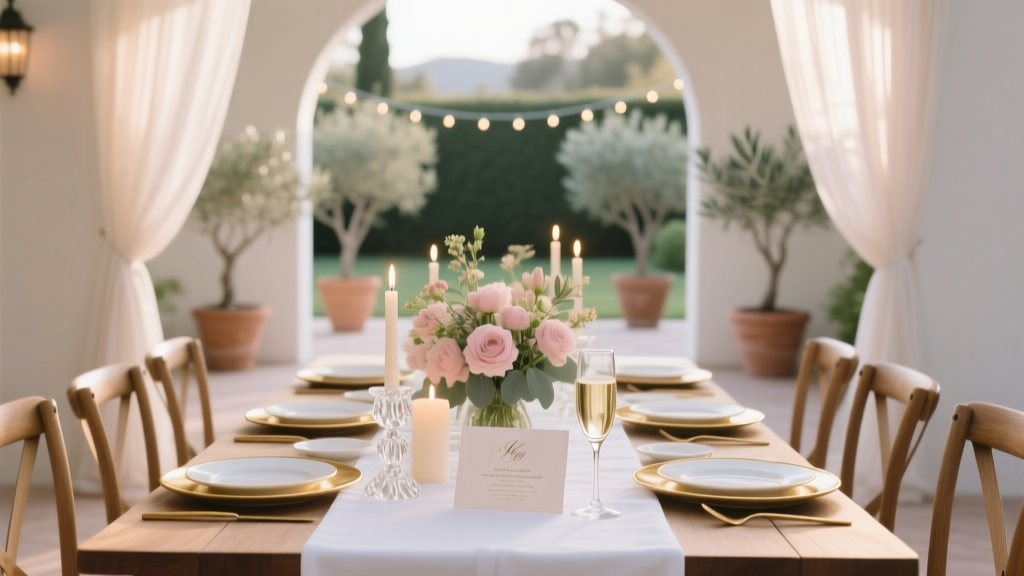
Wedding Rehearsal Dinner Planning Made Easy
The day before your wedding can feel like a beautiful exhale—and a tiny whirlwind. You’re so close to the big day, yet there are still people arriving in town, last-minute questions from the wedding party, and that mix of excitement and nerves you didn’t know could exist at the same time.
That’s where the rehearsal dinner shines. It’s not just a meal—it’s a chance to gather your closest people, thank them for showing up, and kick off the wedding weekend with intention. When it’s planned well, it sets the tone: warm, organized, and full of connection.
This guide breaks rehearsal dinner planning into simple steps, with budget-friendly ideas, timeline tips, and the kind of real-world scenarios couples actually run into. Think of it as your calm, capable planner-friend walking you through everything—without making it complicated.
What Is a Wedding Rehearsal Dinner (and Who Is It For)?
A rehearsal dinner traditionally happens after the wedding ceremony rehearsal, usually the night before the wedding. It’s a hosted event to thank the people participating in the ceremony and to give everyone time to connect before the wedding day.
Typical guest list
- Wedding party (bridesmaids, groomsmen, attendants)
- Immediate family (parents, siblings, grandparents as appropriate)
- Officiant (and their partner, if applicable)
- Ceremony readers, musicians, ushers
- Out-of-town guests (optional—often included for smaller weddings or as a separate welcome event)
Real-world example: If you’re having a 120-guest wedding with 40 out-of-town guests, you don’t have to invite all 40 to the rehearsal dinner. Many couples host a smaller rehearsal dinner for the inner circle, then do a casual welcome drinks hour afterward where out-of-town guests can drop in.
Step-by-Step Rehearsal Dinner Planning Checklist
Use this as your rehearsal dinner planning roadmap. You can follow it in order and check items off as you go.
Step 1: Confirm the basics (8–12 weeks out)
- Pick a date and start time: Most are the night before the wedding, after rehearsal.
- Estimate guest count: Even a rough number helps with venue options.
- Decide the vibe: Formal dinner, backyard BBQ, restaurant private room, casual welcome party, etc.
- Set a working budget: More on budget ranges below.
Step 2: Choose the host(s) and clarify what they’re covering (8–10 weeks out)
Traditionally the groom’s parents hosted, but modern etiquette is flexible. Today, the rehearsal dinner might be hosted by:
- One set of parents
- Both sets of parents together
- The couple
- A combination (for example: parents cover food, couple covers alcohol)
Pro tip: Have one short, clear conversation early: “Who is hosting, what’s the budget, and what does that include (tax, gratuity, drinks, rentals, décor)?” It prevents awkwardness later.
Step 3: Book the venue or make the at-home plan (6–10 weeks out)
Popular rehearsal dinner venues book quickly, especially in peak wedding season. Options include:
- Restaurant private dining room: Easiest logistics, predictable pricing.
- Backyard or home rental: Cozy and personal, but more moving parts.
- Hotel event space: Great if many guests are staying on-site.
- Brewery, wine bar, or lounge: Relaxed and social—ideal for mingling.
- Destination wedding welcome dinner: Often replaces the traditional rehearsal dinner and includes more guests.
Scenario couples relate to: Your wedding rehearsal runs late, and dinner reservations are for 6:30 p.m. If rehearsal starts at 5:00 p.m. and the ceremony site is 25 minutes from dinner, that’s a recipe for stress. Build in buffer time—or choose a venue close to the rehearsal location.
Step 4: Plan food and drink in a way that fits your group (4–8 weeks out)
Rehearsal dinners don’t have to be fancy, but they should be comfortable and welcoming. Consider:
- Plated dinner: Best for speeches and a polished feel.
- Family-style: Warm, communal, and often budget-friendly.
- Buffet: Great for dietary flexibility and larger groups.
- Heavy appetizers + drinks: Perfect for a “welcome party” style event.
Don’t forget to ask about:
- Vegetarian/vegan/gluten-free options
- Allergies (nuts, shellfish, dairy)
- Kids’ meals if children are invited
- Non-alcoholic beverages that feel celebratory
Step 5: Decide if you want speeches, gifts, or special moments (3–6 weeks out)
Many couples include a few short toasts. Keep it simple and meaningful.
A low-stress rehearsal dinner flow:
- Guests arrive + drinks (20–30 minutes)
- Welcome from hosts/couple
- Dinner served
- Toasts (2–4 people, 2–4 minutes each)
- Wrap-up + optional after-dinner social time
Who typically speaks?
- Host(s) of the rehearsal dinner
- Couple (a heartfelt thank-you goes a long way)
- Best man/maid of honor (optional)
- Parents (optional)
Pro tip: If you know your group loves the microphone, assign a toast “moderator” (often the best man or a parent) to keep things moving.
Step 6: Send invitations or messages (3–6 weeks out)
Rehearsal dinner invites can be formal or casual, depending on your event. Common approaches:
- Printed invitations for a more formal dinner
- Email invitations for a restaurant dinner
- Text message + online RSVP for casual gatherings
Include:
- Date, start time, and location (with address)
- Dress code (even if it’s “casual”) so guests don’t guess
- RSVP deadline
- Parking info or rideshare guidance
Step 7: Finalize the timeline and logistics (1–2 weeks out)
This is where rehearsal dinner planning becomes easy: confirm details so you can enjoy it.
- Confirm final headcount with venue/caterer
- Confirm menu selections and dietary accommodations
- Confirm who arrives early (hosts, couple, planner, point person)
- Bring place cards if you’re doing assigned seating
- Confirm check/payment plan (who pays, when, and how)
- Prep tips/toast order and let speakers know the timing
Budget Considerations: What Rehearsal Dinners Typically Cost
The cost of a wedding rehearsal dinner varies widely based on guest count, location, and style. Here are common budget ranges to help you plan realistically:
- Casual pizza/tacos + drinks (15–30 guests): $400–$1,200
- Restaurant dinner (20–50 guests): $1,500–$5,000+
- Private room + open bar (30–60 guests): $4,000–$10,000+
- Backyard event with rentals + catering: $2,500–$8,000+
Hidden costs to watch for:
- Service charges and gratuity (often 18–25%)
- Room rental fees or minimum spend requirements
- Rentals (tables, linens, extra chairs, heaters, lighting)
- Parking or valet
- Extra time fees if you run longer than expected
Budget-saving ideas that still feel special:
- Do beer and wine instead of a full open bar
- Host dessert elsewhere (ice cream shop, hotel lobby treats) instead of a longer dinner
- Choose family-style or buffet instead of plated service
- Skip elaborate décor—use candles, greenery, and a simple welcome sign
- Host a brunch rehearsal meal if the night before is too expensive or hectic
Timeline Advice: When to Schedule the Rehearsal and Dinner
The most common timeline is rehearsal late afternoon, dinner early evening. The key is keeping it comfortable for your wedding party—especially anyone who needs extra time (parents, grandparents, kids).
A sample timeline that works for many couples
- 3:30 p.m. Wedding party arrives at ceremony site
- 4:00–5:00 p.m. Ceremony rehearsal
- 5:00–5:30 p.m. Travel + quick refresh
- 6:00 p.m. Rehearsal dinner begins (drinks + mingling)
- 6:30 p.m. Dinner served
- 7:15 p.m. Toasts
- 8:00 p.m. Wrap up (early night encouraged)
Pro tip from wedding planners: Protect your energy. Ending the rehearsal dinner at a reasonable time is one of the kindest things you can do for yourselves and your wedding party.
Seating, Style, and Atmosphere: Make It Feel Like “You”
Your rehearsal dinner is a great place to be a little more relaxed—or to lean into a theme that doesn’t fit your wedding day.
Simple ways to personalize without overplanning
- Share your story: A short welcome toast with one meaningful memory
- Photo display: A few framed photos of both families through the years
- Signature drink: One fun cocktail/mocktail named after your pet or hometown
- Thank-you notes at each place setting: Especially lovely for wedding party members
- Comfortable dress code: “Garden casual,” “summer chic,” “nice jeans welcome”
Real-world scenario: If your wedding is formal and tightly timed, a casual rehearsal dinner (like a brewery with reserved tables) can feel like a pressure release valve. If your wedding is casual, a more elevated dinner can be a sweet way to honor parents and VIPs.
Common Rehearsal Dinner Mistakes (and How to Avoid Them)
Mistake #1: Inviting too many people without a plan
If you invite all out-of-town guests, you may double the budget overnight. Consider a two-event approach:
- Smaller rehearsal dinner for the ceremony group
- Casual welcome drinks afterward for anyone who wants to join
Mistake #2: Scheduling dinner too close to rehearsal
Things run late. People get lost. Someone forgot their shoes. Build a buffer of at least 30 minutes between rehearsal end and dinner start.
Mistake #3: No clarity on who pays
Avoid the end-of-night check surprise by confirming payment arrangements in writing (even a text thread is fine): who covers what, spending limits, and tip expectations.
Mistake #4: Too many speeches
Toasts are wonderful until they’re 45 minutes long and dinner gets cold. Keep it to 2–4 speakers and set a time guideline.
Mistake #5: Forgetting guest comfort
- Not enough seating for a “cocktail-style” event
- No kid-friendly options when children are invited
- Not accounting for dietary restrictions
- Outdoor event without a weather backup plan
Wedding Planner Pro Tips for a Smooth, Memorable Night
- Assign a point person: Choose someone other than you to handle small questions (a sibling, attendant, or coordinator).
- Do a mini run-of-show: A simple timeline shared with speakers and hosts keeps everything relaxed.
- Bring a “day-before” essentials kit: pain reliever, stain remover pen, safety pins, mints, phone charger.
- Practice the processional once, then move on: Rehearsals don’t need to be perfect—they need to be clear.
- Consider a meaningful thank-you: A short toast from the couple is often remembered more than favors.
FAQ: Wedding Rehearsal Dinner Planning
Who typically pays for the rehearsal dinner?
Traditionally, the groom’s parents hosted, but modern weddings are flexible. Many couples split costs between families or pay themselves. The most helpful approach is agreeing early on a budget and what it includes (food, drinks, tips, rentals).
Do we have to invite all out-of-town guests?
No. It’s optional and depends on budget and venue size. If you want to welcome out-of-town guests, consider adding a casual welcome party after dinner or hosting welcome drinks at the hotel.
How formal should the rehearsal dinner be?
It can be as formal or casual as you want. A good rule: match the comfort level of your families and wedding party. Many couples choose something slightly more relaxed than the wedding day.
Should we do assigned seating?
For a plated dinner with speeches, assigned seating helps things run smoothly. For cocktail-style events, skip it but make sure there’s enough seating and a few “home base” tables for family members who prefer to sit.
How long should the rehearsal dinner last?
Most rehearsal dinners last 2–3 hours. Ending at a reasonable time helps everyone rest up for the wedding day, especially the couple and wedding party.
Can we combine the rehearsal dinner and welcome party?
Yes—this is increasingly popular, especially for destination weddings or when many guests travel. You can host a seated dinner for the wedding party and family, then open up the later portion for more guests to join for drinks and dessert.
Your Next Steps: A Simple Plan for This Week
- Confirm your rehearsal time and location with your ceremony venue/officiant
- Draft a realistic guest list (core group first, then optional add-ons)
- Set a budget range and decide who is hosting what
- Reach out to 2–3 venues or restaurants and ask about minimums and availability
- Choose a simple dinner format and a short toast plan
Your rehearsal dinner doesn’t need to be perfect to be meaningful. When you focus on comfort, gratitude, and a little breathing room in the timeline, you’ll create a night that feels like the start of something wonderful—not another task to manage.
Signoff: Want more practical, calm guidance for the rest of your wedding weekend? Explore more planning guides on weddingsift.com and keep building a celebration that feels like you.
More Articles
 Hat at Evening Wedding: Etiquette & Style Rules (2026)
 Micro Wedding Guest Count: What’s Really Standard?
 Cricut Wedding Invitations: Easy 7-Step Guide (2026)
 Wedding Band & Engagement Ring Stacking Guide
 Ask for Wedding Money: 7 Savvy Steps (2026)
 How to Plan Your Wedding Budget (2026)
 Military Wedding Benefits: What’s Covered (2026)
 Wedding Photo Counts: Real Numbers vs. Hype (2026)
 Instagram Wedding Hashtag: 7 Must-Do Steps (2026)
 Does Kroger Do Wedding Flowers? (2026)