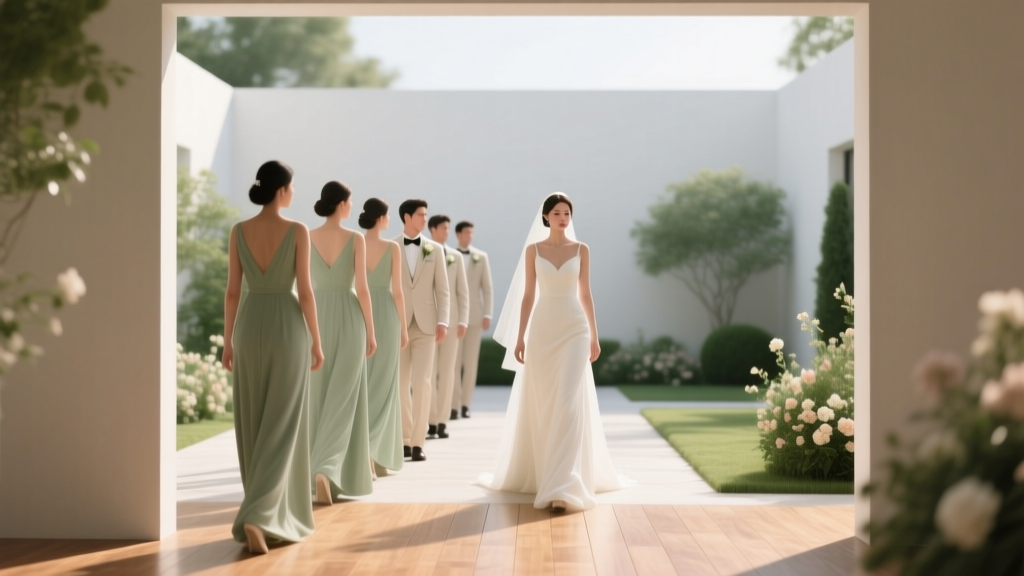
Wedding Planning How to Manage the Processional Order
You’ve picked a date, you’ve pictured the ceremony, and you can probably hear the first notes of your processional song in your head. Then reality hits: Who walks when? Where does everyone stand? What happens if your parents are divorced, your best friend is also your officiant, or you’re skipping a wedding party entirely?
If you’re feeling overwhelmed, you’re not alone. The processional order is one of those wedding planning details that seems “small” until you realize it affects timing, photography, family dynamics, and the overall feel of your ceremony. The good news: once you understand the basic structure, you can customize it to fit your traditions, your relationships, and your venue.
This guide will walk you through how to plan your ceremony processional step by step—with practical options, real-world examples, and the kind of pro tips wedding planners use to keep everything calm, smooth, and meaningful.
What Is the Processional Order (and Why It Matters)?
The processional is the entrance portion of your ceremony—everyone who walks down the aisle and the order they go in. It sets the tone (classic, modern, fun, formal), signals key moments to guests, and helps your vendors execute smoothly.
A well-managed processional order helps:
- Keep the ceremony on schedule (no awkward pauses while people guess what to do)
- Reduce stress for your wedding party and families
- Improve photos and video (clean aisle shots, predictable timing)
- Prevent confusion at the altar (everyone knows where to stand)
Start Here: Key Decisions to Make Before You Choose the Order
1) Choose Your Ceremony Style
Different traditions have different “default” processionals. Your style also influences pacing and roles.
- Religious ceremony (Catholic, Jewish, Hindu, Muslim, etc.) may include specific roles and order.
- Civil ceremony often has more flexibility.
- Non-traditional ceremony may skip formal roles entirely.
2) Confirm Your Venue Layout
Before you finalize anything, ask your venue coordinator:
- Where is the “starting point” (door, hallway, garden gate)?
- How long is the aisle? Any turns, steps, uneven ground?
- Are there two aisles (common in churches) or one center aisle?
- Where does the wedding party line up before walking?
3) Decide Who’s Included
Not every wedding has (or needs) every traditional role. Make a list of who will participate:
- Officiant
- Parents/guardians and step-parents
- Wedding party (maids, matron of honor, best man, groomsmen, bridesmen, etc.)
- Flower child/ring bearer (or alternatives)
- Couple (one partner, both partners, or a joint entrance)
Traditional Processional Orders (with Modern Options)
Think of these as templates you can adjust. Your officiant may have preferences—especially in a house of worship—so confirm early.
Option A: Common Modern Western Processional (Non-Religious or Lightly Traditional)
- Officiant (often enters from the side and takes position)
- Groom/Partner A (may enter from the side or walk in with parents)
- Wedding party (usually in pairs or one-by-one)
- Flower child and/or ring bearer
- Maid/Matron of Honor
- Bride/Partner B (often with a parent/guardian or chosen escort)
Modern variations couples love:
- Both partners enter separately (each escorted by a parent, step-parent, sibling, or friend).
- Both partners enter together to emphasize equality.
- No wedding party: parents first, then the couple.
Option B: Traditional Christian Processional (Often Seen in Churches)
- Officiant
- Groom and best man (sometimes enter from the side)
- Groomsmen (may already be at the altar)
- Bridesmaids
- Maid/Matron of Honor
- Ring bearer
- Flower child
- Bride (last)
Planning tip: Some churches prefer the groom and officiant to be in place before the processional begins. Ask your officiant what’s expected.
Option C: Jewish Wedding Processional (Common Format)
Many Jewish ceremonies feature family-centered entrances.
- Officiant and/or rabbi/cantor
- Groom/Partner A escorted by parents
- Bridal party (if included)
- Bride/Partner B escorted by parents
Chuppah note: Your ceremony space (chuppah) may require extra room for parents and the couple. Do a quick rehearsal of where everyone stands.
Step-by-Step: How to Build Your Processional Order
Step 1: List Everyone Who Needs an Entrance
Write names and roles (not just “bridesmaid”). Include anyone with mobility needs.
Quick checklist:
- Officiant
- Parents/guardians (including step-parents)
- Grandparents (optional, but often appreciated)
- Wedding party
- Kids (flower/rings/signs)
- Pets (if any)
- The couple
Step 2: Decide Who Walks Solo vs. Paired
There’s no rule that everyone must be paired, especially with mixed-gender wedding parties.
- Paired creates a traditional look and makes spacing easier.
- Solo can feel modern and avoids awkward pairings.
- Group entrances work well for kids (two flower children together, for example).
Step 3: Choose the “VIP” Order (Parents, Grandparents, Special Guests)
Many couples seat important family members just before the wedding party enters. Common options:
- Grandparents first (so they’re settled early)
- Parents next (seated just before the wedding party)
- Mother of the bride/Partner B is often last to be seated before the processional begins (a classic cue that things are starting)
Real-world scenario: If one parent is very emotional and wants privacy, seat them earlier. If a parent wants a moment in the spotlight, seating them later can feel special.
Step 4: Time It to Your Music
Your processional order should match your song length and pacing. For most ceremonies, each person or pair needs about 10–20 seconds, depending on aisle length.
Timeline guidance:
- Small wedding party (0–4 attendants): 2–4 minutes total
- Medium wedding party (6–10 attendants): 4–7 minutes total
- Large wedding party (12+ attendants): 7–10 minutes total
Pro tip: Ask your musicians or DJ to create a processional “edit” with clear sections (parents, wedding party, couple). That prevents awkward fading or sudden track changes.
Step 5: Assign Where Everyone Stands at the Front
Half of processional confusion happens after the walking stops. Create a simple “standing map”:
- Who stands on which side?
- Do you want an uneven party balanced visually (e.g., 3 on one side, 5 on the other)?
- Will anyone sit after walking (parents, grandparents, readers)?
Photo-friendly tip: Leave a little space between attendants. When everyone is shoulder-to-shoulder, it can look crowded in photos and block the couple.
Specific Scenarios (and How to Handle Them Gracefully)
Divorced or Remarried Parents
This is one of the most common processional stress points, and it’s manageable with a clear plan.
Options that work well:
- Each parent escorted separately (no pressure to walk together)
- Parent walks with their spouse/partner (if relationships are comfortable)
- Two escorts for one partner (e.g., both parents walk with the bride/partner, if everyone agrees)
Example: If your mom is remarried and your dad is single, you might seat grandparents, then have your dad escorted by an usher, then your mom escorted by her spouse. Everyone gets honored, and no one is put in an awkward pairing.
Blended Wedding Parties (Bridesmen, Groomswomen, Nonbinary Attendants)
Choose pairings (or solo entrances) based on comfort, not gender. A clean approach:
- Have everyone enter one-by-one in a set order (closest friends last)
- Or pair people by friendship/height/pace to keep it visually balanced
No Wedding Party at All
Minimalist ceremonies can feel incredibly intentional.
Simple processional template:
- Officiant
- Grandparents (optional)
- Parents
- Partner A
- Partner B
Kids, Pets, and Unpredictability
Ring bearers and flower children are adorable—and famously unpredictable.
Planner-approved strategies:
- Have kids walk with an older sibling or trusted adult
- Let kids carry a “backup” item (like a sign) instead of the real rings
- Assign a “kid wrangler” (not a parent) to cue them at the start
- If including a dog, have a handler ready with treats and an exit plan
Common Mistakes to Avoid (and What to Do Instead)
- Mistake: Finalizing the order before talking to your officiant.
Do instead: Confirm any tradition or venue rules early, especially for religious ceremonies. - Mistake: Not considering walking speed or mobility needs.
Do instead: Offer arm support, shorten the route if possible, or seat VIPs before the processional begins. - Mistake: Assuming everyone knows where to stand.
Do instead: Share a one-page lineup and altar map with your wedding party and coordinator. - Mistake: Choosing processional music that’s too short (or too long).
Do instead: Ask your DJ/band for a timed version and practice pacing at rehearsal. - Mistake: Putting kids last without a backup plan.
Do instead: Place kids earlier (before the couple) and have an adult ready to guide them if needed.
Wedding Planner Pro Tips for a Smooth Processional
- Use “bookends” for clarity: Have a clear start cue (music begins, officiant in place) and a clear final cue (doors open, partner enters).
- Assign a lineup captain: This can be your coordinator, a trusted friend, or a responsible attendant. One person calls “You’re up” and keeps spacing consistent.
- Practice the handoff: If someone is escorting you, rehearse the moment they sit down and you step forward (it’s where people hesitate most).
- Space matters: Aim for 6–10 feet between pairs for clean photos, depending on aisle length.
- Communicate to photographers: Share the processional order so they’re positioned for parent reactions, wedding party entrances, and your aisle moment.
Budget and Timeline Considerations
How Processional Choices Affect Your Budget
- Live music vs. DJ: Live musicians may charge extra for multiple song transitions or custom timing. A DJ can often mix sections quickly.
- Day-of coordination: If you don’t have a coordinator, consider adding one (even a “month-of” pro). Processionals are a prime spot where coordination pays off.
- Rehearsal time: Some venues charge for rehearsal access. If so, schedule a short, efficient run-through (20–30 minutes) focused only on entrances, exits, and standing positions.
When to Finalize the Processional Order
- 2–3 months out: Draft your processional order and confirm with officiant
- 4–6 weeks out: Share with DJ/musicians and photographer
- 1–2 weeks out: Send lineup to wedding party and family participants
- Rehearsal day: Walk it once slowly, then once at real pace
Processional Order Cheat Sheet (Copy/Paste Checklist)
Use this as a working template and adjust names and roles:
- Officiant: ____________________
- Grandparents (optional): ____________________
- Parents/guardians seating:
- Partner A family: ____________________
- Partner B family: ____________________
- Wedding party order:
- Attendant 1: ____________________
- Attendant 2: ____________________
- Attendant 3: ____________________
- Kids/pets: ____________________
- Partner A entrance: ____________________
- Partner B entrance: ____________________
- Standing positions map confirmed: Yes / No
- Music cues confirmed: Yes / No
- Lineup captain assigned: ____________________
FAQ: Ceremony Processional Order
Who walks down the aisle first?
Often the officiant takes their place first (sometimes from the side). Then VIP family members may be seated, followed by the wedding party, with the couple entering last (or together, depending on your preference).
Does the bride or partner have to walk last?
No. It’s traditional in some ceremonies, but many couples choose to enter together, enter separately, or switch the order. The “right” choice is the one that feels respectful and authentic to you.
What if we have uneven numbers in the wedding party?
You can have attendants walk solo, do a mix of solo and paired entrances, or have three people walk together for one segment. For photos at the front, balance the sides visually rather than trying to force perfect symmetry.
How do we handle divorced parents in the processional?
Keep it simple and low-pressure: seat each parent separately, or escort each with a partner/usher. If relationships are tense, avoid pairings that require them to walk together or sit side-by-side.
How long should the processional take?
Most processionals run 3–8 minutes depending on wedding party size and aisle length. A timed music track and a rehearsal at “real pace” will keep it from dragging.
Do we need a rehearsal to get the processional right?
It helps a lot, especially with a larger wedding party, kids, or a complex venue layout. Even a quick 20-minute walkthrough can eliminate the most common day-of hiccups.
Your Next Steps (So This Feels Easy)
To lock in your processional order without second-guessing:
- Draft your lineup using the cheat sheet above.
- Confirm ceremony rules with your officiant and venue.
- Send the final order to your DJ/band and photographer.
- Assign a lineup captain and practice once at rehearsal.
You don’t need a “perfect” processional—just one that feels like you, honors the people you love, and gives everyone clear cues. Once that’s in place, you’ll be free to enjoy the moment you’ve been planning toward.
Want more ceremony and reception planning help? Browse more practical wedding planning guides on weddingsift.com and keep building a day that feels beautifully, confidently yours.
More Articles
 A Las Vegas Wedding Chapel Guide (2026)
 Hot Pink to a Fall Wedding: Yes—Here’s How (2026)
 Wedding Flower Planning Guide: Save $1,200+ (2026)
 Tipping at Buffet Weddings: What to Know (2026)
 Wedding Photographer Hours: Arrival to Departure (2026)
 Does the Man or Woman Buy the Man's Wedding Ring?
 Wedding Venue Deposits: Real Costs & Protection (2026)
 Wedding Gift Card Messages: 7 Templates (2026)
 A-Line Wedding Dresses with Deep V Necks: Styling Tips
 Wedding RSVP Website Guide (2026)