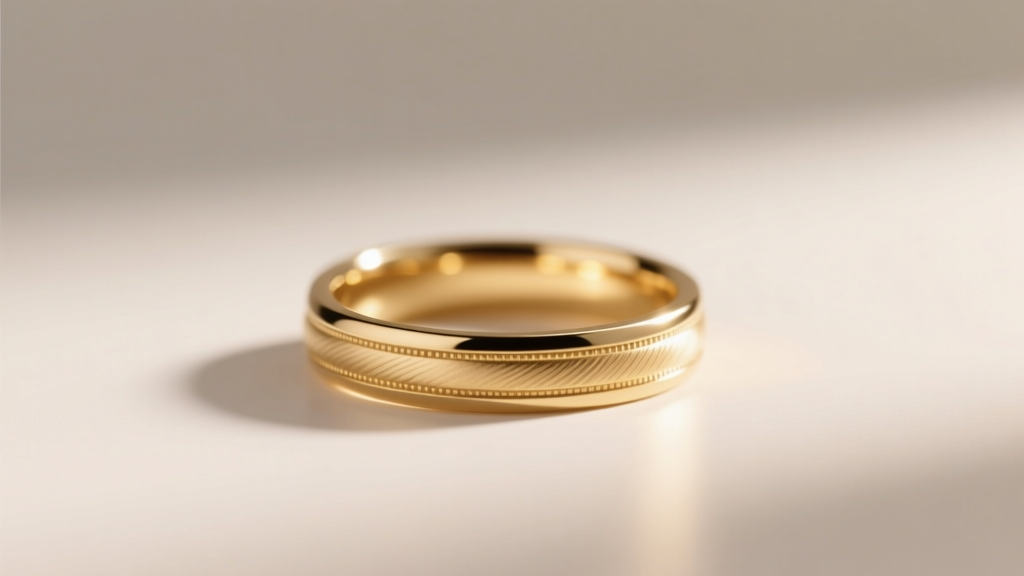
Gold in Wedding Rings: Karats, Weight & Real Cost
Why Knowing How Much Gold Is in a Wedding Ring Matters More Than You Think
When you slip on your wedding ring — whether it’s a delicate 18k yellow band or a bold 14k white gold solitaire setting — you’re wearing more than symbolism: you’re wearing a precisely engineered alloy with measurable gold content. How much gold is in a wedding ring isn’t just trivia; it directly impacts durability, skin sensitivity, resale value, ethical sourcing transparency, and even long-term wear comfort. In an era where couples spend an average of $6,000+ on wedding bands (The Knot 2023 Real Weddings Study), understanding the actual gold percentage — not just the ‘k’ stamped inside the shank — separates informed buyers from those who unknowingly overpay for filler metals or under-invest in longevity. And with rising gold prices ($2,350/oz as of Q2 2024) and growing demand for traceable, recycled gold, this question has shifted from curiosity to critical due diligence.
Breaking Down the Numbers: Karat ≠ Purity Percentage (But It’s Close)
Karat (often misspelled ‘carat’) is the universal metric for gold purity — but it’s frequently misunderstood. A 24k ring would be 100% pure gold. Yet no reputable wedding ring is made from 24k gold. Why? Because pure gold is too soft — it bends, scratches, and deforms under daily wear. That’s why jewelers alloy gold with harder metals like copper, silver, nickel, palladium, or zinc. The karat rating tells you *how many parts out of 24 are pure gold*. So:
- 24k = 24/24 = 100% gold (not used for rings)
- 22k = 22/24 ≈ 91.7% gold (common in South Asian bridal jewelry, rarely in Western wedding bands)
- 18k = 18/24 = 75% gold (the luxury standard for high-end rings)
- 14k = 14/24 ≈ 58.3% gold (the most popular U.S. choice — optimal balance of gold content, strength, and affordability)
- 10k = 10/24 ≈ 41.7% gold (legally the minimum in the U.S. to be called ‘gold’; very durable but noticeably paler in yellow gold)
Here’s the catch: those percentages represent *weight*, not volume. Since alloy metals have different densities (copper is less dense than gold; palladium is denser), a 14k ring weighing 5 grams contains ~2.92 grams of pure gold — but its physical size may differ slightly from an 18k ring of identical dimensions. That’s why jewelers measure by weight, not visual heft.
Your Ring’s Hidden Gold Weight: How to Calculate It Yourself
You don’t need lab equipment to estimate how much gold is in a wedding ring — just three pieces of information: the ring’s total weight (in grams), its karat, and a calculator. Let’s walk through a real-world example:
Case Study: Maya & David’s Bands
Mara chose an 18k yellow gold band weighing 4.2 grams. David selected a 14k white gold band at 5.8 grams. Their jeweler provided certificates, but they wanted to verify gold content themselves before insuring them.
Step-by-step calculation:
- Find the gold purity factor: 18k = 0.75; 14k = 0.583
- Multiply total weight × purity factor:
- Mara’s ring: 4.2 g × 0.75 = 3.15 grams of pure gold
- David’s ring: 5.8 g × 0.583 = 3.38 grams of pure gold
- Convert to troy ounces (for market value): 1 troy oz = 31.1035 g → Mara’s gold = 0.101 oz; David’s = 0.109 oz
- Estimate melt value (using live spot price): At $2,350/oz: Mara’s gold content is worth ~$237; David’s ~$256 — before craftsmanship, design, or brand markup.
This exercise reveals something crucial: David’s heavier 14k ring actually contains *more pure gold by weight* than Mara’s lighter 18k band — despite having a lower karat. That’s why weight matters as much as karat. A thick, wide 10k band can hold more total gold than a dainty 18k one. Always ask for exact gram weight when comparing options.
The Alloy Factor: What’s *Really* in Your Ring (And Why It Matters)
That remaining 25–58% of your ring? It’s not filler — it’s functional engineering. The alloy mix defines color, hardness, hypoallergenic properties, and even tarnish resistance. Here’s what’s typically blended with gold for wedding bands:
- Yellow Gold Alloys: Copper + silver (copper adds warmth/redness; silver lightens tone). High-copper alloys may cause green skin discoloration in sensitive wearers — especially with sweat exposure.
- White Gold Alloys: Nickel (traditional, but banned in EU due to allergy risk) or palladium (costlier, hypoallergenic, naturally whiter). All white gold is rhodium-plated — a thin, bright, scratch-resistant coating that wears off every 1–3 years, requiring re-plating (~$60–$120).
- Rose Gold Alloys: Higher copper content (up to 25%) creates the signature blush hue. Prone to faster oxidation — develops a subtle antique patina over time (many love this; others prefer polishing).
- Recycled vs. Mined Gold: Chemically identical, but recycled gold reduces environmental impact by ~99% vs. newly mined (University of Vermont 2022 Lifecycle Analysis). Over 70% of U.S. fine jewelers now offer certified recycled gold options — ask for SCS or Fairmined certification.
Pro tip: If you have nickel sensitivity, avoid older white gold or low-cost 10k/14k alloys labeled “nickel-based.” Request palladium or platinum-alloyed white gold — and confirm the rhodium plating is nickel-free.
Gold Content Comparison: Popular Wedding Ring Options (2024)
| Ring Type | Karat | Pure Gold % | Avg. Band Weight (Grams) | Pure Gold Weight (g) | Estimated Melt Value* ($2,350/oz) |
|---|---|---|---|---|---|
| Classic 14k Yellow Gold Band (2mm width) | 14k | 58.3% | 3.8 | 2.22 | $168 |
| Luxury 18k Yellow Gold Band (3mm width) | 18k | 75% | 5.1 | 3.83 | $289 |
| 14k White Gold Band w/ Diamond Accent | 14k | 58.3% | 4.6 | 2.68 | $202 |
| 10k Rose Gold Band (4mm width) | 10k | 41.7% | 6.2 | 2.59 | $195 |
| 22k Traditional Indian Band | 22k | 91.7% | 8.4 | 7.70 | $581 |
*Melt value only — excludes craftsmanship, diamonds, design premium, or brand markup. Actual retail value is typically 3–5× higher.
Frequently Asked Questions
Is there such a thing as ‘pure gold’ wedding rings?
No — and for good reason. Pure (24k) gold registers only 2.5–3 on the Mohs hardness scale (talc is 1, diamond is 10). A 24k ring would dent from casual knocks, stretch when pulled over knuckles, and lose its shape within months. All wearable gold wedding rings are alloys. Even ‘fine gold’ jewelry sold in museums or ceremonial contexts uses at least 22k — and still requires careful handling.
Does higher karat gold mean better quality?
Not necessarily — it means *higher gold content*, which trades off against durability. An 18k ring offers richer color and higher intrinsic metal value, but it’s softer and more prone to bending or scratching than 14k. For active lifestyles, manual labor, or frequent hand-washing, 14k strikes the best balance of beauty, resilience, and value retention. 10k is ideal for high-impact professions (nurses, firefighters, athletes) where ring integrity is non-negotiable.
Can I tell how much gold is in my ring just by looking at it?
No — visual cues are highly unreliable. A heavily polished 10k ring can appear brighter than a matte-finish 18k. Color variations depend more on alloy metals than karat (e.g., a copper-heavy 14k rose gold looks warmer than a silver-dominant 18k yellow). The only definitive ways: check the hallmark stamp (e.g., ‘14K’, ‘585’, ‘750’) inside the band, weigh it on a jeweler-grade scale, and do the purity math — or get a professional XRF (X-ray fluorescence) assay, which non-destructively measures elemental composition.
Do gold-filled or gold-plated rings contain meaningful gold?
No — and this is a critical distinction. Gold-filled (GF) contains ~5% gold by weight bonded via heat/pressure — legally required to be 100x thicker than plating. But it’s still mostly brass. Gold-plated rings have a microscopic layer (0.05–0.1 microns) that wears off in months. Neither qualifies as ‘gold’ for resale or insurance. True gold wedding rings must be solid karat gold — meaning the entire band, from surface to core, meets the stated karat standard. Look for stamps: ‘14K’, ‘18K’, ‘750’, ‘585’, or ‘417’. No stamp? Assume it’s not solid gold.
How does gold content affect insurance and appraisal?
Appraisers assess value based on gold weight, purity, gemstones, craftsmanship, and current market rates — not just karat. A 5-gram 14k ring appraises higher than a 3-gram 18k ring if its gold content (by weight) and labor value exceed the latter. Insurers require detailed appraisals listing gram weight and karat. Without that data, claims may be undervalued. Pro tip: When insuring, request a line-item breakdown showing ‘gold content value’ separately from ‘design value’ — it strengthens your case during loss assessment.
Debunking Common Myths About Gold in Wedding Rings
Myth #1: “Higher karat gold is always more valuable long-term.”
False. While 18k holds more gold per gram, 14k rings retain shape and polish longer — meaning fewer repairs, less metal loss from polishing, and higher resale desirability among pre-owned buyers. Auction data (Sotheby’s Jewelry 2023) shows 14k bands sell at 78% of original retail vs. 18k at 62% — primarily due to perceived durability and wider buyer appeal.
Myth #2: “All ‘yellow gold’ rings have the same color because they’re all gold.”
Completely false. Color varies dramatically by alloy recipe. A 14k ring with 12% copper + 15% silver looks pale lemon; one with 20% copper + 5% zinc appears deep amber. Reputable jewelers disclose alloy ratios — especially for custom work. If your ring fades or turns brassy over time, it’s likely a high-zinc alloy oxidizing, not ‘fake gold.’
Your Next Step: Take Control of Your Gold Knowledge
Now that you know exactly how much gold is in a wedding ring — and how to calculate it, compare it, and verify it — you’re equipped to make confident, value-driven decisions. Don’t settle for vague assurances like ‘it’s real gold’ or ‘high quality.’ Ask for: (1) the karat stamp, (2) exact gram weight, (3) alloy composition notes, and (4) a written appraisal with gold-content valuation. Whether you’re choosing your first band, upgrading after a decade, or evaluating an heirloom, this knowledge protects your investment and honors the intention behind the ring: enduring substance, not just surface shine. Next action: Grab your ring, find the hallmark, weigh it on a kitchen scale (or visit a jeweler for free), and run the numbers using our simple formula. Then share your result with your partner — it’s a surprisingly meaningful conversation starter about what ‘value’ really means in marriage.
More Articles
 Best Metals for Wedding Bands Durability Comparison
 10 Karat Gold Wedding Band Value (2026)
 How to Choose a Wedding Band With a Mixed Metal Design
 Are Wedding Bands Solid Gold? Truth & Buying Tips
 Favors Common Mistakes
 26th Wedding Anniversary: Traditional and Modern Gift Guide
 Wedding Rings Gold or Silver? The Truth (2026)
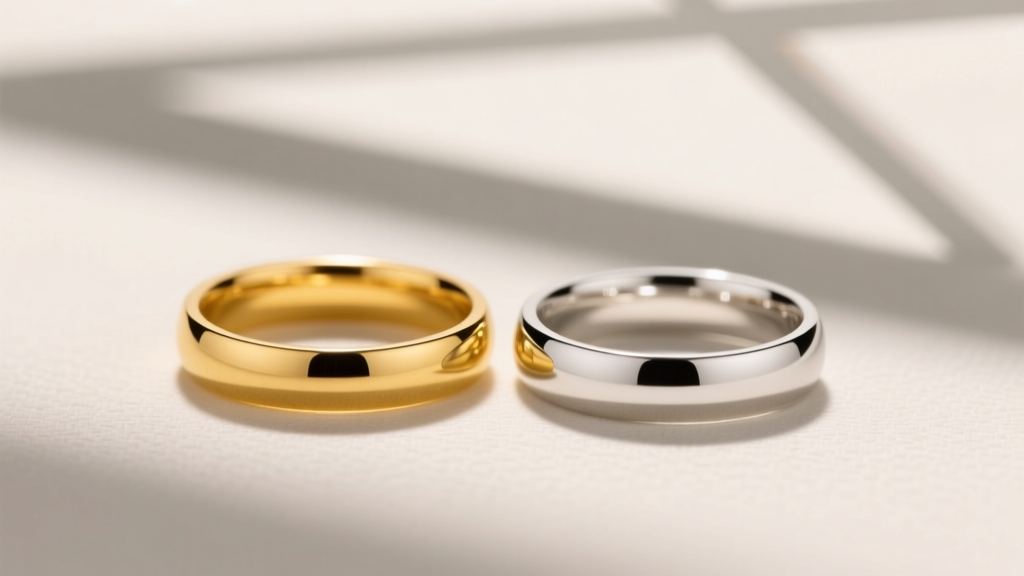 How to Choose Between Yellow Gold and White Gold Bands
 Wedding Ring Sizing: 5 Safe, Permanent Methods (2026)
 Emerald Engagement Rings Symbolism and Care Guide