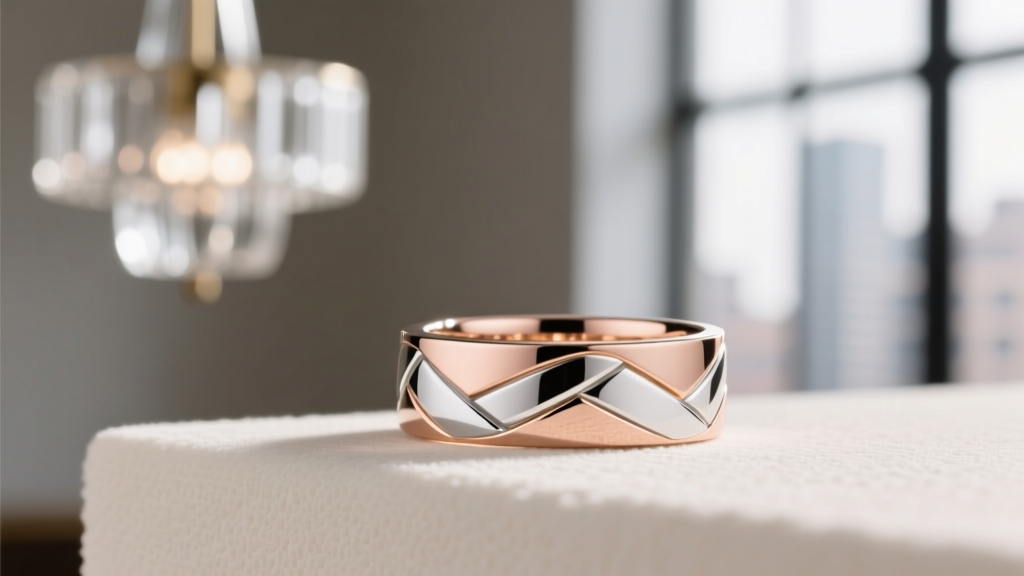
How to Choose a Wedding Band With a Mixed Metal Design
Mixed metal wedding bands have moved from “bold style choice” to modern classic. Couples love them because they bridge tastes: one partner prefers yellow gold, the other leans toward platinum or white gold, and a mixed metal ring makes both feel at home. They also pair beautifully with today’s engagement rings—especially two-tone halos, vintage-inspired settings, and minimalist solitaires set in contrasting prongs.
Beyond style, a mixed metal design is practical. A well-made two-tone or tri-tone wedding band can coordinate with multiple pieces of jewelry, reduce the pressure to “match” everything, and create a look that feels personal rather than cookie-cutter. The key is choosing the right metals, construction, and finish so the ring wears comfortably for decades.
This guide breaks down the best metal combinations, popular styles, craftsmanship details that matter, and how to shop smart—so you end up with a mixed metal wedding band that looks intentional, feels durable, and complements your engagement ring.
What “Mixed Metal” Means (and Why It Works)
A mixed metal wedding band combines two or more precious metals in one ring—most commonly yellow gold with white gold or platinum, and increasingly rose gold with white metals. The contrast can be subtle (a thin inlay line) or dramatic (distinct halves of different colors). Mixed metal designs work because they add dimension and visual structure, much like a tailored suit with thoughtful details.
Popular mixed metal wedding ring keywords you’ll see
- Two-tone wedding band: two distinct metal colors (e.g., 14K yellow gold + platinum)
- Tri-tone wedding band: three metal colors (yellow, white, rose)
- Inlay: a strip of contrasting metal set into the band
- Overlay: one metal layered over another for a patterned look
- Bi-metal construction: the band is built from two metals bonded or assembled together
Choose the Right Metal Combination
The best metal mix depends on your lifestyle, aesthetic, and whether you’re pairing the band with an engagement ring. Here’s how the most common options compare.
Yellow Gold + White Gold
This is the timeless classic for mixed metal wedding bands. Yellow gold brings warmth; white gold adds a crisp, bright contrast that pairs naturally with diamonds.
- Pros: coordinated look with most engagement rings; generally more affordable than platinum combinations
- Watch for: white gold is typically rhodium plated for a bright white finish, and may need re-plating over time
- Best for: couples who want contrast without a dramatic price jump
Yellow Gold + Platinum
Platinum’s naturally white, dense composition makes it a premium partner to yellow gold. This combo is especially popular for diamond-accented bands because platinum prongs and settings hold stones securely.
- Pros: platinum is hypoallergenic for most wearers; it develops a soft patina rather than losing metal
- Watch for: platinum is heavier and usually more expensive; mixed metal joins must be expertly executed
- Best for: daily wearers who want a luxury feel and long-term durability
Rose Gold + White Gold or Platinum
Rose gold continues to trend, especially in romantic, vintage-leaning designs. Its pink tone flatters many skin tones and looks stunning next to bright white metals.
- Pros: warm, distinctive color; pairs well with morganite, champagne diamonds, and blush-toned bridal sets
- Watch for: rose gold gets its color from copper; some people with metal sensitivities may prefer platinum or higher-karat options
- Best for: couples who want a modern look with a soft, romantic edge
Consider Karat and Alloy Choices
For gold, you’ll typically see 10K, 14K, and 18K. Higher karat means more pure gold and a richer color, but slightly less hardness.
- 14K gold: best balance of durability and color for most wedding bands
- 18K gold: richer tone and higher gold content; great for classic luxury, though it can show scratches a bit more
- Platinum (usually 950): durable, weighty, naturally white; ideal for sensitive skin
Mixed Metal Band Styles: From Subtle to Statement
The style you choose should complement your engagement ring and reflect how bold you want the contrast to be.
Inlay Bands (Clean, Modern Contrast)
An inlay is a precise stripe of contrasting metal set into the band—think yellow gold band with a thin platinum center line. This is a favorite for minimalist couples because it feels sleek and architectural.
Craftsmanship cue: Ask whether the inlay is mechanically set and sealed or simply soldered at edges. A well-made inlay sits flush with no gaps.
Two-Tone Classics (Balanced and Timeless)
These bands often split the ring into two distinct areas—like a yellow gold shank with a white gold top, or a platinum band with yellow gold edges. It’s a classic look that works for both men’s wedding bands and women’s stacks.
Interlocking or Braided Designs (Vintage-Inspired)
Interwoven metals create movement and texture. This style pairs beautifully with vintage engagement rings, milgrain edges, and engraving.
Trend note: Right now, couples love a “heritage feel” with modern durability—braided two-tone bands with a comfort-fit interior are a strong example.
Diamond-Accented Mixed Metal Bands
Diamonds add sparkle and can help tie the metals together. Popular choices include pavé rows, channel-set diamonds, and bezel stations.
- Diamond cuts: round brilliant is the most common for pavé; princess cuts often appear in channel settings; baguettes offer a sleek, modern look
- Setting types: pavé (maximum sparkle), channel (protected edges), bezel (secure and smooth)
- Quality tip: Look for consistent diamond color and matching sizes; well-aligned pavé beads or prongs are a sign of careful craftsmanship
How to Match a Mixed Metal Wedding Band to an Engagement Ring
The goal isn’t perfect matching—it’s intentional coordination. Start with the metal that dominates your engagement ring.
Match one metal exactly, coordinate the other
If your engagement ring is platinum, choose a mixed metal band that includes platinum (or a visually similar white gold) so the bridal set feels cohesive. Then add yellow or rose gold as the accent.
Consider the engagement ring’s setting and profile
- Low-set rings: may need a curved, contoured, or notched mixed metal band to sit flush
- Cathedral or high-set rings: often pair well with straight bands, including thicker two-tone styles
- Vintage details (milgrain/engraving): look best with mixed metal bands that echo texture rather than a stark, ultra-modern stripe
Think about band width and comfort fit
Common widths range from 2mm to 8mm. A 2–3mm mixed metal band is delicate and stack-friendly; 4–6mm is a popular “classic” width; 7–8mm reads bold and modern. Comfort-fit interiors (slightly rounded inside) feel better for everyday wear, especially in wider bands.
Quality Factors That Matter in Mixed Metal Rings
How the metals are joined
Mixed metal construction can be done through soldering, fusion bonding, or precision assembly. The join should be smooth, strong, and visually clean. Ask the jeweler how the metals are connected and whether the design has a history of long-term wear.
Finish and texture
Polished finishes highlight contrast; brushed or satin finishes look modern and hide small scratches. Hammered textures and milgrain edges add character and can soften the transition between colors.
Stone security (if diamonds or gemstones are included)
If your mixed metal wedding band includes diamonds or gemstones, check for:
- even prongs or beads with no sharp snag points
- consistent spacing and alignment (especially in pavé)
- secure channel walls with stones sitting level
While diamonds are the most common, some couples choose sapphire accents (classic blue, white sapphire, or even teal). Sapphires rank high on durability and can be a meaningful “something blue.”
Price Range Considerations and Smart Value Tips
Mixed metal wedding bands span a wide range because pricing depends on metal type, total metal weight, brand/designer, and whether stones are included.
- Simple two-tone band (no stones): often $500–$1,500 in 10K/14K gold mixes; $1,200–$2,500+ with platinum
- Textured or more complex construction: typically $900–$2,500, depending on weight and craftsmanship
- Diamond-accented mixed metal band: commonly $1,200–$4,000+ based on total carat weight, diamond quality, and setting labor
Value tips
- Choose 14K gold for everyday wear: it’s a sweet spot for durability and price
- Prioritize craftsmanship over extra millimeters: a well-built 4mm band outperforms a poorly joined 6mm band long-term
- Consider satin or brushed finishes: they can look “new” longer and reduce maintenance costs
- If you want diamonds, put budget into setting quality: a secure channel or well-executed pavé matters more than chasing a slightly higher carat weight
Practical Buying Tips: Getting the Right Ring the First Time
- Try on multiple widths: mixed metal contrast looks different at 3mm vs. 6mm; comfort and proportions change quickly
- Ask about resizing: some mixed metal designs are difficult or costly to resize, especially those with full eternity pavé or complex joins
- Request a “flush fit” check: if pairing with an engagement ring, test the rings together to avoid gaps or rubbing
- Get specs in writing: metal karats, platinum purity (e.g., 950), diamond total carat weight, diamond clarity/color ranges, and return/resizing policy
- Consider future stacking: if you might add an anniversary band later, choose a mixed metal design that can play well with another ring
Care and Maintenance for Mixed Metal Wedding Bands
Mixed metal rings are easy to maintain with consistent, gentle care. Different metals wear differently: gold can show scratches; platinum develops a patina; rhodium-plated white gold may need re-plating.
At-home care
- Clean with warm water, mild dish soap, and a soft toothbrush
- Rinse thoroughly and dry with a lint-free cloth
- Avoid harsh chemicals (chlorine, bleach), especially with gold alloys
Professional maintenance
- Polishing: restores shine; ask for careful polishing so edges and design lines stay crisp
- Rhodium re-plating (white gold): typically every 12–36 months depending on wear and desired brightness
- Stone checks: if your band has diamonds or gemstones, have prongs/channel walls inspected at least once a year
Common Mistakes to Avoid When Shopping Mixed Metal
- Choosing contrast without considering your engagement ring: a strong two-tone band can overpower a delicate solitaire if proportions aren’t balanced
- Ignoring how the metals will age: white gold may warm slightly as rhodium wears; platinum patina is normal and can look beautiful
- Overlooking resize limitations: intricate inlays, multi-piece construction, and eternity settings can limit sizing options
- Assuming all mixed metal joins are equal: the join quality is crucial—ask questions and inspect seams closely
- Buying purely based on online photos: mixed metal contrast changes under different lighting; see videos, read specs, or view in person if possible
FAQ: Mixed Metal Wedding Bands
Do mixed metal wedding bands hold up for everyday wear?
Yes—when they’re well constructed. Choose durable alloys (14K gold, platinum 950), a comfort-fit profile, and reputable craftsmanship. If the ring includes an inlay or multiple pieces, make sure the join is clean and secure.
Will a mixed metal band match my jewelry if I wear both gold and silver tones?
That’s one of the best reasons to choose a two-tone ring. A mixed metal wedding band naturally coordinates with yellow gold earrings, white gold necklaces, platinum engagement rings, and even watches with two-tone bracelets.
Is platinum better than white gold for a mixed metal wedding band?
Platinum is naturally white and very durable, but it costs more and feels heavier. White gold is more budget-friendly and bright when freshly rhodium plated, but may need periodic re-plating. “Better” depends on your budget, skin sensitivity, and maintenance preferences.
Can mixed metal rings be resized?
Some can, some can’t. Simple two-tone bands may be resizable, while complex inlays, interlocking designs, and eternity diamond bands are often limited. Always ask before purchasing and confirm the store’s resizing policy.
What diamond setting is best for a mixed metal wedding band?
For daily wear, channel and bezel settings offer excellent protection and a smooth feel. Pavé gives maximum sparkle but benefits from regular stone checks, especially if you wear your ring nonstop.
Are tri-tone wedding bands still in style?
Yes—tri-tone bands are seeing a resurgence, especially in vintage-inspired designs with milgrain and subtle engraving. They’re also a practical choice if you love mixing yellow, rose, and white metals across your jewelry wardrobe.
Choosing Your Mixed Metal Wedding Band: A Confident Next Step
A great mixed metal wedding band should do three things: complement your engagement ring, fit your lifestyle, and feel like “you” every time you look at your hand. Start by picking the metal combination that matches how you already wear jewelry (yellow/white, rose/white, or yellow/platinum), then choose a style—clean inlay, classic two-tone, or diamond-accented—that balances trend-forward design with long-term wearability.
If you’re deciding between two options, prioritize comfort-fit construction, a clean metal join, and a finish you’ll enjoy maintaining. Those details are what turn a beautiful wedding ring into a forever favorite. Explore more expert ring and bridal jewelry guides on weddingsift.com to keep narrowing down your perfect match.
More Articles
 Rubber Wedding Bands: 7 Trusted Retailers (2026)
 Wedding Bands Can Be Different Colors (2026)
 Wedding Ring Reset Cost: Real Prices & Savings (2026)
 How to Identify Quality Craftsmanship in Wedding Bands
 Celtic Wedding Bands Heritage and Meaning Explained
 How to Resize a Wedding Ring Without Damaging It
 Wedding Band Metal Choice: Avoid Regret (2026)
 How to Choose a Wedding Ring for Wide Fingers
 Gold in Men’s Wedding Rings: Karat, Weight & Price (2026)
 Wedding Dress Shopping Guest Limit: 2–3 People