# Are Wedding Bands Really Solid Gold? The Truth Most Jewelers Won't Tell You
You're standing at the jewelry counter, budget in hand, and the salesperson slides over a gleaming ring labeled "gold wedding band." But is it actually solid gold? The answer is more nuanced than most couples realize — and understanding it could save you hundreds of dollars and years of disappointment.
## What "Solid Gold" Actually Means
Here's the first thing to understand: in the jewelry industry, "solid gold" does not mean pure gold. Pure gold is 24 karats — too soft for everyday wear. When jewelers say "solid gold," they mean the metal is a gold alloy throughout the entire piece, with no hollow core or base-metal filling.
Common karat options for wedding bands:
- **10K gold** — 41.7% pure gold, most durable, most affordable
- **14K gold** — 58.3% pure gold, the most popular choice in the US
- **18K gold** — 75% pure gold, richer color, softer, more expensive
- **22K gold** — 91.7% pure gold, common in South Asian wedding traditions
All of these qualify as "solid gold" because the alloy composition runs uniformly through the entire band. A 14K ring is solid gold — it just isn't *pure* gold.
## Gold-Filled vs. Gold-Plated vs. Solid Gold: Know the Difference
This is where many buyers get burned. Not every gold-colored wedding band is solid gold.
**Gold-plated** rings have a thin layer of gold (often less than 0.5 microns) electroplated over a base metal like brass or copper. They look identical to solid gold in photos and in-store lighting. The plating wears off within months to years, revealing the base metal underneath — and some base metals cause skin reactions.
**Gold-filled** rings contain a thicker layer of gold bonded under heat and pressure to a base metal core. They're more durable than plated rings and are legally required to contain at least 5% gold by weight. A gold-filled band might last 10–30 years with care, but it is not solid gold.
**Solid gold** rings are the same alloy from surface to core. They can be resized, engraved, and refinished indefinitely. They don't tarnish or cause allergic reactions (assuming you're not sensitive to the alloy metals like nickel).
How to verify: Look for hallmarks stamped inside the band. "14K," "585," "750" (for 18K), or "417" (for 10K) indicate solid gold alloys. "GF" means gold-filled. "GP" or "HGE" means gold-plated.
## How Karat Choice Affects Price and Durability
The karat you choose has real-world consequences beyond price.
**14K is the sweet spot for most couples.** It's hard enough to resist daily scratches, contains enough gold to hold its color for decades, and costs roughly 30–40% less than 18K. Most American jewelers default to 14K for this reason.
**18K is worth considering if** you have a nickel sensitivity (18K alloys typically use less nickel), prefer a deeper yellow tone, or are buying a ring that will see light daily wear.
**10K is the budget-conscious choice** — it's the most scratch-resistant of the three and the most affordable, but the color is noticeably paler and it contains more alloy metals that can irritate sensitive skin.
Price benchmark: A plain 4mm solid 14K yellow gold band typically runs $200–$500 depending on width and retailer. The same style in 18K runs $350–$800. Gold-filled versions of the same ring might cost $30–$80 — a red flag if a retailer is charging solid-gold prices.
## 2 Common Misconceptions About Gold Wedding Bands
**Misconception 1: "White gold is not real gold."**
White gold is absolutely real gold — it's a gold alloy mixed with white metals like palladium or nickel, then typically rhodium-plated for a bright finish. An 18K white gold band contains the same 75% gold as an 18K yellow gold band. The rhodium plating does wear over time and may need replating every few years, but the underlying metal is genuine solid gold.
**Misconception 2: "Higher karat always means better quality."**
Higher karat means higher gold purity — not necessarily better quality for a wedding band. 24K gold is so soft it bends and scratches with minimal force. A well-crafted 14K band will outlast a poorly made 18K band every time. Craftsmanship, finish quality, and proper sizing matter as much as karat when evaluating a ring's long-term value.
## The Bottom Line
Most wedding bands sold by reputable jewelers are solid gold — but "solid gold" covers a wide range of purity levels, and not every gold-colored ring qualifies. Before you buy, check the hallmark, ask the jeweler to confirm the karat in writing, and understand what you're actually paying for.
For most couples, a 14K solid gold band offers the best balance of durability, appearance, and value. If you're shopping online, stick to retailers who provide independent certification or a clear return policy.
Ready to choose your band? Ask your jeweler to show you the hallmark stamp and compare 14K and 18K side by side in natural light — the difference in color and price will make your decision much easier.
 How to Shop for Engagement Rings Online Safely
 Smart Care and Maintenance: A Precision Guide for Long-Term Jewelry Integrity
 How to Choose a Wedding Band With a Polished Finish
 How to Choose a Wedding Band With a Woven Design
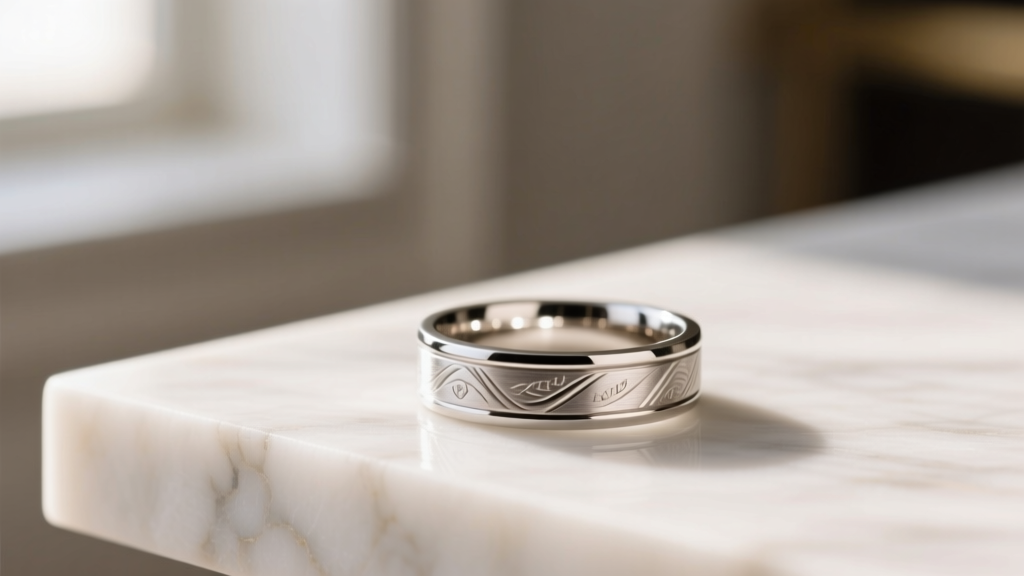 How to Identify Quality Craftsmanship in Wedding Bands
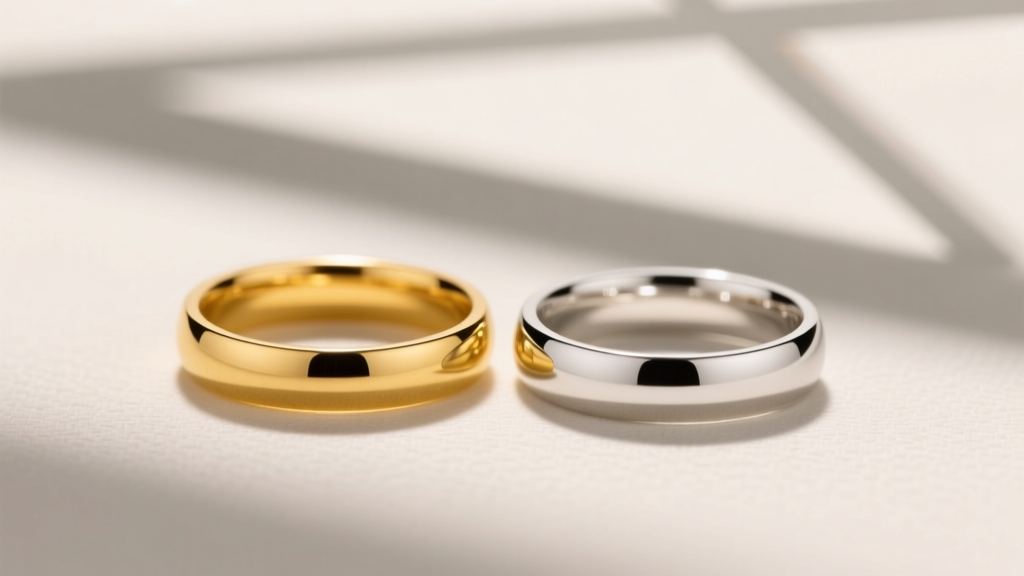 How to Choose Between Yellow Gold and White Gold Bands
 Jewelry Buyer Guide: What to Know First
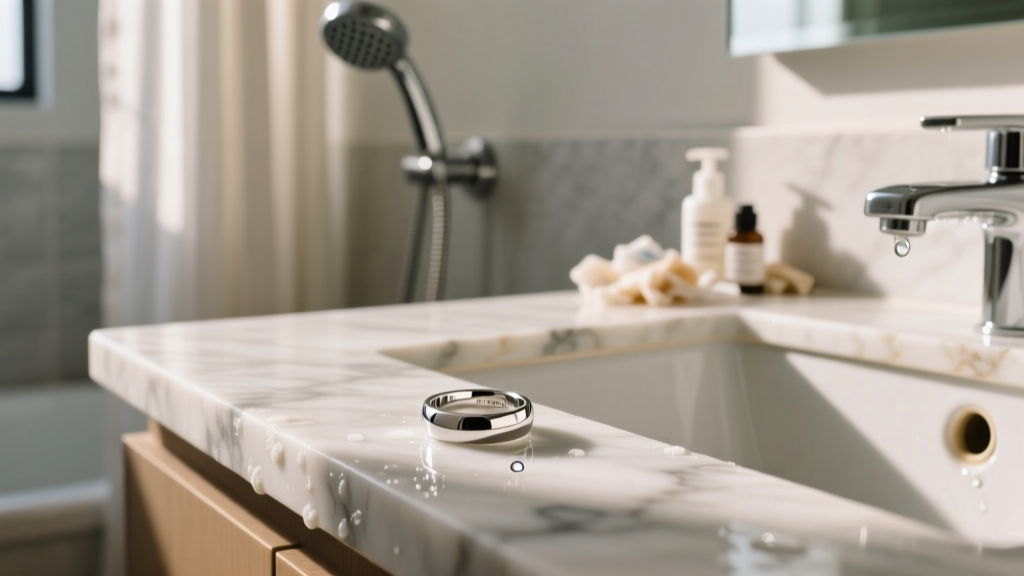 Shower With Wedding Ring? 3 Steps to Prevent Damage
 Spinel Engagement Rings Underrated Gemstone Beauty
 Diamond Cut Guide Understanding Brilliance and Fire