## The One Detail Most Couples Get Wrong on Their Wedding Day
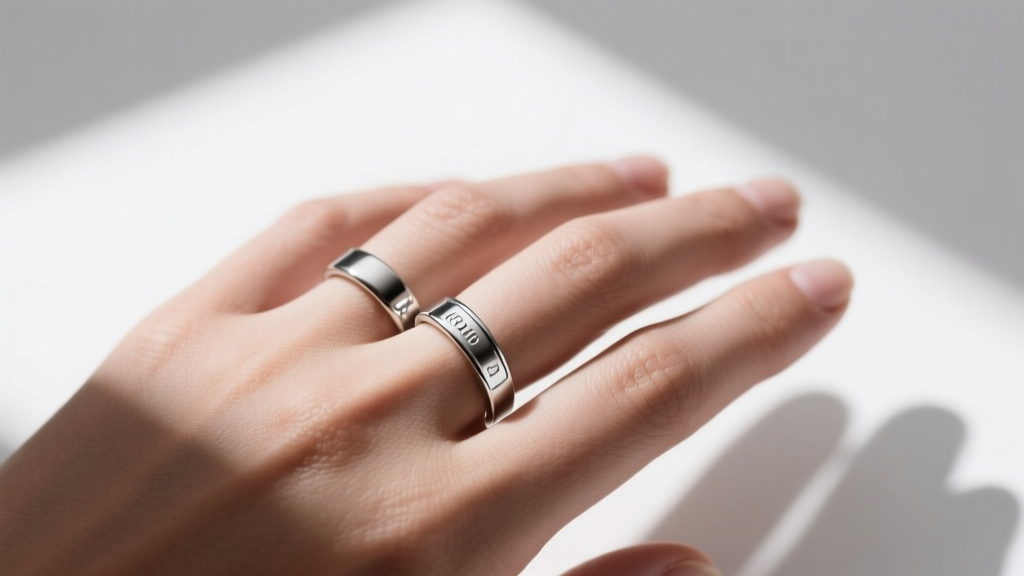
You've spent months planning every detail — the venue, the flowers, the dress. But when it comes to how you wear your wedding ring and band, most couples wing it. The order you stack these two rings isn't just tradition; it carries meaning, affects comfort, and even impacts how your rings look long-term. Here's everything you need to know to get it right.
---
## The Correct Order: Which Ring Goes on First?
The most common question is simple: **which ring goes closer to your heart?**
Traditionally, the **wedding band is worn closest to the heart** — meaning it sits on the bottom, nearest your palm, with the engagement ring stacked on top. This custom dates back centuries and symbolizes the band's unbroken bond being closest to your heart.
**How to achieve this on your wedding day:**
1. Before the ceremony, move your engagement ring to your **right hand**.
2. During the ceremony, your partner places the wedding band on your **left ring finger** first.
3. After the ceremony, slide your engagement ring back on top of the band.
This ensures the band sits in the traditional position without any awkward mid-ceremony shuffling.
---
## Which Finger Do You Wear Wedding Ring and Band On?
In most Western countries — the US, UK, Canada, and Australia — both rings are worn on the **fourth finger of the left hand**, commonly called the ring finger. This tradition stems from the ancient Roman belief in the *vena amoris* ("vein of love") running directly from that finger to the heart.
**Cultural variations worth knowing:**
- In Germany, Norway, Spain, and India, wedding rings are traditionally worn on the **right hand**.
- Some same-sex couples choose whichever hand feels meaningful to them.
- Widows or widowers sometimes move rings to the right hand.
There is no universal rule — wear your rings where they feel right for your culture and relationship.
---
## Styling Tips: How to Wear Wedding Ring and Band Together Beautifully
Beyond tradition, there's a practical and aesthetic side to stacking your rings.
**Match metals when possible.** A yellow gold band paired with a white gold engagement ring can cause friction and scratching over time. If your rings are different metals, consider a spacer band or have a jeweler check compatibility.
**Consider a soldered set.** Many couples choose to have their wedding band and engagement ring **soldered together** after the wedding. Benefits include:
- No spinning or shifting throughout the day
- Reduced wear between the two rings
- A cleaner, unified look
**Sizing matters more with two rings.** Two rings together can feel tighter than one. If your engagement ring already fits snugly, have your wedding band sized a quarter size larger to account for the stack.
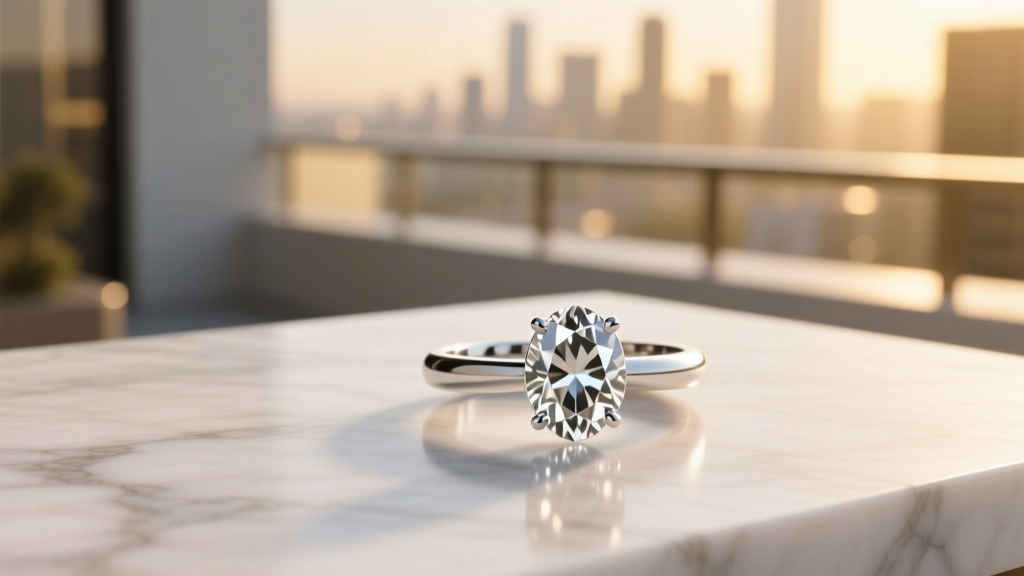
**Curved or contoured bands** are designed specifically to nestle against a solitaire or halo engagement ring, eliminating gaps and creating a seamless look.
---
## Common Myths About Wearing Your Wedding Ring and Band
**Myth 1: You must always wear both rings together.**
Many people remove their engagement ring during activities like cooking, exercising, or gardening to protect the stones and setting. Wearing just your wedding band daily is completely acceptable — and often more practical. Your commitment isn't diminished by leaving a ring in a safe place.
**Myth 2: The engagement ring always goes on top.**
While this is the Western tradition, it isn't a rule. Some people prefer the look of the engagement ring on the bottom, or wear the rings on separate fingers entirely. What matters is that the rings are meaningful to you — not that they follow a prescribed order.
---
## Your Next Step
Knowing how to wear your wedding ring and band correctly comes down to three things: **tradition, comfort, and personal style**. Place the band closest to your heart, choose a finger that aligns with your culture, and consider practical options like soldering or a contoured band for everyday wear.
Before your wedding day, do a quick rehearsal — move your engagement ring to your right hand and practice the swap. It takes 30 seconds and eliminates one small stress from an already full day.
 Jewelry Buyer Guide: What to Know First
 Men's Wedding Band Weight: Real-World Sizing Guide (2026)
 Are Wedding Bands Solid Gold? Truth & Buying Tips
 May Birthstone Rings: Emerald Alternatives (2026)
 How to Repurpose a Wedding Ring (2026)
 Black Onyx Wedding Bands Bold Statement
 Wedding Band Matching: Couple Guide
 How to Choose an Engagement Ring With an Oval Diamond
 Artisan Wedding Bands With Personalized Designs
 Best Metal Colors for Wedding Jewelry