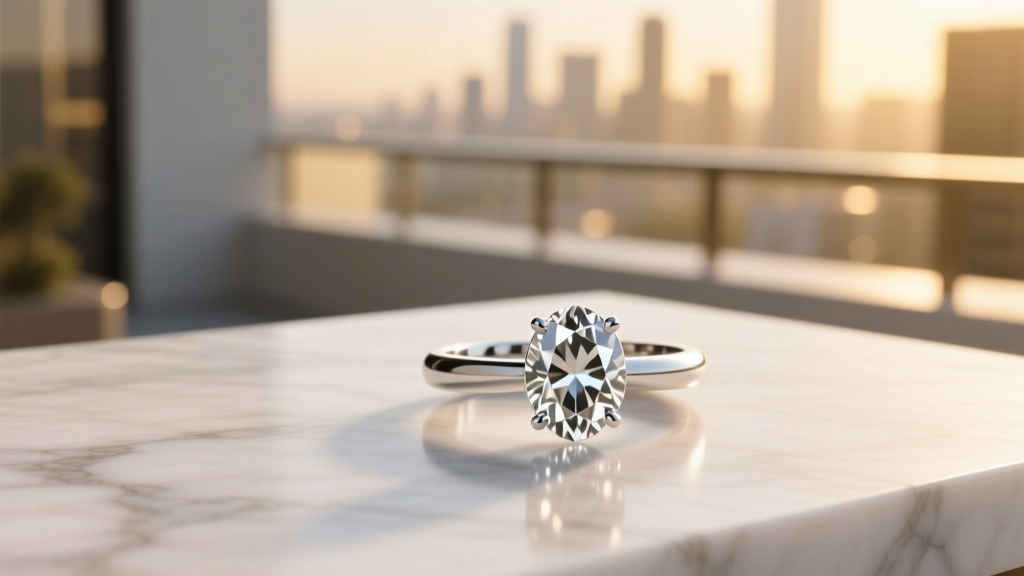
How to Choose an Engagement Ring With an Oval Diamond
Oval diamond engagement rings have become a modern classic: they feel fresh and fashion-forward, yet they still read as timeless from across the room. Couples love the oval cut for its elegant length, brilliant sparkle, and flattering “finger-elongating” look—especially when paired with a slim band or a delicate setting.
That said, ovals come with a few unique quirks. Two oval diamonds with the same carat weight can look very different in size, shape, and performance. Details like the length-to-width ratio, the bow-tie effect, and the setting style can make the difference between a ring that looks extraordinary every day and one that feels slightly “off.” This guide breaks down how to choose an oval diamond engagement ring with confidence, from cut quality and settings to metal choices, price range expectations, and the most common mistakes shoppers make.
Why Oval Diamonds Are So Popular (And Why They Work)
The oval brilliant is a modified brilliant cut, designed to maximize sparkle while offering a more elongated outline than a round diamond. For many shoppers, that blend is the sweet spot: you get the scintillation and fire associated with round brilliants, plus a shape that looks larger per carat and tends to flatter the hand.
- Visual size: Ovals often face up larger than rounds of the same carat weight because of their surface area.
- Versatility: Ovals suit nearly every setting style—solitaire, halo, three-stone, vintage, or modern minimal.
- Trend + longevity: Oval diamond engagement rings are firmly on-trend right now (especially with hidden halos and skinny bands), but they also have a classic profile that won’t feel dated.
Choosing the Right Oval Diamond: The Key Quality Factors
1) Cut Quality: Your #1 Priority for Sparkle
Unlike round diamonds, oval diamonds don’t receive an official GIA cut grade. That means you’ll rely on a combination of measurements, visual checks, and expert guidance. A well-cut oval should look bright and lively across the stone—not dull at the ends or watery in the center.
What to look for:
- Even brilliance: The stone should return light evenly from end to end.
- Symmetry: An oval should be balanced with matching shoulders and a centered culet.
- Polish and symmetry grades: Aim for Excellent or Very Good when possible.
2) Length-to-Width Ratio: Shape Preferences That Change the Look
Oval diamonds range from softly rounded to slender and dramatic. The “best” length-to-width ratio is the one that matches your style and finger shape.
- Classic oval: ~1.35–1.45 ratio (balanced, widely flattering)
- Elongated oval: ~1.46–1.60 ratio (sleeker look, often appears larger)
- Wider oval: ~1.25–1.34 ratio (softer outline, can feel more “round-like”)
If you’re ordering online, ask for the exact millimeter dimensions (length x width x depth). Two 1.50 carat ovals can face up very differently based on those measurements.
3) The Bow-Tie Effect: Manage It, Don’t Ignore It
The “bow-tie” is a darker band that can appear across the center of an oval diamond due to how light interacts with the facets. Nearly all ovals show some bow-tie; the goal is to choose one where it’s minimal and not distracting in normal lighting.
How to evaluate bow-tie:
- View videos in multiple lighting conditions (diffused and spotlight).
- Look for a bow-tie that shifts and brightens with movement rather than staying flat and dark.
- If possible, compare several ovals side by side—this is the fastest way to see the difference.
4) Color: Where You Can Save Without Sacrificing Beauty
Ovals can show color slightly more readily than round brilliants, especially in larger sizes. Your ideal color grade depends on the metal choice and your sensitivity to warmth.
- Platinum or white gold: Many shoppers land around G–I for a bright look; J can work if you don’t mind a touch of warmth.
- Yellow or rose gold: You can often go lower (e.g., H–J) because warmer metals visually blend with slight tint.
Tip: If you love yellow gold but want the diamond to appear whiter, consider a yellow gold shank with white prongs.
5) Clarity: Eye-Clean Is the Goal
Oval diamonds can hide inclusions fairly well due to their faceting, but inclusions near the center may be more noticeable. For most couples, an eye-clean diamond offers the best value.
- Common sweet spot: VS2–SI1 (depending on inclusion type and location)
- Safer bet for larger stones: VS1–VS2
Ask to confirm that the diamond is eye-clean from a normal viewing distance (about 6–12 inches) and from the top view.
6) Carat Weight vs. Millimeters: Shop by Size, Not Just Carat
Carat is weight, not face-up size. With ovals, millimeter measurements tell you how large the diamond looks on the finger. For example, many well-cut 1.50 carat ovals fall roughly around 9.0 x 6.5 mm, but variations are common.
Best Settings for Oval Diamond Engagement Rings
Solitaire: Timeless and Always Trend-Appropriate
A solitaire oval engagement ring is clean, elegant, and easy to pair with wedding bands. A simple solitaire also puts the spotlight on the diamond’s cut quality—so prioritize sparkle and minimal bow-tie.
- Popular right now: slim bands (around 1.6–2.0 mm) and higher “cathedral” shoulders
- Classic forever: a balanced band width with a four-prong head
Hidden Halo: A Modern Detail Without Overpowering the Oval
Hidden halos are a top trend for oval diamond engagement rings. They add shimmer from the side profile while keeping the top view clean. This is a great choice for couples who want a little extra detail without committing to a full halo.
Halo: Maximum Sparkle and a Bigger Look
A halo can make an oval look larger and brighter, and it can also help disguise a mild bow-tie. Choose a halo that matches the oval outline closely—too chunky or mismatched can make the center stone look smaller.
Three-Stone: Romantic, Meaningful, and Very Wearable
Three-stone oval engagement rings are both classic and currently popular again, especially with pear or tapered baguette side stones. They offer presence without the “all-pave” look and often sit nicely with a wedding band.
Prong Style Matters: 4 vs. 6 Prongs and Claw Tips
- Four prongs: minimal, modern, shows more diamond
- Six prongs: extra security; can create a slightly more vintage feel
- Claw prongs: refined and delicate; great for an elongated oval
- V-prongs? Usually used for pointed shapes (pear/marquise). Ovals typically don’t need them.
For everyday wear, prioritize craftsmanship: well-finished prongs, secure setting, and a sturdy head.
Choosing the Best Metal: Platinum vs. Gold for Oval Rings
Platinum
Platinum is naturally white, dense, and durable—excellent for holding diamonds securely. It develops a soft patina over time rather than losing metal.
- Best for: active lifestyles, heirloom durability, white-metal lovers
- Consideration: typically higher cost than gold
14K and 18K Gold (White, Yellow, Rose)
Gold is a classic choice and offers more color options. For engagement rings, 14K is often the most practical balance of durability and price; 18K has a richer color but is slightly softer.
- 14K gold: durable and popular for daily wear
- 18K gold: luxe feel and warmer tone
- White gold: usually rhodium-plated for a bright white finish
Price Range and Value Tips for Oval Diamond Engagement Rings
Oval diamond engagement ring pricing depends on carat weight, cut quality, color, clarity, and whether you choose a natural or lab-grown diamond—plus the setting style and metal.
- Lab-grown oval diamond rings: often offer the best “size for budget,” especially at 1.5–3.0 carats
- Natural oval diamond rings: priced higher due to rarity and market demand
- Settings: a classic solitaire is usually the most cost-effective; halos and pave bands add labor and small diamonds, increasing cost
Smart ways to maximize value:
- Prioritize cut appearance (sparkle and minimal bow-tie) over chasing the highest color/clarity on paper.
- Stay just under “milestone” carats (e.g., 0.90, 1.40, 1.90) for better pricing per carat.
- Consider a slightly warmer diamond (H–J) in yellow/rose gold to save while still looking beautiful.
- Shop by millimeters to ensure the stone faces up large.
Practical Buying Tips (Online or In-Store)
- Ask for video in different lighting: It reveals bow-tie and overall brilliance better than still photos.
- Verify grading reports: Look for reputable labs like GIA or IGI (IGI is common for lab-grown diamonds).
- Check return and warranty policies: Especially important for online engagement ring shopping.
- Confirm band compatibility: Some low-set ovals won’t sit flush with a wedding band without a curved band or spacer.
- Try on shapes: Even if you’re set on an oval, test a few ratios and setting heights to see what feels right.
Care and Maintenance: Keep Your Oval Ring Looking Brilliant
Oval diamonds can show smudges and lotion film—regular cleaning makes a noticeable difference in sparkle.
- At-home cleaning: Soak in warm water with mild dish soap for 15–20 minutes, gently brush with a soft toothbrush, rinse, and pat dry with a lint-free cloth.
- Avoid harsh chemicals: Chlorine and strong cleaners can damage metals and dull finishes.
- Remove for impact activities: Gym lifting, gardening, and home repairs can bend prongs or scratch metal.
- Professional checks: Have prongs and settings inspected about every 6–12 months, especially for pave or halos.
Common Mistakes to Avoid When Shopping for an Oval Diamond Ring
- Buying by certificate grades alone: Two ovals with similar specs can look dramatically different. Always evaluate light performance and bow-tie.
- Choosing an ultra-thin band without reinforcement: Very thin shanks can warp over time. If you love the look, ask about structural design and minimum thickness.
- Ignoring how it stacks with a wedding band: If you want a flush fit, plan the engagement ring setting height and band style early.
- Assuming all halos are equal: Poorly matched halos can make the center stone look smaller or irregular.
- Overpaying for carat instead of presence: A slightly smaller oval with excellent face-up measurements can outshine a heavier stone that looks smaller.
FAQ: Oval Diamond Engagement Rings
Do oval diamonds sparkle as much as round diamonds?
Oval diamonds can be extremely sparkly because they’re brilliant-cut, but rounds are generally the most consistent for light return. A well-cut oval with minimal bow-tie can look just as lively to the eye.
What is the best length-to-width ratio for an oval diamond?
Most people prefer around 1.35–1.45 for a classic oval. If you like a longer, more slender look, consider 1.46–1.60. The “best” ratio is the one that looks right on your hand and suits your style.
How can I minimize the bow-tie effect?
Choose an oval with strong, even brilliance in video and avoid stones where the center stays dark in most lighting. Some settings (like halos) can also help visually, but the diamond’s cut quality is the real solution.
Is a 4-prong or 6-prong setting better for an oval diamond?
Four prongs look clean and show more diamond; six prongs add security and can feel more traditional. If you’re hard on your hands or choosing a larger center stone, six prongs are often a wise choice.
What metal looks best with an oval diamond engagement ring?
Platinum and white gold emphasize a bright, icy look. Yellow and rose gold feel warm and romantic, and can offer better value if you choose a slightly warmer diamond color.
Do oval engagement rings work with wedding bands?
Yes, but the setting height matters. A higher-set oval or a cathedral setting often allows a straight wedding band to sit flush. Low-set ovals may need a curved band, notched band, or spacer.
Next Steps: Choose an Oval Ring That Looks Beautiful Every Day
If you want a ring that feels current but won’t age out of style, an oval diamond engagement ring is a confident choice. Focus on cut appearance (sparkle and a manageable bow-tie), pick a length-to-width ratio that fits your taste, and choose a setting and metal that match your lifestyle—then you’ll have a ring that looks stunning now and decades from now.
For more expert help comparing diamond shapes, wedding band pairings, metals, and engagement ring settings, explore more jewelry guides on weddingsift.com.
More Articles
 Wedding Ring Too Small? 7 Signs & Fixes (2026)
 Marquise Diamonds Elongating Finger Appearance
 25th Wedding Anniversary Gifts for Husband (2026)
 Claddagh Ring Pronunciation Guide (2026)
 Gold Ring Weight: How Many Grams? (2026)
 How to Choose a Wedding Band With an Inlaid Design
 How to Clean Wedding Rings Safely (2026)
 Wedding Ring Stacking Order: Finger Placement Rules (2026)
 Can You Use Engagement Ring as Wedding Band?
 Wedding Band Matching Rules: What You Really Need to Know