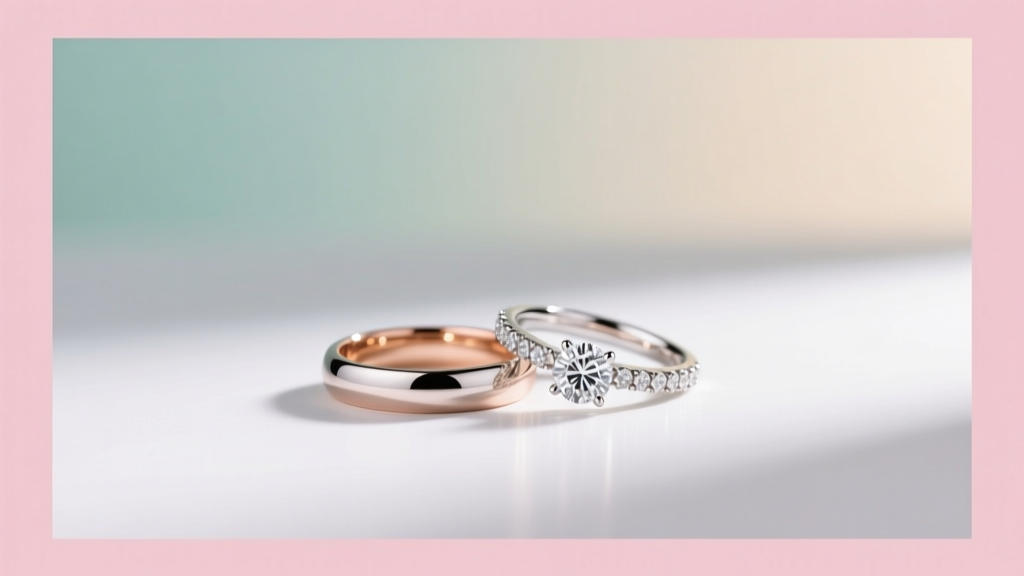
Lab-Grown vs Natural Diamonds: Honest 2026 Comparison
The Diamond Debate in 2026
Lab-grown diamonds have gone from niche curiosity to mainstream dominance. In 2026, over 50% of engagement rings sold in the US feature lab-grown stones. But misinformation abounds — from both the natural diamond industry and lab-grown marketers. Here's the honest truth.
What Lab-Grown Diamonds Actually Are
Lab-grown diamonds are real diamonds — same crystal structure, same chemical composition (pure carbon), same hardness (10 on Mohs scale), same brilliance. They're grown in a laboratory using either HPHT (High Pressure High Temperature) or CVD (Chemical Vapor Deposition) over 2-4 weeks. A gemologist cannot tell them apart from mined diamonds without specialized equipment.
Side-by-Side Comparison
| Factor | Lab-Grown | Natural |
|---|---|---|
| Chemical composition | Carbon (identical) | Carbon (identical) |
| Hardness | 10 Mohs (identical) | 10 Mohs (identical) |
| Brilliance/fire | Identical | Identical |
| Price (1-carat, VS1, G) | $800-$2,000 | $4,000-$8,000 |
| Resale value | 10-20% of purchase | 25-50% of purchase |
| Environmental impact | Lower (but energy-intensive) | Higher (mining) |
| Ethical concerns | Minimal | Varies (Kimberley Process helps) |
| Rarity | Unlimited supply | Finite supply |
| Certification | IGI, GIA available | GIA, AGS standard |
| Detectability | Requires special equipment | N/A |
The Price Reality
A lab-grown diamond costs 50-70% less than an equivalent natural diamond. This means for $2,000, you can get a 1.5-carat lab diamond (VS1, G color) that would cost $8,000-$12,000 in natural. That's $6,000-$10,000 you could put toward a house down payment, honeymoon, or wedding budget.
The Resale Value Problem
This is where lab-grown diamonds have a real disadvantage. Natural diamonds retain 25-50% of their purchase price on resale. Lab-grown diamonds retain only 10-20% — and this percentage is declining as production costs drop and supply increases. If you buy a $2,000 lab diamond today, it might resell for $200-$400 in 5 years.
However: Engagement rings are not investments. You don't buy a car expecting to resell it for profit. The "resale value" argument only matters if you view the ring as a financial asset — which it shouldn't be.
The Ethical Dimension
Natural diamonds: The Kimberley Process has reduced conflict diamonds to less than 1% of the market, but environmental damage from mining remains significant. Open-pit mines displace ecosystems and communities.
Lab-grown diamonds: No mining damage, but production requires significant electricity. If the energy comes from renewables, the carbon footprint is much lower. If from coal, the advantage shrinks. Ask the retailer about their energy source.
Expert Verdict: Which Should You Choose?
- Choose lab-grown if: You want the biggest, best-quality stone for your budget and don't care about resale value
- Choose natural if: Rarity and tradition matter to you, you value the geological story, or resale value is important
- Either way: Always get a GIA or IGI certificate. Never buy uncertified diamonds.
The Bottom Line
In 2026, there is no "wrong" choice. Lab-grown diamonds are real diamonds at a fraction of the cost. Natural diamonds carry the romance of billions of years of geological history. Choose based on your values, budget, and what makes you happy when you look at your hand.
More Articles
 How Much Is an Old Wedding Ring Worth? (2026)
 Smart Ring on Wedding Finger: Truth & Trade-Offs
 Amethyst Engagement Rings February Birthstone Beauty
 Asscher Cut Diamonds Art Deco Geometric Beauty
 Jade Engagement Rings Eastern Tradition and Meaning
 Wedding Band Spinning Fixes: 7 Non-Permanent Solutions
 How to Start Engagement: A Practical, Step-by-Step Guide for Jewelry Makers and Couples
 Why Wedding Rings Slip Off (and 5 Fixes)
 Red Diamond Rarest Natural Diamond Color
 Do You Wear Wedding Band On Inside Or Outside (2026)