How to Start Engagement: A Practical, Step-by-Step Guide for Jewelry Makers and Couples
Starting an engagement is more than a romantic gesture—it’s a collaborative design process rooted in intention, craftsmanship, and mutual values. Whether you’re a metalsmith crafting your first bespoke ring or a couple beginning this milestone, success hinges on clarity, education, and realistic planning. According to the 2023 Brides Real Weddings Study, 68% of couples now co-design their engagement ring, up from 41% in 2015. The average U.S. engagement ring budget sits at $6,000 (The Knot 2023 Real Weddings Survey), but 32% of buyers spend under $3,000—proving thoughtful design doesn’t require premium pricing. This guide walks through every critical phase: defining intent, sourcing materials ethically, choosing metal and stone specifications with precision, setting realistic timelines, and integrating personal symbolism without compromising wearability or structural integrity.
Clarify Intent Before Designing
Before sketching a single line or ordering a diamond, both partners—or the maker and client—must align on core values. Engagement isn’t just about aesthetics; it’s about longevity, ethics, and daily function. Ask: Is this ring meant to be worn daily for 30+ years? Does the wearer prefer low-profile settings for manual work? Are lab-grown diamonds acceptable? Are recycled metals non-negotiable? These aren’t stylistic preferences—they’re engineering parameters. For example, a bench jeweler working with a client who works as a physical therapist must avoid prong heights over 1.2 mm to prevent snagging on gloves or linens. Likewise, a person with arthritis benefits from wider bands (4.5–6.0 mm) and smooth, rounded edges—no sharp bezel corners or textured shanks that impede donning.
GIA’s 2022 Consumer Trust Report found that 79% of buyers prioritize ethical provenance over brand name, yet only 22% can correctly identify what ‘Fair Trade Gold’ certification requires (e.g., third-party audits, minimum wage compliance, mercury-free refining). If sourcing conflict-free stones, verify via the Kimberley Process Certification Scheme (KPCS) documentation—not just verbal assurances. Reputable suppliers like Columbia Gem House (for sapphires) and Pure Grown Diamonds (lab-grown) provide full traceability reports with batch numbers, growth method (CVD or HPHT), and post-growth treatment disclosures.
Key Questions to Ask Early
- What’s the maximum comfortable band width and thickness for daily wear?
- Does the wearer have metal sensitivities? (Note: Nickel allergies affect ~15% of the population; opt for nickel-free 18k yellow gold, platinum 950, or palladium 950 instead of white gold alloys containing nickel.)
- What lifestyle factors impact durability? (e.g., frequent swimming → avoid porous stones like opal or turquoise; construction work → avoid channel-set baguettes vulnerable to impact)
- Is there a family heirloom stone to incorporate? If so, obtain its exact measurements—common round brilliants vary: 6.5 mm = 1.0 ct, 7.4 mm = 1.5 ct, 8.1 mm = 2.0 ct per GIA’s Diamond Grading Reports.)
Select Metal With Purpose, Not Just Preference
Metal choice dictates strength, weight, maintenance, and even thermal comfort. Platinum 950 (95% pure platinum + 5% iridium/ruthenium) remains the benchmark for durability: it’s 60% denser than 14k gold, resists tarnish indefinitely, and holds prongs longer due to natural work-hardening. But it’s also 2.5× more expensive by weight—$1,280/oz vs. $520/oz for 14k white gold (Kitco, April 2024 spot prices). That density matters: a 5.5 mm wide, 1.8 mm thick platinum band weighs ~5.8 g; the same dimensions in 14k white gold weigh ~2.3 g. Lighter weight may suit petite hands—but compromises security for larger center stones.
Recycled content is now standard among responsible studios. Stuller, a leading U.S. supplier, offers 100% recycled 14k and 18k gold certified by SCS Global Services. Their 18k yellow gold contains 93.7% gold, 3.2% silver, and 3.1% copper—a ratio optimized for hardness (HV 135) and warm tone retention. Avoid ‘green gold’ (high silver content) for engagement rings unless fully understood: silver softens the alloy, lowering Vickers hardness to ~90 HV and increasing risk of bending during sizing.
Comparing Common Engagement Ring Metals
| Metal | Gold Purity | Density (g/cm³) | Vickers Hardness (HV) | Common Band Thickness Range | Resizing Limitations |
|---|---|---|---|---|---|
| Platinum 950 | 95% | 21.4 | 120–135 | 1.6–2.2 mm | Can be resized ±2 sizes safely; requires laser welding for clean joints |
| 18k Yellow Gold | 75% | 15.2 | 125–140 | 1.4–2.0 mm | ±2 sizes; excessive thinning occurs beyond |
| 14k White Gold (nickel-free) | 58.5% | 13.1 | 140–160 | 1.3–1.8 mm | ±2.5 sizes; rhodium plating wears after 12–18 months |
| Palladium 950 | 95% | 12.0 | 110–125 | 1.5–2.0 mm | ±1.5 sizes; cannot be laser-welded with standard equipment |
Note: Rhodium plating on white gold is cosmetic only—it adds no structural benefit and must be reapplied every 12–18 months at $65–$110 per service (Mayer & Co. Jewelers, 2024 pricing). Palladium 950 offers natural white color and hypoallergenic properties but lacks platinum’s density and requires specialized solder (palladium-specific hard solder, melting point 1,450°C).
Stone Selection: Beyond the 4Cs
The ‘4Cs’ (cut, color, clarity, carat) remain essential—but they’re insufficient without context. Cut quality determines light performance: a well-cut 0.9 ct round brilliant outshines a poorly cut 1.2 ct stone. GIA’s cut grade applies only to round brilliants; for ovals, pears, or cushions, rely on tangible metrics: total depth percentage (59–62.5% ideal), table percentage (53–58%), and symmetry ratings. Avoid ovals with bow-tie effects covering >25% of the face-up area—visible in stones over 1.0 ct per GIA’s 2023 Shape Analysis.
Lab-grown diamonds now hold 15.4% market share (De Beers Group 2023 Report), with prices averaging 78% below equivalent naturals. A GIA-certified 1.0 ct, D-color, VS1, excellent-cut lab diamond costs $3,200–$3,800 (Brilliant Earth, April 2024); the natural counterpart averages $14,200. However, not all lab-growns are equal: CVD stones often show graining under 10× magnification; HPHT may retain metallic inclusions. Always request GIA or IGI grading reports—not vendor-issued ‘certificates.’
Non-Diamond Center Stone Considerations
- Sapphires: Mohs 9.0 hardness makes them durable, but natural stones often contain rutile silk (inherited from corundum formation). Heat-treated sapphires (standard for 95% of commercial goods) improve color but reduce toughness—avoid ultrasonic cleaning. Unheated Kashmir sapphires exceed $20,000/ct; Madagascar heat-treated alternatives start at $420/ct (Columbia Gem House, 2024).
- Moissanite: Mohs 9.25, double refraction visible at 10×. Modern ‘neo’ cuts (e.g., Charles & Colvard’s Forever One) minimize doubling. 6.5 mm moissanite = 1.0 ct diamond equivalent but weighs 0.88 ct actual—critical for accurate prong sizing.
- Emeralds: Mohs 7.5–8.0 but highly included (‘jardin’). Require oiled treatments (cedar oil, refractive index 1.5) to mask fractures. Never steam-clean—oil evaporates at 60°C. Set in protective bezels, not prongs.
For side stones, avoid mismatched color grades. A D-center diamond flanked by G-H side stones creates visible contrast. Match within two grades (e.g., D center with F-G sides). Also, verify millimeter dimensions—not just carat weight. A 0.10 ct tapered baguette is typically 3.0 × 1.5 mm; a 0.10 ct round is 3.0 mm diameter. Using rounds where baguettes are designed causes gaps in channel settings.
Setting Styles: Engineering Meets Aesthetics
A setting isn’t decorative—it’s a mechanical system securing the stone against gravity, impact, and daily abrasion. Prong settings dominate (72% of new rings, 2023 JCK Industry Survey), but their geometry matters. Four-prong settings expose more stone but increase snag risk; six-prong offer stability for stones over 1.5 ct. Prong height should never exceed 1.5× the girdle thickness—for a 1.0 ct round (girdle avg. 0.45 mm), max prong height = 0.68 mm. Exceeding this invites bending during resizing or impact.
Bezel settings excel for active lifestyles: full bezels wrap 100% of the girdle, eliminating prong breakage. But they reduce perceived size—opt for a ‘low-profile’ bezel (0.7 mm wall height) rather than ‘high’ (1.2 mm) to maintain light entry. Halo settings add visual carat weight but introduce complexity: ensure halo stones are set in separate, independently secured collets—not shared prongs—to prevent cascade failure if one stone loosens.
Channel settings demand precise groove tolerances. Groove width must match stone width ±0.05 mm. A 1.5 mm wide channel for 1.45 mm stones causes rattling; a 1.4 mm groove for 1.45 mm stones induces fracture stress. Use a digital caliper—not visual estimation—to verify before setting. For eternity bands, ensure consistent grain direction in the metal: rolling mills align crystal structure; misaligned grains cause weak spots prone to cracking at solder joints.
Timeline Management: From Concept to Ceremony
Rushing an engagement ring risks compromised craftsmanship. Allow minimum timeframes: 2 weeks for CAD modeling and client revisions, 3 weeks for casting and bench work, 1 week for stone setting and finishing, 1 week for quality control and final polish. Total: 7 weeks minimum. Custom designs with hand-engraving or complex filigree require 12–14 weeks. Rush fees (15–25% surcharge) rarely improve quality—instead, they pressure polishing to skip 1200-grit sanding, leaving micro-scratches visible under 10×.
Seasonality impacts lead times. November–January sees 40% higher order volume (Stuller 2023 Data). Book casting slots by September for December proposals. Also, factor in stone procurement: natural colored gemstones may require 4–6 weeks for sourcing and import clearance (U.S. Customs Form 3461 required for stones valued >$2,500). Lab-grown diamonds ship faster but still need 5–7 business days for GIA verification and laser inscription.
Realistic milestones help avoid disappointment:
- Week 1–2: Finalize design, approve CAD renderings, sign contract with deposit (typically 30%).
- Week 3–5: Casting completed, shank fabrication, prong/base preparation.
- Week 6: Stone setting (center first, then accents), initial polish.
- Week 7: Ultrasonic cleaning, final polish with 3-micron diamond paste, GIA report verification, fit check.
- Week 8: Delivery or in-studio presentation with care instructions.
Personalization That Lasts
Engraving and texture add meaning—but must respect metallurgical limits. Hand-engraved scrolls on platinum require 0.3 mm minimum line depth to survive polishing cycles; shallower lines vanish after 2–3 cleanings. Laser engraving penetrates 0.05–0.1 mm—ideal for dates or coordinates but unsuitable for deep monograms. For interior engravings, limit text to 20 characters (including spaces) on a 5.5 mm band—longer text compresses letterforms, reducing legibility.
Hammered textures enhance grip and hide scratches but reduce metal thickness. A medium hammer texture removes ~0.15 mm of surface material. On a 1.6 mm thick band, this leaves 1.45 mm—still structurally sound. But on a 1.3 mm band, it drops to 1.15 mm, increasing flex fatigue. Reserve heavy textures for bands ≥1.8 mm thick.
Hidden details resonate deeply: a tiny compass rose inside the band for travelers, Morse code for ‘forever’ (••• • •••• •), or a fingerprint impression cast directly into the shank using dental alginate (accuracy ±0.02 mm). These require coordination during wax carving—not after casting—because post-cast engraving distorts surrounding metal.
Post-Engagement Care Foundations
Education begins at handover. Provide clients with a written care sheet—not just verbal advice. Specify cleaning methods: warm water + mild dish soap + soft toothbrush weekly; professional ultrasonic cleaning every 6 months (avoid for emeralds, opals, or pearls). Note resizing limits: platinum bands sized beyond ±2 sizes require re-shanking (rebuilding the band), costing $220–$380 (Lang Antique & Estate Jewelry, 2024). Include warranty terms: most reputable makers cover manufacturing defects for life but exclude wear-related damage (e.g., bent prongs from impact) or loss.
Track ring health annually. Use a 10× loupe to inspect prong tips for rounding or splitting—early signs of fatigue. Weigh the ring yearly: loss >0.1 g indicates metal erosion from abrasion (e.g., rubbing against countertops). Recommend re-rhodium plating for white gold when yellowing appears at prong tips—before it spreads across the entire surface.
Finally, normalize redesign. 28% of couples modify their engagement ring within 5 years (Jewelers of America 2023 Survey)—often to accommodate wedding bands or evolving style. Design with modularity: choose a low-profile solitaire that accepts a curved wedding band, or use threaded gallery rails for future detachable halos. Starting engagement isn’t a finish line—it’s the first calibrated step in a lifetime of intentional adornment.
Remember: great engagement jewelry balances emotional resonance with metallurgical rigor. It’s not about the largest stone or shiniest metal—it’s about creating something that endures, functions, and honors the people who wear it. When a ring fits the hand, the lifestyle, and the values—without compromise—that’s when engagement truly begins.
For metalsmiths: Document every specification—stone dimensions, metal alloy batch numbers, prong height measurements—in your client file. This isn’t bureaucracy; it’s accountability to craft. For couples: Ask for the data before the dazzle. Request GIA reports, metal assay certificates, and setting tolerance specs. Knowledge transforms sentiment into stewardship.
The engagement ring is the first artifact of a shared future. Build it with precision, respect its physics, and honor its symbolism—not as decoration, but as a covenant forged in gold, platinum, and intention.
More Articles
 How to Choose an Engagement Ring With an East-West Setting
 Pear-Shaped Diamonds Teardrop Elegance
 Iolite Engagement Rings Violet Blue Cordierite
 How to Keep Wedding Rings Together Without Soldering
 Wedding Band Matching: 7-Step Visual Guide (2026)
 Black Wedding Band Meaning: 7 Truths (2026)
 How to Tell If Your Ring Setting Needs Repair
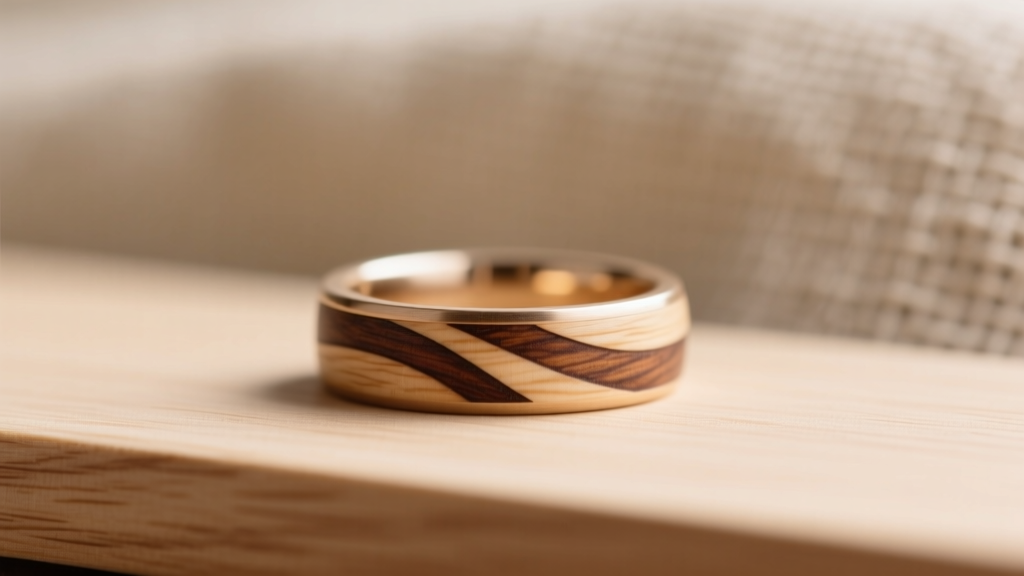 Wood Inlay Wedding Bands Natural and Organic
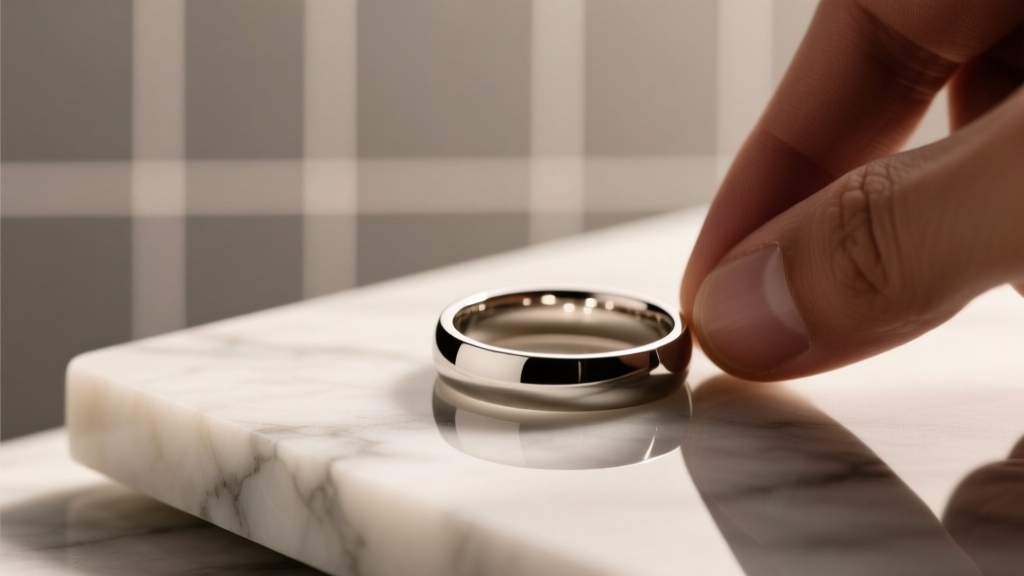 Men's Wedding Ring Fit: The 5-Second Test (2026)
 Couples Rings vs. Really: Decoding the Critical Distinction in Commitment Jewelry