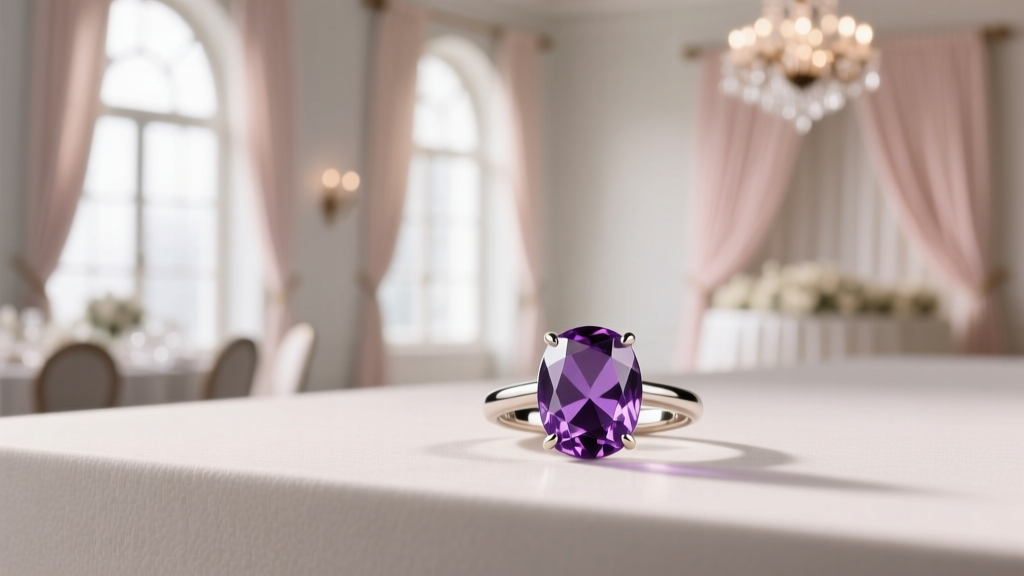
Amethyst Engagement Rings February Birthstone Beauty
Amethyst engagement rings have a way of stopping people mid-sentence. The rich purple color feels romantic, a little unexpected, and deeply personal—especially for anyone with a February birthday or a love story tied to that month. While diamonds still dominate the engagement ring world, more couples are choosing colored gemstone engagement rings to reflect individuality, meaning, and style.
Amethyst is also a smart choice for couples who want a standout center stone without the steep price tag that often comes with sapphire or diamond. With the right cut, setting, and protective design, an amethyst ring can be both wearable and unforgettable—ideal for a proposal, a bridal set, or even a matching wedding band pairing that feels cohesive.
This guide covers what makes amethyst special, how to evaluate quality, which ring styles work best, what to pay, and how to avoid common mistakes when shopping for an amethyst engagement ring.
Why Choose an Amethyst Engagement Ring?
Meaning and symbolism
Amethyst has long been associated with calm, clarity, and devotion—fitting themes for marriage. As the February birthstone, it’s a popular choice for couples who want a ring that feels sentimental rather than traditional. In modern engagement ring trends, meaning-driven stones are in demand, and amethyst fits perfectly into that “purposeful jewelry” movement.
Color that feels both modern and timeless
Purple plays well with many aesthetics: vintage-inspired halos, minimalist solitaires, and even edgy mixed-metal designs. Deep violet reads regal and classic; pale lilac feels soft, airy, and contemporary. That range makes amethyst unusually versatile for engagement ring styles.
Budget-friendly impact
Compared with many center stones, amethyst offers impressive size and color at accessible prices. Couples often choose a larger carat weight for visual presence—then invest savings into better craftsmanship, a durable setting, or coordinating wedding bands.
Understanding Amethyst: Durability, Color, and Quality
How durable is amethyst for daily wear?
Amethyst is a variety of quartz and ranks 7 on the Mohs hardness scale. That makes it reasonably durable, but not as tough as sapphire (9) or diamond (10). For an engagement ring worn daily, durability depends heavily on the setting and lifestyle. If you work with your hands, lift weights, garden often, or wear your ring constantly, a protective design is a must.
What color is best in amethyst?
Color is the top value driver. The most prized amethyst is a rich purple with flashes of red or blue (often described as “royal purple”). Lighter lavender stones can look beautiful—especially in rose gold—but they tend to show inclusions more easily and may look washed out in very bright light.
- Deep violet/royal purple: Classic, luxurious, stronger color presence.
- Medium purple: Balanced, often best for sparkle and everyday versatility.
- Light lilac: Romantic and modern, especially in delicate settings.
Clarity and inclusions
Amethyst is commonly “eye-clean,” meaning inclusions are not visible without magnification. Look for a stone that appears clear when viewed from the top at arm’s length. Large or pale stones can reveal more internal features, so inspect carefully under different lighting.
Cut: where beauty is won or lost
A well-cut amethyst should look lively, not flat. Because color can be strong, cutting must balance saturation with brilliance.
- Round brilliant: Maximum sparkle; ideal for modern solitaires and halos.
- Oval: Elegant, elongates the finger; popular in current engagement ring trends.
- Cushion: Soft corners, vintage feel; great for halos.
- Emerald cut: Clean lines and “hall-of-mirrors” flashes; best with higher clarity.
- Pear and marquise: Dramatic and romantic; require secure prongs (especially at the tip).
Best Metals for Amethyst Engagement Rings
White gold and platinum
14k or 18k white gold and platinum make amethyst look crisp and vibrant. If you love a high-contrast, cool-toned look, these metals deliver. Platinum offers excellent durability for prongs, which matters for protecting a center stone worn daily.
Yellow gold
Yellow gold creates a warm, classic contrast with purple. It’s especially striking in vintage-inspired settings, engraved bands, and three-stone designs. For couples seeking a timeless engagement ring look with a twist, yellow gold and amethyst is a strong pairing.
Rose gold
Rose gold is a favorite in modern bridal jewelry and flatters both deep and pale amethyst. It leans romantic and slightly bohemian—perfect for nature-inspired rings, floral halos, and delicate pavé shanks.
Durability tip: choose the right karat
For daily wear, 14k gold is often the sweet spot: durable enough for prongs and settings while still looking luxurious. 18k is richer in color but slightly softer. Platinum is excellent for longevity, especially if you want fine prongs or a more secure head.
Settings and Styles That Make Amethyst Engagement Rings Practical
Protective settings for everyday wear
Because amethyst is not as hard as sapphire or diamond, protective settings help prevent chips and abrasion.
- Halo setting: A circle of small diamonds (or moissanite) frames the amethyst and adds a buffer zone.
- Bezel setting: Metal surrounds the stone’s edge; one of the safest choices for active lifestyles.
- V-prongs for points: Essential for pear, marquise, and heart shapes to protect tips.
- Low-profile settings: Reduce snagging and impact risk.
Popular engagement ring styles right now
Current wedding ring trends lean toward personalization and refined detail:
- Oval amethyst solitaire with a thin band for a clean, modern look.
- Vintage halo with milgrain edges and delicate engraving.
- Three-stone rings featuring side diamonds or white sapphires for symbolism (past, present, future).
- Mixed metals (e.g., rose gold center head with a white gold band) for dimension.
Timeless classics that always work
If you want a ring that ages beautifully in photos and in real life, classic profiles win: a round or cushion amethyst in a simple halo or a well-made solitaire with sturdy prongs, paired with a matching wedding band that sits flush.
How to Choose Quality: A Practical Checklist
- Color first: Choose a purple you’ll love for decades, not just what looks trendy today.
- Look for lively cutting: Avoid stones that look dark in the center or glassy.
- Inspect symmetry: Off-center facets and uneven outlines can reduce sparkle.
- Check setting craftsmanship: Prongs should be even, smooth, and secure—no sharp edges or gaps.
- Ask about treatments: Amethyst is often heat-treated to improve color; this is common and generally stable.
Price Range and Value Tips
Typical pricing
Amethyst is generally affordable, but total ring cost depends on metal, accent stones, and craftsmanship.
- Simple amethyst solitaire (14k gold): often $300–$900 depending on stone size and build quality.
- Halo or pavé diamond accents: often $800–$2,500+ depending on total diamond weight and metal.
- Platinum settings or custom design work: typically $1,500–$4,000+ depending on details.
Where to spend for the best value
- Prioritize setting security: Strong prongs, a protective head, and good finishing matter more than an extra half-carat.
- Choose a better cut over bigger size: A well-cut 1.5 ct stone can look richer than a poorly cut 3 ct stone.
- Consider accent stones strategically: Small diamonds or moissanite in a halo can boost brilliance without a huge jump in cost.
- Think about wedding band pairing now: Some halos and low baskets allow a flush band; others require a curved wedding band.
Care and Maintenance for Amethyst Rings
Daily wear habits
Amethyst can abrade over time if constantly exposed to friction. Remove your ring for weightlifting, cleaning, gardening, and any task where it may be knocked or scraped.
Cleaning your amethyst engagement ring
Use warm water, mild soap, and a soft brush. Rinse well and pat dry with a lint-free cloth. Avoid harsh chemicals and be cautious with ultrasonic cleaners—some settings and stones can be sensitive, and repeated ultrasonic cleaning can loosen pavé or prongs.
Light and heat considerations
Prolonged exposure to strong sunlight can potentially fade some amethyst over long periods. Don’t store the ring in direct sun. Avoid high heat, especially if the stone has been treated (common in the market).
Routine checkups
Have a jeweler check prongs and stone security about once a year, or sooner if you notice snagging or movement. This is especially important for halo settings and pavé bands.
Common Mistakes to Avoid When Shopping
- Choosing a very high-set stone without protection: Beautiful, but more likely to chip.
- Buying based on photos only: Amethyst shifts color in different lighting; ask for videos in daylight and indoor light.
- Ignoring band thickness: Ultra-thin bands can bend over time; look for balanced proportions for a long-wearing engagement ring.
- Not planning for a wedding band: Some settings don’t sit flush with a straight band, which affects your bridal set.
- Assuming “darkest purple” is best: Overly dark stones can look inky and lose sparkle—aim for richness with life.
FAQ: Amethyst Engagement Rings
Are amethyst engagement rings durable enough for everyday wear?
Yes, with smart design choices. Choose a protective setting (bezel or halo), avoid very high profiles, and remove the ring during rough activities. Annual prong checks help keep it secure.
Does amethyst look good with diamonds?
Very. Diamonds add brightness and contrast, making purple look even richer. Halo settings and three-stone rings are especially popular for amethyst-and-diamond engagement rings.
What metal makes amethyst look the most vibrant?
White metals (white gold and platinum) emphasize crisp, vivid purple. Rose gold adds romantic warmth, and yellow gold gives a classic, regal contrast. The “best” choice depends on the shade of amethyst and your personal style.
Will amethyst fade over time?
Some amethyst can fade with prolonged exposure to strong sunlight or heat. Normal wear is usually fine, but avoid storing the ring in direct sun and keep it away from high temperatures.
How do I match a wedding band to an amethyst engagement ring?
If your engagement ring sits low or has a halo, you may need a curved or contoured wedding band for a flush fit. A jeweler can recommend a matching band or create a custom wedding band that nests neatly against the setting.
Is amethyst a good alternative to purple sapphire?
Amethyst offers a similar color family at a lower cost, but sapphire is harder and more scratch-resistant. If you want maximum durability, sapphire wins; if you want value, size, and birthstone meaning, amethyst is a beautiful choice.
Your Next Step: Finding the Right Amethyst Ring
An amethyst engagement ring works best when it’s chosen with both heart and practicality: a color you truly love, a cut that stays lively in real-world lighting, and a setting built to protect the stone for daily wear. For many couples, a halo or bezel in 14k gold or platinum strikes the right balance of style, security, and long-term value—then a coordinated wedding band completes the bridal set.
If you’re comparing gemstone engagement rings, exploring wedding band pairings, or narrowing down settings and metals, browse more jewelry guides on weddingsift.com to shop smarter and choose with confidence.
More Articles
 How to Choose a Wedding Band With a Ceramic Material
 Asscher Cut Diamonds Art Deco Geometric Beauty
 Wedding Ring Fit Test: Avoid Regret (2026)
 Wedding Ring Insurance Costs What to Expect
 Moissanite vs Lab Diamond: Honest Comparison
 How to Tell If Your Ring Setting Needs Repair
 Wedding Ring Cleaning Frequency: Science-Backed Guide
 When Men Started Wearing Wedding Bands (2026)
 Wedding Band Placement: Top or Bottom in 2026
 The Practical, Ethical, and Timeless Proposal Ring Buying Guide