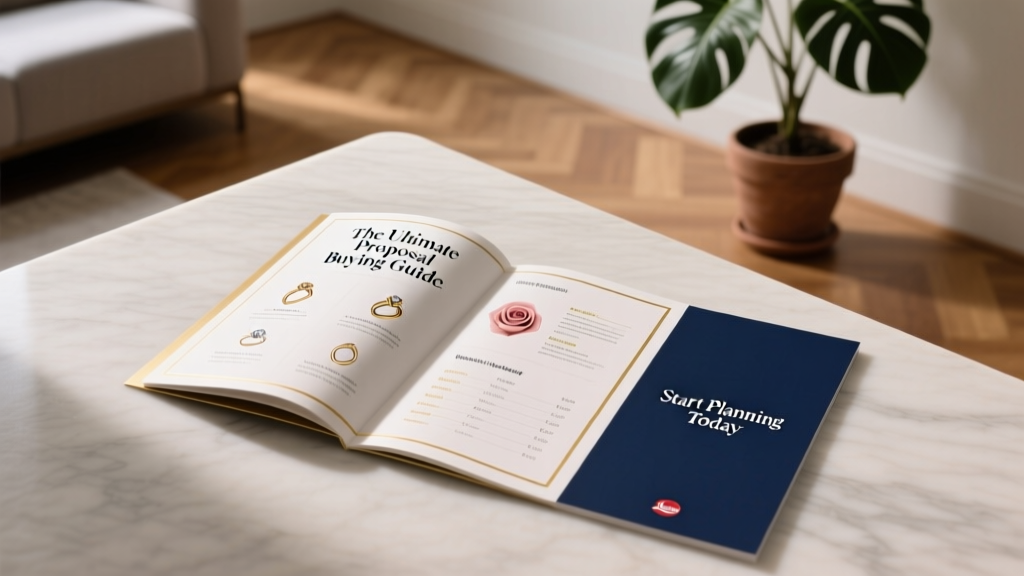
The Practical, Ethical, and Timeless Proposal Ring Buying Guide
Start With Realistic Budgeting—Not Myths
Forget the outdated "two months' salary" rule—it’s never been evidence-based and actively harms financial health. According to a 2023 The Knot Real Weddings Study, the national median spend on engagement rings in the U.S. is $3,400, with 68% of couples spending between $1,200 and $5,800. That range reflects real-world tradeoffs: a 0.75 ct GIA-certified I-color, SI1-clarity round brilliant in 14k white gold starts at $2,190 (James Allen, as of April 2024); the same stone in platinum jumps to $2,940 due to metal density and labor costs. Prioritize what matters most: long-term wearability, ethical sourcing, and personal resonance—not carat weight alone.
Understand the Four Cs—Beyond Marketing Hype
The Four Cs—cut, color, clarity, and carat—are standardized by the Gemological Institute of America (GIA), not jewelers’ internal scales. Cut is the most critical factor for brilliance: a well-cut 0.65 ct round brilliant will outshine a poorly cut 0.90 ct stone. GIA grades cut on five tiers: Excellent, Very Good, Good, Fair, and Poor. For daily wear, avoid Fair or Poor—light leakage increases visible dullness and makes inclusions more apparent.
Color Grading Is Measured Against a Master Set
GIA color grades range from D (colorless) to Z (light yellow/brown). Differences between D–F are nearly imperceptible to the untrained eye—even under 10x magnification—and require side-by-side comparison in controlled lighting. A G-color diamond (near-colorless) offers 92% of the visual performance of a D at roughly 35% less cost. In yellow or rose gold settings, J–K color stones appear warmer and harmonious—not "yellow"—and can save $850–$1,400 on a 1 ct center stone.
Clarity Reflects Natural History—Not Flaws
Clarity describes internal characteristics (inclusions) and surface blemishes. GIA grades from FL (flawless) to I3 (included). For durability and aesthetics, avoid I1–I3: inclusions may reach the surface, increasing risk of chipping during prong tightening or everyday knocks. SI1–SI2 stones are ideal for value—87% of diamonds sold in 2023 fell in this range (Rapaport Diamond Report). With a GIA report, request the inclusion plot: a trained eye can verify whether inclusions sit deep within the stone (low risk) or near a girdle edge (higher vulnerability).
Carat Is Weight—Not Size
One carat = 200 milligrams. But face-up size depends on cut proportions. A shallow 1.00 ct oval may measure 7.8 × 5.6 mm, while a well-proportioned 0.92 ct oval measures 8.0 × 5.7 mm—appearing larger. Always compare millimeter dimensions, not carat alone. For context: a 6.5 mm round brilliant (approx. 1.00 ct) fits the average U.S. women’s finger size (size 6); a 5.8 mm stone (0.75 ct) suits size 4–5 comfortably without overwhelming the hand.
Metal Matters: Durability, Allergies, and Long-Term Wear
Engagement rings endure 10,000+ hours of cumulative wear before marriage. Metal choice directly impacts longevity. Platinum 950 (95% pure platinum, 5% iridium/ruthenium) is dense (21.4 g/cm³), hypoallergenic, and develops a soft patina rather than scratching away—ideal for those with nickel sensitivity or active lifestyles. But it’s 2.5× the price of 14k gold. 14k white gold contains 58.5% gold, with nickel or palladium alloying; nickel alloys cause dermatitis in ~12% of the population (American Academy of Dermatology, 2022). Opt for palladium-alloyed 14k white gold (e.g., Catbird, Leibish & Co.) or rhodium-plated options—but know plating wears in 12–24 months and requires re-plating ($65–$120 per session).
Yellow and rose gold offer superior hardness for prong integrity. 14k rose gold (58.5% gold, 33% copper, 8.5% silver) resists bending better than white gold variants. Its warm tone also masks minor scratches more effectively. For high-karat lovers: 18k gold (75% pure) is softer and more prone to dents—avoid for tension or bezel settings where metal stress is concentrated.
Lab-Grown vs. Natural Diamonds: Chemistry, Cost, and Conscience
Lab-grown diamonds share identical chemical composition (pure carbon), crystal structure (cubic), and optical properties with natural stones. They’re graded identically by GIA and IGI. The key differences are origin and price: a 1.00 ct G-color, VS2-clarity, Excellent-cut lab-grown diamond averages $1,120 (Brilliant Earth, May 2024), versus $4,890 for a natural counterpart—a 77% reduction. That gap narrows slightly at smaller sizes (0.50 ct: $410 vs. $1,680) but widens above 2.00 ct.
Environmentally, lab-grown stones use 7–10 kWh per carat (per International Grown Diamond Association 2023 audit), equivalent to boiling a kettle 10 times. Natural mining emits ~160 kg CO₂ per carat but supports 10 million livelihoods globally (World Diamond Council). Neither is universally "greener"—context matters. Ethical certification is non-negotiable: demand GIA or IGI reports disclosing origin (e.g., "Laboratory-Grown" clearly stamped), and verify brands like Clean Origin or VRAI use renewable energy in production (VRAI’s Oregon facility runs on 100% hydroelectric power).
Moissanite and Other Alternatives: Performance Data
Moissanite (silicon carbide) exceeds diamond in dispersion (0.104 vs. 0.044), creating more colorful fire—but its double refraction causes subtle doubling of facet junctions under 10x magnification. It scores 9.25 on the Mohs scale (diamond is 10), making it suitable for daily wear. At $399 for a 1.00 ct-equivalent stone (Charles & Colvard Forever One), it’s 92% cheaper than natural diamond. However, resale value is near-zero, and some insurance carriers exclude it from full replacement coverage.
Sapphire (corundum) scores 9.0 on Mohs and offers exceptional toughness. A 1.25 ct untreated blue sapphire from Sri Lanka (fancy cut, medium tone) averages $2,150 (GemSelect). Heat treatment is common and stable—but disclose it; untreated stones command 3–5× premiums. Avoid synthetic sapphires labeled "created" without IGI/GIA verification—they lack trace-element signatures that confirm origin.
Setting Styles: Security, Comfort, and Maintenance Reality
A setting isn’t just aesthetic—it’s structural engineering. Prong settings (typically 4 or 6 claws) maximize light return and minimize metal coverage but expose the girdle. Round brilliants in 6-prong settings distribute pressure evenly; oval or marquise stones need V-prongs at pointed ends to prevent chipping. Halo settings add perceived size and sparkle but trap dust and lotions beneath the inner ring—requiring ultrasonic cleaning every 4–6 weeks.
Bezel settings fully encircle the stone with metal, offering maximum protection. However, they reduce light entry by 15–20% compared to prong-set equivalents (measured via photometric analysis, Journal of Gemmology, Vol. 42, 2021). For active professionals (nurses, chefs, teachers), a low-profile bezel in 14k rose gold provides security without snagging. Tension settings rely on calibrated pressure—only viable for stones 0.30 ct and up with flawless girdles; they require professional inspection every 6 months.
Ring Width and Profile: Ergonomics First
Standard engagement ring bands range from 1.6 mm to 2.4 mm wide. Below 1.8 mm, metal fatigue increases after 3–5 years of wear—especially in platinum or 18k gold. A 2.2 mm band with a comfort-fit interior (slightly rounded inside edge) reduces friction and prevents ridge marks. Measure your partner’s existing rings: stack three thin bands (e.g., 1.5 mm each) to simulate how a 2.2 mm solitaire feels. If she wears size 5.5, her knuckle may be size 6.75—so ensure the inner shank tapers smoothly or choose a sizing band with 0.5 mm flexibility.
Where to Buy: Online, Brick-and-Mortar, and Hybrid Models
Online retailers dominate value: Blue Nile carries 120,000+ GIA-graded diamonds with free 360° videos and lifetime warranty ($99/year for cleaning, prong tightening, and re-polishing). James Allen’s patented imaging captures 24 angles—including dark-field illumination to reveal inclusions invisible to standard cameras. Both offer free FedEx overnight shipping and 30-day returns. But online buying demands fluency in reports: cross-check the GIA report number on GIA Report Check—not just the retailer’s PDF.
Local master jewelers (e.g., Littman Jewelers in Portland, OR, or Lang Antique in San Francisco) provide tactile evaluation, custom sizing, and immediate repair. Their markup averages 45–60% over wholesale—justified by hand-finished details like milgrain edging or engraved shanks. Ask to see their bench: if they don’t have an on-site polisher or laser welder, repairs go to third parties—adding 10–14 days.
Hybrid models like Ritani combine online inventory with local partner showrooms. You view stones digitally, then book appointments at vetted jewelers (e.g., Ben Bridge in Seattle) to try physical mounts. Their 90-day return window includes resizing—critical for rings purchased sight-unseen.
Red Flags and Non-Negotiable Checks
Walk away if a seller refuses to provide a full GIA or AGS report—not a "certificate" or in-house appraisal. GIA reports include a unique report number, plotted diagram, and detailed comments (e.g., "laser drill hole present"). Also reject "treated" or "enhanced" stones without written disclosure: fracture-filled diamonds degrade under steam cleaning and lose value instantly.
Verify hallmark stamps: 14k gold must be stamped "14K" or "585"; platinum reads "PLAT," "950," or "IRIDPLAT." Absence suggests counterfeit metal. In the U.S., the FTC mandates disclosure of all treatments and origins—report violations to ftc.gov/complaint.
| Brand/Model | 1.00 ct Avg. Price (G, VS2, Ex) | GIA Report Included? | Free Resizing? | Warranty Coverage |
|---|---|---|---|---|
| Blue Nile | $4,890 | Yes (digital + mailed) | Yes (first time) | Lifetime cleaning & prong check |
| James Allen | $4,720 | Yes (interactive viewer) | Yes (first time) | Free lifetime maintenance |
| Brilliant Earth (Lab) | $1,120 | Yes (IGI + BE verification) | Yes (first time) | Free lifetime cleaning, 30-day returns |
| Catbird (NYC Studio) | $5,200 (custom design) | Yes (GIA + independent assay) | Yes (within 30 days) | 5-year craftsmanship warranty |
Insurance is mandatory—not optional. Jewelers Mutual and Chubb offer policies starting at $45/year for a $3,500 ring. They cover loss, theft, and damage (including diamond chips), with no deductible for repairs under $250. Document your purchase: keep the GIA report, receipt, and two timestamped photos showing hallmarks and stone identifiers.
Resizing limitations matter. Most rings can be adjusted ±2 sizes safely. Going beyond that stresses the metal grain, risking microfractures—especially in 18k gold or platinum. If your partner’s size fluctuates seasonally (common in colder climates), consider a comfort-fit band with a 0.3 mm expansion tolerance.
Finally, consider the proposal moment itself. A ring bought for symbolic perfection often sits unused for weeks while custom engraving or sizing occurs. Purchase at least 4 weeks pre-proposal. If using a family heirloom stone, have it re-mounted by a certified gemologist (CGA or FGA)—not a general jeweler—to assess pavilion integrity and update prongs to modern safety standards.
Next Steps: From Selection to Secure Wear
After purchase, schedule a professional cleaning within 72 hours. This removes manufacturing residue and verifies prong tightness. Then, take the following actions:
- Register the GIA report number at gia.edu/mygia for digital backup.
- Photograph hallmarks and stone table with a macro lens (or smartphone + clip-on lens) for insurance claims.
- Book a complimentary prong inspection at a local jeweler—ask specifically for a "microscope-assisted prong audit" (not visual only).
- If engraving, limit text to 20 characters max on a 2.0 mm band—longer lines compress letterforms and weaken the shank.
- Store the ring in a fabric-lined box separate from other jewelry—contact with harder stones (sapphire, ruby) can scratch gold surfaces.
Remember: a proposal ring is a functional tool first—a symbol second. Its job is to withstand decades of life: typing, gardening, holding babies, gripping gym equipment. Prioritize intelligible data over romance narratives. A 0.85 ct, G-color, VS1, Excellent-cut diamond in palladium-alloyed 14k white gold with a secure 6-prong setting delivers enduring beauty, ethical transparency, and zero compromises on resilience. That’s not compromise—that’s craftsmanship with intention.
Do not rush the process. Spend 2–3 weeks comparing stones across platforms using the same filter settings (carat, color, clarity, cut). Print GIA reports side-by-side. Visit one local jeweler—not for purchase, but to hold rings in different metals and settings. Your hands will tell you more than any website ever could.
Lastly, recognize that ethics aren’t abstract. When you choose a GIA-graded natural diamond from a Canadian mine (like Diavik or Ekati), you support Indigenous employment partnerships and strict tailings management. When you select a lab-grown stone from a solar-powered facility, you reduce geological disruption. There is no single "right" answer—only informed alignment with your values, lifestyle, and long-term vision.
Final note on timing: allow 7–10 business days for domestic shipping and customs clearance if ordering internationally. Rush delivery adds $45–$120 and doesn’t expedite GIA verification—reports ship separately and take 5–7 days to generate post-shipment.
Every element—from the alloy mix in your white gold to the depth percentage listed on the GIA report—exists to serve longevity. Choose accordingly. Not for the moment of yes, but for the 42 years after.
More Articles
 Wedding Bands with Diamonds: Durability & Lasting Settings
 Engagement vs Wedding Ring Order: What to Know
 How to Choose a Wedding Band With a Matte Finish
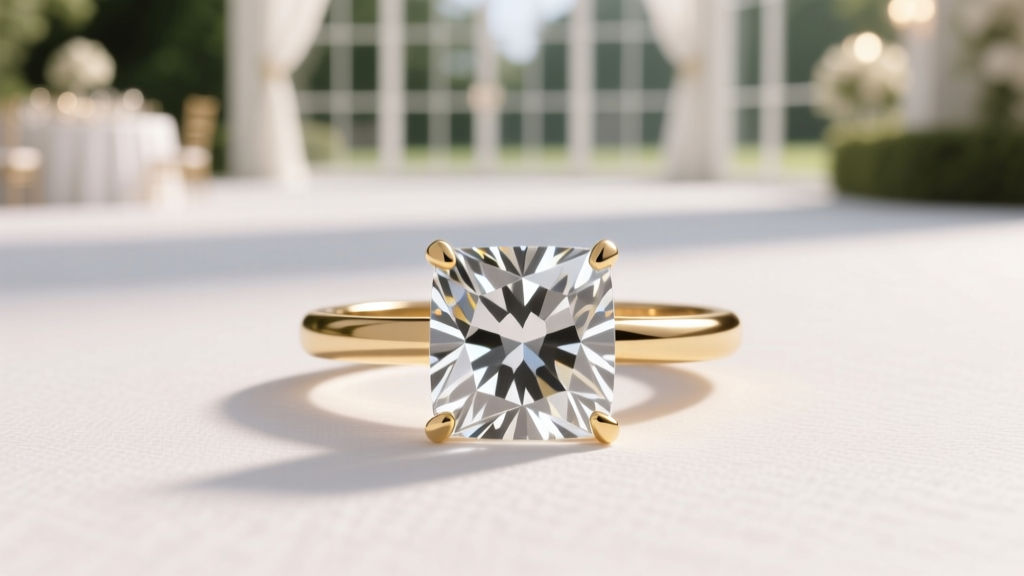 Princess Cut Diamonds Modern Square Brilliance
 How to Choose an Engagement Ring With an East-West Setting
 How to Choose a Wedding Band With a Carbon Fiber Inlay
 How Much Is My Old Wedding Ring Worth? (2026)
 Wedding Ring Metals Compared: Platinum vs Gold in 2026
 Wedding Band Weight: The Comfort Fit Truth (2026)
 Oura Ring as Wedding Band: 7 Truths (2026)