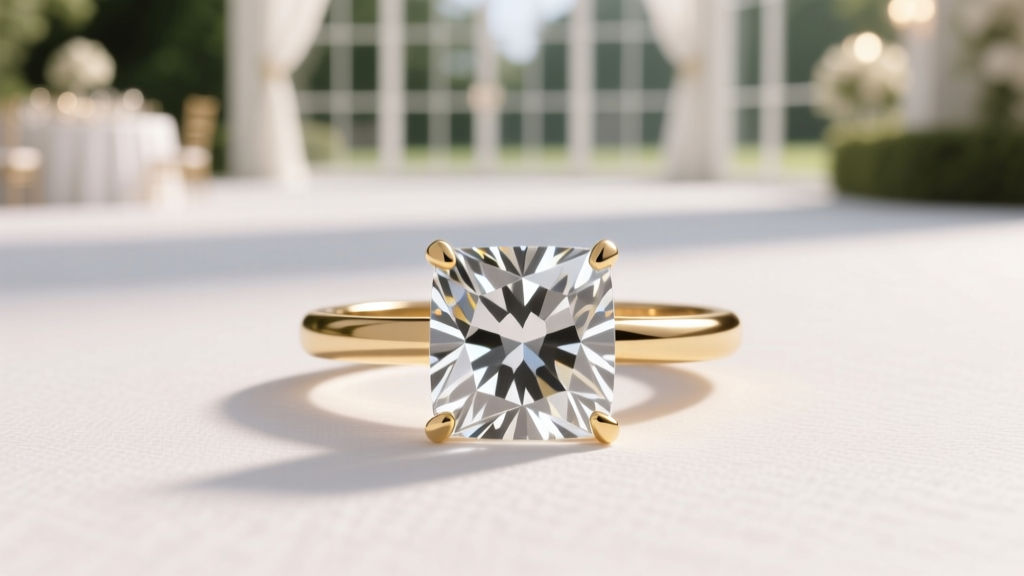
Princess Cut Diamonds Modern Square Brilliance
The princess cut diamond has a way of looking both crisp and romantic at the same time. Its clean square (or slightly rectangular) outline feels modern, yet the sparkle can rival—and sometimes even outshine—more traditional shapes. For couples shopping for engagement rings and wedding bands, this cut often hits the sweet spot: contemporary style, strong brilliance, and a shape that works beautifully in everything from minimalist solitaires to intricate vintage-inspired settings.
Choosing a princess cut isn’t just about loving a square diamond. The cut’s sparkle depends heavily on craftsmanship, and its pointed corners call for smart setting choices. When you understand what makes a princess cut perform at its best, you’ll be able to choose a diamond that looks bright in real life (not just under showroom lights), sits securely in its setting, and fits your lifestyle and budget.
What Makes a Princess Cut Diamond Different?
A square silhouette with serious fire and brilliance
The princess cut is a brilliant-style diamond, meaning it’s designed with faceting that returns lots of light to the eye. Unlike the round brilliant, the princess cut has a square face-up shape and a faceting pattern that creates a lively mix of sparkle (brilliance) and rainbow flashes (fire). Many shoppers love how it looks crisp and architectural on the hand, especially in platinum or white gold engagement rings.
Why it became a modern classic
Princess cut diamonds rose in popularity as couples began gravitating toward cleaner lines and contemporary engagement ring styles. Today, it’s considered a modern classic: timeless enough to wear forever, but still fresh—especially in trending settings like hidden halos, cathedral solitaires, and East-West band pairings (more common with rectangular stones, but increasingly used in creative bridal stacks).
Princess Cut Diamond Quality Factors: The 4Cs That Matter Most
Cut quality: the biggest driver of sparkle
Cut is the make-or-break factor for princess cut brilliance. Unfortunately, princess cuts don’t have a single universally standardized cut grade the way many round brilliants do, so you’ll want to lean on visual performance and trusted grading reports. Look for a stone that appears bright across the whole face, without a dull “window” in the center.
- Ideal proportions vary, but many well-performing princess cuts have a depth around the mid-to-high 60% range and a table that doesn’t look overly large.
- Symmetry and polish should be Very Good or Excellent on a grading report for a crisp, balanced look.
- Avoid overly shallow stones that can look glassy, or overly deep stones that hide weight where you can’t see it (costing you in price per carat).
Color: square shapes show color more readily than rounds
Princess cut diamonds can show body color a bit more than round diamonds because of their faceting and larger corner areas. Many couples find a sweet spot around G–H for white gold or platinum, and I–J can still look lovely in yellow or rose gold, where the warmer metal tone complements faint warmth in the diamond.
Clarity: choose eye-clean, not perfection on paper
Because princess cuts are faceted for sparkle, they can hide inclusions well—especially toward the edges. A practical range for many buyers is VS2–SI1, focusing on stones that are eye-clean from the top view. Always check the corners and edges; inclusions near a corner can be more concerning because corners are already the most vulnerable points of the stone.
Carat and shape: square vs. slightly rectangular
Princess cuts are commonly square, but some are subtly rectangular. If you want a true square look, look for a length-to-width ratio close to 1.00–1.05. Ratios above that will start to read more rectangular. Carat weight is a personal choice, but remember that two stones of the same carat can face up differently depending on depth—another reason to compare measurements in millimeters, not only carat.
Best Metals for Princess Cut Engagement Rings and Wedding Bands
Platinum: secure, durable, and naturally white
Platinum is a top choice for princess cut engagement rings because it’s tough and holds prongs securely—helpful for protecting those pointed corners. It develops a soft patina over time rather than losing metal, and it pairs beautifully with colorless to near-colorless diamonds.
14K and 18K white gold: bright look, slightly lighter price
White gold offers a similar “white” appearance with a typically lower price than platinum. Many white gold rings are rhodium plated for extra brightness. If you choose white gold, plan for occasional replating depending on wear.
Yellow gold and rose gold: warm contrast that’s trending
Yellow gold solitaires and two-tone engagement ring styles (yellow gold shank with white metal prongs) are strong current trends, and princess cuts look striking in these settings. Rose gold adds a romantic blush tone that complements both modern minimalism and vintage-inspired halo designs.
Settings That Make Princess Cut Diamonds Shine (and Stay Safe)
Four-prong vs. V-prong: corner protection is key
A princess cut diamond’s corners are the most delicate parts. A well-made setting should protect them:
- V-prongs (or claw prongs that wrap corners) offer excellent protection and a sleek look.
- Standard prongs can work, but confirm that each corner is truly shielded.
Solitaire: timeless, clean, and all about the diamond
A princess cut solitaire engagement ring is a classic choice for couples who want the diamond to do the talking. Pair it with a simple wedding band for a clean bridal set, or stack with diamond bands for a more current layered look.
Halo and hidden halo: extra sparkle and a larger look
Halos remain popular, especially for maximizing sparkle and giving a larger visual footprint. A hidden halo (diamonds tucked under the center stone) is a trend-forward option that adds brilliance from the side view while keeping the top look refined.
Channel-set and pavé bands: sparkle meets practicality
Channel-set princess cut diamonds in a band create a sleek, secure style often used in wedding bands and anniversary rings. Pavé bands deliver intense shimmer, but choose a reputable jeweler with strong craftsmanship so tiny stones stay secure over time.
Princess Cut Diamonds vs. Other Popular Cuts
Princess cut vs. round brilliant
Round brilliants tend to have the most consistent sparkle across a wide range of proportions and are often priced higher per carat. Princess cuts can offer a more budget-friendly path to a larger-looking diamond, but you’ll want to be pickier about cut quality.
Princess cut vs. cushion cut
Cushion cuts have softer corners and a pillow-like outline, often with a vintage feel. Princess cuts look sharper and more geometric. If you love a square shape but want a gentler look, cushion may be your alternative.
Princess cut vs. radiant cut
Radiant cuts combine brilliant sparkle with clipped corners (more durable than sharp corners). They’re a great option if you love brilliance and want extra corner security, especially for active lifestyles.
Price Range and Value Tips for Princess Cut Diamonds
Princess cut diamonds are often priced a bit lower than round diamonds of similar carat, color, and clarity. Your final price depends on the 4Cs, certification, and setting craftsmanship. As a general shopping framework:
- Budget-friendly sweet spot: Consider I–J color in yellow/rose gold, and VS2–SI1 clarity if eye-clean.
- Balanced “forever ring” pick: Many couples land around G–H color, VS clarity, excellent finish, and a secure setting.
- Where money is best spent: Prioritize cut performance and setting quality over chasing the highest clarity grade.
To stretch value, compare millimeter measurements, request videos in different lighting, and choose a setting that protects the diamond—repairs and replacements cost far more than doing it right at purchase.
Practical Buying Tips for Engagement Rings and Wedding Bands
- Choose a certified diamond from a reputable lab report (commonly GIA or AGS, when available) for reliable grading.
- Inspect corner security in the setting—V-prongs or protective corner coverage is ideal.
- Match the wedding band early: princess cut settings can sit low or have protruding prongs; confirm your band will sit flush or consider a curved/contoured wedding band.
- Consider lifestyle: if you work with your hands, a low-profile setting or bezel-style design (full or partial) can offer added protection.
- Check the return and warranty policies, especially for pavé or halo settings where routine maintenance matters.
Care and Maintenance: Keeping Princess Cut Diamonds Brilliant
- Clean regularly: soak in warm water with a mild dish soap, gently brush with a soft toothbrush, then rinse and pat dry with a lint-free cloth.
- Be mindful of lotions and hair products: buildup dulls sparkle and can lodge around prongs and corners.
- Get prongs inspected every 6–12 months, especially the corner prongs. This is one of the best ways to prevent loss.
- Remove rings for heavy activity: gym workouts, gardening, moving furniture, and harsh chemicals can damage metal or loosen stones.
Common Mistakes to Avoid When Shopping Princess Cut Diamonds
- Buying by carat only: a deep stone can look smaller face-up than you expect.
- Ignoring corner protection: sharp corners need secure prongs—don’t compromise here.
- Overpaying for clarity: choose eye-clean rather than chasing flawless grades that won’t look different on the hand.
- Assuming all princess cuts sparkle the same: they don’t; cut quality varies widely, so request real-life videos and compare.
- Forgetting the wedding band fit: some engagement ring settings require a contoured band to sit neatly.
FAQ: Princess Cut Diamond Engagement Rings
Do princess cut diamonds sparkle as much as round diamonds?
A well-cut princess cut can be extremely brilliant, but round brilliants tend to be more consistently sparkly across a wider range of proportions. With princess cuts, choosing strong cut quality is the key to maximizing light return.
Are princess cut diamonds more likely to chip?
The pointed corners are more vulnerable than rounded edges. With protective prongs (ideally V-prongs) and sensible wear habits, a princess cut can be worn confidently every day.
What’s the best setting for a princess cut engagement ring?
For security and style, many jewelers recommend a four-prong setting with protected corners (V-prongs) or a bezel/partial bezel for extra coverage. Your best choice depends on lifestyle and how low-profile you want the ring to sit.
What color grade looks white in a princess cut?
In platinum or white gold, many shoppers prefer G–H for a bright look, while I can still look quite white depending on sensitivity and the specific stone. In yellow or rose gold, I–J often offers excellent value and looks harmonious with the metal tone.
Can I pair a princess cut engagement ring with a straight wedding band?
Often yes, especially with a higher-set solitaire or a design made for flush fit. Some settings have protruding prongs or a low basket that creates a gap; in that case, a contoured wedding band or custom-fit option may look best.
Princess Cut Diamonds: A Confident Next Step
If you love a clean, modern silhouette with eye-catching sparkle, the princess cut diamond is a standout choice for an engagement ring—and it pairs beautifully with everything from classic metal wedding bands to diamond pavé stacks. Focus on cut performance, protect the corners with a well-made setting, and choose a metal that fits both your style and how you live day to day.
For more guidance on engagement ring styles, wedding bands, metal types, and diamond shapes, explore our other jewelry guides on weddingsift.com.
More Articles
 Are Wedding Rings Biblical? What Scripture Says
 Wedding Ring Care: 7 Non-Negotiable Habits (2026)
 How to Choose a Wedding Band With a Matte Finish
 How to Tighten Wedding Ring Safely (2026)
 How to Repurpose a Wedding Ring (2026)
 Ring Sizing Tips You Can Do at Home Accurately
 Wedding Band Set Rules: Avoid Gaps & Bling Mistakes (2026)
 Eternity Bands Symbolism and Styling Tips
 How to Pair Engagement and Wedding Rings Together
 How to Choose Between Yellow Gold and White Gold Bands