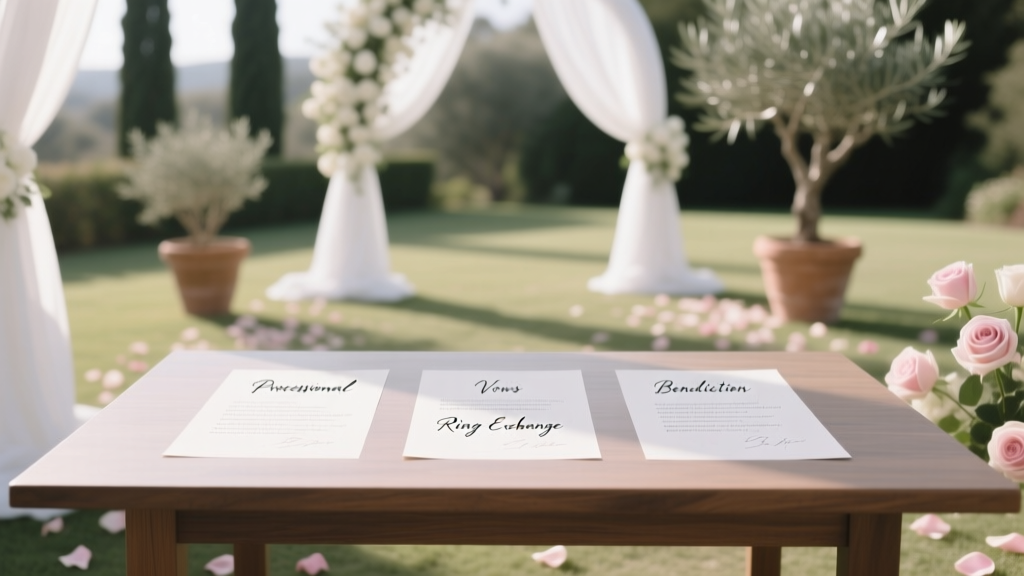
How to Plan a Wedding Ceremony Script
You’ve booked a venue, chosen a date, and started picturing that moment you walk in and see each other. Then reality hits: what will actually be said during the ceremony? If you’re feeling a mix of excitement and pressure, you’re not alone. A wedding ceremony script can feel surprisingly personal—because it is. It’s the spoken story of your relationship, your values, and your promises.
The good news: you don’t need to be a writer to create a ceremony that feels meaningful and “so you.” With a solid plan, a few thoughtful choices, and the right timeline, you can shape a wedding ceremony script that flows beautifully, fits your crowd, and reflects the tone of your day—whether that’s formal, modern, spiritual, or totally relaxed.
This guide walks you through the process step-by-step, with real-world examples, budget-friendly options, and wedding planner pro tips to keep everything calm and organized.
What a Wedding Ceremony Script Is (and Why It Matters)
A wedding ceremony script is the outline (and often the word-for-word text) of what happens and what’s said during your ceremony. It typically includes:
- Processional order
- Welcome and opening remarks
- Reading(s) or personal story
- Declaration of intent (“Do you take…?”)
- Vows (personal or traditional)
- Ring exchange wording
- Unity ritual (optional)
- Pronouncement and first kiss
- Recessional
When the script is well planned, your ceremony feels smooth and intentional. When it’s rushed or unclear, it can create awkward pauses, missed cues, or moments that don’t sound like you.
Step-by-Step: How to Plan Your Ceremony Script
Step 1: Decide the Ceremony Style (Religious, Secular, Interfaith, or Blended)
Start with the big picture: what type of ceremony are you having? This affects what’s required and what’s flexible.
- Religious ceremony: Often follows a set format. Ask your officiant for guidelines early.
- Secular ceremony: More freedom with wording, readings, and structure.
- Interfaith ceremony: Combines traditions; benefits from a clear plan so both families feel included.
- Cultural ceremony elements: May include tea ceremony, lazo/arras, jumping the broom, or other rituals.
Real-world scenario: If one of you is Catholic and the other isn’t religious, you might choose a ceremony that includes a short blessing and a reading from Corinthians, but keeps the rest secular with personal vows and a unity candle.
Step 2: Choose (and Brief) Your Officiant
Your officiant is more than a speaker—they’re your guide for pacing, tone, and legal requirements. Whether you hire a professional officiant or ask a friend to get ordained, schedule a planning call.
Officiant briefing checklist:
- Pronunciation of names (and any cultural terms)
- Your preferred tone: funny, heartfelt, formal, minimalist
- Any “no-go” topics (ex: exes, family drama, religion)
- Whether guests will be invited to respond (“We do,” blessings, prayers)
- Mic needs and speaking style (projecting vs. mic-dependent)
- Legal requirements in your state/country (timing, witnesses, license signing)
Budget tip: A professional officiant often costs more than a friend, but they usually bring scripting expertise, rehearsal leadership, and calm. If you’re saving money by asking a friend, consider paying for a one-hour coaching session with a pro officiant to review the script.
Step 3: Set the Ideal Ceremony Length
Most couples are happiest with a ceremony that feels meaningful but doesn’t drag. A sweet spot for many weddings is 15–25 minutes, depending on readings and rituals.
Quick timing guide:
- Welcome + intro: 2–3 minutes
- Reading(s): 2–6 minutes total
- Story + address: 3–6 minutes
- Vows: 2–5 minutes
- Rings + pronouncement: 2–3 minutes
- Unity ritual (optional): 2–5 minutes
Real-world scenario: If you’re planning an outdoor summer ceremony at 4 pm, keeping it closer to 15–18 minutes can help guests stay comfortable in the heat and keep your timeline on track for photos and cocktail hour.
Step 4: Build Your Ceremony Outline (The Flow)
Before writing word-for-word text, create a clean outline. Here’s a common wedding ceremony order that works for most modern celebrations:
- Pre-ceremony music + guest seating
- Processional
- Welcome and opening remarks
- Optional: acknowledgment of loved ones, moment of silence
- Reading(s) (optional)
- Officiant story/message
- Declaration of intent
- Vows
- Ring exchange
- Optional unity ritual or cultural tradition
- Pronouncement
- First kiss
- Recessional
Pro tip: Put the most emotionally intense moment (usually vows) after everyone is settled and you’ve done any readings. Avoid placing long readings after vows—people mentally “wrap up” once vows are done.
Step 5: Write the Key Script Sections (With Sample Wording)
You don’t need a novel. You need wording that sounds natural when spoken out loud. Read everything aloud as you draft.
1) Welcome and Opening Remarks
Keep this warm, inclusive, and brief. The officiant can set the tone and acknowledge why everyone is there.
Example (modern + warm):
“Welcome, everyone. Thank you for being here to celebrate [Name] and [Name]. Your presence means the world to them, and it’s an honor to share this moment together.”
2) The Couple’s Story (Officiant Address)
This can be a short story about how you met, what you admire in each other, and what marriage means to you.
Scenario tip: If one partner hates being the center of attention, ask the officiant to keep the story to 2–3 minutes, focusing on shared values rather than embarrassing anecdotes.
3) Declaration of Intent (“I Do” Moment)
This is often required for legal reasons. It can be traditional or personalized.
Example (traditional):
“Do you, [Name], take [Name] to be your lawfully wedded [husband/wife/spouse], to love and to cherish…?”
Example (modern):
“Do you choose [Name] today and every day, promising to support them, challenge them, and love them through all seasons of life?”
4) Vows (Personal vs. Traditional)
Personal vows are often the most memorable part of the ceremony—but they don’t need to be perfect. They need to be honest.
If you’re writing personal vows, use this simple structure:
- What you love about them
- What you promise (3–6 promises)
- What you’re looking forward to building together
Practical vow-writing rules that prevent stress:
- Aim for 60–90 seconds each (about 150–250 words)
- Agree on tone (serious, light humor, romantic)
- Agree on format (repeat-after-me, read from cards, or memorized)
- Set a deadline (at least 2 weeks before the wedding)
Pro tip: If you’re worried one of you will write a full speech and the other will write three sentences, agree on a word count range.
5) Ring Exchange
Ring wording is short but powerful. Decide if you want repeat-after-me lines or a simple exchange.
Example (repeat-after-me):
“[Name], I give you this ring as a symbol of my love. I choose you today and always.”
6) Optional Unity Rituals (Choose One That Fits You)
Unity rituals can be lovely, but only include one if it genuinely resonates. Popular options:
- Unity candle: Classic, best indoors or wind-protected.
- Sand ceremony: Great for blended families; visually strong.
- Handfasting: Symbolic and beautiful in outdoor/boho weddings.
- Wine box: Seal letters + wine to open on an anniversary.
- Jumping the broom: Meaningful cultural tradition for many couples.
Budget note: Unity ceremonies can be done affordably (often under $50) with simple supplies, but custom items (engraved boxes, premium candles) can add up. If you’re trimming expenses, prioritize what guests will see and what matters emotionally, not what looks trendy online.
Step 6: Plan the Processional and Recessional Like a Timeline Pro
This is where ceremonies often get chaotic—music cues, walking order, and where people stand. Lock this in early and share it with your coordinator, DJ/band, and officiant.
Common processional orders:
- Traditional: grandparents → parents → wedding party → flower girl/ring bearer → bride (or one partner) with escort
- Modern: both partners enter separately, or enter together
- Inclusive: parents escort partners, or chosen family escorts
Pro tip: Choose a walking pace song that’s not too fast. If you love a short song, ask your musician/DJ to loop it.
Step 7: Confirm Legal Requirements and Logistics
Even the most personal ceremony still needs to meet legal standards. Requirements vary by location, so confirm these items with your officiant (and your local county clerk, if applicable):
- Marriage license pickup timing and expiration
- Whether witnesses are required
- Exact names needed (match IDs)
- When and where the license will be signed (after ceremony is common)
- Who is responsible for mailing/returning the license
Timeline advice: Assign one responsible person (planner, coordinator, or a very organized friend) to hold the marriage license on the wedding day. Do not toss it in a getting-ready bag and hope for the best.
Suggested Ceremony Planning Timeline (So You’re Not Writing at Midnight)
- 3–6 months before: Choose officiant, discuss ceremony style and must-haves
- 2–3 months before: Decide on readings, unity ritual, and general outline
- 6–8 weeks before: Draft script v1 (officiant + you); select processional/recessional songs
- 4 weeks before: Finalize ceremony script and processional order; print vow cards
- 1–2 weeks before: Ceremony rehearsal; confirm mic/sound; final script sent to all key vendors
- Wedding week: Pack rings, vow books, license; confirm who holds what
Real-World Ceremony Script Examples Couples Relate To
Example 1: Short and Sweet (Courthouse Feel, But Prettier)
- Welcome (1 min)
- Brief message (2 min)
- Declaration of intent (1 min)
- Short personal vows (2 min)
- Ring exchange (1 min)
- Pronouncement + kiss (1 min)
Best for: couples who want a simple wedding ceremony script, elopement-style weddings, or tight venue time slots.
Example 2: Family-Focused Blended Family Ceremony
- Welcome + acknowledgment of children
- Reading by a family member
- Couple vows + family vows (everyone promises support)
- Sand ceremony including children
- Pronouncement
Best for: couples combining households who want children included in a meaningful, age-appropriate way.
Example 3: Interfaith Ceremony That Feels Balanced
- Welcome
- Short blessing from tradition A
- Reading from tradition B (or a shared spiritual text)
- Officiant message on shared values
- Vows + rings
- Closing blessing
Best for: couples honoring both families without making the ceremony feel like a full service for either faith.
Common Mistakes to Avoid (and How to Fix Them)
- Writing a script that looks great on paper but sounds stiff out loud.
Fix: Read it aloud. If you wouldn’t say it in real life, rewrite it. - Making the ceremony too long “because guests expect it.”
Fix: Choose one reading and one ritual max. Keep stories focused. - Unclear cues for music and movement.
Fix: Add stage directions to the script (e.g., “Music fades,” “Wedding party enters,” “Pause for rings”). - Surprising your officiant with last-minute changes.
Fix: Lock the final ceremony script at least 2 weeks before the wedding. - Forgetting microphone and sound planning.
Fix: If your guest count is over ~30, assume you need amplification—especially outdoors.
Wedding Planner Pro Tips for a Smooth Ceremony
- Print three copies of the ceremony script: officiant, coordinator, and DJ/band. Add large font and clear spacing.
- Make vow delivery stress-proof: Put vows on sturdy cards (not your phone). Phones lock, dim, and disappear.
- Plan for emotions: Add intentional pauses. Your officiant can say, “Take a moment and look at each other.”
- Assign ring responsibility: Best person, maid of honor, or officiant—one person only.
- Do a “mic check” during rehearsal: Confirm where the officiant stands and how close they need to be.
- Budget smart on the ceremony: If you’re choosing where to spend, prioritize audio (mics/speakers) and officiant experience over extra decor guests won’t remember.
FAQ: Wedding Ceremony Script Planning
How long should a wedding ceremony be?
Most couples aim for 15–25 minutes. If you’re including multiple readings, cultural traditions, or a longer religious format, 30–45 minutes can be normal. Outdoors or in hot weather, shorter is often more comfortable.
Do we need to write the ceremony script ourselves?
No. Many officiants provide a template and customize it with your story, readings, and vows. You can be as hands-on or hands-off as you want, as long as you review and approve the final wording.
Can we do personal vows and still keep the ceremony short?
Yes—keep vows around 60–90 seconds each and choose one reading (or skip readings altogether). Personal vows don’t have to be long to be powerful.
What if we don’t want anything religious, but our families do?
You can include a brief blessing, a moment of gratitude, or a reading that feels spiritual without being tied to a specific religion. Another option is to invite a family member to do a short blessing at the reception instead of during the ceremony.
Should we include humor in the ceremony script?
Light humor works best when it’s kind, inclusive, and brief. Avoid inside jokes that leave guests confused or stories that could embarrass either partner. When in doubt, keep the ceremony warm and save bigger laughs for speeches.
When do we rehearse the ceremony?
Typically 1–2 days before the wedding (often at the rehearsal). Even a quick 20-minute run-through helps everyone understand walking order, spacing, and cues—especially if you have a large wedding party or multiple readers.
Your Next Steps: Turn This Into a Script You’ll Love Hearing Out Loud
If you want a ceremony that feels effortless on the day, keep it simple: choose your ceremony style, lock in the outline, write (or approve) the key wording, and share the final script with your vendor team. Give yourselves enough time to practice once—then let it be. The most memorable ceremonies aren’t perfect; they’re honest.
Save this page, start a shared document with your officiant, and set two deadlines: one for the first draft and one for the final script. Your future selves will be so grateful.
Looking for more planning support? Explore more wedding ceremony and reception planning guides on weddingsift.com to keep every step clear, calm, and truly yours.
More Articles
 Wedding Veil Trends: What Brides Choose in 2026
 Celtic Wedding Knot: Easy Step-by-Step Guide (2026)
 Wedding Favors: Worth It in 2026? Real Couple Data
 Diamond Wedding Rings: Real Prices & Save $2,800 (2026)
 Wedding Bands: How Many Do You Really Need? (2026)
 Sims 4 Wedding Guide: No Mods, Real-Time Success (2026)
 Men's Wedding Attire: 7-Second Dress Code Decoder (2026)
 When to Make a Wedding Bouquet (2026)
 Spanish Wedding Vows: Authentic, Culturally Grounded Guide
 How Much to Put in a Wedding Card (2026)