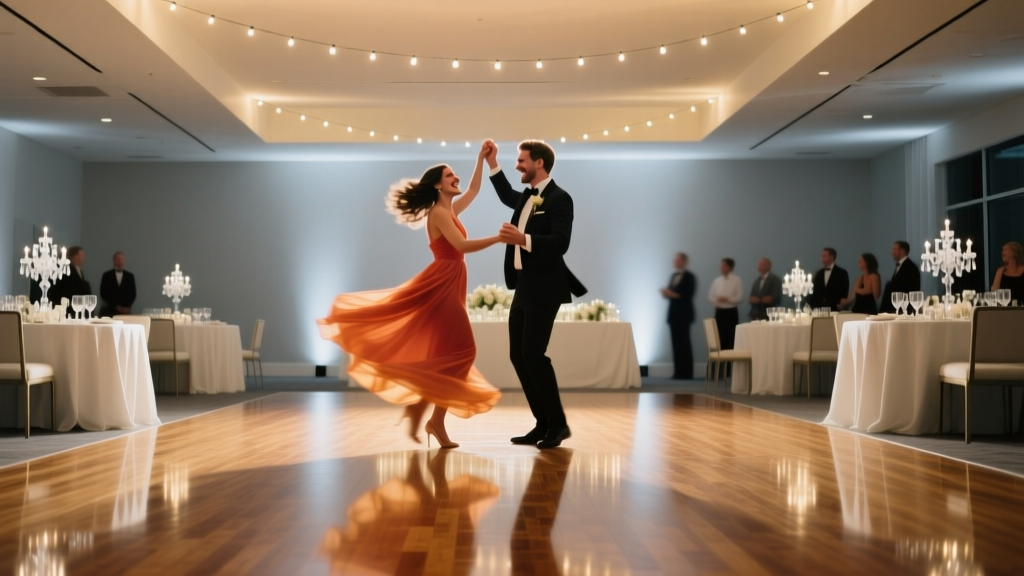
How to Plan a Wedding With a Dance Floor That Packs
You know the feeling you want: the lights dim, your favorite song comes on, and suddenly the room shifts. Aunties are laughing, your college friends are singing every lyric, your partner pulls you in for a spin, and the dance floor becomes the place everyone wants to be. That kind of packed dance floor doesn’t happen by accident—it’s the result of thoughtful planning that still feels effortless on the day.
If you’re worried your guests “aren’t dancers,” or you’ve been to weddings where the dance floor looked lonely, you’re not alone. The good news is that you can create a wedding reception that feels full, fun, and inclusive—whether your crowd loves club hits, country two-step, Bollywood bangers, or throwback Motown.
This guide walks you through the exact decisions that make the biggest difference: music, layout, timing, lighting, flow, and the small cues that gently nudge guests from their seats to the center of the party.
Start With the People: Who’s Coming and What Will Get Them Moving
A packed dance floor is really a packed “comfort zone.” People dance when they feel like the music is for them, the space is welcoming, and they won’t be stranded out there alone.
Create Your “Dance Floor Profile”
Before you pick a DJ or build a playlist, answer these questions together:
- Guest mix: How many guests are under 30, 30–50, 50+?
- Culture and traditions: Are there must-play genres (Afrobeats, bhangra, cumbia, line dances, Greek favorites)?
- Energy style: Do you want “big party” all night, or waves of dancing with breathing room for conversation?
- Non-dancers: Who will need a little encouragement (shy coworkers, older relatives, plus-ones who don’t know many people)?
Real-world scenario
Mixed crowd wedding: Your friends want current pop and EDM, your parents want ’80s and Motown, and your partner’s family loves Latin music. A great DJ can blend: start with familiar classics early, then build into modern hits, and sprinkle cultural favorites every 3–4 songs to keep different groups returning to the floor.
Choose the Right Music Setup: DJ vs. Band vs. Hybrid
Music is the biggest driver of dance floor success, but the “best” choice depends on your venue, budget, and crowd.
DJ: Most flexible, usually best value
- Pros: Quick genre changes, seamless transitions, lower space needs, often more budget-friendly.
- Best for: Diverse guest lists and couples who want club-style energy.
Live band: Big energy, big presence
- Pros: Live performance elevates the vibe; great for classics and singalongs.
- Trade-offs: Less flexible across niche genres; breaks can empty the floor unless managed well.
Hybrid options that pack the floor
- DJ + live sax/drummer: A popular way to get “live” hype without losing playlist flexibility.
- Band for dinner + DJ for dancing: Smooth, upscale, and keeps dance sets consistent later.
Budget considerations (typical ranges vary by region)
- DJ: Often mid-range and scalable based on hours, lighting, and experience.
- Band: Usually higher due to multiple musicians, sound needs, and travel.
- Hybrid: Can be comparable to a band or higher depending on talent and equipment.
Planner tip: If your budget is tight, invest in the best DJ you can afford and skip extras you won’t notice (like a photo montage on a projector). A talented DJ who reads the room is worth more than fancy add-ons.
Hire Entertainment That Can Read a Room (Not Just Press Play)
When couples say, “We want a packed dance floor,” they usually mean: great song choices, smooth transitions, and the ability to pivot when the crowd shifts.
Questions to ask DJs and bands
- How do you handle a mixed-age crowd?
- Do you take requests? How do you filter them so the vibe stays consistent?
- What’s your approach to keeping the dance floor full (set length, pacing, genre mixing)?
- Can you share a sample set list from a wedding with a similar vibe to ours?
- How do you announce events (first dance, cake cutting) without killing the energy?
Must-have music planning tools
- “Must play” list: 10–20 songs you love.
- “Do not play” list: Be specific (songs, artists, explicit versions).
- “If you need to fill the floor” list: 10 reliable crowd-pleasers across generations.
Real-world example: If your friends love dance music but your family prefers classics, your “fill the floor” list could include “September,” “I Wanna Dance with Somebody,” “Uptown Funk,” “Dancing Queen,” and one or two cultural staples that reliably bring your people out.
Design the Reception Layout So Dancing Feels Inevitable
Even great music can’t overcome a layout that hides the dance floor or makes it awkward to join. The best reception flow makes dancing the natural next step.
Dance floor placement rules
- Put the dance floor near the bar: People naturally drift between the two.
- Keep it visible from most tables: Guests are more likely to join when they can see others having fun.
- Avoid dead corners: A dance floor tucked away feels optional (and emptier).
- Use lighting to “frame” the party zone: It signals where the fun is.
How big should your dance floor be?
It’s tempting to go huge, but an oversized dance floor looks empty fast. Aim for a size that looks full with 30–50% of guests dancing at peak moments.
- Smaller guest counts (50–80): Keep it cozy; a compact floor creates instant energy.
- Mid-size (90–150): Medium floor with room for circles and groups.
- Larger (150+): Consider a larger floor, but avoid placing it too far from the action.
Planner tip: If you’re between sizes, choose slightly smaller. A “full” dance floor looks better in photos and feels more exciting.
Build a Reception Timeline That Protects the Party
One of the biggest reasons dance floors die: too many interruptions, long gaps between high-energy moments, or starting dancing too late when guests are tired.
A sample timeline that keeps momentum
- Grand entrance (optional): Quick and upbeat.
- First dance: Right after entrance, while attention is high.
- Parent dances (if doing them): Keep them back-to-back and short.
- Open dance set #1 (15–25 minutes): Get people out early.
- Dinner: Let guests refuel and mingle.
- Toasts: Limit to 2–3 speakers, 2–3 minutes each.
- Open dance set #2 (30–45 minutes): This is usually peak energy.
- Cake cutting/dessert (optional): Keep it quick or do it during a natural lull.
- Open dance set #3: End with your biggest hits.
- Last song: Choose a singalong or anthem that pulls everyone in.
Checklist: Keep the dance floor full all night
- Start open dancing before dinner or immediately after toasts.
- Bundle “formal moments” together so guests aren’t constantly sitting and standing.
- Avoid long room flips or surprise delays between dinner and dancing.
- Plan 2–3 high-energy “anchors” (a group dance, a cultural set, a hype song) at strategic points.
Common mistake: Pushing dancing to the very end because you want more time for photos, long toasts, or extended dinner courses. Guests often dance best when they’re not too full and not too tired.
Use Lighting, Sound, and Details That Make People Want to Stay
A packed dance floor is sensory. It should feel different from dinner—more intimate, more electric, and a little “nighttime.”
Lighting upgrades that matter
- Dim the room: Bright overhead lighting makes people self-conscious.
- Uplighting: Transforms plain walls and adds warmth.
- Dance lighting: Moving lights or wash effects create a party look without feeling like a nightclub (unless you want that).
- Spotlight for first dance: Helps guests focus and makes photos pop.
Sound: clear, balanced, not painful
- Ask your DJ/band how they adjust volume throughout the night.
- Make sure speakers are placed so the dance floor is loud enough, but tables can still talk.
- If your venue has strict noise rules, plan for earlier peak dancing and ask about sound limiters.
Small touches that keep guests on the floor
- Comfort station: Flip-flops or heel protectors near the dance floor.
- Late-night snack: Something salty that keeps energy up.
- Water access: A visible water station prevents people from disappearing too long.
- Photo booth placement: Near (not on) the dance floor so it adds energy rather than stealing it.
Plan the Music Like a Party DJ Would (Pacing, Not Just Favorites)
Even if you’re choosing songs you love, the order matters. A packed dance floor usually comes from waves: build, peak, breathe, build again.
A simple pacing formula
- Warm-up (early): Familiar, medium-tempo songs people can sing to.
- Peak (middle): High-energy hits, group dances, remixes if your crowd likes them.
- Breathers: One slower song or throwback every 6–8 songs so people can reset without leaving.
- Final push: Biggest anthems and singalongs to end strong.
Pro tip: Create “dance floor magnets”
These are songs that reliably pull people from their chairs. Think:
- Group dances (if your crowd enjoys them)
- Era classics (’90s/2000s throwbacks are often gold)
- Cultural favorites that bring a specific group to the floor instantly
- A “friend group anthem” that signals, “Okay, we’re doing this!”
Make It Easy for Shy Guests to Join In
Not everyone wants to be first on the floor. Your job (and your DJ’s job) is to make joining feel safe and natural.
Strategies that work
- Open the dance floor with a group moment: After your first dance, invite wedding party and close family to join for one upbeat song.
- Use circles and line dances thoughtfully: They can be inclusive, but don’t overdo them.
- Seat “fun starters” near the dance floor: The people who love to dance should have easy access.
- Keep couples together: If many guests are couples, mix in songs they’ll dance to together.
Real-world scenario
Introverted crowd: You’re hosting lots of coworkers and family friends. A great approach is starting with universally known songs (think upbeat classics) and keeping the lighting a bit dimmer. People dance more when they feel less “on display.”
Common Mistakes to Avoid (And What to Do Instead)
- Mistake: Oversized dance floor that looks empty.
Do instead: Size it so it looks full at 30–50% participation. - Mistake: Too many slow songs early.
Do instead: Save slow songs for strategic breathers or late-night moments. - Mistake: Toasts that run long and kill momentum.
Do instead: Cap speeches and place them before a strong dance set. - Mistake: Bright house lights all night.
Do instead: Transition lighting from dinner ambiance to dance party mode. - Mistake: Letting requests derail the vibe.
Do instead: Tell your DJ to accept requests but prioritize flow and your “do not play” list.
Quick Planning Checklist: Packed Dance Floor Edition
- Define your crowd’s top 3 genres and “no thanks” list.
- Hire a DJ/band with proven wedding reception experience.
- Design a layout with the dance floor near the bar and in clear view.
- Choose a dance floor size that will look full at peak moments.
- Build a timeline with early open dancing and minimal interruptions.
- Plan lighting that shifts the room into party mode.
- Prepare “dance floor magnets” and a short list of must-plays.
- Add guest-friendly extras: water, shoe relief, late-night snack.
FAQ: Planning a Wedding Reception With a Great Dance Floor
How do we keep the dance floor full if our guests “don’t dance”?
Focus on familiarity and comfort: start with universally known songs, keep lighting dimmer, and open dancing with a group moment so no one feels like the first person out there. Also, plan a few interactive songs (line dances or cultural favorites) that feel more like a shared activity than “performing.”
Is a DJ or a band better for a packed dance floor?
For most mixed crowds, a DJ is the safest bet because they can pivot quickly and blend genres. Bands bring amazing energy, especially for classics and singalongs, but you’ll want a plan for band breaks (or consider a band + DJ hybrid).
When should we do the first dance to help the party vibe?
Often, right after your grand entrance works beautifully—everyone’s attention is on you, and it transitions naturally into opening the dance floor. If you prefer to wait until after dinner, keep the gap short and go directly into upbeat songs.
How many songs should be on our must-play list?
Aim for 10–20 must-plays and 10 or so “if you need to fill the floor” songs. Too many must-plays can limit your DJ’s ability to read the room, which is one of the keys to a full dance floor.
What’s the biggest budget-friendly upgrade for dancing?
Lighting. Even a modest uplighting package and turning down bright overhead lights can completely change how comfortable guests feel dancing. If you have extra budget beyond that, prioritize a skilled DJ over extra décor.
What if our venue has noise restrictions?
Ask early about decibel limits and cutoff times. Plan for an earlier dance peak, keep speakers positioned toward the dance floor (and away from doors/windows), and consider silent disco as a creative option if your venue allows it.
Your Next Steps (So Your Dance Floor Feels Full and Fun)
Pick one action to do this week:
- Draft your must-play and do-not-play lists (keep them short and clear).
- Review your reception timeline and group all formal moments together.
- Sketch your layout: dance floor near bar, visible from tables, no awkward corners.
- Get quotes from DJs/bands and ask specifically how they keep the dance floor packed.
You don’t need a nightclub budget or a crowd of professional dancers to have an incredible party. You just need intentional choices that make people feel comfortable, included, and excited to join in.
Want more reception planning help? Explore more practical planning guides on weddingsift.com—we’re here to help you build a day that feels like you, right down to the last song.
More Articles
 Linen Napkin Folds for Weddings: 7 Elegant & Secure (2026)
 Can You Wear Black to a Christian Wedding? (2026)
 How to Write a Wedding Song: A Non-Musician’s Guide
 Average Wedding Gift Cost in 2026
 Wedding Dance Steps for Non-Dancers (2026)
 Sister Wedding Gift: How Much to Give (2026)
 Cheap But Classy Wedding: 7 Ways to Save $8,200+ (2026)
 What to Get for Wedding Anniversary (2026)
 Wedding Arrival Time: When to Get There by Venue & Role
 Wedding Registry Sharing: 7 Mistakes to Avoid (2026)