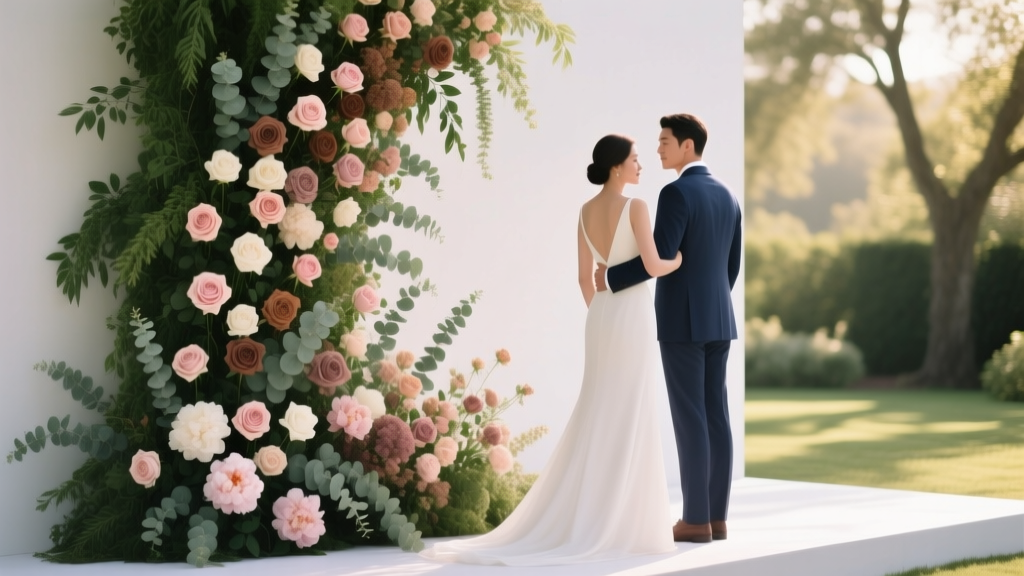
How to Plan a Wedding With a Flower Wall
You’ve probably seen it: a lush flower wall behind a sweetheart table, a soft cascade of blooms framing vows, or a stunning backdrop where guests line up all night for photos. A flower wall isn’t just “pretty decor.” It’s a mood-setter, a focal point, and one of the easiest ways to make your wedding feel thoughtfully styled without over-decorating every corner.
If you’re engaged and juggling a hundred decisions (venue, budget, guest list, family opinions), adding a flower wall can feel like one more thing. The good news: once you know why you want it and where it will make the biggest impact, planning becomes straightforward—and honestly fun.
This guide walks you through choosing the right flower wall style, budgeting realistically, coordinating vendors, and building it into your wedding day timeline. You’ll also get real-world scenarios, planner pro tips, and a checklist to keep you organized from start to “that photo booth line is still going.”
What a Flower Wall Does for Your Wedding (Beyond Looking Amazing)
A wedding flower wall can serve multiple purposes—sometimes three or four at once—which is why it can be a smart investment.
- Creates a focal point: Anchors the design of your ceremony, reception, or photo area.
- Upgrades photos instantly: Your photographer gets a consistent, flattering background for portraits.
- Adds “wow” without extra clutter: One statement installation can reduce the need for lots of small decor pieces.
- Improves guest flow: A defined photo moment keeps guests entertained during cocktail hour or after dinner.
- Bridges awkward spaces: Covers blank walls, service doors, or less-photogenic venue features.
Step 1: Decide the Purpose (Ceremony, Reception, Photo Booth, or All Three)
Before you pick colors or flowers, decide what job your flower wall is doing. This single step prevents the most common mistake: ordering a gorgeous wall that ends up in the wrong spot, the wrong size, or with the wrong lighting.
Most popular flower wall placements
- Ceremony backdrop: Behind the couple or framing an arch. Best for emotional impact and vow photos.
- Sweetheart table backdrop: Focuses attention on the couple and elevates reception photos.
- Head table backdrop: Great for large bridal parties, but requires a longer wall.
- Photo booth / guest photo area: Creates an interactive moment and encourages guest content.
- Welcome moment: Near the entrance with signage (perfect for first impressions and late arrivals).
Real-world scenarios couples relate to
- Small wedding, big impact: A 40-guest garden wedding uses one flower wall behind the ceremony and then moves it to the sweetheart table for dinner.
- Ballroom with blank walls: A couple rents a soft white-and-green wall for a photo area to “warm up” a large, neutral space.
- Outdoor ceremony with wind risk: Instead of a tall freestanding wall, they use a low floral meadow plus a partial wall on a weighted base near the photo booth.
Step 2: Choose the Right Type of Flower Wall
There are three main categories: fresh, faux, and mixed. Your budget, climate, and style will point you in the right direction.
Fresh flower wall
- Best for: Luxury look, fragrance, organic texture, close-up photos.
- Watch for: Higher cost, labor time, wilting in heat, and limited reusability.
- Pro tip: Ask your florist about “fresh clusters on a greenery base” for a similar vibe at a lower price.
Faux flower wall (silk/foam)
- Best for: Predictable cost, durability, outdoor heat, reusability, rentals.
- Watch for: Some faux walls photograph flat if the florals are low quality.
- Pro tip: Request close-up photos and videos in natural light. High-quality faux looks incredible on camera.
Mixed wall (faux base + fresh accents)
- Best for: A “wow” look without full fresh-flower pricing.
- Watch for: Coordination between rental company and florist (or one vendor who handles both).
- Pro tip: Use fresh accents where people are closest—around signage or at face height for photos.
Step 3: Pick the Size, Shape, and Coverage Level
Size is where budget meets reality. A wall can be a full “carpet of blooms” or a more airy, modern design with intentional negative space.
Common wedding flower wall sizes
- 6' x 6' (small square): Best for intimate weddings, sweetheart table, or a compact photo moment.
- 8' x 8' (standard statement): Great for photo backdrops and ceremony focal points.
- 8' x 10' or 10' x 10' (large impact): Works for big guest counts and wide camera angles.
- Custom length (12'+): Head tables and large ballroom stages.
Coverage options (and what they cost)
- Full coverage: Dense blooms edge-to-edge (most expensive, most dramatic).
- Gradient or ombré: Concentrated blooms at top/sides with softer fill elsewhere.
- Asymmetrical floral “moments”: Big clusters with greenery and open areas—very on-trend and often more budget-friendly.
Step 4: Budget for the Flower Wall (Realistic Ranges + Hidden Costs)
Costs vary widely based on location and style, but you can plan confidently with ranges and line items.
Typical price ranges
- Faux flower wall rental: $250–$900+
- Mixed wall (rental + fresh accents): $500–$1,500+
- Fresh flower wall: $1,500–$5,000+ (can be higher for large custom builds)
Don’t forget these add-ons
- Delivery + setup + breakdown fees
- Structural frame / stand rental (especially for freestanding walls)
- Weights/sandbags for safety outdoors
- Lighting (uplights or a soft spotlight can transform the look)
- Signage (acrylic welcome sign, neon sign, monogram)
- Second move fee if repurposing from ceremony to reception
Budget-smart strategies
- Choose one “hero” installation: One flower wall can replace multiple smaller decor purchases.
- Repurpose it: Ceremony backdrop → sweetheart table backdrop → photo wall.
- Use a partial wall: A 4' x 8' panel plus drape or greenery can look intentional and elevated.
- Go neutral on the wall, add color elsewhere: White/ivory/blush walls are easier to reuse and pair with colorful bouquets.
Step 5: Match the Flower Wall to Your Wedding Style and Color Palette
The flower wall should feel like it belongs in your overall wedding design—not like a random Pinterest moment dropped into the room.
Style pairings that work beautifully
- Modern minimalist: Mostly white blooms + subtle greenery, clean edges, maybe a simple neon sign.
- Romantic garden: Soft pastels, layered textures, trailing greenery, airy asymmetry.
- Classic ballroom: Ivory/cream with roses and hydrangea look-alikes; add warm uplighting.
- Moody and dramatic: Deep reds, plum, or rust accents; consider a darker base or mixed greenery.
- Boho: Pampas-inspired textures (faux) with neutral blooms and dried accents.
Pro tip: Design for photos
Ask your photographer what backgrounds photograph best in your venue lighting. A wall that looks soft and dimensional in person can appear flat if it’s under harsh overhead lights. Uplighting or a diffused spotlight fixes this quickly.
Step 6: Build the Flower Wall Into Your Wedding Day Timeline
A flower wall is a “logistics item,” not just decor. Timeline planning prevents rushed setups, blocked doorways, or guests arriving before it’s photo-ready.
Suggested timeline (adjust to your day)
- 8–12 weeks out: Book rental/florist and confirm exact size, color, and placement.
- 6–8 weeks out: Finalize floor plan with your planner/venue. Confirm loading access and setup window.
- 4 weeks out: Confirm lighting plan and whether the wall needs power (for neon signs or uplights).
- 1–2 weeks out: Confirm setup time, who is responsible for moving it (if repurposing), and who signs off at delivery.
- Wedding day: Install early, test lighting, do a quick photo test, then keep the area clear until guests arrive.
Repurposing plan (simple and realistic)
- Option A: Keep it in one place all day (lowest stress).
- Option B: Move once (ceremony → reception). Plan the move during cocktail hour.
- Option C: Move twice (ceremony → sweetheart → photo wall). Only do this with a planner/coordinator and a vendor who agrees in writing.
Step 7: Logistics That Make or Break a Flower Wall
Placement and guest flow
- Leave 3–6 feet in front of the wall for photos and a small “line” area.
- Avoid placing it where it blocks service doors, exits, or bar lines.
- If it’s a photo wall, place it near cocktail hour or the reception entrance so guests naturally see it.
Safety and stability (especially outdoors)
- Use weighted bases and ask the vendor how it’s secured.
- Check wind exposure and ground surface (grass can be uneven).
- Confirm venue rules about attaching to walls or using command strips, nails, or tape.
Lighting checklist
- Indoor: Add uplights behind or beside the wall, or a soft spotlight angled down.
- Outdoor daytime: Ensure the wall won’t be in harsh direct sun (squinting + shiny faux florals).
- Outdoor evening: Bistro lights, a pin spot, or LED uplights keep it photo-friendly.
Flower Wall Planning Checklist (Copy/Paste Friendly)
- Choose purpose: ceremony / sweetheart / head table / photo booth / welcome
- Decide: fresh vs faux vs mixed
- Confirm size and coverage level
- Get a quote including delivery, setup, breakdown, and any move fees
- Confirm placement on the floor plan + allow space for a photo line
- Plan lighting (uplights/spotlight) and power needs
- Select add-ons: signage, neon sign, monogram, floral accents
- Assign responsibility: who approves setup and who coordinates moves
- Schedule a quick “photo test” when the wall is installed
Common Mistakes to Avoid (and How Planners Prevent Them)
- Mistake: Choosing a wall that’s too small for the space.
Fix: Ask for a mock floor plan or photos of the wall used in similar venues. - Mistake: Underestimating setup time and access restrictions.
Fix: Confirm loading dock access, elevator use, and setup window with the venue. - Mistake: Placing the wall under unflattering lighting.
Fix: Budget $50–$300 for basic lighting—it’s worth it for photos. - Mistake: Not planning for guest traffic.
Fix: Keep the wall away from bottlenecks (bar, bathrooms, buffet). - Mistake: Repurposing without a plan or labor.
Fix: If moving it, put it in the vendor contract and assign a coordinator to cue the move.
Wedding Planner Pro Tips for a Next-Level Flower Wall
- Layer textures: Even faux walls look luxe when you add a few fresh accents (sprays, orchids, roses) at the edges.
- Add a “moment,” not just a wall: A small rug, velvet rope stanchions, or a cute sign (“Meet the Newlyweds”) makes it feel intentional.
- Think about height: If you’re tall or your wedding party is tall, go for an 8' wall so heads don’t float above the florals in photos.
- Ask for a sample panel: Many vendors can show a close-up section so you can approve color and density.
- Plan a 5-minute photo window: Ask your coordinator to pull you for a few “just married” portraits at the wall before guests crowd in.
FAQ: Planning a Wedding With a Flower Wall
How far in advance should we book a flower wall?
For peak wedding season, aim for 2–4 months ahead for rentals and 3–6 months for custom fresh flower walls. If you’re getting married on a popular date, earlier is better.
Is a flower wall cheaper than a traditional floral arch?
Sometimes. A rental faux flower wall can be more budget-friendly than a large fresh floral arch. A custom fresh flower wall is typically more expensive than many arches because of bloom quantity and labor.
Can we DIY a flower wall?
Yes for smaller, simpler designs—especially faux panels. Plan realistically for time, transport, and setup. If you DIY, do a test build at home and assign two reliable helpers for setup so you’re not troubleshooting on your wedding day.
What size flower wall works best for guest photos?
An 8' x 8' wall is a strong standard for a photo backdrop. If you expect lots of group shots (friends, families), consider wider options like 8' x 10' so people aren’t squeezed.
Will a flower wall work outdoors?
Absolutely, with the right prep. Use a sturdy frame, add weights, avoid high-wind areas, and consider faux or mixed designs for hot weather so it stays photo-ready.
How do we make sure it matches our wedding colors?
Bring your vendor a simple color reference: a palette with 3–5 colors and one or two inspiration photos. If exact matching matters (like dusty blue or terracotta), ask for a sample or close-up photos taken in natural light.
Your Next Steps
If you’re ready to plan a wedding with a flower wall, start with the easiest win: choose the one place it will have the biggest impact (ceremony, sweetheart table, or photo area), then work backward into size, style, and budget. Once the wall has a clear purpose and a clear plan, the rest of your decor decisions tend to fall into place.
Save your favorite inspiration photos, reach out for quotes with your ideal size and placement, and add lighting to your budget so your wall looks as good in photos as it does in person. You’ve got this—and your future selves will be grateful when your gallery is full of gorgeous, consistent backdrops.
Want more practical planning help? Explore more wedding planning guides, décor ideas, and timelines on weddingsift.com.
More Articles
 Are Wedding Websites Worth It? (2026)
 How to Put Time on Wedding Invitation (2026)
 Wedding Planning Vendor Meal Planning Guide
 Do Wedding Licenses Expire? (2026)
 Ritz-Carlton Wedding Cost Breakdown (2026)
 Wedding Dress Underwear: What to Wear (2026)
 How Long Before A Wedding To Send Invitations (2026)
 Wedding Cash Gifts: Average Amounts & Smart Tips (2026)
 Can Parents Be Wedding Witnesses? Legal Facts (2026)
 Wedding Card Box Guide: Setup, Security & Styling