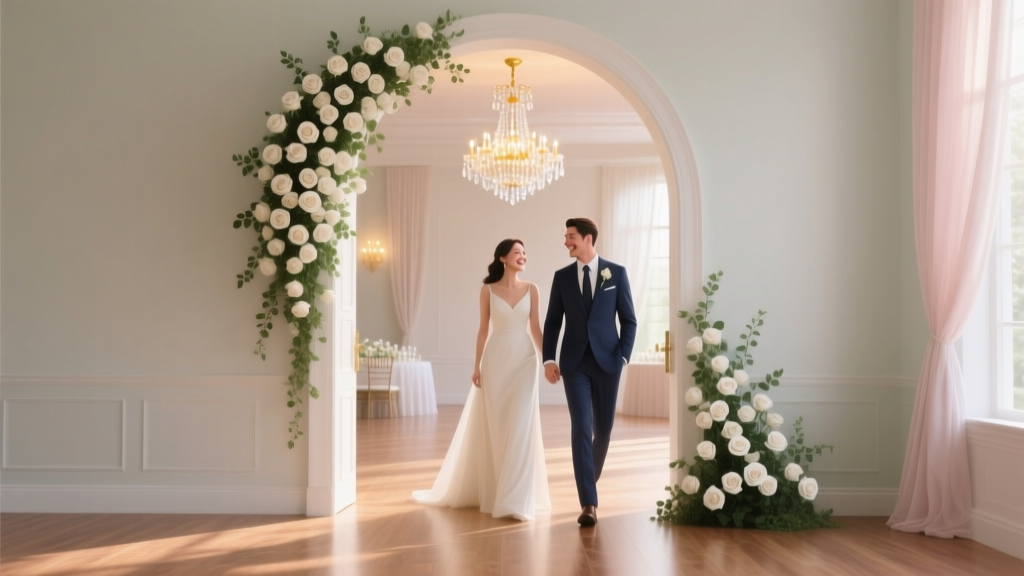
How to Plan a Wedding With a Reception Entrance
You’ve planned the ceremony, chosen the outfits, picked the menu, and then it hits you: the moment you walk into your reception matters just as much as the walk down the aisle. Your reception entrance is the first time you’ll be introduced as newlyweds (or as a married couple celebrating with everyone you love), and it sets the tone for the entire night.
Some couples want a high-energy “everyone on the dance floor” entrance. Others want something soft and romantic that feels true to them. Either way, a great entrance isn’t about doing what’s trending—it’s about creating a moment that feels natural, organized, and fun for you and your guests.
This guide breaks down exactly how to plan a wedding reception entrance—from timeline and music to logistics, budget, and common mistakes—so your grand entrance feels smooth, confident, and memorable.
What a Reception Entrance Actually Is (and Why It Matters)
A reception entrance is the coordinated moment when key people enter the reception space and are introduced—typically by the DJ or emcee. It may happen right after cocktail hour, right before dinner, or after guests are already seated. It can include:
- Parents of the couple (optional)
- Wedding party (optional)
- The couple (usually the final entrance)
Why it matters:
- Energy shift: It transitions guests from mingling to celebrating.
- Photo and video highlight: It’s a natural “big moment” your media team will capture.
- Flow and timing: A well-planned entrance helps your reception timeline run on track.
Step 1: Decide the Vibe You Want (Fun, Formal, or Somewhere Between)
Before you pick a song or plan choreography, decide what you want guests to feel in that first minute.
Choose your entrance style
- Classic + elegant: A simple walk-in to a romantic or upbeat song, wave, quick kiss, then straight into your first dance or welcome toast.
- High-energy: Fast-paced song, big introductions, maybe a quick spin or dip, and guests cheering with napkins or glow sticks.
- Low-key + intimate: No wedding party introductions; you simply enter together, greet the room, then sit for dinner.
- Theme-based: A nod to your favorite movie, sports team, cultural music, or shared hobby—kept tasteful and easy to execute.
Real-world scenarios couples relate to
- “We’re not dancers.” Do a confident walk-in with a short song clip (30–45 seconds), a quick kiss, then move right into dinner.
- “Our families are traditional, but we want fun.” Keep intros formal (names only), then pick an upbeat couple entrance song to lift the mood.
- “We’re doing a small wedding.” Skip the big announcement and do a “welcome moment” where you enter and thank everyone personally.
Step 2: Decide Who’s Being Introduced (and Keep It Simple)
Not every entrance needs a full lineup. The more people included, the more coordination you’ll need—and the more chances things get awkward or delayed.
Common introduction orders
- Parents/guardians (optional)
- Wedding party (optional)
- Couple (nearly always)
Planner-friendly recommendation
- If you want a smoother timeline: introduce only the couple or the couple + maid of honor/best man.
- If you want the classic feel: wedding party enters in pairs, then couple enters last.
Pro tip: If your wedding party is large (10+ people), consider skipping individual intros and bringing everyone in together. It’s faster, less stressful, and still celebratory.
Step 3: Choose the Right Timing in Your Reception Timeline
Your reception entrance works best when it’s placed intentionally. Here are common options and when each makes sense.
Option A: Entrance right after cocktail hour (most common)
- Best for: Keeping momentum and moving guests into dinner.
- Typical flow: Guests seated → introductions → couple entrance → first dance or welcome toast → dinner.
Option B: Couple enters after guests are already eating
- Best for: Couples doing photos during cocktail hour and running behind.
- Watch out for: Less energy—guests may be mid-salad when you arrive.
Option C: Entrance kicks off dancing (after dinner)
- Best for: Couples who want a “club-style” moment with the dance floor reveal.
- Typical flow: Dinner → toasts → couple entrance (re-intro) → first dance → open dance floor.
Sample mini-timeline (smooth and realistic)
- 5:00–6:00 PM: Cocktail hour
- 6:00 PM: Guests invited to take seats
- 6:10 PM: Wedding party + couple reception entrance
- 6:15 PM: First dance (or welcome toast)
- 6:25 PM: Dinner service begins
Budget note: A longer cocktail hour to buy time for photos can increase bar and staffing costs. If you’re trying to stay on budget, focus on efficient photo planning instead of extending the hour.
Step 4: Pick Your Entrance Song (and Edit It on Purpose)
Your entrance song is the emotional “cue” for the room. Choose something you love, but also think about your guests’ experience.
Entrance song checklist
- Energy match: Does it feel like you?
- Clean lyrics: Double-check explicit words and meaning.
- Right length: Aim for 30–60 seconds of the best part.
- Strong intro: Songs with a clear beat drop or chorus hit work well.
Pro tip from planners: Ask your DJ to create an “entrance edit” that starts at the chorus and fades at the right moment. This prevents the awkward “keep walking while the song keeps going” situation.
Scenario: One partner wants hype, the other wants romantic
Compromise by doing a short hype entrance song, then a romantic first dance song right after. Guests get the fun moment, and you still get the intimacy you wanted.
Step 5: Plan the Logistics Like a Pro (So It Looks Effortless)
This is where a reception entrance goes from “cute idea” to “that was seamless.” Think through the physical space, cues, and transitions.
Entrance logistics checklist
- Where are you lining up? Back hallway, side patio, behind a partition—choose a spot that’s close but hidden.
- How are guests positioned? Seated? Standing around the dance floor? Make sure sightlines are good.
- Who cues you? DJ, coordinator, or venue captain should give a clear “30 seconds” heads-up.
- What happens immediately after? First dance, welcome toast, or dinner—decide in advance.
- Photo/video placement: Confirm where your photographer will stand and whether off-camera lighting is needed.
Quick rehearsal (5 minutes, big payoff)
- Walk the route from lineup spot to your “end point” (dance floor center, sweetheart table, etc.).
- Decide if you’re stopping for a kiss, a wave, or a quick spin.
- Practice what you’ll do with your hands (bouquet, holding hands, waving).
- Time it with the music snippet if possible.
Budget consideration: If you don’t have a wedding planner, consider adding a day-of coordinator. Coordinating entrances is a small part of what they do, but it’s one of those moments where professional cueing makes everything feel calm and polished.
Step 6: Decide on “Extra” Moments (Sparklers, Confetti, Props) Carefully
Props can be fun, but they’re also where delays, mess, and venue restrictions show up. If you add extras, keep them controlled.
Popular add-ons (and what to ask first)
- Confetti poppers: Ask the venue about cleanup fees and if confetti is allowed (many ban it).
- Glow sticks or LED foam sticks: Great for high-energy entrances and dance floors; low cleanup.
- Sparklers: Often better for a send-off than an entrance; check fire rules and designate lighters.
- Paper fans or napkin wave: Budget-friendly and easy—tell guests what to do right before you enter.
Pro tip: Assign one person (planner, coordinator, trusted friend) to pass out any props during the “guests take seats” window so your entrance doesn’t stall.
Common Mistakes to Avoid (and How to Fix Them)
- Mistake: The DJ can’t pronounce names correctly.
Fix: Send phonetic spellings (and voice notes if needed) a week ahead. - Mistake: Wedding party doesn’t know what to do once they enter.
Fix: Tell them the end point: “Enter, wave, go to table,” or “Enter and line the dance floor edges.” - Mistake: Entrance takes too long and guests lose energy.
Fix: Shorten intros, introduce groups together, and keep the song clip tight. - Mistake: The couple is missing (bathroom, bustling, photos still happening).
Fix: Build a 10-minute buffer and have a coordinator physically gather everyone before intros. - Mistake: Guests are standing in the entrance path, blocking photos.
Fix: Ask the DJ to make a quick announcement: “Please clear the doorway and face the dance floor.”
Wedding Planner Pro Tips for a Confident, Crowd-Pleasing Entrance
- Put your VIPs at ease: If parents are being introduced, let them know exactly when and how. A quick text the day before helps.
- Don’t over-choreograph: Unless dancing is your thing, keep it simple: walk in, pause, wave, kiss, proceed.
- Use lighting: Ask your DJ about a spotlight or room “warm-up” lighting change during the entrance. It looks great in photos.
- Plan a mic moment: If you want to thank guests, do a 30-second welcome right after the entrance—before dinner service starts.
- Protect your dress and suit: Bustle the dress and check buttons before you line up. This is a high-movement moment.
Reception Entrance Planning Checklist (Save This)
- Choose entrance style (classic, hype, intimate, themed)
- Decide who is introduced (couple only, parents, full wedding party)
- Confirm entrance timing in your wedding reception timeline
- Select entrance song and request a 30–60 second edit
- Write pronunciations for all names and titles
- Confirm lineup location and walking route
- Assign a cue person (planner/coordinator/DJ)
- Tell wedding party what to do after they enter
- Confirm photographer/videographer positions
- Decide what happens next (first dance, toast, dinner)
FAQ: Wedding Reception Entrances
Do we have to do a grand entrance at the reception?
No. You can skip it entirely, do a simple “welcome in,” or enter quietly and start dinner. If you dislike being the center of attention, consider a low-key entrance followed by table visits or a short welcome toast.
Should we introduce the wedding party individually?
Only if it fits your vibe and your timeline. Individual intros can be fun with a small wedding party, but for larger groups it often drags. A grouped entrance keeps energy high and reduces awkward pauses.
How long should the reception entrance take?
Ideally 2–5 minutes total. If you’re introducing many people, keep each intro short, use a single song track, and move quickly from the final entrance into the next scheduled moment.
What if our venue has a tight space or no clear entrance doorway?
You can create an “entrance moment” anywhere: around a corner, through patio doors, or even from the dance floor edge with guests facing one direction. Your DJ and coordinator can cue guests to turn and cheer.
Can we do a second entrance (or re-entrance) later in the night?
Yes—especially if you want to kick off dancing after dinner. A quick re-intro can be a fun way to bring everyone back to the dance floor after speeches or a room flip.
How do we make the entrance feel fun if guests are shy?
Give guests a simple action: wave napkins, clap overhead, or hold glow sticks. Ask the DJ to lead with a short prompt right before you enter so people know how to participate.
Your Next Steps
Start by choosing your entrance vibe and deciding who’s being introduced. Then lock in the timing on your wedding reception timeline and send your DJ the essentials: names (with pronunciations), entrance order, and your song edit request. If you do nothing else, do a quick walk-through at the venue or during rehearsal—those five minutes prevent most entrance-day hiccups.
Your reception entrance doesn’t need to be flashy to be unforgettable. When it’s planned with intention, it becomes a genuine “we did it” moment—one you’ll feel in your chest every time you watch your video back.
Want more reception planning help? Browse more practical planning guides and wedding tips on weddingsift.com.
More Articles
 Wedding Cost 2026: Real Average + Free Budget Calculator
 How Long Before Wedding Do You Send Invitations
 Rent Wedding Tables & Chairs: 7-Step Checklist (2026)
 Outdoor Wedding Venue Costs: What $5K vs $25K Gets You
 Wedding Planning: Realistic 12-Month Roadmap (2026)
 How Many Handles of Liquor for Wedding (2026)
 Birdcage Wedding Veil DIY: No Sewing Machine (2026)
 How Much to Pay Minister for Wedding (2026)
 Wedding Thank You Cards: Personal, Fast & Affordable (2026)
 Self-Officiate Wedding: Legal Steps & Savings (2026)