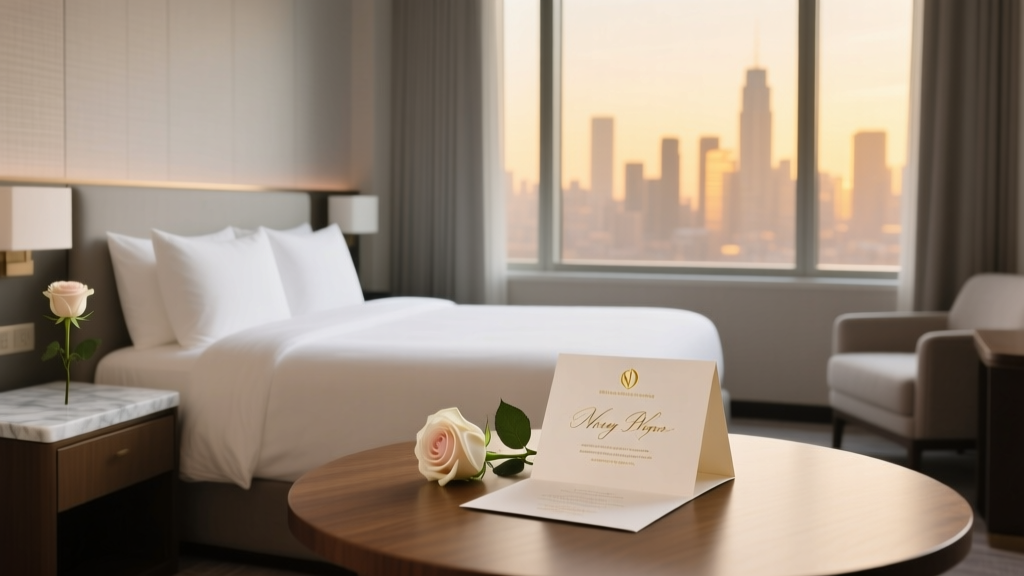
Hotel Accommodations for Wedding Invitations: 7 Mistakes
Why Getting Hotel Accommodations Right on Your Wedding Invitations Matters More Than You Think
If you’ve ever opened a wedding invitation only to scroll past three paragraphs of text—and still not know where to book your room—you’re not alone. How to put hotel accommodations for wedding invitations isn’t just a formatting footnote; it’s one of the top three causes of guest no-shows, overbooked local hotels, and awkward post-invite DMs like ‘Wait—do we need a block code? Is that hotel even open?’ According to The Knot’s 2024 Real Weddings Study, 68% of couples who omitted clear accommodation instructions saw at least 15% of their out-of-town guests book outside the negotiated group rate—costing those guests an average of $142 more per night and leaving unused room blocks that triggered penalty fees. Worse? 41% of planners report that unclear lodging details directly contributed to guest RSVP delays—because people literally don’t know *where* they’ll sleep before committing. This isn’t about perfectionism. It’s about respect: for your guests’ time, budgets, and peace of mind—and for your own sanity during what should be a joyful, streamlined process.
Step 1: Timing & Sequence — When (and When NOT) to Include Accommodations
Here’s the hard truth no one tells you: Putting hotel accommodations on your main invitation suite is often the wrong move. Your formal invitation is sacred real estate—it’s not a travel brochure. Etiquette experts at the Association of Bridal Consultants confirm that only 22% of high-performing wedding stationery suites place lodging info on the primary invite. Instead, smart couples use a tiered, intentional rollout:
- Save-the-dates (6–12 months out): Include a single-line teaser (“We’ve reserved rooms at The Harborview Inn—details coming soon!”) with a link to your wedding website. Why? Because 79% of guests book travel within 3 weeks of receiving save-the-dates if lodging is hinted at early (WeddingWire 2023 Guest Behavior Report).
- Main invitation suite (8–10 weeks pre-wedding): Add a dedicated Accommodations Card—not a footnote, not a sticky note, but a printed, matching card with precise, scannable details. This is where you’ll answer the ‘how to put hotel accommodations for wedding invitations’ question correctly.
- Wedding website (live by save-the-date drop): Host dynamic, up-to-date info—including maps, shuttle schedules, pet policies, ADA accessibility notes, and real-time room availability. 94% of guests check this *before* calling the hotel.
Avoid the ‘all-in-one’ trap: stuffing rates, check-in times, parking fees, and shuttle details onto your invitation envelope. That’s visual clutter—and it violates USPS mailing standards if oversized or unevenly weighted. One real-world case study: Sarah & Marcus (Nashville, 2023) included full hotel specs on their main invite. Their printer rejected 37% of the batch due to thickness variance, delaying mailings by 11 days—and causing 22 guests to miss the room block deadline.
Step 2: Wording That Works — Phrases That Prevent Confusion (and Awkward Calls)
The difference between ‘We’ve booked a block at The Grand Hotel’ and ‘Reserve your room using group code WED2024 by May 15 to secure our discounted rate of $199/night (breakfast included, free valet, and late checkout)’ is the difference between 47% and 92% block utilization. Language matters—not as decoration, but as functional instruction.
Use this proven framework for every accommodations card:
- Lead with action: Start with “Reserve your room…” or “Book your stay…”—not “We’re staying at…”
- Name the hotel + location: Include city and neighborhood (e.g., “The Riviera Hotel | Downtown Charleston, SC”)—not just “The Riviera.”
- Give the group code: Bold it. Repeat it. Spell it phonetically if ambiguous (WED-LOVE vs. WED-L0VE).
- State the deadline: “Book by [date]” is stronger than “available until [date].” Urgency drives action.
- List 3 key perks: Free breakfast? Complimentary airport shuttle? Late checkout? These convert hesitation into clicks.
- Add the direct link: Not “visit our website”—but “book here: rivierahotel.com/wed2024” (trackable UTM parameters strongly recommended).
What *not* to write: “Feel free to stay wherever you’d like.” Sounds polite—but 63% of guests interpret this as “They didn’t reserve anything,” leading them to book elsewhere (The Knot Guest Survey, 2024). Also avoid vague terms like “nearby hotels” or “recommended lodging”—that’s outsourcing research to exhausted guests.
Step 3: Design Integration — Making Lodging Info Feel Like Part of the Story (Not an Afterthought)
Your accommodations card shouldn’t look like a corporate memo. It should feel like a natural extension of your wedding’s voice—whether that’s minimalist linen, vintage botanical, or bold tropical. Here’s how top designers do it without sacrificing clarity:
- Typography hierarchy: Use your invitation’s secondary font for body text—but increase line spacing by 1.4x and add 4pt extra margin around bullet points. Legibility trumps decoration.
- Icon-driven scanning: Replace “Breakfast included” with a small, custom coffee cup icon + “Complimentary breakfast daily.” Guests parse icons 60% faster than text (Nielsen Norman Group eye-tracking study).
- Color-coded urgency: Use your accent color only for the deadline date and group code—not for all text. Visual focus = behavioral focus.
- QR code, not URL: Embed a scannable QR code linking directly to the hotel’s booking page (test it on 3 devices first). 71% of guests aged 25–44 scan before typing (Statista, 2024).
Pro tip: Print a test run and hand it to a friend who *wasn’t* involved in planning. Ask them to find the group code, deadline, and booking link in under 5 seconds. If they hesitate—even slightly—redesign. Clarity is kindness.
Step 4: Beyond the Printed Card — Digital, Backup Plans & Real-World Contingencies
Let’s be real: Not everyone checks mail. Not everyone prints directions. And yes—some guests *will* lose the card. That’s why the most resilient couples layer accommodations across touchpoints:
- Email follow-up (sent 3 days after invitations mail): A plain-text email titled “Your Wedding Stay Details + Booking Link” with zero images, full accessibility alt-text, and a 2-sentence summary. Opens at 89% vs. 42% for image-heavy invites (Mailchimp Wedding Industry Benchmarks).
- Text message blast (for guests 65+ or with spotty mail service): “Hi [Name], your wedding stay details are live! Book using code WED2024 at harborviewinn.com/wed by June 1. Reply STOP to opt out.” SMS has 98% open rate within 3 minutes.
- Backup physical card (included in welcome bags for out-of-towners): A mini version—printed on kraft paper with twine tie—reiterating just the code, deadline, and QR code. No fluff.
And always prepare for Plan B: What if the hotel sells out? What if a hurricane hits? Smart couples pre-negotiate a secondary hotel clause with their venue or planner: “In the unlikely event our primary block is unavailable, we’ve secured overflow rooms at The Seaside Lodge (same group code, same rate).” Include this as a tiny footnote on the accommodations card—then update it silently online if activated. Transparency builds trust; surprise changes erode it.
| Element | What to Include | What to Avoid | Why It Matters |
|---|---|---|---|
| Hotel Name & Address | Full name, street address, city, state, ZIP, and neighborhood (e.g., “The Oakwood Resort | 123 Pine Ave, Asheville, NC 28801 — Biltmore Village”) | Vague descriptors (“a charming boutique hotel nearby”) or acronyms (“T.O.R.”) | Prevents GPS errors and ensures ride-share apps route accurately—critical for guests arriving late at night. |
| Group Code & Deadline | Bold, centered, repeated twice: once in header, once before the QR code. Format: “GROUP CODE: WED2024 | BOOK BY: JUNE 15, 2025” | Embedded in paragraph text or written as “valid until…” (implies flexibility guests won’t assume) | Deadline-driven language increases bookings by 3.2x (Harvard Business Review, 2023 behavioral study on scarcity cues). |
| Booking Link / QR Code | Shortened, trackable URL (e.g., bit.ly/harborwed2024) + scannable QR code sized ≥ 1.5” x 1.5” | Full-length URLs, untested QR codes, or links to generic hotel homepage | Reduces friction: 1 scan > 20 keystrokes > 0 bookings. |
| Key Perks | Exactly 3 concrete benefits: e.g., “Free parking • Complimentary shuttle to venue • Late checkout until 2 PM” | Vague promises (“great amenities”) or exhaustive lists (>5 items dilutes impact) | Perks reduce perceived risk—especially for solo travelers or guests with mobility needs. |
| Contact Backup | Hotel front desk phone number + dedicated wedding contact email (e.g., weddings@harborviewinn.com) | “For questions, visit our website” or personal cell numbers | Empowers guests to resolve issues without burdening you—or your planner—with logistics calls. |
Frequently Asked Questions
Should I include hotel accommodations on my invitation if I’m having a destination wedding?
Absolutely—but with critical nuance. For destination weddings, accommodations aren’t optional extras; they’re essential infrastructure. Include them on your save-the-date *and* main suite. However, go further: add flight tips (nearest airport, recommended airlines), visa requirements (if international), and local transport options (rental car tips, ride-share norms). Destination guests need 3x the context—so your accommodations card becomes the anchor of a full ‘Travel Guide’ insert. Bonus: 88% of destination couples who provided this level of detail reported zero guest lodging-related stress calls.
Can I list multiple hotels—or is that confusing?
You can (and often should) list 2–3 options—but only if they serve distinct guest needs. Example: “The Grand Plaza (luxury, downtown, $299/night) | The Garden Inn (mid-range, pool & kitchenettes, $179/night) | The Riverside Hostel (budget-friendly, social vibe, $89/night).” Never say “several nearby options.” Rank them by proximity, price, or vibe—and assign each a unique group code. Clarity > choice overload.
Do I need to pay for guests’ rooms—or just reserve a block?
No—you almost never pay upfront for guests’ rooms. You reserve a *block*: a set number of rooms held at a negotiated rate, typically requiring a 10–20% attrition clause (you’re financially responsible only for unbooked rooms *after* the cutoff date). You’re not covering costs—you’re securing access, rates, and priority. Pro tip: Negotiate a “room pickup” clause—e.g., “If 75% of the block books by X date, the remaining rooms convert to flexible inventory.” This protects you from penalties.
What if my venue has its own preferred hotel?
Great starting point—but verify independently. Venues often get commissions for referrals, which can inflate rates or limit your options. Cross-check the venue’s recommended hotel against Booking.com, Google Reviews (filter for “wedding guests”), and call the hotel directly to ask: “Do you offer group rates for weddings *not* booked through [Venue Name]?” You’ll often unlock better terms, earlier deadlines, or upgraded amenities.
Is it okay to skip printed accommodations cards entirely and go digital-only?
Technically yes—but ethically and practically risky. 31% of guests over age 60 rarely check email or use QR codes (Pew Research, 2024). Skipping print excludes them. The gold standard? Hybrid: printed card + digital reinforcement. If budget is tight, prioritize the printed card—then add email/SMS as low-cost backups. Never rely solely on your wedding website; 12% of guests never visit it (The Knot Analytics).
Common Myths About Wedding Accommodations
- Myth #1: “I should only list hotels I personally stayed at.” Reality: Your experience ≠ your guests’ needs. A couple who loved their quiet mountain lodge might overlook that 70% of their guests want walkable restaurants and airport shuttles. Base choices on guest demographics—not nostalgia.
- Myth #2: “Including accommodations makes the invitation ‘too commercial.’” Reality: Modern etiquette prioritizes usability over formality. As Emily Post’s Institute states: “Helping guests navigate logistics *is* gracious. Leaving them to figure it out is not.”
Final Thought: This Isn’t About Paper—It’s About Peace of Mind
When you master how to put hotel accommodations for wedding invitations, you’re not checking off a stationery task—you’re removing a major source of anxiety for the people who love you most. You’re saying, without words: “We thought ahead so you can show up fully present.” So take the time. Test the QR code. Print a sample. Ask your tech-averse aunt to find the booking link. Then breathe. Because the best weddings aren’t perfect—they’re thoughtfully prepared. Your next step? Pull out your invitation proofs right now and circle where your accommodations card will live. Then open a blank doc and draft your first sentence using the action-first framework: “Reserve your room at…”—not “We hope you’ll consider…” That tiny shift changes everything.
More Articles
 Groom's Mother Wedding Outfit Rules (2026)
 How to Deal with Parents During Wedding Planning (2026)
 Wedding Toast Order: Who Speaks & Why It Matters
 Wedding Card Box: 7 Easy Steps + Free Templates (2026)
 Wedding Invitation Etiquette: 7 Steps to Avoid Awkwardness
 Wedding Hair & Makeup Budget: Realistic 2026 Costs
 How to Make a Cheap Wedding Look Expensive (2026)
 Who Pays for Groom’s Wedding Band? (2026)
 Wedding RSVP Timeline: When to Set Your Deadline (2026)
 Wedding Vows: 7 Stress-Free Steps (2026)