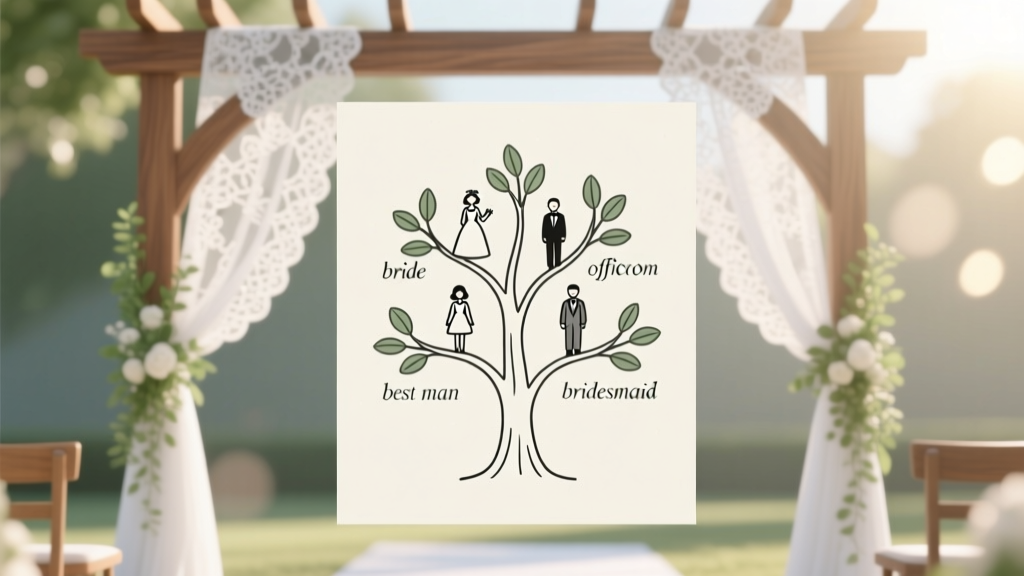
Wedding Planning How to Choose Ceremony Participants
You’re planning a wedding, and suddenly you realize you’re not just choosing flowers and playlists—you’re choosing people. The ceremony participants are the faces you’ll see as you take a deep breath before walking down the aisle, the voices that will steady you when your emotions spike, and the support system standing close during one of the biggest moments of your life.
It can feel simple at first (“My best friend, your brother, done!”) until real-life dynamics show up: divorced parents, step-siblings, a friend you’ve drifted from, a cousin who assumes they’ll be included, or cultural expectations you want to honor without losing yourselves in the process. If you’re feeling pressure, you’re not alone—and you can absolutely make choices that are meaningful and manageable.
This guide walks you through how to choose ceremony participants thoughtfully, kindly, and with less stress—plus timelines, budget considerations, and planner-level tips to keep the process smooth.
What “Ceremony Participants” Really Means (and Who Typically Counts)
Ceremony participants include anyone who has an official role in the ceremony itself or is part of the processional/recessional. Some roles are traditional, but you can customize every piece to fit your relationship, family structure, and wedding style.
Common ceremony participants
- Officiant (religious leader, celebrant, friend, or family member)
- Wedding party (maid/matron of honor, best man, bridesmaids, groomsmen, mixed-gender wedding party attendants)
- Parents/guardians (processional roles, readings, blessings)
- Flower child(ren) and ring bearer(s)
- Readers (poem, scripture, letter, or meaningful passage)
- Witnesses (legal witnesses, sometimes the honor attendants, varies by location)
- Ushers (seating support, handing out programs)
- Musicians or vocalists (live or pre-recorded)
- Cultural participants (sponsors, padrinos/madrinas, ketubah witnesses, tea ceremony helpers, etc.)
Pro tip: When you’re stuck on who to include, start by listing the roles you actually want. You don’t need to fill every traditional slot.
Start With Your Vision: The “Feel” of Your Ceremony
Before you choose people, get aligned on the kind of ceremony you’re creating. This prevents overcommitting out of obligation and keeps your choices consistent.
Quick alignment questions (5 minutes, big payoff)
- Do we want a formal ceremony or a relaxed one?
- Do we want a small and intimate wedding party or a larger group?
- Are there religious/cultural expectations we’ll honor?
- Do we want the ceremony to feel family-focused, friend-focused, or balanced?
- Do we want more voices (readings, music) or a simpler ceremony?
If you’re planning a micro-wedding, you might choose fewer formal roles and let loved ones contribute through toasts at dinner. For a larger wedding, structured roles can help more people feel included without chaos.
A Step-by-Step Checklist to Choose Ceremony Participants
Step 1: List your “must-have” people
Write down the names of the people you can’t imagine the ceremony without. Do this separately, then compare lists.
- Closest friends
- Siblings and chosen family
- Parents/guardians who are supportive
- Mentors or meaningful figures
Planner tip: Keep this first list small. You can add later, but starting with your core people helps your decisions stay heart-led instead of pressure-led.
Step 2: Choose your non-negotiable roles
Decide which roles matter most to you. Typical priorities:
- Officiant
- Honor attendants (maid/matron of honor, best man—or equivalents)
- Wedding party size
- Special family roles (processional, reading, blessing)
Step 3: Set a realistic wedding party size (based on your budget and logistics)
Wedding parties are wonderful—and they affect costs and coordination. Consider:
- Photos: Bigger groups take longer and can feel chaotic
- Attire: Gifts, accessories, hair/makeup, and suit rentals can add up
- Rehearsal: More people = more scheduling complexity
- Venue space: Does your ceremony layout comfortably fit everyone up front?
Budget reality check: Even if attendants pay for their outfits, couples often cover items like bouquets/boutonnieres, getting-ready food, thank-you gifts, extra transportation, and sometimes hair/makeup. A larger wedding party can add hundreds (or thousands) to your total wedding budget.
Step 4: Match people to roles based on strengths
Not everyone is comfortable walking down an aisle or speaking into a microphone. Choose roles that fit each person’s personality.
- Calm under pressure: maid of honor/best man, witness, wedding party captain
- Loves public speaking: reader, welcome speech, toast (if that’s later)
- Detail-oriented: usher lead, program helper, ceremony cue person
- Emotional support: getting-ready buddy, pre-ceremony check-in person
Step 5: Plan “inclusion roles” for loved ones you can’t fit in the wedding party
This is one of the kindest ways to handle family expectations and friend dynamics—without expanding the wedding party beyond what you want.
- Do a reading (short poem, family blessing, cultural text)
- Seat grandparents or parents as part of the processional
- Invite them to sign the marriage license as a witness (where legal)
- Ask them to do a unity ritual (candle, sand, handfasting, wine box, tea ceremony)
- Honor them with a reserved seat and a note in the program
- Have them hold the rings (if you’re not using a ring bearer)
Step 6: Confirm your ceremony structure and timing
Once you know who’s participating, sketch your ceremony flow (even a rough version). This will clarify how many participants you truly need and prevent last-minute confusion.
Simple sample ceremony flow:
- Processional (grandparents/parents/wedding party/couple)
- Welcome + opening words
- Reading (optional)
- Vows
- Ring exchange
- Pronouncement + kiss
- Recessional
Real-World Scenarios (and How Couples Handle Them Gracefully)
Scenario 1: “We have uneven sides—do we need the same number?”
No. Mixed sides and uneven numbers are common. You can:
- Have attendants walk solo
- Pair three people together (two on one side, one on the other)
- Skip walking pairs entirely and have attendants already standing at the front
Example: One partner has 2 siblings they want included; the other has 5 close friends. They choose a mixed wedding party of 7, with everyone standing in a semicircle so it feels balanced in photos.
Scenario 2: “My parents are divorced and don’t want to walk together”
Totally workable. Options:
- Have each parent walk with a different family member
- Seat parents before the processional begins
- Give each parent their own entrance moment (with separate music cues if desired)
Example: The couple seats parents first, then begins the processional with grandparents. This avoids awkward pairings and keeps the focus on the ceremony.
Scenario 3: “We want our friend to officiate—what should we consider?”
Friend officiants can be incredibly meaningful. Plan ahead:
- Confirm legal requirements for your location (registration, ordination, paperwork)
- Ask them early so they can prepare a great script
- Schedule a rehearsal and a mic check
- Provide a clear ceremony outline and tone (lighthearted, spiritual, short and sweet, etc.)
Example: A couple asks their close friend to officiate, but hires a coordinator to manage the processional cues so their friend can focus on delivering the ceremony confidently.
Scenario 4: “We can’t include everyone, and feelings might get hurt”
This is one of the most common pain points in wedding planning. A few kind strategies:
- Choose based on current closeness, not history alone
- Offer meaningful alternative roles (reading, ushering, getting-ready support)
- Be consistent—if you include one cousin, be prepared for cousin expectations
- Keep your explanations simple and loving
Example script: “We’re keeping our wedding party small, but it would mean a lot if you’d do a reading during the ceremony. You’re important to us, and we’d love to include you that way.”
Timeline Advice: When to Ask Ceremony Participants
Good timing reduces stress and helps everyone plan financially and logistically.
Suggested timeline
- 10–12+ months out: Choose and ask wedding party; book officiant (or ask friend officiant)
- 8–10 months out: Decide on readers, ushers, ceremony musicians
- 4–6 months out: Confirm attire, processional plan, and any cultural ceremony details
- 2–3 months out: Share ceremony draft with officiant/reader participants; confirm rehearsal date
- 1 month out: Final ceremony lineup; send “what to expect” notes to participants
- Week of: Rehearsal + cue sheet; confirm arrival times and where everyone stands
Pro tip: If you’re planning a destination wedding, ask earlier—travel costs and time off work can affect who can say yes.
Budget Considerations Couples Often Forget
Even when ceremony participants are honored guests, participation can trigger extra expenses. Planning for these early avoids last-minute budget surprises.
- Flowers: bouquets, boutonnieres, corsages for parents/grandparents
- Gifts: wedding party thank-you gifts, officiant gift
- Hair & makeup: if you’re covering services for attendants
- Transportation: shuttles, rideshares, parking arrangements
- Attire support: ties, jewelry, shoes, last-minute alterations
- Ceremony programs: printing costs increase with more names/roles
Money-saving idea: If your budget is tight, consider skipping a large wedding party and choosing 1–2 honor attendants each, plus a few readers. You’ll still have a full, meaningful ceremony—just with fewer moving parts.
Common Mistakes to Avoid (and What to Do Instead)
Mistake 1: Choosing participants out of guilt or family pressure
Do instead: Decide your wedding party size first, then fill roles based on closeness and support. Use alternative roles for inclusion.
Mistake 2: Asking too late
Do instead: Ask as soon as you’ve chosen your ceremony date and venue—especially for destination weddings or friends with demanding schedules.
Mistake 3: Assuming everyone knows what to do
Do instead: Send a simple “role outline” message with:
- Where to be and when
- What to wear
- Whether they’re walking in the processional
- If they’re holding anything (rings, bouquet, etc.)
- Who to contact day-of (planner/coordinator, not you)
Mistake 4: Overloading the ceremony with too many voices
Do instead: Keep the ceremony focused. A good rule for many couples is:
- 1 officiant
- 0–2 readings
- 1 unity element (optional)
- Clear processional and recessional
Wedding Planner Pro Tips for a Smooth Ceremony
- Create a one-page ceremony cue sheet: lineup order, walking order, music cues, where people stand, and who holds the rings.
- Pick a “people-wrangler”: a friend or coordinator who can gather participants for lineup and photos so you’re not managing it.
- Do a mic check: readers and officiants should practice with the actual microphone setup.
- Plan for kids realistically: If you have a flower child or ring bearer, assign an adult “kid buddy” and be okay if they freeze or wander.
- Keep the peace with boundaries: You can honor family without giving up your comfort. A calm “we’ve decided…” is your best friend.
FAQ: Choosing Ceremony Participants
How many bridesmaids and groomsmen should we have?
There’s no rule. Many couples choose 2–6 each, but the best number is what fits your relationships, budget, and ceremony space. If you’re feeling stressed, go smaller and add readers or ushers for additional inclusion.
Do we have to have a maid of honor or best man?
No. You can skip honor titles, choose “co-maids of honor,” have a “best person,” or have no wedding party at all. Your ceremony can still feel complete and beautiful.
What’s the difference between wedding party members and ushers?
Wedding party members typically stand with you during the ceremony and often join pre-wedding photos and events. Ushers mainly help guests find seats and distribute programs, and they may or may not be part of the formal processional.
Can we include divorced parents without causing tension?
Yes. Seat parents separately, give each their own processional moment, or have supportive family members escort them. The goal is a plan that feels respectful and avoids forcing uncomfortable pairings.
Who should be our ceremony readers?
Choose people who are comfortable speaking clearly and who will follow through. Great options include a sibling, close friend, grandparent, or mentor—especially someone who feels honored by a role that doesn’t require standing up front the entire time.
How do we tell someone they aren’t in the wedding party?
Keep it kind and simple. You don’t owe a long explanation. Offer a meaningful alternative if you want to include them: a reading, usher role, or special pre-wedding moment like getting-ready time or a private note exchange.
Your Next Steps: A Simple Action Plan
If you want to move forward today, here’s a quick plan that works for most engaged couples:
- Choose your ceremony vibe (formal vs. relaxed, simple vs. layered).
- Set your wedding party size based on budget and logistics.
- Write your must-have list and match people to roles that fit them.
- Decide inclusion roles for loved ones outside the wedding party.
- Ask participants with clarity about what the role involves and when key dates are.
- Create a ceremony cue sheet and share it with your officiant/coordinator.
You’re allowed to choose the people who make you feel supported, safe, and celebrated. When your ceremony participants are the right fit, the whole day feels steadier—and a lot more joyful.
Want more practical wedding planning help? Explore more planning guides on weddingsift.com for timelines, checklists, and ideas that make decisions easier.
More Articles
 DIY Wedding Arch Guide: Build, Rent & Avoid Mistakes
 Cocktail Attire Wedding: Clear, Friendly Dress Code Tips
 Pinstripe Suit for Wedding: Dress Code Decoder (2026)
 Formal Attire Wording for Wedding Websites (2026)
 DIY Wedding Programs Templates (2026)
 White House Wedding Requirements: What You Must Submit
 Wedding Card Checklist: 7-Second Sign-Off (2026)
 5th Anniversary: The Science-Backed Marriage Turning Point
 Barn Wedding Venue Checklist: Save $4,200+ (2026)
 Wedding Registry Items: The Guest-Centric Formula (2026)