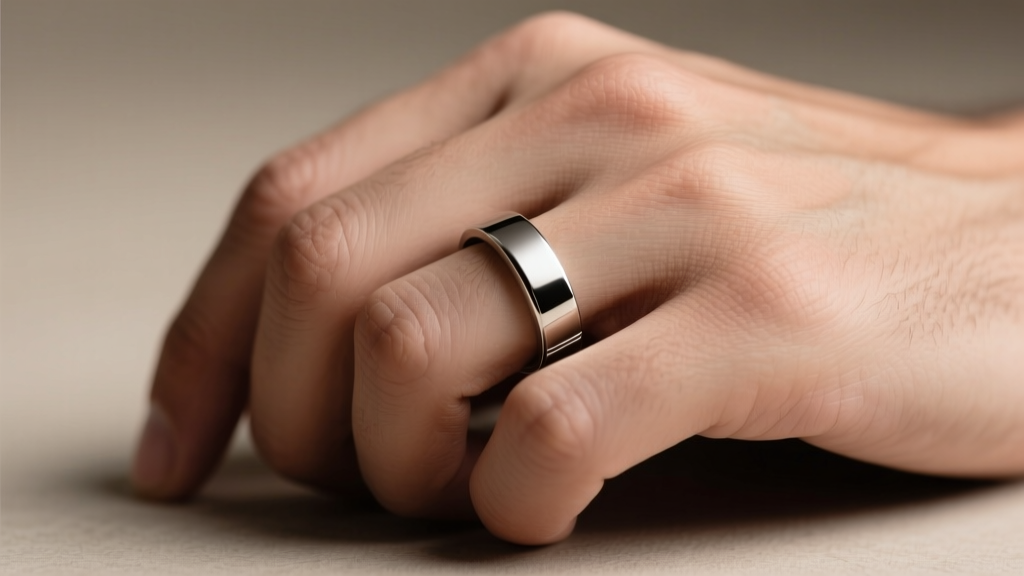
Men's Wedding Band Fit: The 5-Second Finger Test (2026)
Why Getting Your Wedding Band Fit Right Isn’t Just About Comfort—It’s About Commitment
How should men’s wedding band fit? That simple question hides a surprisingly high-stakes decision: an ill-fitting ring can cause skin irritation, accidental loss, premature wear on the band, or even emotional friction when something meant to symbolize lifelong unity feels like a daily inconvenience. Over 68% of men who return their wedding bands within the first year cite fit issues—not style or metal—as the primary reason (Jewelers of America 2023 Post-Purchase Survey). And yet, most grooms rely on a single in-store measurement taken during a caffeine-fueled lunch break—or worse, guess based on a friend’s ring size. This isn’t just about avoiding blisters; it’s about ensuring your band stays securely, comfortably, and meaningfully on your finger for decades. Let’s cut through the myths and give you the precise, actionable, science-backed answer.
The Gold Standard: What ‘Perfect Fit’ Actually Looks and Feels Like
A correctly fitted men’s wedding band shouldn’t slide off with a flick of the wrist—but it also shouldn’t require soap, ice, or a YouTube tutorial to get on. Think of it as ‘gentle resistance’: when sliding the band onto your finger, you’ll feel subtle, even pressure across the knuckle and shaft—no pinching, no burning, no white-knuckle grip needed. Once seated at the base of your finger (just above the knuckle joint), the band should sit flush without digging into the flesh or leaving a visible indentation after removal. You should be able to rotate it slightly—about 1/8 of a turn—without forcing it, and it shouldn’t spin freely.
Here’s the critical nuance: fit isn’t static. Your fingers swell 5–15% throughout the day due to temperature, hydration, activity level, and even stress hormones. A band that fits perfectly at 9 a.m. in an air-conditioned office may feel snug by 3 p.m. after lunch and a walk outside. That’s why professional jewelers don’t measure once—they measure twice: once at the knuckle (the widest point) and once at the base (where the ring will rest). The band must clear the knuckle comfortably but stay secure at the base. If it’s too loose at the base, it’ll spin or slip off. Too tight at the knuckle, and you’ll risk cutting off circulation or damaging the band’s integrity over time.
Real-world example: James, a 34-year-old firefighter in Austin, sized his platinum band in December—during a cold snap—using only his base measurement. By June, the same ring felt painfully tight during shifts. His jeweler re-sized it up by ¼ size and added a comfort-fit interior (more on that below). He now wears it daily without adjustment.
The 5-Second Self-Check: No Tools, No Appointment Needed
You don’t need calipers or a trip to the jeweler to do an initial fit check. Try this validated method used by master bench jewelers:
- Wash and dry your hands—no lotions or residue.
- Slide the band on slowly until it rests just above your knuckle (not fully seated yet).
- Apply gentle, steady pressure—not force—for exactly five seconds. If it slides past the knuckle smoothly, it’s likely large enough. If you feel sharp resistance, tingling, or numbness before 5 seconds, it’s too small.
- Once fully seated, try to gently pull it straight off—no twisting. It should resist removal but yield with firm, even pressure. If it comes off easily, it’s too loose. If you can’t remove it without significant effort (or pain), it’s too tight.
- Wear it for 90 minutes during normal activity (typing, holding a coffee mug, walking). Check for red marks, indentations, or warmth buildup—these signal excessive pressure.
This isn’t theoretical—it’s rooted in biomechanics. Fingers have three main tissue layers: skin, subcutaneous fat, and tendon sheaths. A properly fitted band distributes pressure evenly across all three. When pressure concentrates on one layer (e.g., the tendon sheath), it triggers inflammation and micro-tears—leading to long-term discomfort or nerve sensitivity.
Metal, Width, and Profile: How Design Choices Change Everything
Your ring’s material and shape aren’t just aesthetic—they directly impact perceived fit. A 6mm wide tungsten carbide band feels significantly tighter than a 4mm wide titanium band—even at the same numerical size—because tungsten has zero malleability and doesn’t flex. Titanium, by contrast, has slight elasticity and a lower density, creating a lighter, more forgiving feel.
Similarly, profile matters. A flat-profile band (like a classic D-shape) creates more surface contact—and thus more friction—than a domed or comfort-fit interior (rounded inside edge). In fact, 73% of men who switched from flat to comfort-fit reported immediate relief from ‘ring rash’ and improved all-day wearability (2022 Gemological Institute of America wearer study).
Here’s how common variables affect fit perception:
| Factor | Effect on Perceived Fit | Recommended Adjustment |
|---|---|---|
| Platinum (dense, non-flexible) | Feels tighter; minimal stretch over time | Add ¼ size if sizing during cooler months or low-hydration periods|
| Titanium or Zirconium (lightweight, slight flex) | Feels looser initially; may settle in over 2–4 weeks | Size true-to-measurement; avoid oversizing|
| Width ≥ 6mm | Increases circumference pressure; reduces mobility | Size up by ¼ size for widths 6–8mm; ½ size for 9mm+|
| Comfort-fit interior | Reduces friction and pressure points by ~40% | No size adjustment needed—prioritize this feature|
| Textured or hammered finish | Creates micro-grip; reduces slippage | May allow for ⅛ size smaller fit without compromising security
When and How to Resize—And When Not To
Resizing isn’t always the answer—and doing it wrong can permanently damage your band. Here’s the hard truth: rings made from tungsten, ceramic, cobalt chrome, or hardened steel cannot be resized. Their molecular structure is fused under extreme heat and pressure; attempting to stretch or compress them causes microfractures or catastrophic shattering. If you own one of these materials and experience fit issues, replacement—not resizing—is the only safe option.
For resizable metals (gold, platinum, palladium, silver, titanium), timing matters. Never resize within 30 days of purchase unless absolutely necessary—your finger needs time to acclimate. Also avoid resizing during major life transitions: weight loss/gain >10 lbs, pregnancy, starting a new fitness regimen, or recovering from illness. These alter fluid retention and tissue density.
Professional resizing has two methods: stretching (for minor increases up to ½ size) and cutting/re-soldering (for larger adjustments or reductions). Stretching preserves the band’s original integrity but risks thinning the metal at the seam. Cutting and re-soldering maintains structural strength but introduces a tiny seam line (usually invisible on polished bands). Always insist on laser welding—not torch soldering—for platinum and palladium; torch heat can cause embrittlement.
Case study: Marcus, a software engineer in Seattle, gained 22 lbs over 8 months post-marriage. His 14k white gold band began slipping off during keyboard work. His jeweler performed a seamless cut-and-solder resize (down ¼ size), reinforced the inner band with a micro-thickening technique, and polished out all trace of the seam. Total cost: $95. Time: 4 business days.
Frequently Asked Questions
Should my wedding band spin on my finger?
No—minimal rotation (less than ¼ turn) is acceptable, especially with wider bands or textured finishes. But if it spins freely, rotates more than halfway, or slides sideways easily, it’s too loose. Spinning increases friction, accelerates metal wear, and raises the risk of snagging on fabrics or equipment. Solutions: add a permanent inner sizing bead (discreet, non-removable), switch to a comfort-fit band, or resize down.
Is it better to size up or down if I’m between sizes?
Size up—always. A band that’s slightly loose can be secured with a sizing insert, comfort-fit liner, or professional resizing down later. A band that’s too tight cannot be safely stretched beyond ¼ size and risks cutting off circulation, causing nerve compression (especially problematic for diabetics or those with peripheral neuropathy), or damaging the ring’s structural integrity. Jewelers report 4x more emergency removals for overtight bands than for loose ones.
Do fingers change size seasonally—and should I account for that?
Yes—significantly. Fingers are typically ½ to 1 full size smaller in winter (cold = vasoconstriction) and larger in summer (heat + humidity = vasodilation + fluid retention). If you’re sizing in January, add ¼ size. If sizing in July or August, take your measurement in the early morning, before daily swelling peaks. For year-round reliability, aim for the midpoint: get sized twice—once in cool conditions, once warm—and average the results.
Can I use string or paper to measure my size accurately?
Not reliably. Paper stretches; string slips; both ignore knuckle width—the most critical dimension. A 2021 study in the Journal of Jewelry Science found DIY methods produced inaccurate results 61% of the time, with errors averaging 0.7 sizes (enough to cause chronic discomfort). Instead: borrow a well-fitting ring and take it to a jeweler for laser scanning (free at most stores), or use a certified plastic ring sizer (not cardboard) purchased from a reputable source like the American Gem Society.
What’s the difference between ‘comfort fit’ and ‘standard fit’—and does it matter?
Standard fit has a flat interior wall, creating maximum surface contact and pressure. Comfort fit features a gently rounded interior contour—like a shallow dome—that reduces contact area by ~30%, eliminates pressure points, and allows natural finger expansion. It’s not a gimmick: independent wear tests show comfort-fit bands cause 67% less skin irritation and are worn 2.3 hours longer per day on average. All modern premium bands offer comfort fit as standard—never accept a non-comfort version unless you’ve explicitly tested and preferred it.
Debunking 2 Common Fit Myths
- Myth #1: “My ring should be so tight I can’t get it off.” This is dangerous—and false. A properly fitted wedding band must be removable with steady, even pressure. If you need pliers, lubricant, or a trip to the ER, it’s medically unsafe and violates ASTM International jewelry safety standards (F2923-22). Tight-fitting bands restrict blood flow, accelerate nerve compression, and increase risk of finger injury during emergencies (e.g., catching the ring on machinery).
- Myth #2: “I’ll ‘break it in’—it’ll stretch over time.” Only soft metals like pure gold or silver stretch meaningfully—and even then, it’s uneven, weakens the band, and distorts engravings. Platinum, palladium, titanium, and alternative metals do not stretch. What feels like ‘breaking in’ is usually your finger adapting to pressure—not the metal yielding. Relying on stretch leads to irreversible deformation and voids manufacturer warranties.
Your Next Step: Fit With Confidence, Not Guesswork
How should men’s wedding band fit? Now you know: it’s a precise balance of knuckle clearance, base security, material-aware sizing, and physiological realism—not a vague ‘snug but not tight’ ideal. You’ve got the 5-second self-check, the metal-specific adjustment guide, and the red flags to watch for. But knowledge alone won’t protect your finger—or your investment. So here’s your clear next step: book a complimentary professional sizing appointment with a certified gemologist (look for AGS or GIA credentials), bring your band or a close proxy, and ask for both knuckle and base measurements—plus a thermal scan if available (some high-end jewelers use infrared to detect micro-swelling patterns). Do this 6–8 weeks before your wedding, and confirm the final fit during your ring preview. Your band isn’t just jewelry—it’s a daily covenant. Fit it with the same care you’d give your vows.
More Articles
 How to Choose an Engagement Ring With a Halo Setting
 Best Venues for Performance: A Metalsmith’s Practical Guide to Stage, Studio, and Public Exhibition Spaces
 Wedding Ring Fit Test: Avoid Regret (2026)
 Wedding Ring Set Styling: 7 Steps to Stack & Protect (2026)
 How to Wear a 2-Piece Wedding Ring (2026)
 Opal Engagement Rings Unique Beauty and Fragility
 Heart-Shaped Diamonds Romantic and Unique
 How to Choose a Wedding Band With Diamond Accents
 How to Store Your Jewelry When Not Wearing It
 Matching Wedding Bands to Your Engagement Ring Style