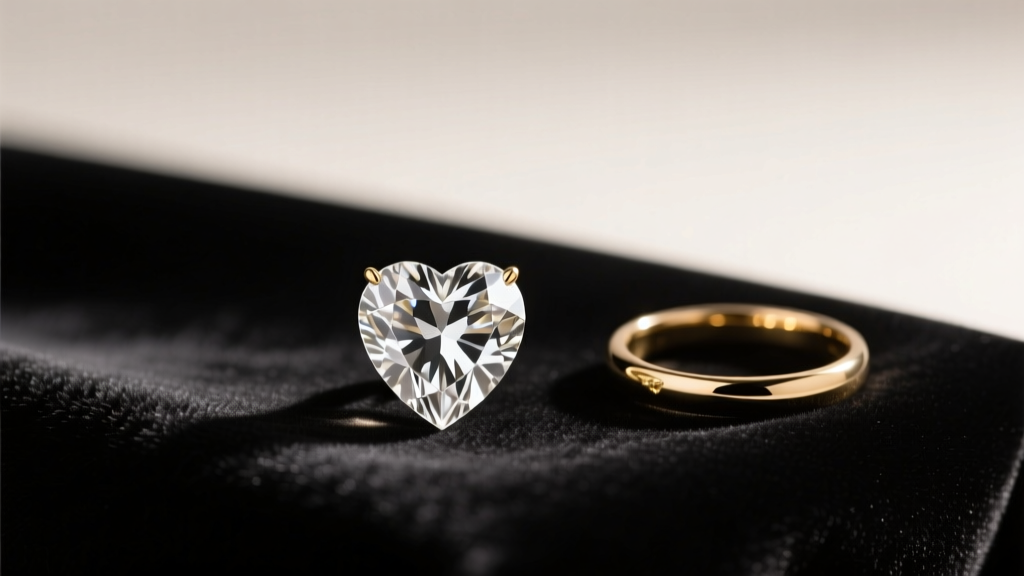
Heart-Shaped Diamonds Romantic and Unique
Heart-shaped diamonds have a way of saying what words sometimes can’t. For couples shopping for an engagement ring or wedding band set, this cut is a clear symbol of love—but it’s also a technical diamond shape that rewards careful selection. When the proportions are right, a heart diamond looks bright, crisp, and unmistakably romantic. When they’re off, the shape can appear uneven, shallow, or “squashed,” even if the carat size is impressive.
What makes heart-shaped engagement rings especially appealing right now is how they bridge trends and tradition. They’re having a strong moment in modern bridal jewelry—often styled with minimalist solitaire settings or bold halos—yet the heart shape itself is a timeless motif. If you’re considering a heart-shaped diamond for your proposal or a matching bridal set, the guide below breaks down what to look for, which styles flatter the shape, and how to get the best value without compromising beauty.
What Makes a Heart-Shaped Diamond Different?
A heart-shaped diamond is a “fancy shape,” meaning it’s not graded exactly like a round brilliant. It’s essentially a modified brilliant cut, combining elements of a round and a pear/marquise. The result is a stone with a cleft (the top indentation), two rounded lobes, and a pointed tip. Because the outline is so recognizable, symmetry and cutting precision matter more than most shoppers expect.
Why couples choose heart-shaped engagement rings
- Symbolism: Directly communicates romance and commitment.
- Standout style: Less common than ovals and pears, so it feels more personal.
- Versatile aesthetics: Works in sleek solitaires, vintage-inspired halos, and bold three-stone designs.
Heart Diamond Quality Factors: Cut, Symmetry, and Sparkle
For heart-shaped diamonds, “cut quality” is less about a single grade on a report and more about judging proportions, outline, and light performance together. A well-cut heart looks balanced, bright, and defined, with a clean separation at the cleft and a tip that isn’t overly thin.
Shape and proportions to look for
- Length-to-width ratio: Many couples prefer 0.90–1.05 for a classic heart. A ratio closer to 1.00 looks symmetrical and “true heart,” while higher ratios can look more elongated.
- Even lobes: The two rounded sides should match in size and curve. Uneven lobes are noticeable from arm’s length.
- Defined cleft: A shallow cleft can make the heart read like a rounded triangle; too deep can create a dark area near the top.
- Centered point: The tip should align with the cleft so the heart doesn’t lean.
Bow-tie and light performance
Like pears and ovals, heart diamonds can show a bow-tie effect—a darker shadowed region across the center. A slight bow-tie can be normal, but strong darkness reduces brilliance. If you can view videos or the diamond in person, rotate it under light to confirm it sparkles evenly across the face.
Clarity and color: where you can save
Because heart diamonds have brilliant-style faceting, they can hide inclusions well—especially in settings that provide visual distraction like halos or pavé bands.
- Clarity: Many shoppers find VS2–SI1 can be eye-clean, depending on inclusion type and placement. Avoid inclusions near the tip or along the cleft if they’re visible.
- Color: In white metals (platinum, white gold), G–H often looks bright. In yellow or rose gold, you can often go to H–J for better value because the metal warmth masks faint tint.
Setting Styles That Flatter Heart-Shaped Diamonds
A heart diamond is both delicate (at the tip) and expressive (in the outline). The right setting protects the stone while emphasizing the heart silhouette. This is where craftsmanship matters: prong placement, seat alignment, and symmetry need to be precise.
Solitaire settings: modern and timeless
A solitaire heart-shaped diamond engagement ring is clean and classic, and it’s trending for couples who want a simple, statement center stone. Look for:
- V-prong at the tip: This is non-negotiable for protection. A standard prong leaves the point vulnerable to chipping.
- Two prongs at the lobes: Often 3-prong or 5-prong designs are used to secure the shape without covering it.
- Low vs. high profile: Low settings feel practical for everyday wear; higher settings can show off more sparkle but catch more easily.
Halo settings: extra brilliance and definition
Halo heart-shaped engagement rings remain popular because the outline is naturally romantic, and a halo can sharpen the heart shape while boosting finger coverage. Micro-pavé halos are a current trend, but make sure the halo follows the heart cleanly—if the halo is misshapen, the whole ring looks off.
Three-stone and side-stone designs
For a balanced look, tapered baguettes or half-moons can complement the heart without competing with it. Pear side stones can also work, but proportion is key so the center still reads as the focal point.
Matching wedding bands: what pairs well
- Contour (curved) bands: A great match for heart centers because they hug the point and sit flush.
- Simple pavé bands: Adds sparkle without distracting from the heart.
- Classic plain metal bands: Timeless and practical, especially in platinum or 14k gold.
Metal Choices for Heart Diamond Rings
The metal you choose affects durability, maintenance, color appearance, and overall style. Couples often choose based on lifestyle and whether they want a bright white look or warmer tones.
Platinum
Pros: Naturally white, strong, and excellent for securing prongs; ideal for daily wear and active lifestyles.
Cons: Higher cost; develops a patina over time (many love it, some prefer polishing).
14k and 18k gold (white, yellow, rose)
14k gold: A popular choice for engagement rings and wedding bands due to durability and value.
18k gold: Richer color and slightly more luxurious feel, but softer than 14k.
- White gold: Bright, modern look; typically rhodium-plated and may need re-plating over time.
- Yellow gold: Timeless classic; pairs beautifully with near-colorless diamonds and vintage-inspired settings.
- Rose gold: Romantic, on-trend, and flattering on many skin tones; complements heart shapes naturally.
Price Range and Value Tips for Heart-Shaped Diamonds
Heart-shaped diamonds can offer strong value compared with round brilliants, but pricing varies widely based on cut quality, carat, color, clarity, and whether the stone is natural or lab-grown.
Typical budget expectations
- Lab-grown heart diamond rings: Often provide larger carat sizes for the same budget, with excellent color/clarity options.
- Natural heart diamond rings: Higher cost, especially in higher color grades and larger carat weights.
As a practical ballpark, many couples find that a well-made heart diamond engagement ring (center stone plus setting) often lands anywhere from the mid four figures to five figures, depending on size and material choices. Add a matching wedding band set, and the total can rise accordingly—especially with pavé craftsmanship and platinum.
Best value strategies
- Prioritize outline and symmetry: A slightly lower color grade with a perfect heart shape will look more beautiful than a higher color grade with uneven lobes.
- Consider “just under” carat weights: 0.90ct, 1.80ct, or 2.90ct can cost less than the full-number carat mark while looking nearly identical in size.
- Choose eye-clean clarity: Save on clarity while keeping the diamond visibly clean from the top view.
- Match metal to color goals: Yellow/rose gold can let you buy lower color with confidence.
Care and Maintenance: Keeping a Heart Diamond Brilliant
Heart-shaped diamonds need the same routine care as any engagement ring, with extra attention to the pointed tip and prongs.
At-home cleaning
- Soak in warm water with mild dish soap for 15–20 minutes.
- Use a soft toothbrush to clean under the setting and around prongs (especially near the tip).
- Rinse thoroughly and pat dry with a lint-free cloth.
Professional checks
Have a jeweler inspect prongs and the V-tip setting every 6–12 months. This is especially important for pavé styles, where small stones and beads can loosen over time.
Common Mistakes to Avoid When Shopping
- Buying by carat weight alone: Two heart diamonds of the same carat can look very different in face-up size and shape.
- Ignoring symmetry: Uneven lobes or an off-center point will always look “slightly wrong” once you see it.
- Skipping a protective V-prong: The tip is the most vulnerable part of the stone.
- Assuming all hearts sparkle equally: Light performance varies; always review videos or see it in person.
- Choosing a wedding band without checking the fit: Many heart settings need a curved band to sit flush.
FAQ: Heart-Shaped Diamond Engagement Rings
Do heart-shaped diamonds look smaller than round diamonds?
They can, depending on depth and outline. A well-cut heart with good spread can look quite large, especially in a halo setting. Comparing millimeter measurements (not just carat weight) helps you judge true face-up size.
Is a heart-shaped diamond durable for everyday wear?
Yes, as long as the point is protected with a V-prong and the ring is well-crafted. Regular prong checks are the key to long-term durability.
What’s the best setting for a heart-shaped diamond?
For most couples, a solitaire with a V-prong offers a timeless look and easy maintenance. If you want extra sparkle and definition, a halo is a popular and flattering choice.
Can heart-shaped engagement rings pair with straight wedding bands?
Sometimes, but many heart settings leave a gap with straight bands. A contoured or notched wedding band is often the best match for a clean, intentional fit.
Are lab-grown heart-shaped diamonds a good choice?
They’re a strong option for couples who want a larger look, high color/clarity, or more budget flexibility. Choose the same way you would a natural diamond: focus on symmetry, light performance, and a secure setting.
Your Next Step: Choosing a Heart Diamond You’ll Love for Life
If you want a ring that feels romantic but still refined, a heart-shaped diamond engagement ring is a confident choice—especially when you prioritize symmetry, a protective V-prong setting, and a metal that suits your lifestyle. Choose a shape that looks balanced to your eye, pair it with a wedding band that sits comfortably, and you’ll have a bridal set that feels both meaningful and uniquely yours.
For more guidance on diamond cuts, ring settings, and matching wedding bands, explore more jewelry guides on weddingsift.com.
More Articles
 Diamond Color Scale What Grade Should You Choose
 How to Choose an Engagement Ring With a Unique Band
 Clean Your Engagement Ring at Home Safely
 How to Choose a Wedding Band With Diamond Accents
 Rachel McAdams Wig in Wedding Crashers? (2026)
 Jewelry FAQ: Materials, Care & Craftsmanship
 How to Clean Gold Wedding Rings at Home
 7 Things Nobody Tells You Before Buying a Plain Wedding Band
 Birthstone Wedding Rings A Unique Alternative
 How To Match Base Metals With Value