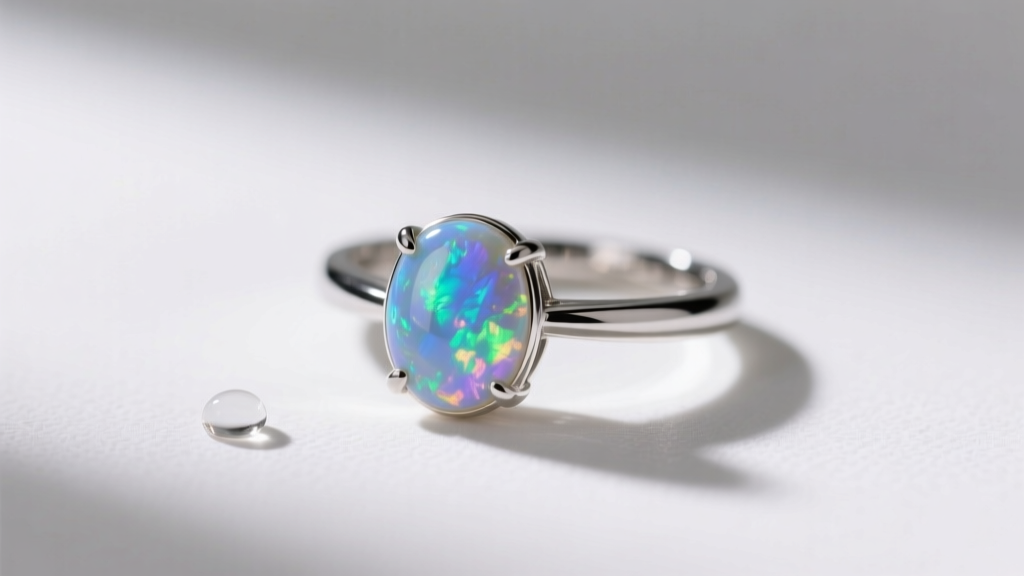
Opal Engagement Rings Unique Beauty and Fragility
Opal engagement rings have a way of stopping people mid-sentence. One glance at that shifting “play-of-color”—flashes of green, blue, orange, even neon pink—makes the stone feel alive. For couples who want a ring that’s expressive, romantic, and unmistakably different from a traditional diamond solitaire, an opal center stone can feel like the perfect match.
That same magic is also the reason opals require a more informed approach. Opal is softer than many popular engagement gemstones, and it can be sensitive to impacts, heat, and dryness. If you love the look, the goal isn’t to talk you out of it—it’s to help you choose the right type of opal, a protective setting, and a lifestyle-friendly design so your ring stays beautiful for years.
Why Opal Engagement Rings Are So Popular Right Now
Across modern bridal jewelry trends, couples are leaning into individuality: non-diamond center stones, vintage-inspired settings, and meaningful color. Opal fits that movement perfectly. It offers a one-of-a-kind pattern (no two opals look identical), a softer, dreamy glow that photographs beautifully, and a strong connection to personal symbolism—many people associate opal with creativity, love, and emotional connection.
At the same time, opal engagement rings can still feel timeless when set thoughtfully. Pair an oval opal with a classic halo, or choose a sleek bezel set opal in platinum, and you get a design that feels current while staying elegant enough for decades of wear.
Understanding Opal: What Makes It Special (and Delicate)
Play-of-Color vs. Common Opal
When most people imagine opal, they’re thinking of precious opal—the type with visible flashes of color that shift as the stone moves. That effect is called play-of-color, caused by the internal structure diffracting light. Common opal lacks that rainbow flash and is generally less sought after for engagement rings.
Opal Hardness, Durability, and Wearability
Opal sits around 5.5–6.5 on the Mohs hardness scale, compared to sapphire at 9 and diamond at 10. Hardness isn’t the whole story—opal also has relatively low toughness, meaning it can chip if knocked against a countertop or doorframe. Many opals also contain water content, which is why rapid temperature changes and very dry conditions can be an issue over time.
Opal can absolutely be worn daily, but it performs best in designs that prioritize protection and in households where the ring will be removed for workouts, heavy cleaning, gardening, or hands-on jobs.
Types of Opal for Engagement Rings
Solid Natural Opal
A solid opal is a single piece of opal material. This is typically what couples prefer for a center stone because it’s the most straightforward and traditional construction. Look for a stone with strong play-of-color, minimal cracking, and a well-cut dome (for cabochons) or clean faceting (for faceted opals).
Ethiopian Opal vs. Australian Opal
- Australian opal (including Lightning Ridge black opal and white opal) is often considered the benchmark for durability and stable beauty. Black opal is especially prized for vivid color against a darker body tone.
- Ethiopian opal can offer dramatic color at more accessible prices, but some material is more porous or hydrophane (can absorb water), meaning it may be more sensitive to moisture, lotions, or humidity changes. A reputable jeweler will disclose origin and any treatments.
Opal Doublets and Triplets
Doublets (a thin opal layer bonded to a backing) and triplets (opal layer with a backing and a clear top cap) can look beautiful and cost less. They’re more vulnerable to delamination if exposed to water, harsh chemicals, or frequent soaking. For an engagement ring meant for daily wear, solid opal is usually the better long-term choice—unless your lifestyle and setting choice keep the stone very protected.
Lab-Created Opal
Synthetic (lab-created) opal can be a practical option for couples who love the look and want improved consistency and value. Lab opals can still be delicate, but they often offer more uniform color and lower replacement cost if damage occurs. Ask for clear disclosure: “lab-created,” “synthetic,” and “imitation” are not the same.
Best Opal Cuts and Ring Styles
Cabochon: The Classic Choice
Most opals are cut as cabochons—smooth, domed tops—because it showcases play-of-color beautifully and avoids fragile facet edges. An oval cabochon opal engagement ring is one of the most timeless looks, especially in a halo or vintage-inspired setting.
Faceted Opal: Modern Sparkle with Extra Care
Faceted opals can look striking, especially in minimalist modern styles. Just know that facets can introduce edge vulnerability. If you love a faceted opal, choose a protective setting and avoid very thin girdles (the edge of the stone).
Trending Styles
- Bezel-set opal rings (top choice for protection and a clean, modern feel)
- Opal halo engagement rings with diamonds or moissanite for extra sparkle and stone security
- East-west oval opal settings for a contemporary twist
- Three-stone rings pairing opal with side stones like diamonds, sapphires, or emeralds
- Vintage-inspired opal rings with milgrain, filigree, and art deco geometry
Setting Choices That Protect an Opal
Best Settings for Durability
- Bezel setting: A metal rim surrounds the opal, shielding edges from chips. This is the most protective option for daily wear.
- Halo setting: A diamond halo can act like a buffer zone, helping prevent direct hits to the opal.
- Low-profile settings: Keeping the opal closer to the finger reduces snagging and impact risk.
Settings to Approach Carefully
- High prong solitaires: Beautiful but expose the stone. If you choose prongs, opt for a lower basket and sturdy prongs.
- Very thin bands or ultra-delicate claws: These can bend over time, increasing the chance of loosening.
- Tension settings: Not recommended for opal due to stress on the stone.
Metal Choices: What Works Best with Opal
Metal affects both style and practicality. Opal’s soft, glowing colors tend to look flattering in many metals, but daily wear considerations matter.
- Platinum: Durable, hypoallergenic, and secure for settings. Higher cost, excellent for heirloom-quality opal rings.
- 14k gold (yellow, white, or rose): A sweet spot for strength and value. 14k is typically more durable than 18k for everyday wear.
- 18k gold: Rich color and luxury feel, but slightly softer—best in protective settings.
Style tip: Rose gold opal engagement rings are trending because the warm metal enhances opal’s pink and orange flashes. For a crisp, timeless look, white gold or platinum makes the colors appear brighter and cooler.
How to Judge Opal Quality (What Actually Matters)
Play-of-Color and Pattern
Look for vivid color that shows from multiple angles, not just one “sweet spot.” Patterns like harlequin, broad flash, and pinfire can command higher prices, but the best choice is the one that feels mesmerizing to you.
Body Tone
Opals range from light (white opal) to dark (black opal). Darker body tone often makes colors appear more intense, which is why black opal engagement rings can be more expensive.
Transparency and Brightness
Some opals are opaque; others are translucent or crystal opal. Brightness—how strongly the colors “pop”—often influences value more than transparency alone.
Surface Condition and Stability
Avoid stones with visible cracks, crazing (fine surface fractures), or a chalky look. Ask whether the opal is treated (smoke-treated, dyed, impregnated) and request care instructions specific to that material.
Price Range and Value Tips
Opal engagement rings span a wide range based on opal type, color intensity, size, and craftsmanship.
- Entry level: $300–$900 for smaller opals, lab-created opal, or opal doublets/triplets in sterling silver or 10k/14k gold.
- Mid-range: $900–$3,000 for solid opals with good play-of-color in 14k gold, often with small diamond accents.
- Fine jewelry: $3,000–$10,000+ for high-brightness Australian opal, especially black opal, in platinum or intricate designer settings with diamond halos.
Value tip: If you want maximum sparkle and durability around the center stone, consider a halo with lab-grown diamonds or moissanite. You’ll get a larger visual impact while reserving budget for a more protective, better-made setting.
Practical Buying Tips for Couples
- Choose protection first: If you’re set on opal, prioritize a bezel or low halo and a slightly thicker band for stability.
- Ask for origin and construction: Confirm whether it’s a solid opal, doublet/triplet, or lab-created opal.
- Request close-up photos and videos: Opal appearance shifts with light; video under natural and indoor lighting is ideal.
- Match your wedding band early: Some opal settings sit low and may need a curved or contour wedding band.
- Plan for insurance: Opal is more damage-prone than sapphire or diamond. Jewelry insurance is a smart add-on.
Care and Maintenance: Keeping an Opal Ring Beautiful
Daily Wear Rules That Prevent Damage
- Remove your opal engagement ring for gym workouts, lifting, gardening, home repairs, and dishwashing.
- Avoid harsh chemicals (chlorine, bleach, strong cleaners) and limit exposure to lotions and perfumes.
- Protect from heat and rapid temperature changes (hot tubs, saunas, leaving jewelry in a hot car).
How to Clean an Opal Ring
Use lukewarm water, a mild soap, and a soft cloth. If needed, use a very soft toothbrush around the metal—avoid scrubbing the opal aggressively. Skip ultrasonic cleaners and steam cleaning; both can damage opals or loosen settings.
Storage and Checkups
Store opal jewelry separately in a soft pouch to prevent scratches from harder stones like diamonds. Have prongs and bezels checked by a jeweler at least once a year (or every six months if worn daily).
Common Mistakes to Avoid When Shopping for Opal Engagement Rings
- Choosing a high-set ring for an active lifestyle: The stone becomes a “first point of contact.”
- Assuming all opals wear the same: Ethiopian, Australian, solid, and triplet opals can behave differently over time.
- Ignoring the band thickness: Ultra-thin shanks can warp, risking stone loss—especially with softer center stones.
- Buying solely by size: A larger opal with weak color may look less lively than a smaller, brighter stone.
- Cleaning the ring like a diamond: Ultrasonic and steam cleaners are frequent causes of damage.
FAQ: Opal Engagement Rings
Are opal engagement rings durable enough for everyday wear?
They can be, with the right design and habits. Choose a bezel or protective halo, keep the setting low, and remove the ring for high-impact activities and cleaning.
What’s the best metal for an opal engagement ring?
Platinum and 14k gold are top choices for daily wear because they’re durable and secure. The “best” also depends on the look you want—rose gold is popular for warm, romantic styling.
Do opal rings need special cleaning?
Yes. Clean gently with mild soap and lukewarm water. Avoid ultrasonic cleaners, steam, harsh chemicals, and prolonged soaking—especially for doublets/triplets or more porous opals.
Will an opal crack or dry out over time?
Opals can crack if exposed to sudden temperature changes, impacts, or very dry conditions. Quality material, a protective setting, and careful wear habits greatly reduce the risk.
Are opal doublets or triplets okay for engagement rings?
They can be, but they’re less ideal for daily wear because layers can separate if exposed to water or chemicals. If you choose one, commit to careful wear and avoid soaking entirely.
What wedding band pairs best with an opal engagement ring?
A plain gold or platinum band is timeless and won’t compete with the opal’s color. If the opal ring sits low, a contour or curved wedding band may fit more comfortably and avoid gaps.
Next Steps: Choosing an Opal Ring You’ll Love for the Long Haul
If you want an engagement ring that feels personal, artistic, and unmistakably yours, opal delivers a look few gemstones can match. The smartest approach is choosing a stable, well-cut opal (ideally solid), setting it in a protective design like a bezel or halo, and pairing it with a lifestyle that respects the stone’s softer nature.
When you’re ready, keep exploring more engagement ring and wedding band guides on weddingsift.com to compare gemstones, settings, metals, and styles—so your final choice feels confident, beautiful, and built to last.
More Articles
 Are Wedding Rings Biblical? What Scripture Says
 Plan Themes Essentials: A Metalsmith’s Practical Framework for Jewelry Design Consistency
 How Much Is My Wedding Ring Worth? (2026)
 How to Choose a Wedding Band With a Brushed Finish
 How to Choose a Wedding Ring for Wide Fingers
 How to Choose an Engagement Ring With a Flush Setting
 Can You Wash Hands With Wedding Ring On? (2026)
 Does The Wedding Band Go Above Or Below
 Engagement Ring Upgrade Options for Anniversaries
 Wedding Ring Engraving Ideas That Are Meaningful