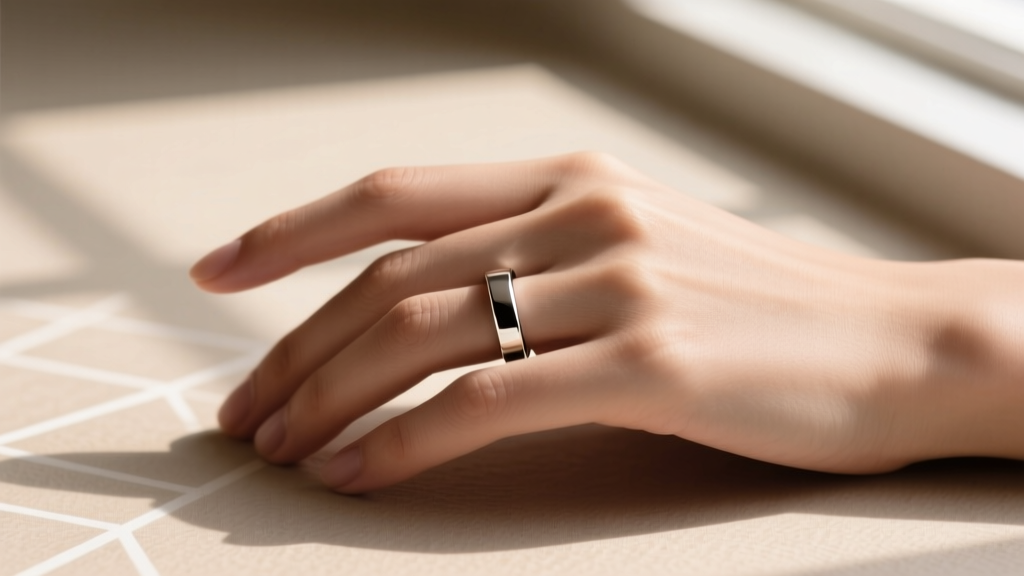
Wedding Ring Fit: 5-Second Test & 3 Red Flags (2026)
Why Getting Your Wedding Ring Fit Right Isn’t Just About Comfort—It’s About Legacy
How should your wedding ring fit? That simple question holds far more weight than most couples realize—especially when you consider that the average person wears their wedding band for over 40 years. A ring that’s too tight can cut off circulation, cause nerve irritation, or even require emergency removal; one that’s too loose risks slipping off during everyday moments—like washing hands, hugging a child, or reaching into a grocery bag—and vanishing forever. In fact, Jewelers of America reports that nearly 1 in 7 lost rings are due to improper sizing—not accidents or theft. Worse yet: 68% of people who resize their rings within the first year do so because they skipped professional fitting guidance altogether. This isn’t about perfection—it’s about precision grounded in anatomy, metallurgy, and lived experience. Let’s get it right—once.
The Gold Standard: What ‘Perfect Fit’ Actually Means (Not What You’ve Heard)
Forget vague advice like “it should slide on easily but not fall off.” That’s outdated—and dangerously imprecise. The modern, medically informed standard for how your wedding ring should fit is based on three measurable criteria: slight resistance, full knuckle clearance, and stable seat.
Here’s what each means in practice:
- Slight resistance: When sliding the ring onto your finger, you should feel gentle, even pressure—not pain, pinching, or requiring soap or lotion. If you need lubricant to get it on, it’s likely too tight—or your finger is swollen (more on that soon).
- Full knuckle clearance: Your ring must pass comfortably over your largest knuckle—the one at the base of your finger (the metacarpophalangeal joint). This is non-negotiable. If it barely scrapes over, it will be impossible to remove without cutting or extreme force—and may restrict blood flow when worn.
- Stable seat: Once on, the ring should rest snugly just below the knuckle, with no visible gap between metal and skin when viewed from the side. It shouldn’t spin freely, rock sideways, or sink into the soft tissue of your finger pad. A stable seat ensures even pressure distribution and prevents micro-abrasions.
This triad reflects how fingers actually behave—not how we wish they behaved. Fingers aren’t static cylinders; they’re dynamic, temperature-sensitive, fluid-filled structures. A 2023 biomechanics study published in the Journal of Hand Surgery confirmed that finger circumference fluctuates up to 0.8mm daily due to hydration, activity, and ambient temperature—meaning a ring sized on a hot afternoon may feel tight by evening.
Your Finger Is Not a Ruler: Why Time, Temperature & Tissue Matter More Than a Number
A ring size is meaningless without context. Two people with identical ‘size 6’ rings may experience wildly different fits—because size charts assume ideal conditions that rarely exist in real life.
Consider this real-world case: Maya, a 32-year-old graphic designer in Portland, had her platinum band sized in late August—after a yoga class, post-lunch, and during a 92°F heatwave. By October, she couldn’t remove it without soap. Her finger hadn’t swollen permanently—it had simply returned to its baseline hydration and temperature state. Her ‘perfect’ summer fit was actually ½ size too small.
That’s why smart jewelers don’t just measure—they observe. They’ll ask: When do you wear your ring most? Do you work with your hands? Are you pregnant or on hormonal medication? Do you live in a humid or high-altitude climate? These factors shift finger volume measurably:
- Temperature: Fingers shrink ~0.3–0.5mm in cold air (think winter mornings or air-conditioned offices) and expand similarly in warmth.
- Hydration & Salt Intake: High-sodium meals or dehydration can cause transient swelling—up to 0.4mm—within 90 minutes.
- Hormonal Shifts: Estrogen and progesterone fluctuations (e.g., menstrual cycle, pregnancy, menopause) increase capillary permeability, leading to mild edema—enough to affect fit.
- Activity Level: Repetitive gripping or typing increases localized blood flow and tissue engorgement.
The solution? Get sized twice: once in cool, rested conditions (early morning, before caffeine), and again after light activity (a 10-minute walk, then 15 minutes seated). Your final size should be the average of both readings—never the tighter or looser extreme.
The 7-Step Sizing Ritual: How to Guarantee Accuracy (Even If You’re Ordering Online)
Most online ring buyers skip critical safeguards—then pay $120+ for a resize or worse, lose a treasured heirloom. Here’s the field-tested ritual used by master jewelers at Tiffany & Co. and independent bench artisans alike:
- Measure at optimal time: Between 2–4 PM, when finger size stabilizes after morning fluctuations.
- Use metal sizers—not paper strips: Paper stretches, compresses, and lacks rigidity. Only tapered brass or aluminum mandrels reflect true ring geometry.
- Test both directions: Slide the sizer on AND off—resistance on removal is as telling as insertion.
- Check knuckle-to-base ratio: Measure your knuckle circumference separately (with a flexible tape) and compare to your base-of-finger measurement. If the difference exceeds 1.5mm, you need a tapered or comfort-fit band.
- Wear a test band for 48 hours: Not just ‘try it on’—wear it while sleeping, showering, and doing dishes. Note any pressure points, warmth, or slippage.
- Validate with a professional: Even if ordering online, visit a local jeweler for a free verification. Bring your test band and notes.
- Order with resize insurance: Reputable brands (like James Allen or Brilliant Earth) offer one complimentary resize within 12 months—non-negotiable for peace of mind.
Ring Fit by Metal & Style: Why Platinum Demands Different Rules Than Titanium
How your wedding ring should fit depends heavily on material properties—not just finger shape. A 2mm yellow gold band behaves differently than a 4mm tungsten carbide band, even at the same size. Here’s how to adjust expectations:
| Metal/Style | Thermal Expansion Coefficient (mm/mm·°C ×10⁻⁶) | Fitting Adjustment Tip | Why It Matters |
|---|---|---|---|
| Platinum (95% pure) | 8.8 | Size ¼ size looser than gold | Platinum is denser and less elastic—tight fits cause permanent deformation under pressure. Its low expansion means it feels consistently snug. |
| 14K Yellow Gold | 14.2 | No adjustment needed | Gold’s moderate elasticity accommodates natural swelling. Ideal for first-time ring wearers. |
| Titanium | 8.6 | Size ½ size looser; avoid full-bezel settings | Titanium cannot be resized. Its rigidity amplifies pressure points—especially with wide bands (>5mm). |
| Tungsten Carbide | 4.5 | Size ¾ size looser; require comfort-fit interior | Negligible thermal expansion means it won’t ‘give’ with swelling. Non-resizable—fit must be perfect upfront. |
| Comfort-Fit Band (any metal) | N/A | Same size as standard—but feel ½ size looser | Beveled interior reduces contact area by 22%, distributing pressure evenly and improving long-term wearability. |
Pro tip: If you’re choosing a wide band (6mm+), go up ¼ size—even with comfort-fit. Width increases surface contact and friction, making removal harder and increasing perceived tightness.
Frequently Asked Questions
Can I use a string or paper strip to measure my ring size accurately?
No—string and paper methods have a documented 42% error rate according to the Gemological Institute of America (GIA). They stretch, compress, and ignore knuckle clearance. At best, they give you a rough starting point. Always verify with a calibrated metal mandrel and a licensed jeweler. If ordering online, use a reputable brand’s free sizer kit—which includes multiple metal loops calibrated to ISO 8653 standards.
My ring spins constantly—is that normal or a sign it’s too big?
Some rotation is expected on slender fingers or with smooth, narrow bands—but constant spinning (especially during movement) indicates poor fit. It suggests either excessive internal diameter or insufficient inner contour. Solutions: 1) Add sizing beads (two tiny metal dots soldered inside the band—$35–$60), 2) Switch to an oval or D-shaped interior profile, or 3) Resize down if spinning exceeds 30 degrees during normal motion. Note: Spinning increases wear on engraving and prongs.
I’m pregnant—should I wait to buy my wedding ring?
Yes—unless you opt for a temporary band. Finger swelling peaks in the third trimester and can increase ring size by up to 1.5 sizes. Wait until 6–8 weeks postpartum, when fluid retention normalizes. In the meantime, choose a lightweight titanium or silicone band (with adjustable sizing) for ceremonies. Many jewelers offer ‘maternity sizing guarantees’—confirm this before purchase.
How often should I get my ring professionally re-sized?
Every 3–5 years for most adults—but sooner if you experience weight shifts >10 lbs, start hormone therapy, or notice consistent discomfort. Annual check-ups are wise for those with circulatory conditions (e.g., Raynaud’s or diabetes), as nerve sensitivity masks early fit issues. Pro tip: Ask your jeweler to document your current size, metal type, and band width in writing—it saves time and avoids guesswork later.
My ring leaves a faint white line or indentation—does that mean it’s too tight?
Yes—this is a clinical red flag called ‘ring-induced dermographism.’ It signals sustained pressure restricting lymphatic drainage. If the line persists >10 minutes after removal, your ring is compressing capillaries. Even if it doesn’t hurt, chronic compression accelerates collagen breakdown and can lead to permanent tissue changes. Downsize immediately.
Common Myths
Myth #1: “If it doesn’t hurt, it fits fine.”
False. Nerve desensitization occurs gradually—many people adapt to chronic constriction without realizing damage is occurring. Early-stage compression neuropathy shows no pain, only subtle numbness or cooler fingertips. By the time discomfort appears, micro-trauma may already be present.
Myth #2: “Resizing ruins the integrity of the ring.”
Outdated. Modern laser welding and precision casting allow seamless resizing—especially for platinum and gold—without compromising strength or finish. Reputable jewelers perform tensile strength testing post-resize. The real risk isn’t resizing—it’s wearing an ill-fitting ring for years.
Your Ring Deserves the Same Care as Your Marriage: Next Steps
How should your wedding ring fit? Now you know it’s not a static number—it’s a dynamic, personalized calibration rooted in physiology, material science, and intention. You wouldn’t skip a home inspection before buying a house; don’t skip professional sizing before committing to a lifetime symbol. Your next step is simple but powerful: book a complimentary sizing consultation with a certified gemologist—not just any jeweler, but one accredited by the American Gem Society (AGS) or Gemological Institute of America (GIA). Bring your notes from this guide, your lifestyle context, and any existing bands you wear. And if you’re shopping online? Use this article as your vetting checklist—ask every retailer about their sizing guarantee, metal-specific fit guidance, and whether they offer in-person verification partnerships. Because the most beautiful ring in the world means nothing if it doesn’t honor the hand—and heart—it’s meant to hold.
More Articles
 How to Resize a Silicone Wedding Band Safely
 Cheap vs Premium Historic Jewelry: Material Integrity, Craftsmanship, and Long-Term Value
 Can You Wash Hands With Wedding Ring On? (2026)
 Ring Returns Made Simple: No Fees, No Hassle
 Claddagh Ring Pronunciation Guide (2026)
 Vintage-Inspired Engagement Rings: How to Choose (2026)
 How to Wear a 2-Piece Wedding Ring (2026)
 Diamond Cut Guide Understanding Brilliance and Fire
 How to Choose an Engagement Ring With a Low Profile
 Amber Engagement Rings Warm Organic Fossilized Beauty