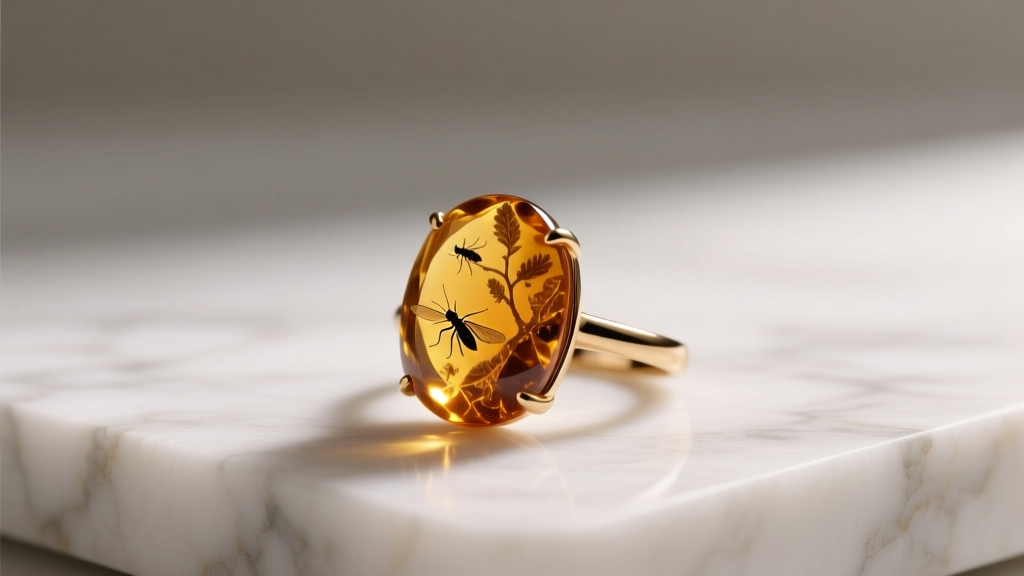
Amber Engagement Rings Warm Organic Fossilized Beauty
Amber engagement rings have a glow that feels different from any traditional gemstone. Rather than the icy sparkle of a diamond or the crisp brilliance of a sapphire, amber offers warmth—golden honey, deep cognac, or even rare green tones that look lit from within. For couples who want a ring that feels personal, nature-inspired, and a little unexpected, amber delivers a distinctly romantic look with real story behind it.
Amber is also one of the oldest “gems” worn by humans, prized for centuries across Europe and Asia. Technically, it’s fossilized tree resin rather than a mineral, which gives it a uniquely organic character. Some pieces even contain ancient inclusions (like plant fragments), making each stone one-of-a-kind. If you’re considering amber for an engagement ring or wedding band set, understanding its strengths—and its limitations—will help you choose a ring that’s both beautiful and practical.
This guide breaks down amber qualities, ring styles, best metal choices, protective settings, price expectations, and the care routine amber needs to stay radiant for the long haul.
What Makes Amber Special?
Amber is fossilized resin, not a traditional gemstone
Amber forms when sticky tree resin hardens, gets buried, and slowly fossilizes over millions of years. Because it’s organic, amber can feel warm to the touch and often appears softly luminous rather than sharply reflective. This is part of its appeal—especially in boho, vintage-inspired, and nature-themed engagement rings.
Color range and visual personality
Most shoppers picture amber as golden, but the spectrum is wider:
- Honey/Golden amber: bright, sunny, classic “Baltic” look
- Cognac/Cherry amber: deeper orange-red tones with richer drama
- Butterscotch: opaque, creamy warmth with a retro feel
- Green amber: rarer; can appear olive or mossy depending on lighting
- Clear amber with inclusions: prized for “time capsule” character
How amber compares to diamonds and other engagement stones
Amber is significantly softer than most engagement ring gemstones. On the Mohs hardness scale, amber typically ranges around 2–2.5, while sapphire is 9 and diamond is 10. That doesn’t disqualify amber—it simply means you’ll want a smart setting choice and realistic expectations about wear, especially if you work with your hands or want a low-maintenance ring.
Amber Quality Factors: What to Look For
Natural vs. pressed vs. reconstituted amber
Amber is sold in several forms, and this affects value and durability:
- Natural amber: solid pieces of fossilized resin; most desirable for fine jewelry
- Pressed amber (ambroid): tiny fragments fused under heat/pressure; can be beautiful but is typically less valuable
- Reconstituted/resin composites: may include modern resins; lower value and should be clearly disclosed
Ask the seller what type of amber it is and whether any treatments were applied.
Clarity and inclusions
Unlike diamonds, inclusions in amber can add charm. A clean, transparent amber cabochon looks elegant and classic, while pieces with organic flecks or plant-like patterns feel mystical and unique. Inclusions should look natural—not like bubbles that suggest plastic imitation. If the ring is positioned as “fine jewelry,” request details about authenticity and origin.
Treatments and enhancements
Some amber is heat-treated or clarified to deepen color or improve transparency. Treatments are common and not necessarily negative, but they should be disclosed. Be cautious with “too perfect” stones offered at unusually low prices—copal (younger resin) or synthetic imitations can be misrepresented as amber.
Cut and shape: why cabochons dominate
Amber is usually cut as a cabochon (smooth, domed top) rather than faceted. Cabochons protect the stone’s surface better and emphasize amber’s internal glow. Popular shapes include oval, round, cushion, and pear. Faceted amber exists, but edges can be more prone to chipping.
Best Amber Engagement Ring Styles and Settings
Protective settings: bezel and halo designs
If you want an amber engagement ring for daily wear, prioritize settings that shield the stone:
- Bezel setting: a metal rim encircles the amber, protecting edges from knocks; one of the best choices
- Half-bezel: more modern and open, still offers meaningful protection
- Halo setting: surrounding accent stones can add sparkle and create a buffer zone, but make sure the amber is still well supported
Prong settings: beautiful but higher risk
Prongs show more of the stone and can look delicate and romantic, but amber’s softness makes it more vulnerable if the stone is exposed. If you love prongs, choose thicker prongs, a lower profile, and consider a protective gallery rail.
Nature-inspired and vintage trends (plus timeless classics)
Current engagement ring trends lean heavily into individuality, and amber fits right in. Popular looks include:
- Botanical details: leaf engravings, vine-like shoulders, twig textures
- Vintage-inspired settings: milgrain edges, engraved bands, Art Nouveau motifs
- Minimalist bezels: clean lines, low-set amber cabochons, wide bands
- Toi et Moi styling: amber paired with a contrasting stone (like a diamond, moissanite, or sapphire) for symbolism and sparkle
For a timeless approach, an oval amber cabochon in a simple bezel on a classic 14k gold band reads elegant without feeling trendy.
Choosing the Right Metal for Amber
Yellow gold: the most harmonious pairing
14k or 18k yellow gold amplifies amber’s warmth and creates a cohesive, glowing palette. 14k is slightly more scratch-resistant than 18k, making it a practical choice for engagement rings.
Rose gold: romantic and flattering
Rose gold complements cherry and cognac amber beautifully. If you love warm-toned jewelry, rose gold can look modern, soft, and distinctive.
White gold and platinum: modern contrast, but choose wisely
White metals create a striking contrast, especially with clear honey amber. Platinum is durable, but it can make warm amber look more “spotlit.” If you want a cooler-toned aesthetic, a white metal bezel is a sleek option—just keep the setting protective.
Silver: budget-friendly, but maintenance matters
Sterling silver works well for boho styles and keeps costs down, but it tarnishes and may need regular polishing. If you choose silver, store the ring properly and avoid harsh cleaners near the amber.
Amber Engagement Rings: Price Range and Value Tips
Amber is generally more affordable than most traditional engagement gemstones, but pricing varies with size, clarity, origin, and craftsmanship.
- Entry level ($80–$300): sterling silver rings, smaller stones, simpler craftsmanship; verify authenticity
- Mid-range ($300–$1,200): 10k/14k gold, better-cut cabochons, bezel settings, artisan details
- Higher-end ($1,200–$3,500+): 14k/18k gold or platinum, custom design, rare colors (like green), exceptional clarity or unique inclusions, heirloom-level craftsmanship
Value tip: Put budget into a protective setting and solid metalwork before paying extra for sheer stone size. A well-designed bezel in 14k gold often outperforms a larger amber in a fragile mount.
Practical Buying Tips for Couples
Match lifestyle to design
If you plan to wear your engagement ring daily, choose a low-profile bezel and consider keeping a separate “travel ring” or “work ring” for high-impact activities. Amber is best for wearers who can commit to gentle habits.
Ask the right questions before you buy
- Is the amber natural, pressed, or composite?
- Has it been heat-treated or clarified?
- What is the return policy and warranty on the setting?
- Can the jeweler provide guidance on resizing without risking the stone?
Consider the wedding band pairing early
Amber engagement rings often sit lower or have wider bezels. If you want a flush-fitting wedding band, ask about a curved or contour band. A simple gold band, a textured twig band, or a slim pavé band can complement amber—just ensure accent stones aren’t positioned to rub against the amber.
Care and Maintenance: Keeping Amber Beautiful
What amber doesn’t like
Amber can scratch and cloud if exposed to the wrong conditions. Keep it away from:
- Heat: hot tubs, saunas, prolonged direct sunlight
- Chemicals: perfumes, hairspray, chlorine, household cleaners
- Ultrasonic or steam cleaners: can damage amber and loosen settings
How to clean amber safely
Use lukewarm water, a mild soap, and a soft cloth. Gently wipe—don’t scrub with abrasive brushes. Dry thoroughly. If the metal needs polishing, avoid getting polishing compounds on the amber.
Storage and wear habits
Store amber jewelry in a soft pouch or lined box, separate from harder gemstones like diamonds that can scratch it. Put your ring on after applying skincare and fragrance, and remove it for workouts, gardening, cooking with heavy tools, and cleaning.
Common Mistakes to Avoid When Shopping for Amber Rings
- Choosing a high, exposed setting: a tall prong setting increases impact risk and snagging.
- Assuming amber wears like a diamond: it won’t; buy it for its warmth and meaning, and treat it gently.
- Not verifying authenticity: plastic imitation and younger copal can be sold as amber; buy from reputable jewelers with clear disclosures.
- Skipping the band match: a gorgeous engagement ring can become frustrating if the wedding band can’t sit well beside it.
- Using the wrong cleaners: ultrasonic, steam, alcohol, and harsh chemicals can dull amber’s surface.
FAQ: Amber Engagement Rings
Are amber engagement rings durable enough for everyday wear?
They can be, if you choose a protective setting (preferably bezel), keep the profile low, and remove the ring for high-impact activities. Amber is softer than most gemstones, so gentle wear habits matter.
Does amber scratch easily?
Yes. Amber’s softness means it can scratch from everyday contact with harder materials. Minor surface marks can sometimes be polished by a professional, but prevention is the best strategy.
What’s the best metal for an amber engagement ring?
14k yellow gold is a favorite for both durability and color harmony. Rose gold is also beautiful, especially with darker amber. White gold and platinum work for contrast, but prioritize a protective setting.
How can I tell if an amber ring is real?
Buy from a trusted jeweler, request disclosure of whether it’s natural or pressed, and ask about treatments and origin. Avoid deals that seem too good for a large “perfect” stone, and look for clear documentation and return policies.
Can an amber engagement ring be resized?
Often yes, but resizing should be done carefully to avoid heat or pressure near the amber. A jeweler may recommend removing the stone first, especially for significant size changes.
What wedding band pairs best with amber?
Classic options include a plain gold band, a contour band that hugs the setting, or a nature-textured band for a cohesive organic look. Avoid bands with sharp edges or protruding diamonds that could rub against the amber.
Confident Next Steps for Choosing Amber
If you’re drawn to warm color, organic character, and meaningful individuality, amber engagement rings are a beautiful alternative to traditional diamond engagement rings. The smartest approach is simple: choose a well-made setting designed to protect the stone, pick a durable metal like 14k gold, and commit to gentle care. Done right, amber becomes more than a ring—it becomes a piece of natural history you get to wear every day.
For more guidance on engagement ring styles, wedding bands, gemstone alternatives, and metal comparisons, explore more jewelry guides on weddingsift.com.
More Articles
 Sterling Silver Wedding Bands: Durability, Tarnish & 2026
 Best Venues for Performance: A Metalsmith’s Practical Guide to Stage, Studio, and Public Exhibition Spaces
 Jewelry Making for Beginners: First Projects
 Radiant Cut With Corner Cutouts Modern Elegance
 Engagement Ring Upgrade Options for Anniversaries
 How to Choose a Wedding Band With a Braided Design
 Champagne Diamond Warm Earthy Elegance
 Oura Ring as Wedding Band: 7 Truths (2026)
 Moissanite vs Lab Diamond: Honest Comparison
 How to Maintain the Shine of Your Wedding Jewelry