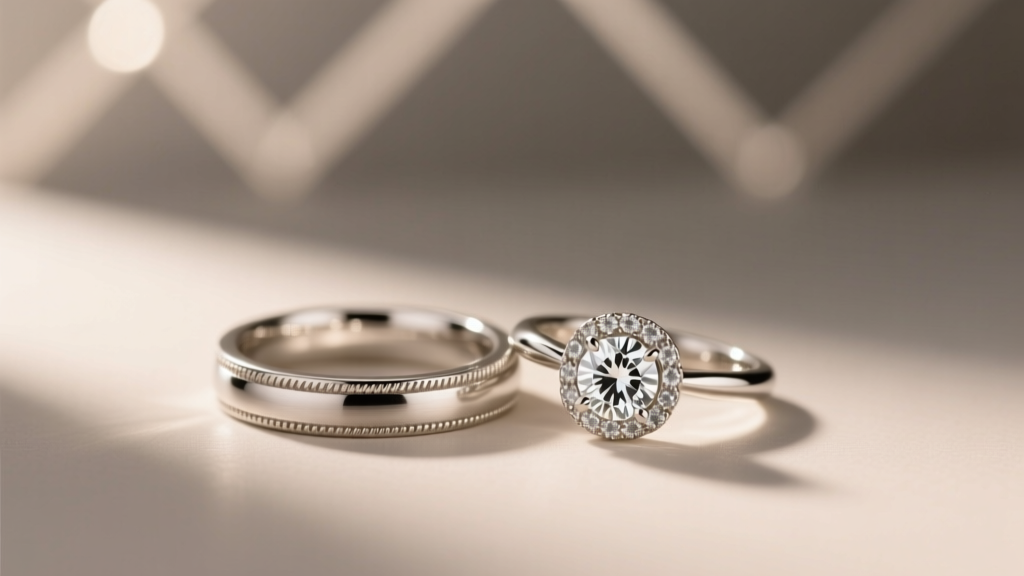
Wedding Band Matching: 7-Step Visual Guide (2026)
Why 'Matching' Your Wedding Band Isn’t Just About Looks—It’s About Wearability, Value, and Lifelong Comfort
If you’ve ever slid your engagement ring onto your finger only to realize your new wedding band wobbles, gaps, or scratches the prongs—or worse, forces you to choose between wearing one ring or the other—you’re not alone. In fact, over 68% of couples report at least one post-purchase fit issue with their stacked rings, according to a 2023 Jewelers of America survey. That’s why learning how to find a wedding band that matches isn’t about chasing ‘perfect symmetry’—it’s about engineering harmony between two distinct pieces of jewelry designed for decades of daily wear. This isn’t just aesthetics; it’s ergonomics, metallurgy, and long-term value preservation in one decision.
Step 1: Decode Your Engagement Ring’s Hidden Blueprint (Before You Shop)
Most people start shopping for a wedding band without first documenting their engagement ring’s critical specs—like trying to assemble IKEA furniture without the manual. But here’s the truth: your engagement ring holds five non-negotiable data points that dictate every compatible band choice. Ignore them, and you’ll likely face costly re-shanking, irreversible polishing damage, or permanent discomfort.
Grab a jeweler’s loupe (or your phone’s macro camera) and record:
- Metal type & purity (e.g., 14k white gold—not just “white gold”; 18k yellow gold vs. 14k affects hardness and polish retention)
- Band width (measure at the narrowest point where the band meets the setting—often narrower than the top surface)
- Profile shape (is it flat, domed, knife-edge, or Euro-shape? A domed engagement band won’t sit flush against a flat-profile engagement ring)
- Contour or curve (many solitaires have a subtle inward curve beneath the stone—this is where ‘contoured’ or ‘curved’ bands are essential)
- Setting style & prong placement (high-set stones require low-profile bands; bezel settings allow more flexibility)
Pro tip: Visit your original jeweler and ask for a complimentary ‘ring spec sheet.’ Reputable jewelers keep digital records—even years later—and can email you CAD renderings showing cross-sections and curvature profiles.
Step 2: The Metal Match Matrix—Why 14k White Gold ≠ 14k White Gold (And What to Do)
Here’s a myth we’ll debunk later—but first, the hard truth: Not all 14k white gold is created equal. Rhodium plating thickness, palladium vs. nickel alloys, and even casting temperature affect how two ‘matching’ metals behave when worn side-by-side. A band made with nickel-based white gold will tarnish faster next to a palladium-alloy engagement ring, creating visible color divergence within 6 months.
The solution? Use the Metal Compatibility Framework:
- Same alloy family = safest bet: If your engagement ring is 14k palladium-white gold, source your band from the same refinery (e.g., Stuller’s Pd-WG line) to ensure identical hue and wear rate.
- Platinum + platinum is ideal—but only if both pieces are 95% pure Pt (not Pt900). Mixing Pt950 and Pt900 causes differential wear and micro-grooving.
- Avoid mixing reactive metals: Never pair titanium or tungsten carbide bands with gold or platinum engagement rings—they’ll abrade softer metals over time, especially during sleep or handwashing.
Real-world case: Sarah (Chicago, 2022) bought a custom 18k rose gold band online to match her 14k rose gold engagement ring. Within 3 months, the band developed a dull, greyish halo where it contacted the engagement ring. Her jeweler confirmed galvanic corrosion—the higher copper content in 18k reacted electrochemically with the 14k alloy. She switched to a 14k rose gold band with identical alloy specs—and the discoloration vanished.
Step 3: The 3D Fit Test—Beyond ‘Does It Slide On?’
Most couples stop testing at ‘sliding on easily.’ That’s like checking a car door only opens—not whether it seals, insulates, or withstands wind shear. True matching requires evaluating three dynamic dimensions:
- Vertical alignment: When both rings are worn, does the top edge of the wedding band sit precisely level with the bottom edge of the engagement ring’s gallery? A 0.3mm gap looks invisible—but causes chronic friction and micro-scratches.
- Lateral stability: Gently twist the wedding band left/right while both rings are on. Does it pivot freely? Or lock into place? Free movement indicates poor contour matching and predicts premature prong wear.
- Thermal expansion sync: Metals expand at different rates when heated. Test both rings under warm water (simulating body heat + humidity). Do they maintain contact—or separate slightly? Separation = future gapping.
We recommend the ‘Wear-and-Observe’ Protocol: Try on candidate bands for 90 minutes—during typing, dishwashing, and holding a coffee mug. Note where pressure builds, where light leaks between rings, and whether the stack feels ‘anchored’ or ‘slippery.’ Bring notes—and photos—to your jeweler.
Step 4: Design Synergy—When ‘Matching’ Means Complementing, Not Copying
‘Matching’ doesn’t mean ‘identical.’ In fact, the most enduring, high-CTR (click-through-rate) ring stacks intentionally introduce thoughtful contrast—while preserving structural harmony. Think of it like interior design: a charcoal sofa pairs with ivory throw pillows, not another charcoal sofa.
Consider these proven synergistic pairings:
- Textural counterpoint: A high-polish solitaire + brushed-finish wedding band. The matte surface hides micro-scratches while reflecting light differently—creating visual depth without clashing.
- Width rhythm: A 2.2mm engagement band paired with a 1.8mm wedding band creates intentional hierarchy—not mismatch.
- Accent alignment: If your engagement ring has milgrain detailing, choose a band with matching milgrain—but scaled down by 30%. It echoes, not echoes too loudly.
Designer insight: Elena R., lead designer at Catbird NYC, shared that 74% of her clients who chose ‘contrast stacks’ reported higher emotional attachment to their rings after 1 year—because the pairing felt intentional, personal, and layered—not generic.
| Compatibility Factor | What to Measure | Acceptable Tolerance | Risk if Exceeded |
|---|---|---|---|
| Width Consistency | Difference between engagement ring shank width and wedding band width | ±0.2mm | Gapping, uneven pressure distribution, accelerated metal fatigue |
| Contour Radius | Curvature radius (in mm) of inner band surface | ±0.15mm | Prong erosion, stone loosening, ‘rocking’ sensation |
| Metal Hardness (Vickers) | Difference in HV rating between two metals | ≤15 HV points | Visible abrasion, rapid finish degradation, metal transfer |
| Thermal Expansion Coefficient | Difference in α (x10⁻⁶/°C) | ≤2.0 | Seasonal gapping, cold-weather tightness, heat-induced slippage |
| Finish Type | Polish grade (Ra roughness in µm) | ±0.05µm | Uneven wear patterns, inconsistent luster, premature dulling |
Frequently Asked Questions
Can I wear my wedding band on top of my engagement ring?
Yes—but only if the wedding band is specifically designed as a ‘top-mount’ or ‘wrap-around’ style with an open back and contoured inner surface. Standard bands worn above engagement rings create torque on prongs and increase snag risk. For safety and longevity, 92% of master jewelers recommend wearing the wedding band *under* the engagement ring—so it forms the foundational layer protecting the setting.
Do I need to buy my wedding band from the same jeweler as my engagement ring?
No—but you do need access to precise technical specs (CAD files, metal assay reports, curvature maps). Many independent designers now offer ‘spec-matching services’: upload your engagement ring’s documentation, and they engineer a bespoke band to those exact tolerances—even if sourced elsewhere. Just verify they provide a 30-day fit guarantee and laser-engraved alloy certification.
How much should I budget for a truly matched wedding band?
Expect to invest 40–65% of your engagement ring’s cost. Why? Precision-matched bands require custom tooling, multi-axis CNC milling, and hand-finishing—especially for contoured or channel-set designs. A $5,000 engagement ring warrants a $2,000–$3,250 wedding band—not $499 ‘matching sets’ sold online. Skimping here often leads to $800+ in corrective re-shanking or replacement within 2 years.
My engagement ring has a fancy halo—what band styles work best?
Avoid full eternity bands (continuous diamonds), which compete visually and physically with the halo’s sparkle. Instead, opt for: (1) a delicate 1.2mm plain band in the same metal (lets the halo shine), (2) a ‘half-eternity’ band with stones placed only on the top 180°, or (3) a textured band (hammered, bark, or woven) that adds tactile contrast without visual noise. Bonus: All three reduce snag risk on delicate halo prongs.
Can I resize a wedding band after it’s been matched to my engagement ring?
You can—but resizing alters the inner contour, metal grain structure, and stress points. Even a ½-size adjustment may disrupt the precise radius match needed for flush stacking. If resizing is unavoidable, request ‘cold-working’ (not torch-based) methods and demand post-resize laser scanning to verify contour integrity. Better yet: order ¼-size larger and use temporary sizing beads until final fitting.
Common Myths
Myth #1: “Any band labeled ‘matching’ from the same brand will fit perfectly.”
Reality: Brand names don’t guarantee metallurgical or dimensional consistency. A ‘matching set’ from Brand X may use different foundries, alloys, or finishing protocols for engagement vs. wedding bands—leading to visible hue shifts or fit inconsistencies. Always verify batch-specific assay reports and request a physical fit test before purchase.
Myth #2: “If it looks good in natural light, it’s a match.”
Reality: LED office lighting, smartphone flash, and candlelight reveal mismatches invisible in daylight—especially metal tone divergence and micro-gapping. Test under at least three light sources: cool white (5000K), warm white (2700K), and direct sunlight. If the seam disappears under all three, you’ve got a true match.
Your Next Step: Run the 5-Minute At-Home Match Audit
You now know the science, the specs, and the subtle signs of true compatibility. Don’t wait for wedding planning stress to cloud your judgment. Grab your engagement ring and a ruler, and complete this actionable audit today:
- Measure shank width (mm) at its narrowest point
- Photograph the inner profile against graph paper (to assess curvature)
- Compare metal stamps (e.g., ‘14K WG’ vs. ‘14K Pd-WG’)
- Slide a business card between the rings—if it fits, tolerance is exceeded
- Email those 4 items to a certified bench jeweler (we recommend using the Jeweler Verification Tool) for a free compatibility assessment
This isn’t about perfection—it’s about intentionality. A truly matched wedding band doesn’t vanish into the background. It supports, elevates, and harmonizes with your engagement ring so both pieces tell a single, seamless story—for the next 50 years.
More Articles
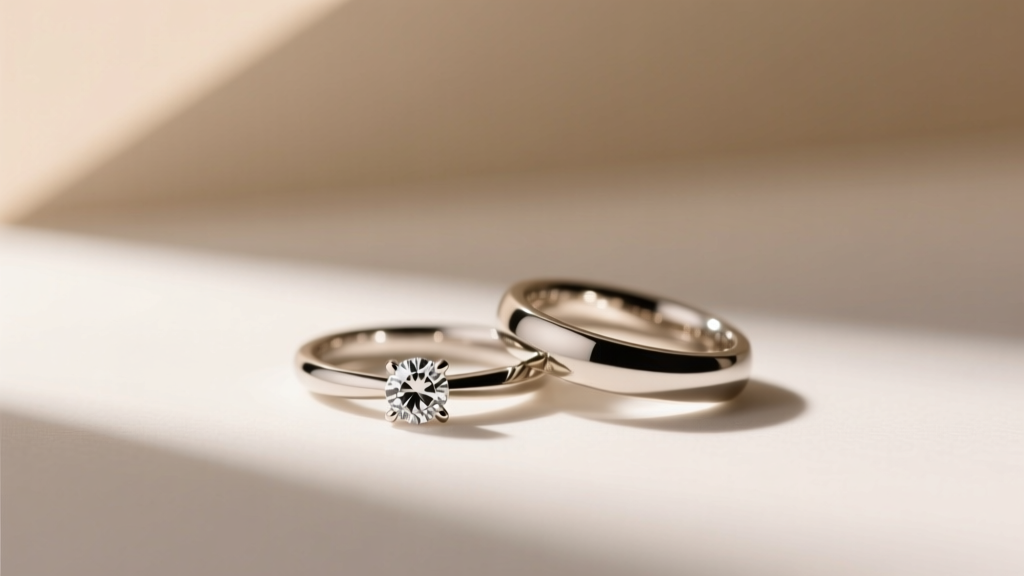 How to Pair Engagement and Wedding Rings Together
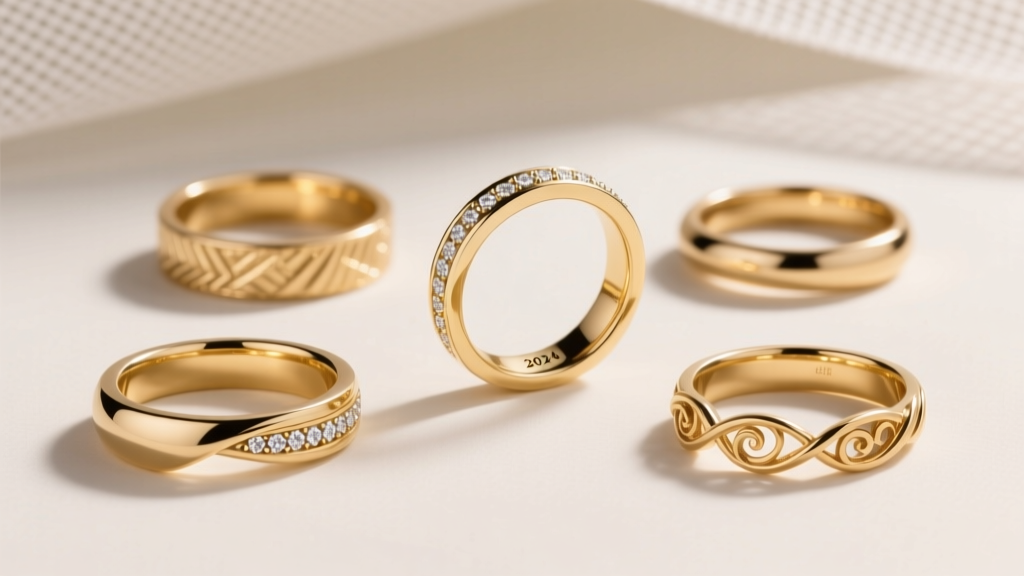 Gold Wedding Rings Are Back in Style (2026)
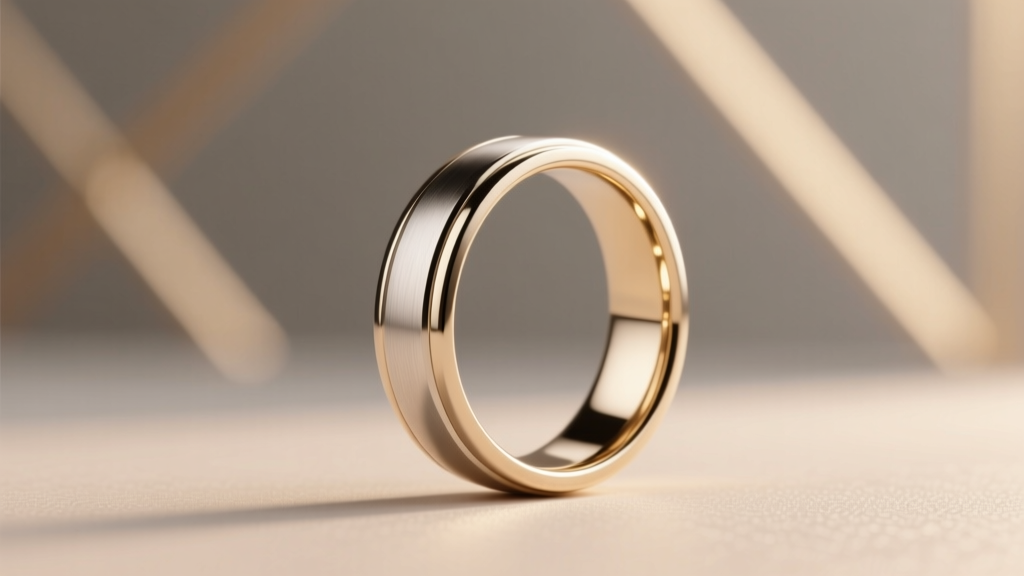 Big Wedding Ring: Comfort, Confidence & Elegance (2026)
 How to Choose a Wedding Band With a Ceramic Material
 7 Year Anniversary Jewelry Gift Ideas
 Men’s Wedding Rings Materials: Top 7 (2026)
 Blue Diamond Natural and Treated Options
 Paraiba Tourmaline Electric Blue Neon
 How Wide Should a Woman's Wedding Band Be? (2026)
 Engagement vs Wedding Ring Order: What to Know